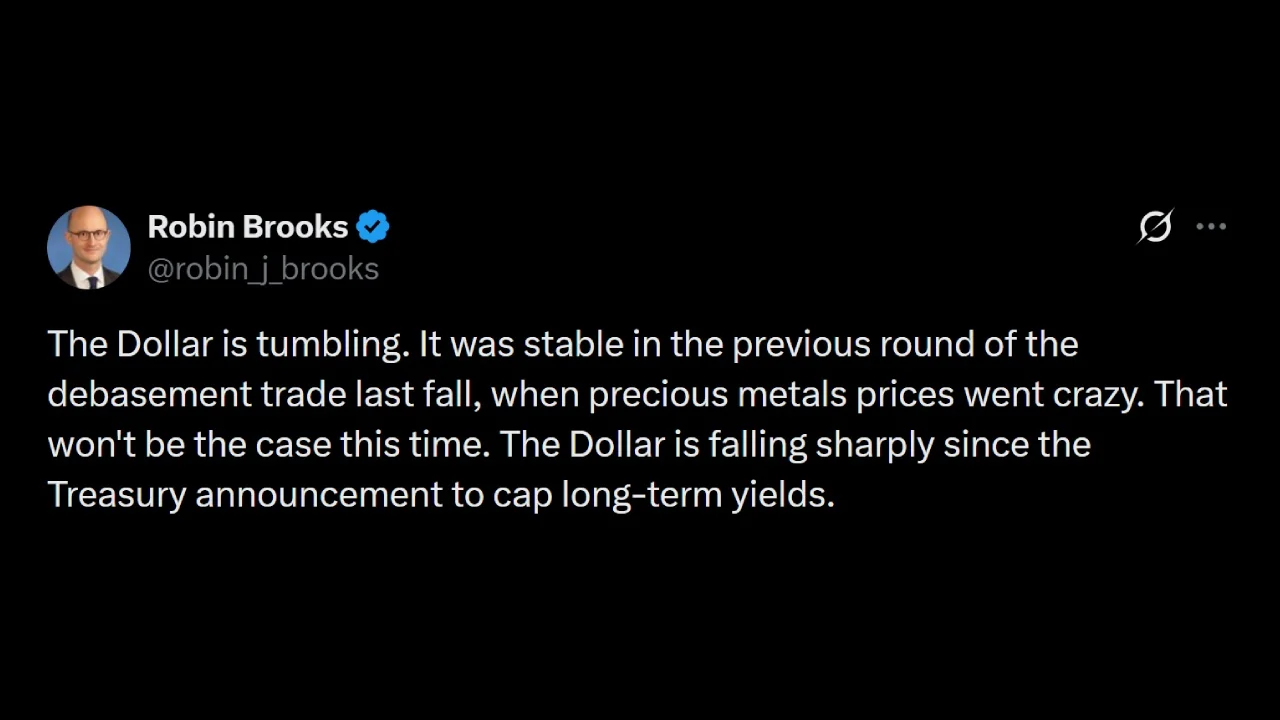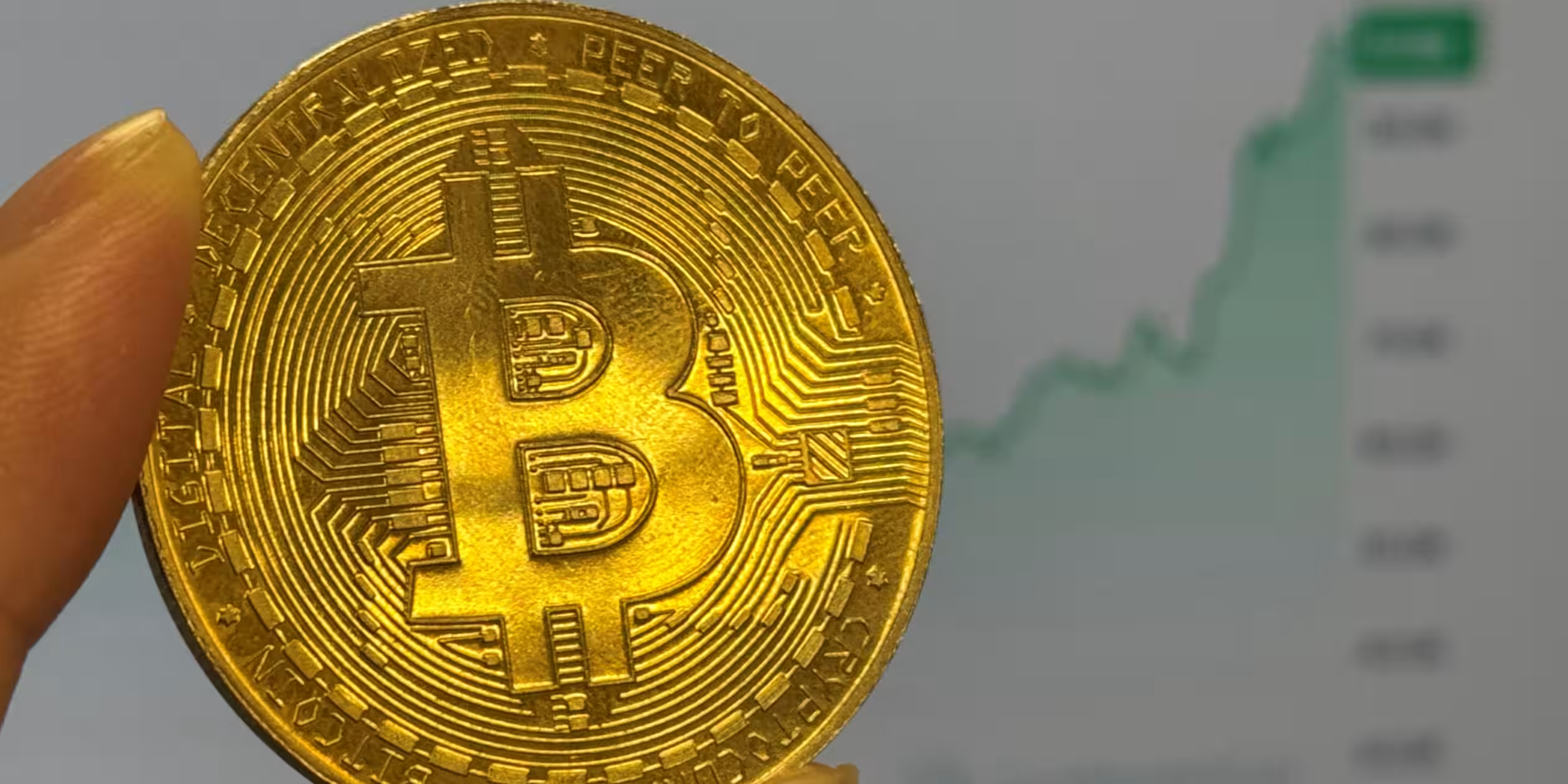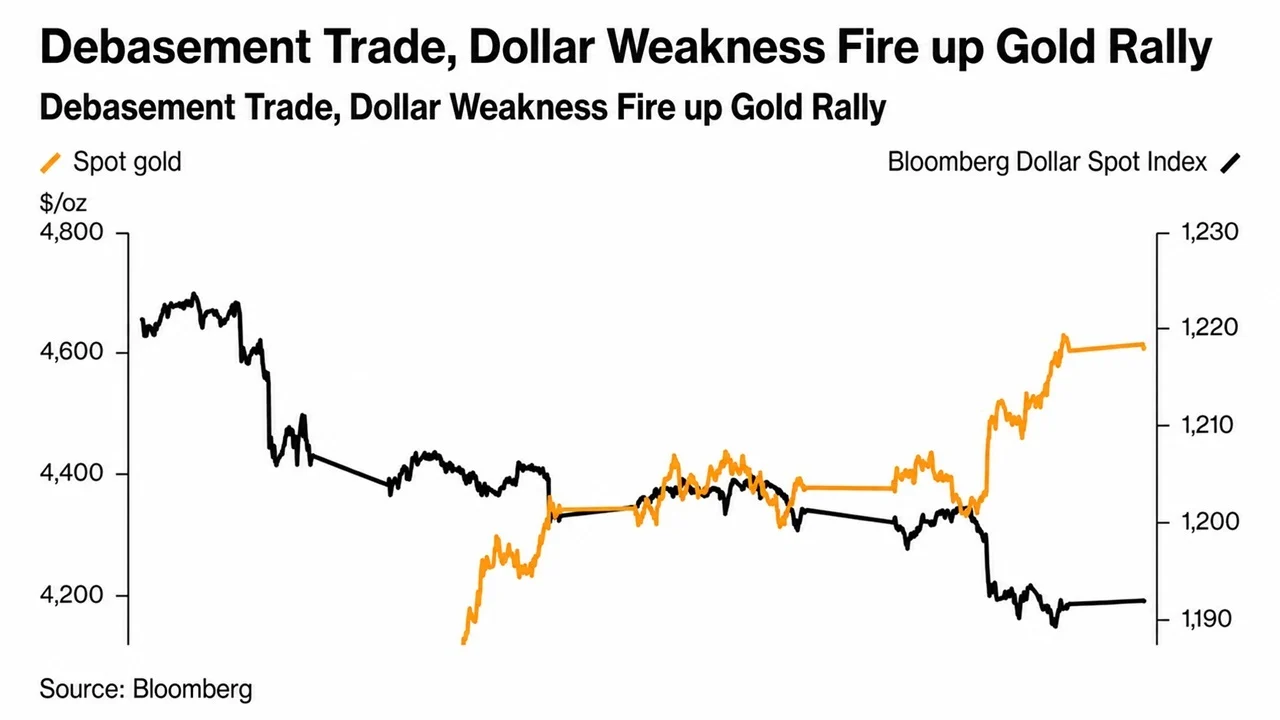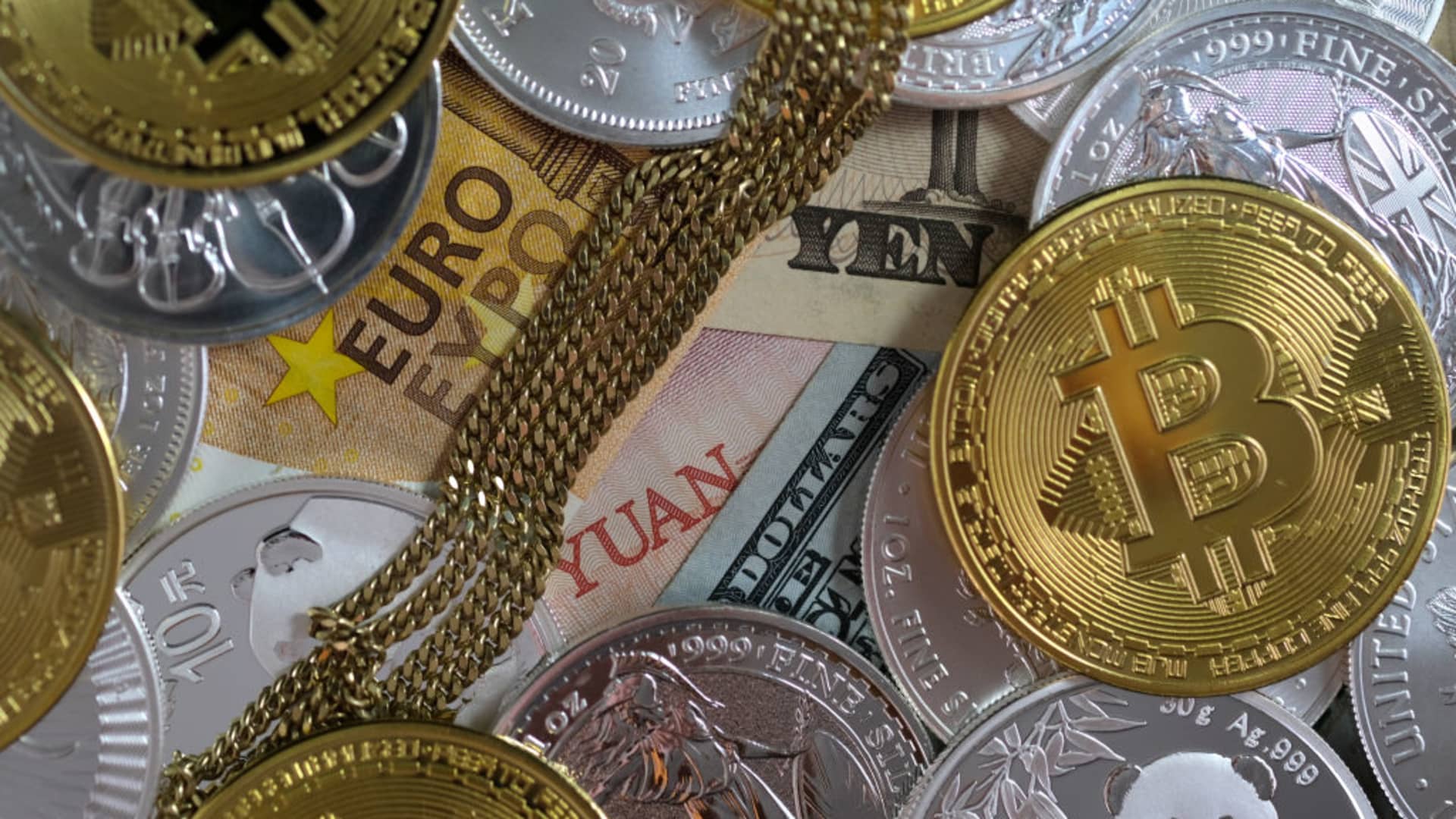
A photo illustration showing a gold necklace, silver coins and visual representations of bitcoin placed on top of different currencies.Yuriko Nakao | Getty ImagesThe debasement trade is gaining new traction on Wall Street as concern over the size and cost of the budget deficit mounts.The conventional wisdom behind the trade is that perceived hard assets, like cryptocurrencies and precious metals, gain as investors try to hedge against a weaker U.S. dollar and Treasury debt in the face of ballooning government spending. Those fears reached a fever pitch last week before, and after, the Treasury Department's unusual step of increasing debt buybacks under Secretary Scott Bessent."The size of the Treasury purchases announced so far by Bessent are trivial in comparison to the size of the overall market, but the [signaling] effect was very powerful," said Stephen Coltman, head of macro at 21Shares, a crypto-focused creator of exchange-traded funds.Gold touched three-month highs Monday, building on last week's advance of more than 5%. The yellow metal has climbed for five straight weeks and in August is on track for its biggest monthly rise since 1999.Stock Chart IconStock chart iconGold and bitcoin over the past monthBitcoin added 2% Monday, to the highest since May. Last week, the digital currency soared 22%, its biggest three-day rally since 2023. Overnight Tuesday, the crypto touched $80,000.Conversely, investors fled the dollar. The U.S. dollar index, which tracks the dollar against six other leading currencies, hit three-month lows last week and recorded its third down week in the last four. The index was little changed on Monday as investors expressed little appetite to bid up the greenback. Stock Chart IconStock chart iconThe U.S. dollar index, 5-day'Message' in marketsThe Treasury Department said last week that it would double the maximum size of its bond buyback, to at least $4 billion from $2 billion. Two senior Treasury officials told CNBC Monday that the department could use its General Account to help fund the plans.Last week's announcement followed news that the monthly U.S. budget deficit in July reached a five-year high and came at the same time as total federal government debt topped $40 trillion. Bessent told CNBC last week that he wields a "big toolkit" to calm the government bond market amid concerns about the government's financial health.Long-dated U.S. Treasury yields surged last week, at one point sending the 30-year yield to almost a 20-year high of 5.34%, up from 4.82% in late June. Yields dipped and then rebounded in the wake of the Treasury buyback move, a signal that bond investors believed Bessent's moves were inadequate."Markets are saying something," the billionaire philanthropist and former energy trader John Arnold said in a Friday post on X. The weaker dollar, lower Treasury prices and strengthening hard assets, are "all part of the debasement trade," he wrote.Stock Chart IconStock chart iconThe U.S. 30-year Treasury yield, 5-dayThe Treasury's moves could aid the bond market, but also translate into outsized pain for the dollar, according to Nohshad Shah, Citadel's head of fixed income sales for Europe, the Middle East and Africa.The stakes are high for monetary policymakers, as a weaker greenback can ease financial conditions, Shah said. U.S. inflation — above the Federal Reserve's 2% target for five years — could worsen.The Fed might need to hike interest rates in response, Shah said. Fed funds futures reflect about a 56% chance the central bank raises borrowing costs at its October meeting, up more than seven percentage points from a week ago, according to CME's FedWatch tool."The bond market's message is straightforward: fiscal or monetary policy should be tighter," Shah said in a Monday note. "Households may ultimately pay for policymakers' unwillingness to fix the roof whilst the sun is shining."Coltman at 21Shares said the appetite for alternative stores of value also stems from mounting geopolitical tension. The U.S. on Monday rolled out a global sanctions program focused on segregating Iran from the global economy, days after slapping 50% tariffs on billions of dollars in Canadian exports.'Inflection point'Still, assets that would benefit from a debasement trade have recently received votes of confidence on Wall Street.Deutsche Bank analyst Michael Hsueh said in a Monday note that gold could surpass his target price of $4,800 an ounce. Already, that level suggests the precious metal only need to rise another 3% or so from where it closed on Friday. "We see the Treasury policy change as underlining the gold constructive view," Hsueh said.Billionaire investor Ray Dalio recommended investors remain overweight gold and bitcoin ahead of what he warned could become a debt crisis in the U.S. as a result of unchecked government spending. Gold could account for as much as 15% of a model portfolio, the Bridgewater Associates founder said."The government's financial condition is at an inflection point," Dalio wrote on LinkedIn Friday. "If this is not dealt with now, the debts will build up to levels where they can't be managed without great trauma."Others are less sure, devaluing the notion of a debasement trade. It's probably too early to endorse the idea unless it's clear that the Fed will go along with the Treasury Department, said Alexander Lis, investing chief at Social Discovery Ventures.
The 'debasement trade' returns after Bessent bond maneuver. Crypto and gold are back in style
Concern over the size and the cost of U.S. government spending has given new life to the debasement trade.
856 words~4 min read