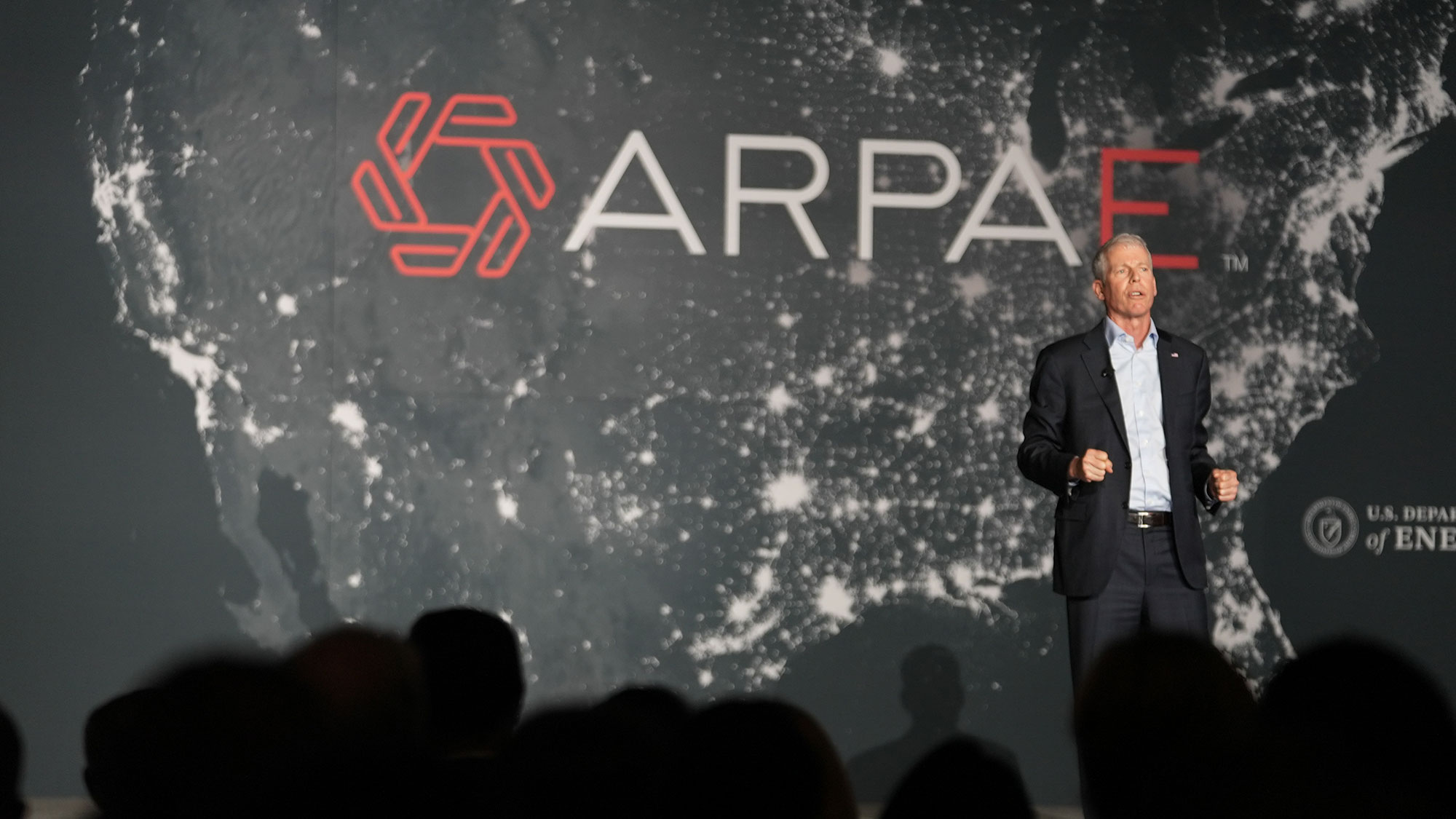
The United States has never been one of the most ambitious countries when it comes to tackling climate change, but it has long maintained a program that funds innovative clean energy technology. This program is known as the Advanced Research Projects Agency–Energy, or ARPA-E, and over the past 15 years it has doled out more than $4 billion to universities and startups that are trying to change the way we produce energy.
It’s very hard to raise money for this kind of moonshot technology, which can take years or even decades to scale up large enough to generate a profit. A huge number of emergent technologies never attract the funding to cross this “valley of death” between experiment and big business. The purpose of the Department of Energy’s ARPA-E, which was modeled on a similar program run by the U.S. military, was to help energy inventors span this gap and develop the climate technologies of the future.
A landmark report from the National Academies of Science, requested by Congress and released last week, has found that this high-risk, high-reward program is working: ARPA-E’s $4 billion investment has led to more than $20 billion in additional funding and more than 1,400 patents. Projects that received ARPA-E money were much more likely to get patents and additional investment than projects that were denied. The report also found that around 40 percent of ARPA-E grants led to a “crowding in” effect: After a startup proves that a new technology is feasible, other companies jump in and try to replicate it.