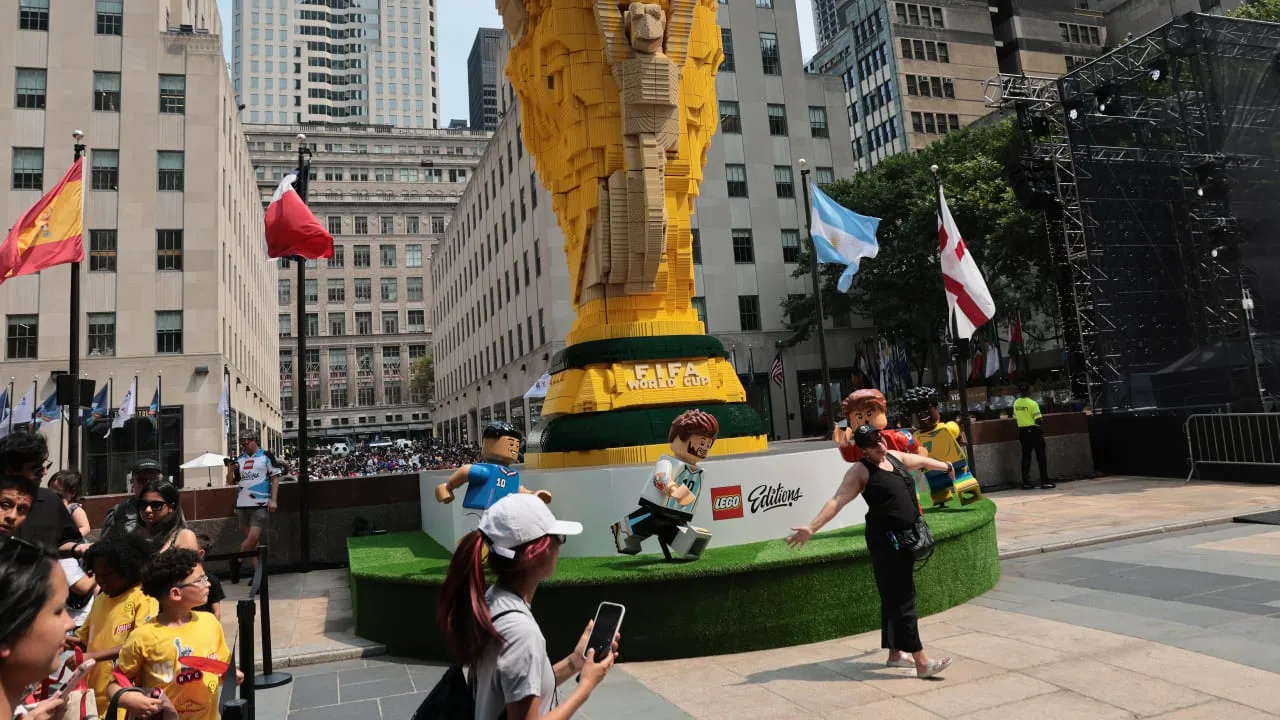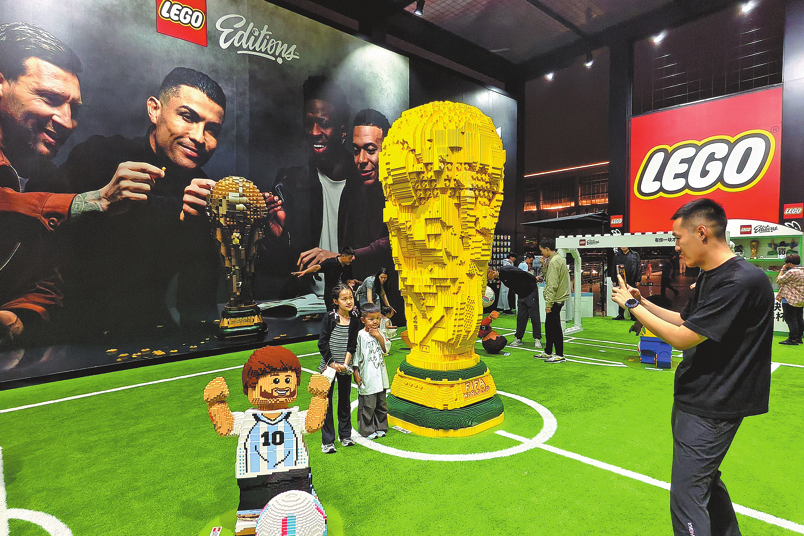
BILLUND, Denmark – Lego is ruling out handing over the design of its iconic building sets to artificial intelligence, betting instead on human creativity to extend a run of record revenue and market-share gains.The stance puts a limit on how far the Danish toymaker is willing to take AI as the technology spreads rapidly into creative work, with companies using it for everything from advertising and images to video and product concepts.Chief executive Niels Christiansen says Lego is still embracing AI in other parts of the business, particularly on administrative and standardised tasks.“You’re never going to have a product that’s only made by AI,” Christiansen said in an interview. “It will always be the designer who does the creative work.”AI can still play a role in the work surrounding the creative process.Christiansen pointed to the production of Lego’s building manuals, where some standardised tasks could be handled with AI tools, much as designers have adopted other technologies over the years.The aim, he said, is to make designers more productive and free up more of their time for creative work.For now, that human-led approach is delivering.Lego on Aug 25 reported record first-half sales and profits, with total revenue jumping 21 per cent to 41.9 billion kroner (S$8.3 billion), or more than triple that of rivals Hasbro and Mattel.The company continued to take market share even as consumers contend with wars, trade tensions and a more uncertain economic outlook, Christiansen said.“We’ve had a very strong first half” in the US, Asia and Europe, he said. “It’s not one single country. It’s very, very broad across a lot of markets.”However, China is the exception. Christiansen said consumers there remain more cautious, and Lego is not seeing the same pace of growth as in other markets after several weaker years.Still, the company is sticking with its expansion plans, continuing to open stores and invest behind the brand as it waits for demand to recover.“There are really, really a lot of children in China, and it’s a super interesting market,” Christiansen said. “There’s simply some uncertainty and a reluctance to spend in the Chinese market more broadly.”Elsewhere, Lego has kept finding new sources of growth by expanding into areas where it previously had a smaller presence.Football has been one of those, with the company introducing products tied to the World Cup and stars, including Lionel Messi and Cristiano Ronaldo. Christiansen cited the push into the sport as an example of Lego’s strategy of reaching new groups of consumers.Overall, the company introduced 332 new sets in the first half of 2026, according to its earnings statement.“The machine is running pretty well, and we have a pretty good handle on things,” Christiansen said. “But there are no guarantees.” BLOOMBERG
Lego CEO rules out AI-designed toys
Lego rejects AI-designed toys, focusing on human creativity while embracing AI for administrative tasks amid record sales and global market growth. Read more at straitstimes.com. Read more at straitstimes.com.
452 words~2 min read