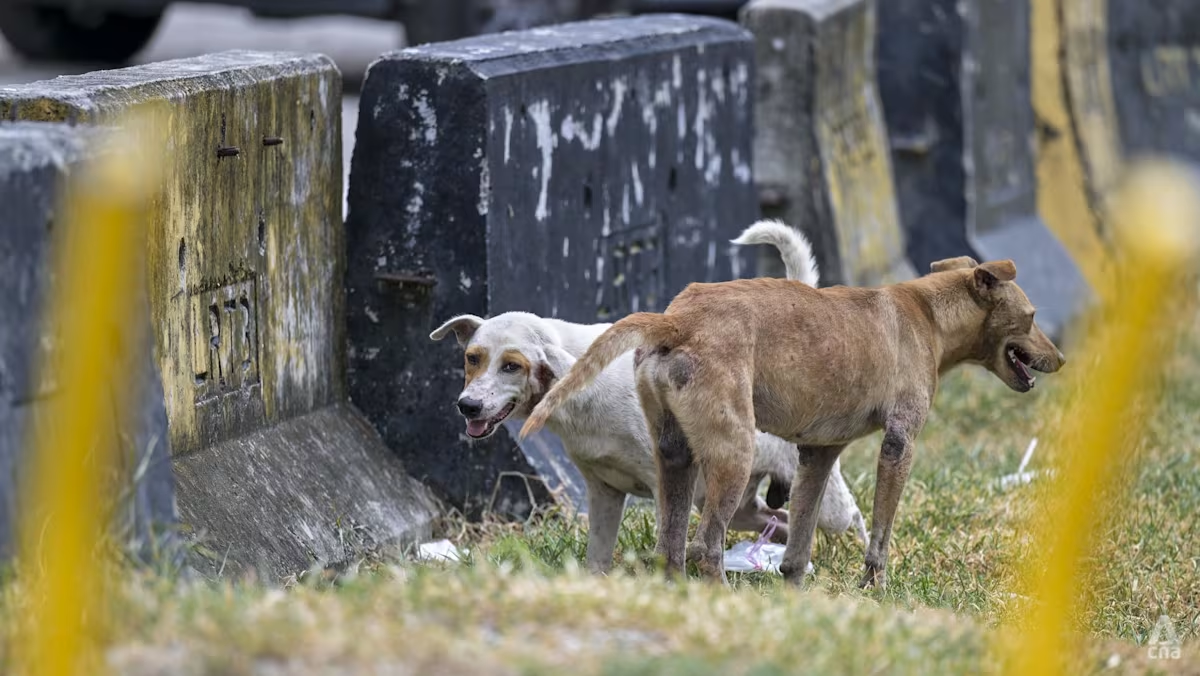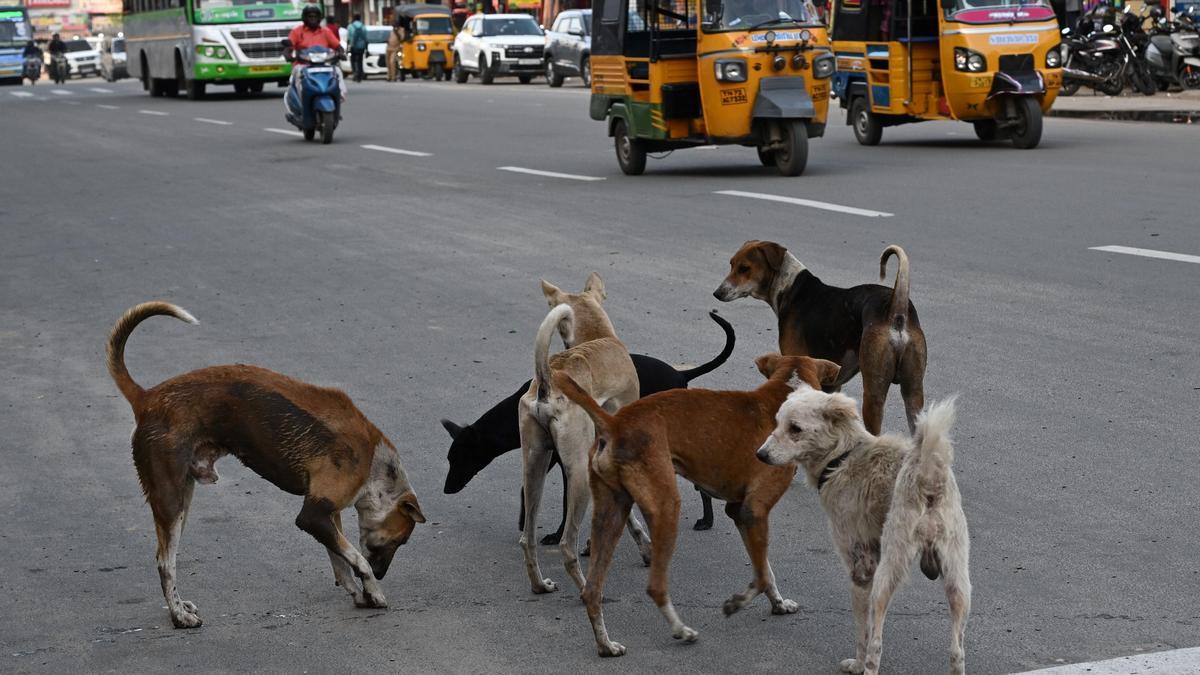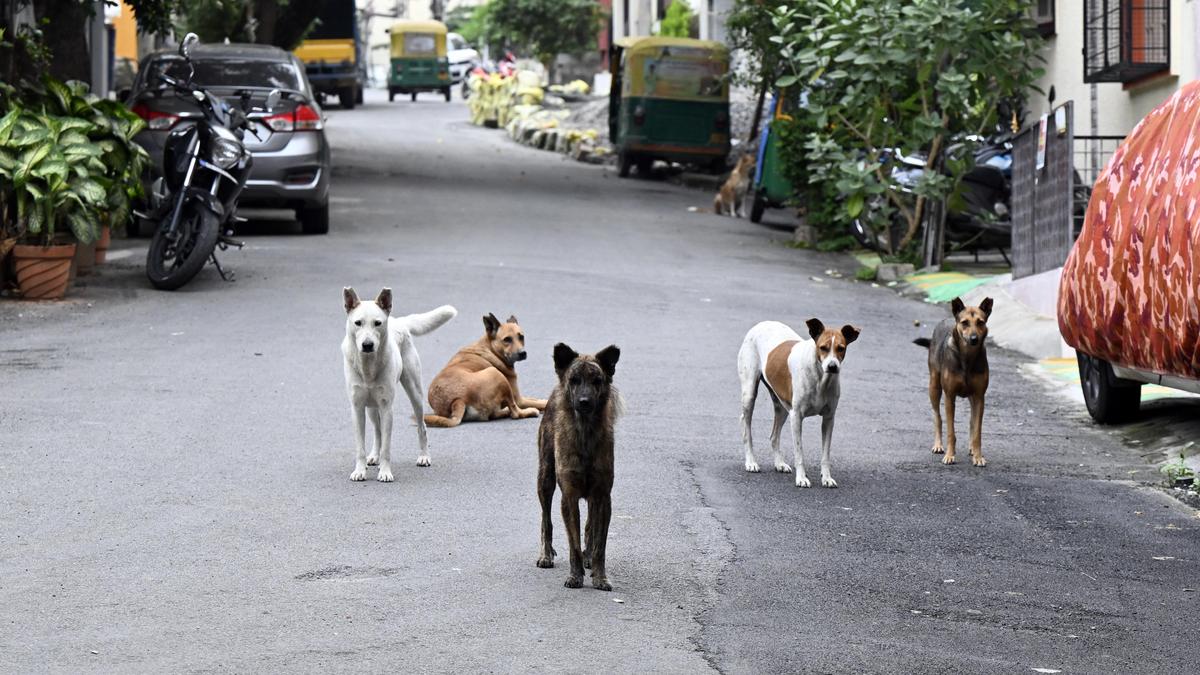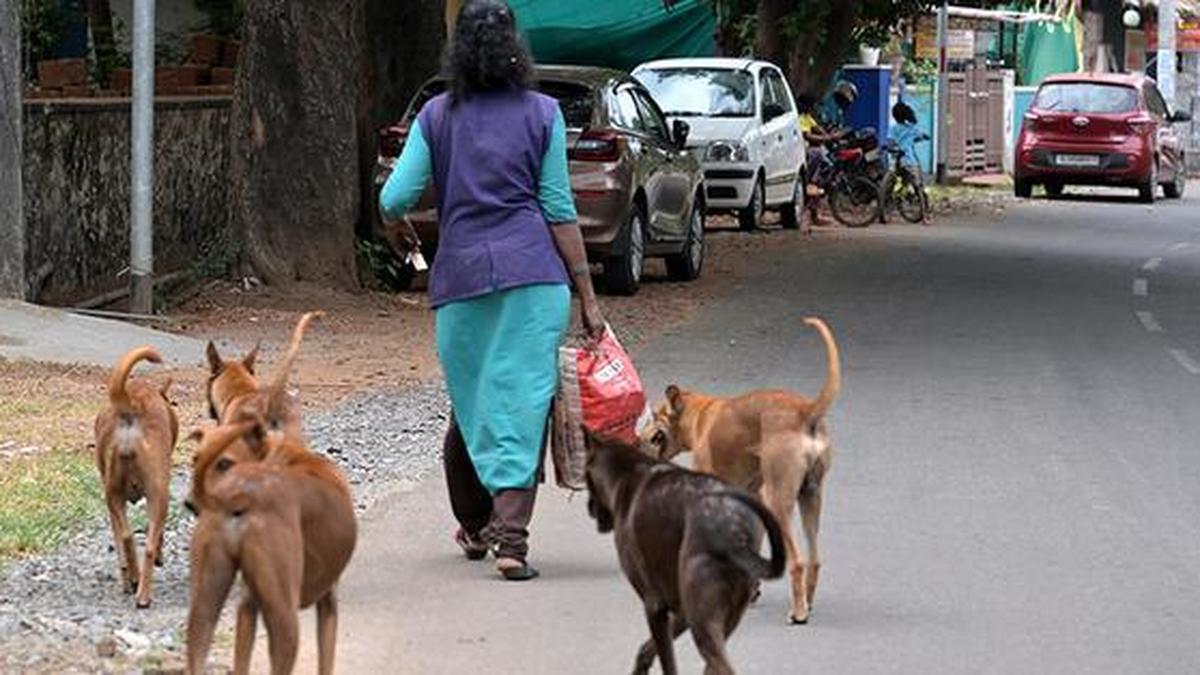
Street dogs troubling a pedestrian at Akathethara in Palakkad on Monday, May 11, 2026. The growing stray dog population continues to pose a threat to commuters and residents on several roads across the district, with frequent complaints being raised about attacks and nuisance caused by roaming packs.
| Photo Credit: K.K. Mustafah
The story so far: The Keralam government on Saturday (August 22, 2026) approved standard operating procedures (SOP) for the euthanasia of rabid, incurably ill or demonstrably dangerous stray dogs, following a Supreme Court order in May this year allowing euthanasia in such cases.Following an alarming increase in stray dog bite cases and deaths due to rabies, the State government in July 2025 allowed local bodies to carry out euthanasia of diseased or dangerous stray dogs by making use of the provisions of the Prevention of Cruelty to Animals (Animal Husbandry Practices and Procedures) Rules, 2023. However, the Kerala High Court soon deferred the implementation of the order. Since then, there have been occasional demands from various quarters for decisive action to control stray dog bites, while animal rights activists have argued against drastic action such as euthanasia.What led to the framing of the SOP?In 2025, Keralam reported a total of 3.69 lakh dog bites, compared with 3.17 lakh dog bites in 2024. A total of 33 people succumbed to rabies in the State in 2025, while the number of rabies-related deaths in 2024 was 26. Though the Animal Birth Control (ABC) programme is being carried out across most local bodies in the State, the pace of sterilisation of stray dogs has not kept up with the increase in their population. For instance, the Thiruvananthapuram Corporation sterilises an average of 1,200 stray dogs annually, while the ideal number required is 4,000-5,000 sterilisations to control the rising stray dog population.What did the Supreme Court say?The SOP, now approved, relies on the Supreme Court’s order of May 19, 2026, allowing euthanasia in cases involving rabid, incurably ill or demonstrably dangerous stray dogs. The Supreme Court, while underscoring that when the safety and lives of human beings are weighed against the interests and welfare of sentient beings, the “constitutional balance” must necessarily tilt in favour of the preservation of human life, also permitted municipal authorities to adopt legally permissible measures, including euthanasia in cases involving “rabid, incurably ill or demonstrably dangerous or aggressive dogs”.As per the relevant portions of the Supreme Court judgment quoted in the SOP, “In areas where the population of stray dogs has assumed alarming proportions and where incidents of dog bites or aggressive attacks have become frequent and pose a continuing threat to public safety, the authorities concerned may, subject to due assessment by qualified veterinary experts and strictly in accordance with the provisions of the Prevention of Cruelty to Animals Act, 1960, the Animal Birth Control Rules, 2023 and other applicable statutory protocols, take such measures as may be legally permissible, including euthanasia, in cases involving rabid, incurably ill or demonstrably aggressive dogs, so as to effectively curb the threat posed to human life and safety.”How will euthanasia be carried out? What are the safeguards?A stray dog management committee, which will be formed in every local body, will bear the responsibility of deciding whether euthanasia has to be carried out in a particular case. The stray dog management committee, which will have the local body chairperson as its head and the secretary as the convener, will include the respective ward councillor, veterinary officer and medical officer of the local body, Animal Birth Control (ABC) centre project-in-charge officer and a representative of the Animal Welfare Board.The procedure for euthanasia should be carried out by a qualified veterinary surgeon. Only sodium pentobarbital or thiopental sodium should be administered intravenously. Other chemicals or methods that could cause pain should not be used. All local bodies will have to maintain a separate register to record cases of euthanasia of stray dogs. The register will have information about each such dog, including the area from which it was caught, photographs and the exact reasons for deciding on euthanasia.The dogs caught for euthanasia have to be kept for two to three days in the local body’s isolation kennels or an ABC centre. During this period, approved agencies or animal lovers who are willing to take care of the dog can claim responsibility for it. The euthanasia should not be carried out in the presence of other dogs.The SOP cites the apex court ruling regarding legal protection for the officers carrying out the procedure. As per the ruling, the officials are “entitled to due protection for acts performed by them in good faith and in bona fide discharge of their official duties and compliances carried out pursuant to the present order and the earlier orders passed by the Court. Accordingly, no First Information Report, criminal complaint or coercive proceedings should be initiated against such officials”. Published - August 25, 2026 01:22 pm IST