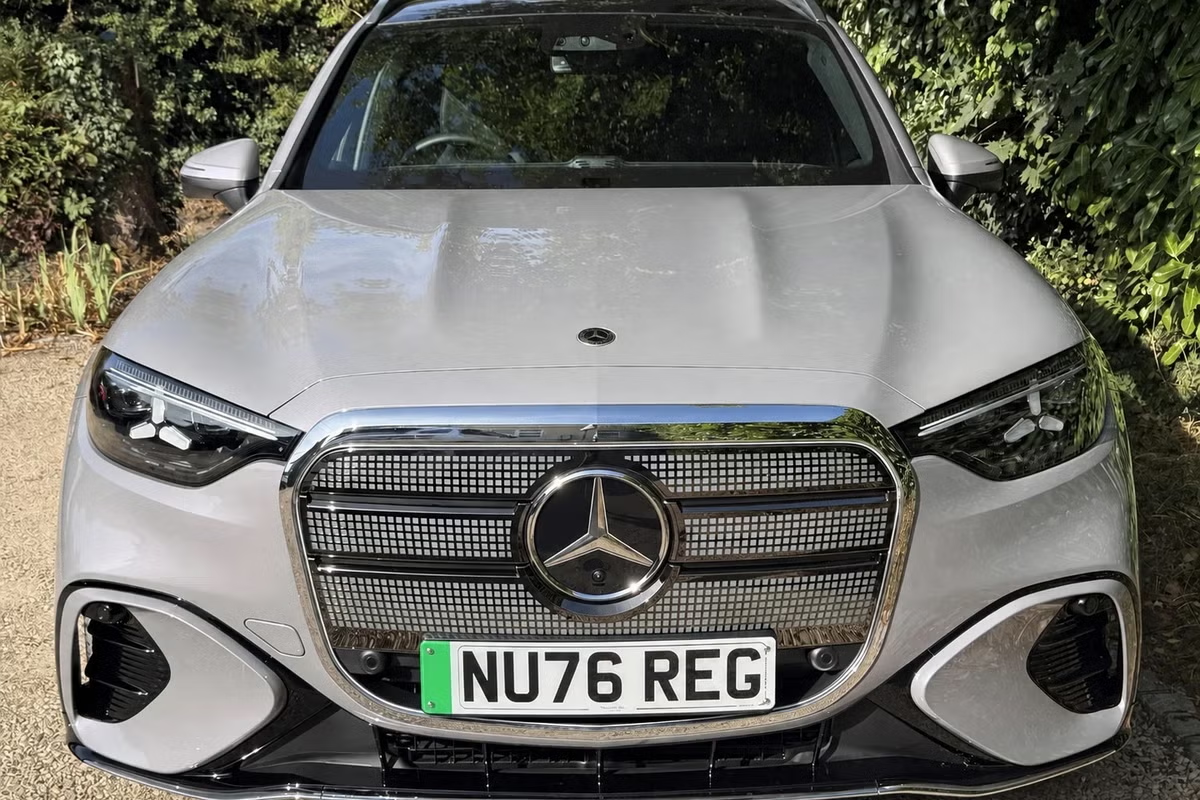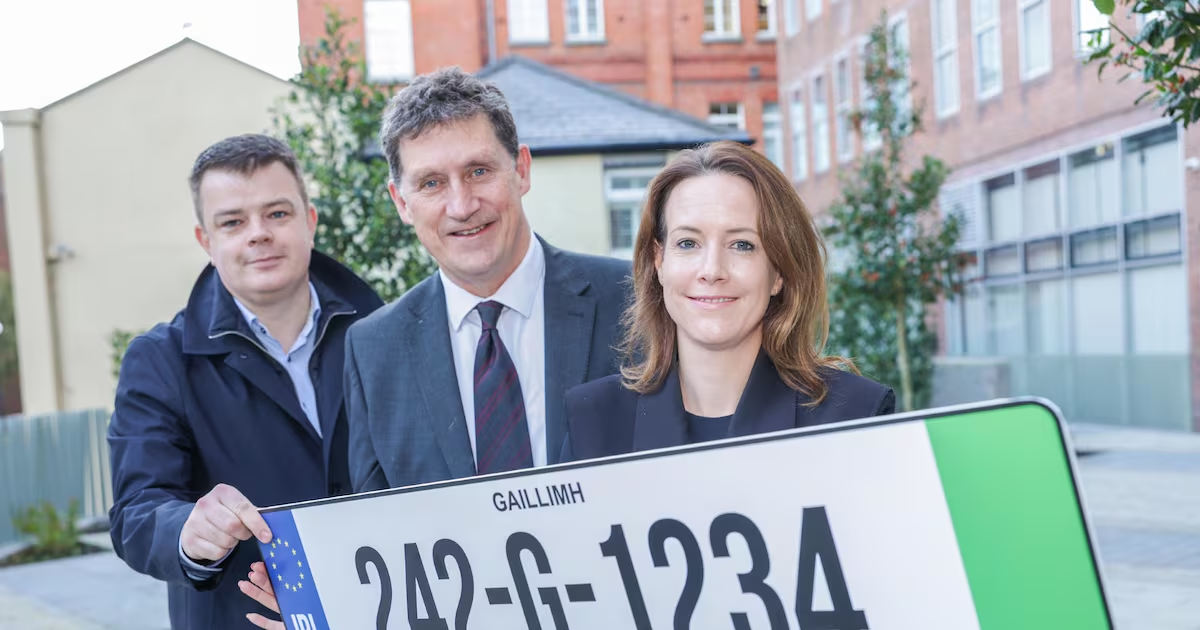
When my children were younger and in the back of our car, they played a game spotting different-coloured car licence plates. Shouting out black reg, yellow reg or red reg, the rarer the colour the better, to get one over on a sibling who hadn’t seen it first. Those coloured plates are less common today, but I now find myself scanning other cars in a similar way, looking out for a small green flash on the licence plate telling me it’s an electric vehicle (EV). The concept was already well established in the UK and China when it was introduced here a year ago. We started on a voluntary basis because the Revenue Commissioners did not want to pass the primary legislation that would have been needed to make it mandatory. A year on, it would seem that some dealers are better than others when it comes to encouraging customers to go for this green mark. I’m particularly surprised when I see so many new Volkswagen electric cars without one, given that company’s recent history in undermining vehicle emissions standards.The great thing is, however, that the vast majority of new owners do seem to be taking it up. The green band is so small you’d hardly see it at first – but once spotted, you don’t forget it. They are popping up everywhere as electric vehicles have become the most popular type of car to buy. Most people of course probably don’t even notice the change, and others I am sure hate the whole thing, no doubt describing it as just virtue signalling, which is in many ways true because that band of green is designed to send out two important signals. The prize is not just reducing our greenhouse gas emissions but also lessening our dependency on expensive and insecure imported fossil fuelsFirstly, you are not on your own when it comes to tackling climate change. Secondly, if you do want to play your part, then your next car purchase is going to have to be a fully electric one.The car industry is still spending a fortune on marketing messages to confuse that issue. They promote all sorts of eco labels, hybrid models and plug-in, halfway house solutions that are nowhere near as good as the real thing. The green band is designed to give some status to this better alternative, knowing one of the reasons why people pick a particular car is what they think it says about themselves. [ Demand for electric vehicle grants surges in wake of fuel price increasesOpens in new window ]It is not that the EV option is a hard sell. The best evidence for that is how few EV drivers revert to buying a new fossil-fuelled car, once they have made the switch. EVs are going to take over and become the dominant car type in a few short years because they are nicer to drive, cheaper, cleaner and quieter to run, easier to service and cooler than the polluting alternative. EVs also have a real advantage in Ireland, as our longest driving distances are still relatively short. The large number of rural and suburban homes with a driveway means 80 per cent of the charging can be done from home, which is cheaper, and last but not least our moderate climate makes it a good place for batteries to work in. We have the means to make the change. The number of public charging points doubled from 2022 to 2025, and while our grid companies have been slow in delivering other new public charging schemes, these are coming, and will help people get over any range anxiety. The passing of the Private Wires Bill in the Oireachtas – when that happens – should also help those who don’t have a home charge point and will need to plug in on the street. The prize is not just reducing our greenhouse gas emissions but also lessening our dependency on expensive and insecure imported fossil fuels. If we get the infrastructure and regulations right, we will end up with a large fleet of batteries that can draw down power when it is cheap and feed back to the grid when things are tight, lowering the cost of electricity for everyone. [ ‘I put €50-€70 in petrol in my car every week. How much would going electric save?’Opens in new window ]The vehicles can also come to the rescue in a power cut with the introduction of a simple switch, and are the ideal solution for rural Ireland, where the average mileage and cost of motoring is so high. That is why 65 per cent of the recent scrappage scheme was set aside for customers outside the big cities, and why that allocation was taken up in seconds. There are so many good reasons for making the switch, but I think the main one still goes back to the inner mind of that parent who is driving their child somewhere and listening to what they might have to say. What will the answer be when you hear something simple and obvious like: “Mummy? Daddy? Why are we driving a vehicle that is killing our planet and threatening my future, when the better alternative is already so obviously here?”
What will you say when a child asks: ‘Why are we driving a vehicle that is killing our planet?’
The car industry is still promoting all sorts of ‘eco’ labels, hybrid models and plug-ins which are nowhere near as good as electric vehicles
874 words~4 min read