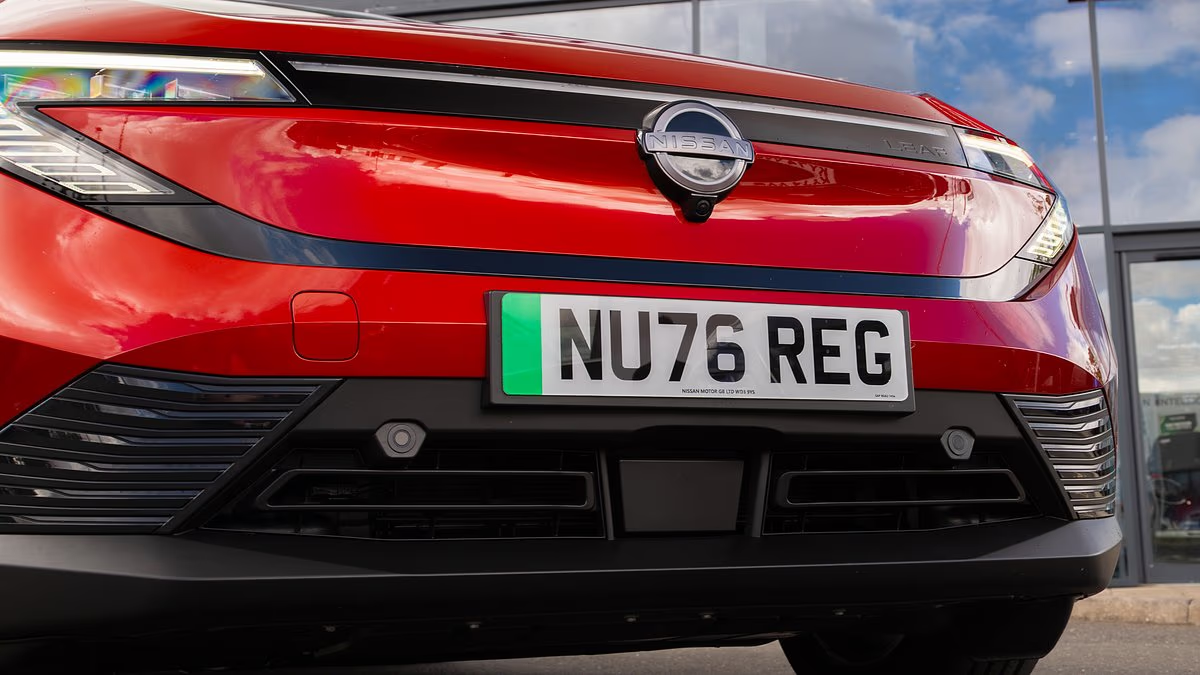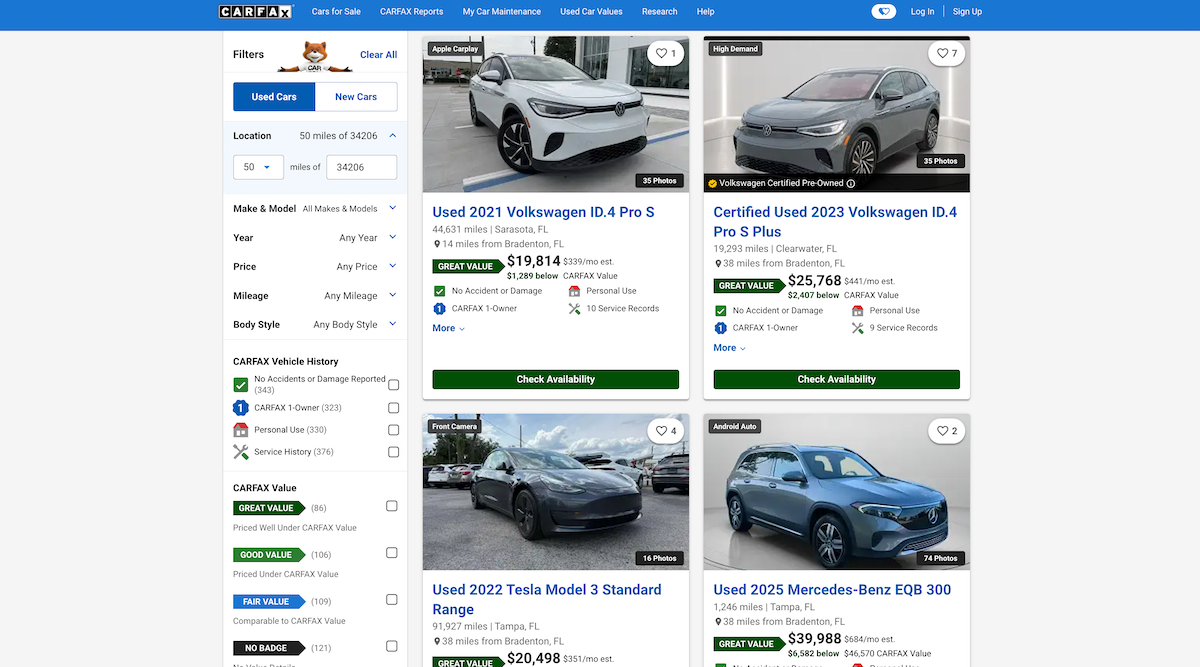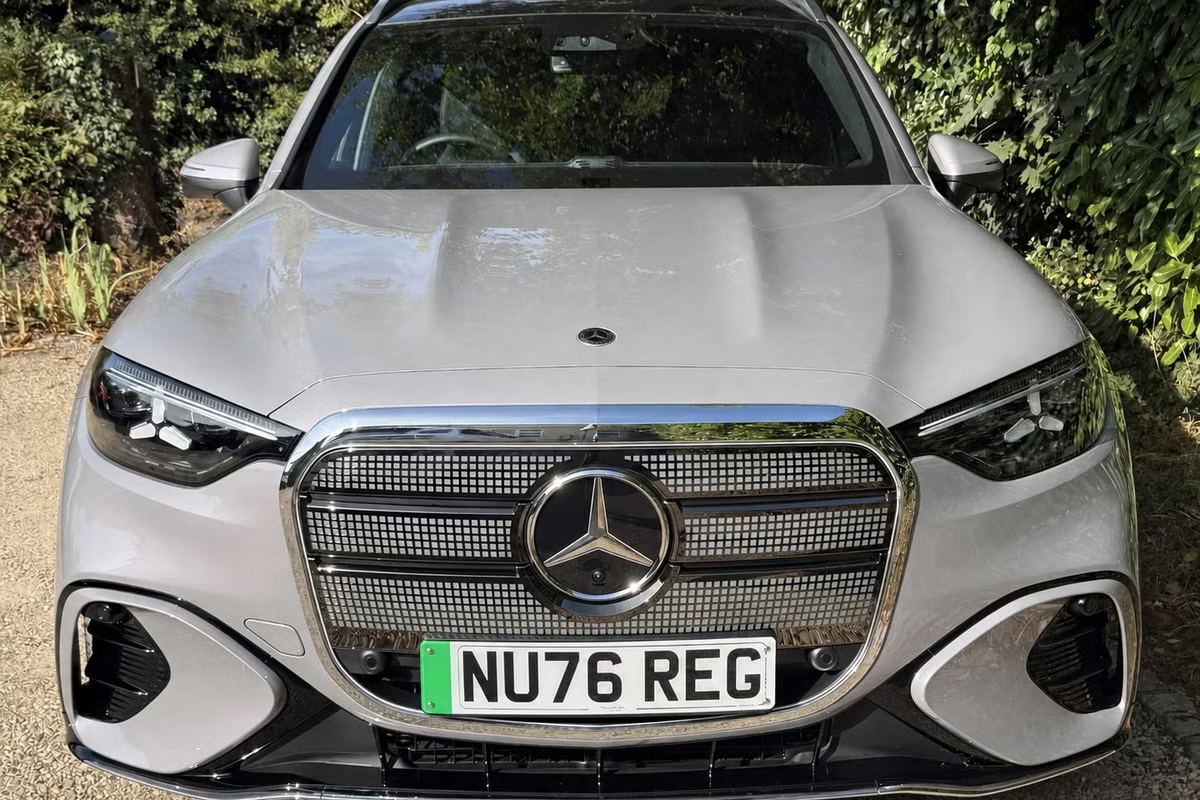
The new 76 registration plate arrives tomorrow and, although I’m not sure a new number plate has quite the pull it once did, I’ll still notice the first one I see. When I was a lad and plate change day was once a year on August 1, I’d compile a written list of the number of new-reg cars I’d seen that day and compare year-on-year. Yes, I was that kid! Even when we moved to the twice-yearly plate change every September and March it was a really big deal in the car world, with buyers waiting for the magic date so everybody knew their shiny new car really was brand new. I suspect rather fewer people care these days (do you? Let me know!), but September is still one of those months that makes plenty of us wonder whether now might be the time to change cars. If it’s an electric car you’re considering, though, I’d add another question before you start looking at all those tempting 76-plate offers: do you actually need a brand-new EV?Sign up for Steve Fowler’s DriveSmart newsletter hereThere are some very good reasons why the answer might be yes. The pace of change in electric cars is still incredibly fast and cars arriving now are generally going further on a charge, charging more quickly and, in many cases, costing less than the models they replace. We’re seeing better software, smarter route planning and improved efficiency, while thankfully some car makers are also beginning to realise that putting absolutely everything on a touchscreen wasn’t necessarily progress. Buy new and you get the reassurance of a full warranty, a battery you know has had no previous life, the latest safety systems and, of course, the chance to choose exactly the colour and specification you want. If you’re planning to keep the car for a long time, that can make plenty of sense, while if you simply like having the latest technology, I completely understand the appeal. Electric cars are still developing quickly enough that there can be a noticeable difference between one launched three years ago and one arriving today. But there’s another side to this, because some of the best-value cars you can buy right now are used EVs. That’s largely because the first owner (increasingly often a leasing company or the car maker itself) may already have swallowed the bit that hurts – the depreciation. The combination of falling new-car prices, manufacturer discounts, increasing numbers of company cars coming back onto the market and rapidly improving technology has been pretty savage on the values of some electric cars. That hasn’t been much fun for people who bought them new, but for the person coming along two or three years later it can mean getting an awful lot of car for the money.And buyers certainly seem to have noticed. The latest figures from the Society of Motor Manufacturers and Traders show that 110,761 used electric cars changed hands between April and June this year, an increase of 67 per cent compared with the same period last year. EVs accounted for a record 5.5 per cent of used-car transactions, which is still a relatively small slice of the overall used market but shows that more people are becoming comfortable with the idea of buying an electric car that somebody else has owned first.Does a new registration on new-reg day have the allure it once did? And should you buy new or used? (Steve Fowler)There are even signs that the great used-EV price slide may be starting to ease. Auto Trader says like-for-like used EV asking prices were up 3.3 per cent year-on-year in July, obviously partly due to the increase in demand.That doesn’t mean every used EV is suddenly shooting up in value – there are still some eye-watering depreciation figures out there – but it does suggest buyers are beginning to spot the bargains. And if more people start chasing the best used EVs, those bargains may not stay quite as spectacular forever. The big worry I still hear, of course, is the battery. Mention buying a three-year-old petrol car and nobody immediately assumes the engine is going to need replacing next year. Yet mention a three-year-old EV and plenty of people still seem to imagine that its battery is quietly counting down towards an enormous bill.Battery health is something you should check, of course, but it isn’t a reason to be frightened of a used electric car. Batteries do lose some capacity as they age, just as the battery in your phone does, but generally not at anything like the rate some people fear. Recent research involving more than 22,000 electric cars found average battery degradation of just over two per cent a year, which gives a pretty good indication that an EV battery doesn’t suddenly become useless when the car reaches its third or fourth birthday.I’d still want to know the battery’s state of health before buying, especially on an older or higher-mileage car, and increasingly that can be established with a proper battery-health test. I’d like to see that become as normal a part of buying a used EV as checking the service history or looking at the condition of the tyres. I’d also check how much of the original battery warranty remains, make sure any software updates and recalls have been carried out, check that the charging cables are all present and use the test drive to make sure the car’s indicated range and energy use look sensible. None of that is particularly scary or complicated; it’s just the EV equivalent of the checks we’ve always made when buying a used petrol or diesel car.It’s also worth remembering that not all older EVs are equal. Some early electric cars had fairly modest ranges to begin with and slow charging speeds by today’s standards – a temptingly low price doesn’t suddenly make a used EV suitable for somebody who regularly drives 300 miles in a day.If most of your driving is local, you can charge at home and you only make the occasional longer journey, an older EV with a real-world range of 150 or 200 miles could be all the car you need. In that case, spending thousands more to get another 100 miles of range you’ll rarely use doesn’t make much sense.Equally, don’t assume used automatically means old technology. Plenty of two- and three-year-old EVs already have useful long-distance ranges, decent rapid charging, excellent infotainment and most of the driver-assistance kit you’ll find on a brand-new car. Some were very expensive when new, too, which means their depreciation can suddenly put a properly luxurious and very well-equipped car within reach of someone shopping on a much smaller budget.It may also be the case that a used car is actually better than when new, thanks to software-over-the-air updates that might have added new features or even improved the car’s efficiency. So, 76 plate or used? If you want the newest model, the latest battery and charging technology, the longest possible warranty and the ultimate peace of mind, I’d buy new. There’s a pleasure in being the first owner of a car, too, and I wouldn’t pretend otherwise – but I’d still make sure I got a great deal.I certainly wouldn’t be frightened of buying a used EV – quite the opposite. Do the same sensible checks you would with any used car, add a proper look at battery health, and there are some extraordinary bargains out there. You may lose the bragging rights of having a 76 on the number plate, but when the car sitting on your driveway cost many thousands less than it did a couple of years ago and still does everything you need it to do, I suspect you’ll get over that pretty quickly.Sign up for the DriveSmart newsletterTo get the latest motoring insights from EV editor Steve Fowler delivered straight to your inbox, simply enter your email address in the box at the top of this page.Each edition of DriveSmart offers clear, expert guidance on the fast-moving world of electric vehicles and modern motoring, from trusted reviews and practical tips to the biggest industry news of the week.You can also head to our newsletter preference centre to sign up for the email.
Should you buy a new 76-plate EV or a bargain used one?
In the latest DriveSmart newsletter, EV editor Steve Fowler weighs up new 76-plate EVs against the bargains now flooding the used market – and explains what to check before buying either
1,375 words~6 min read