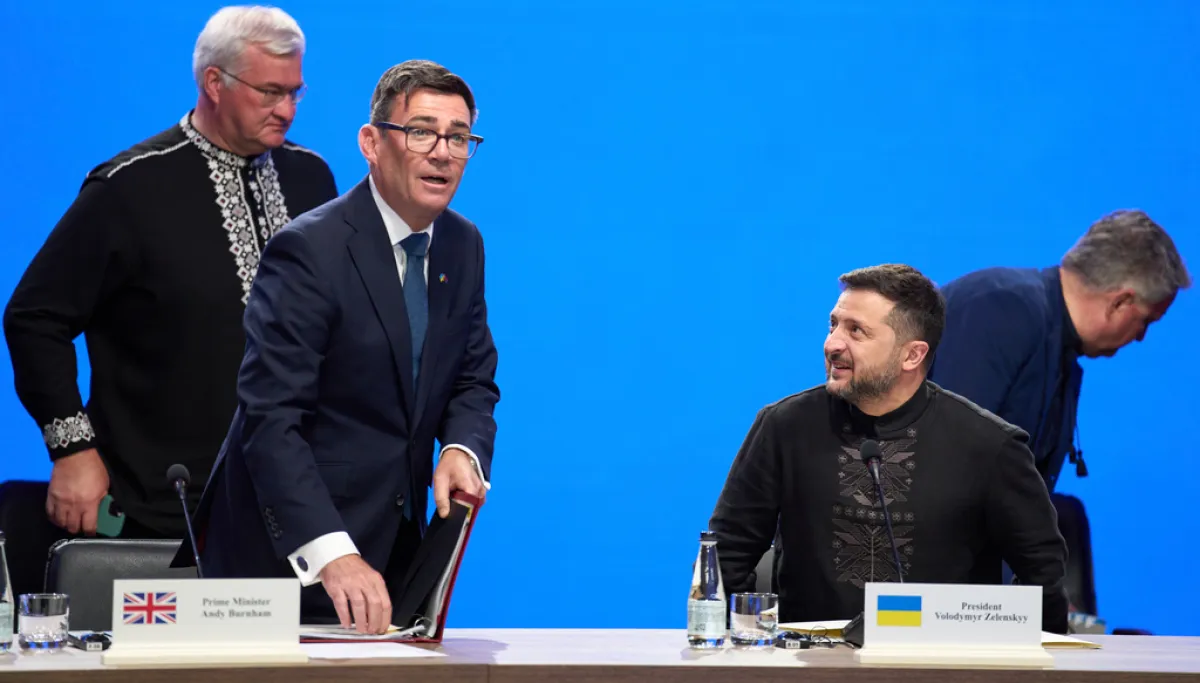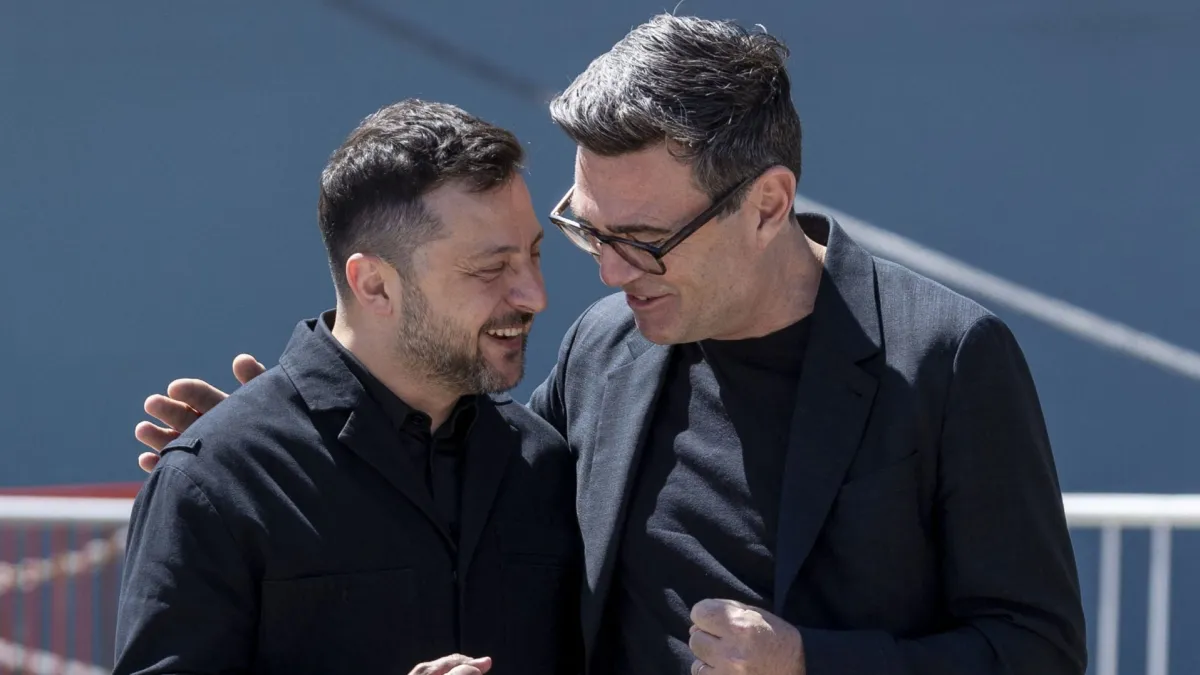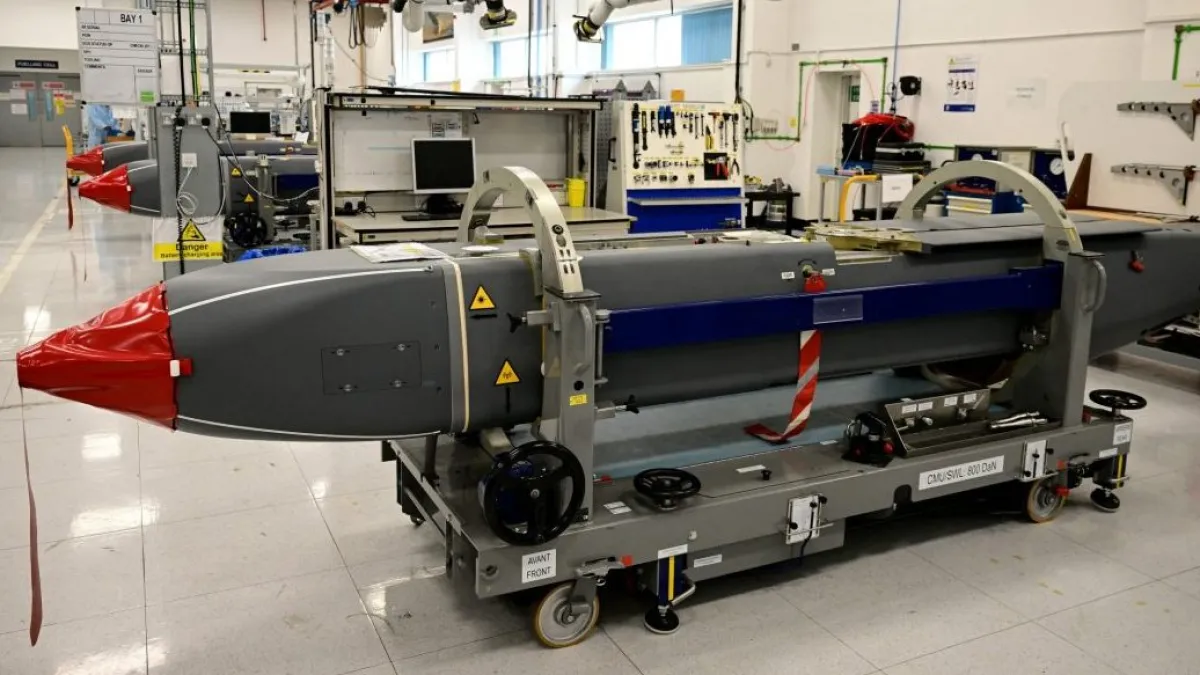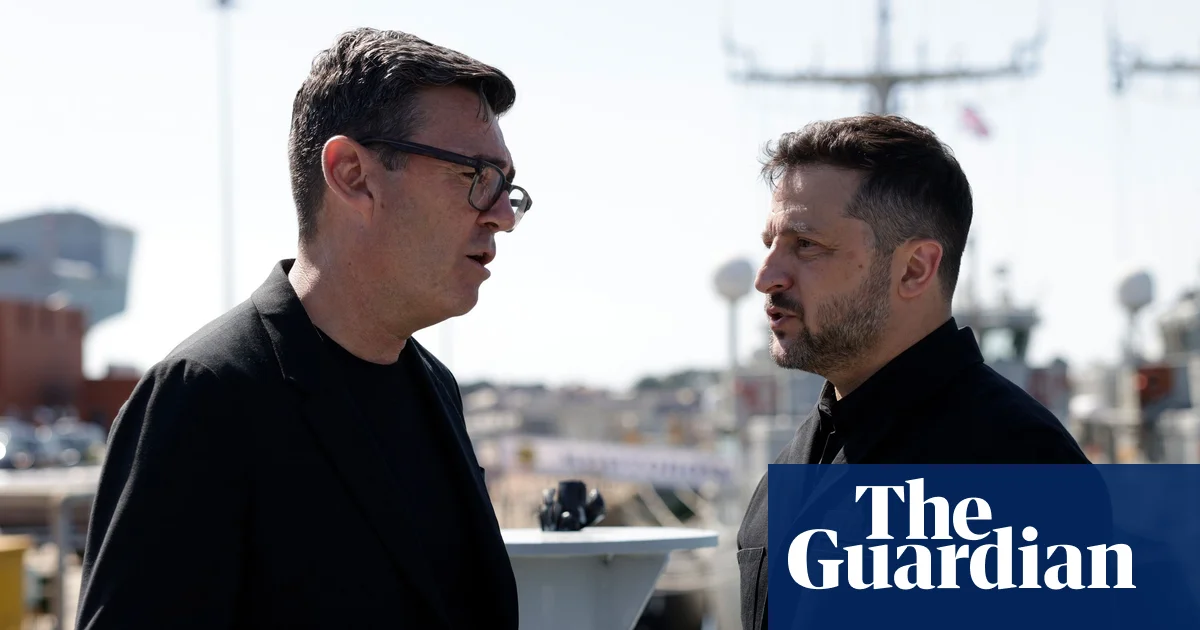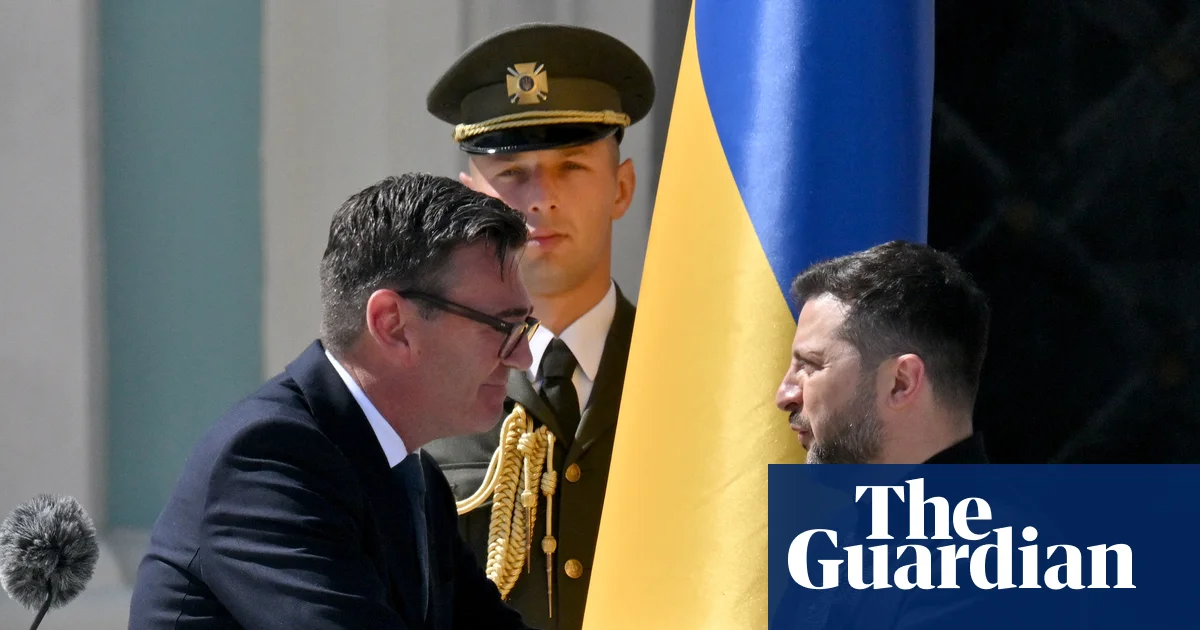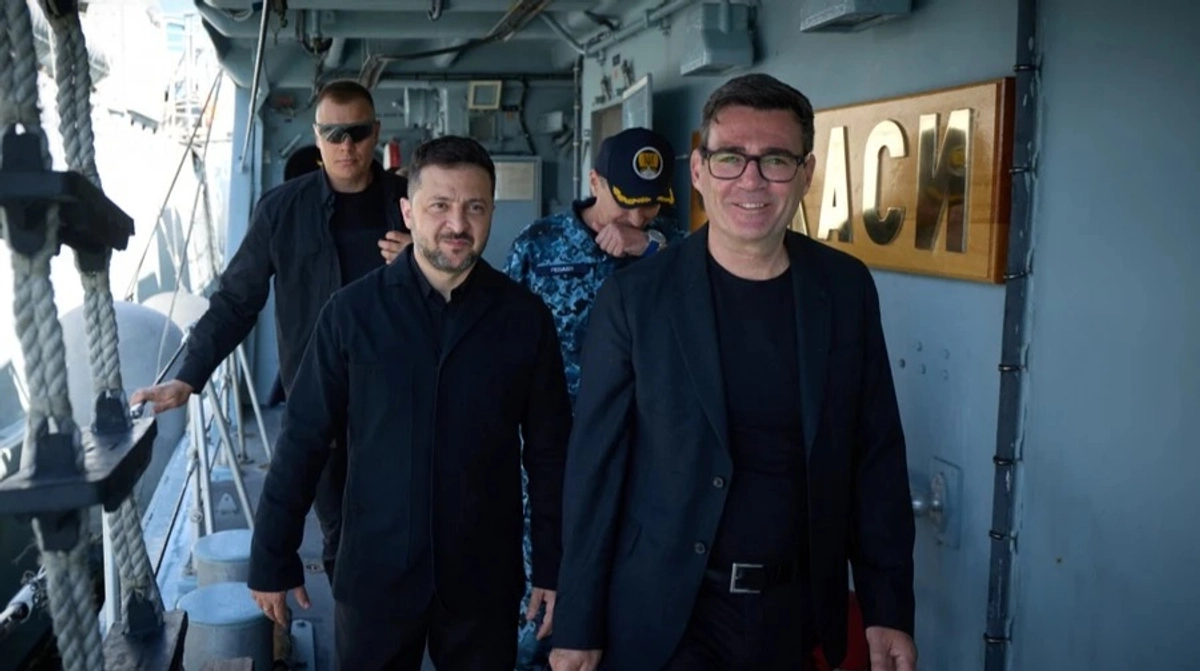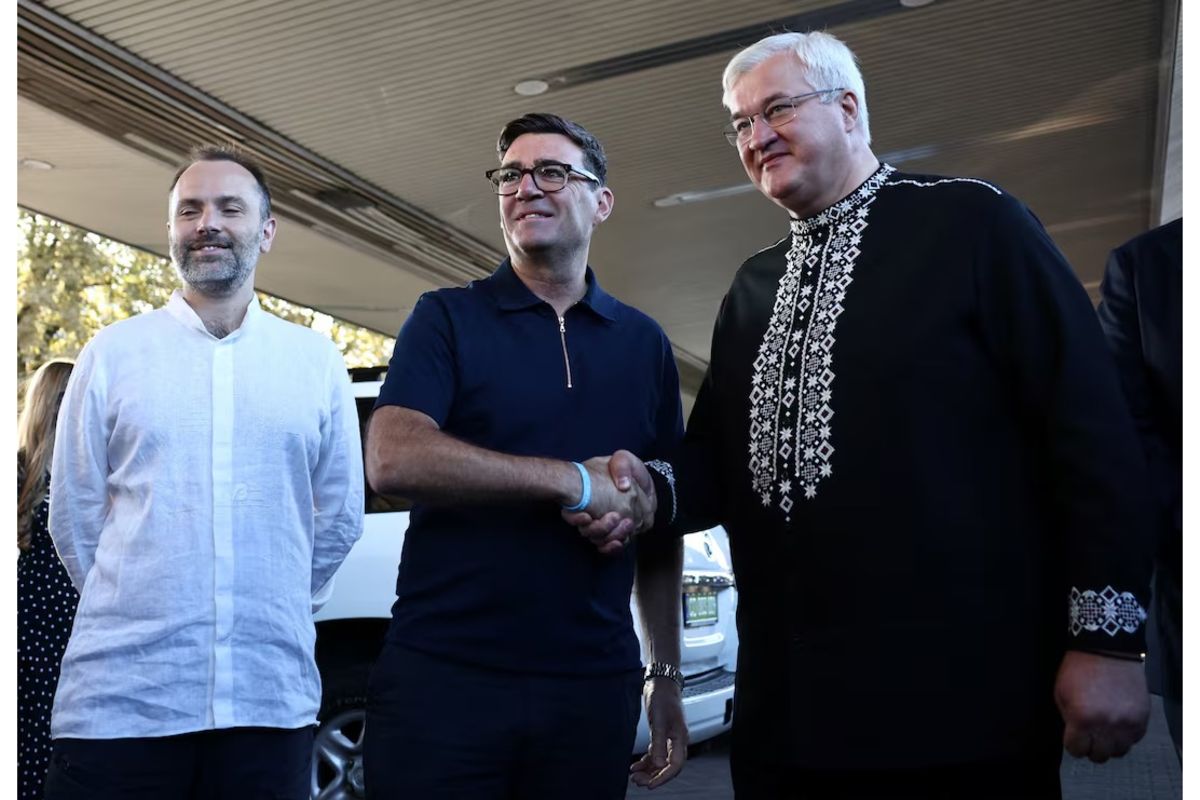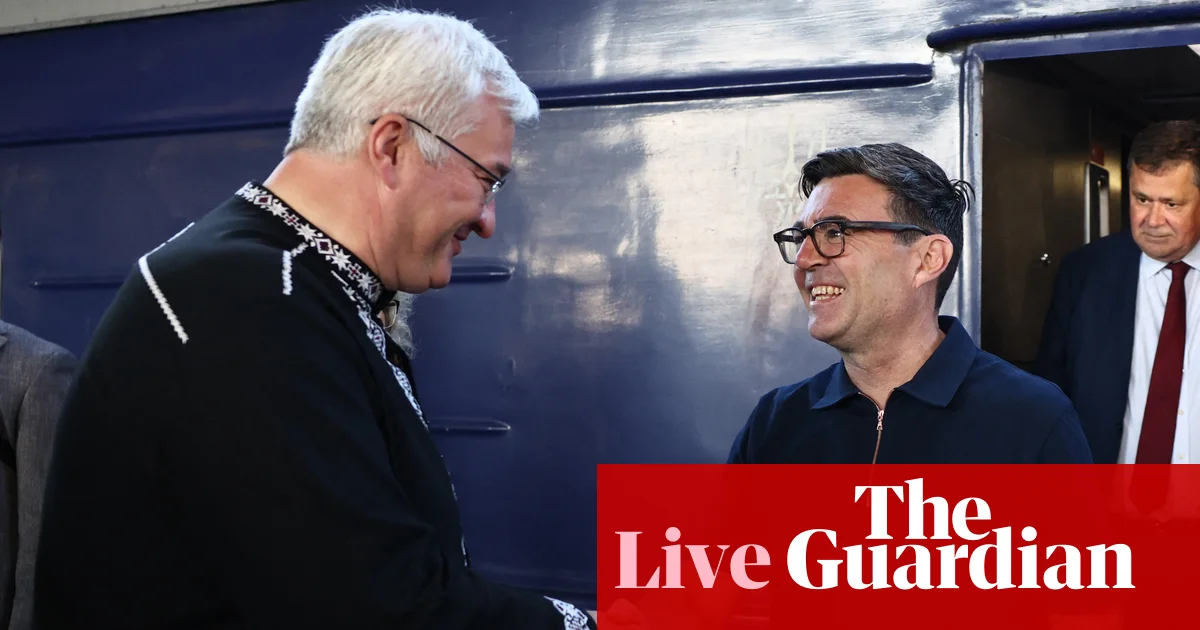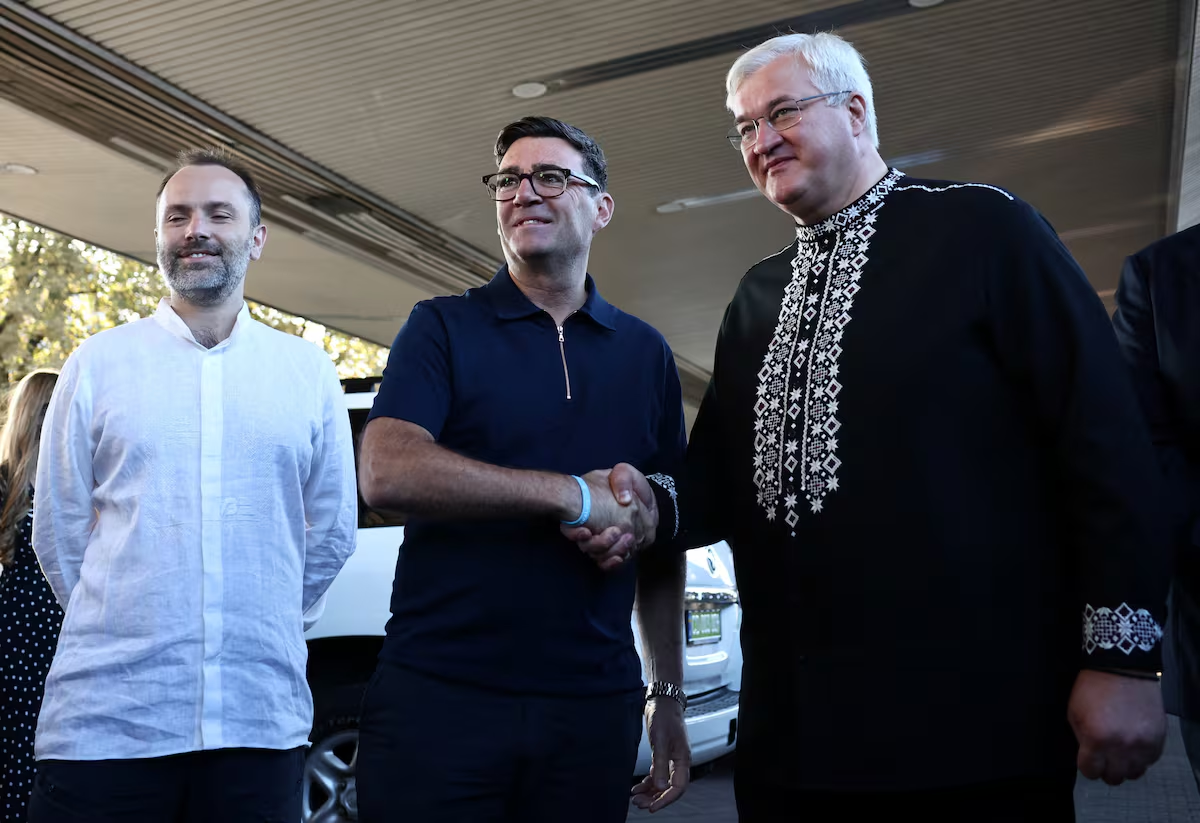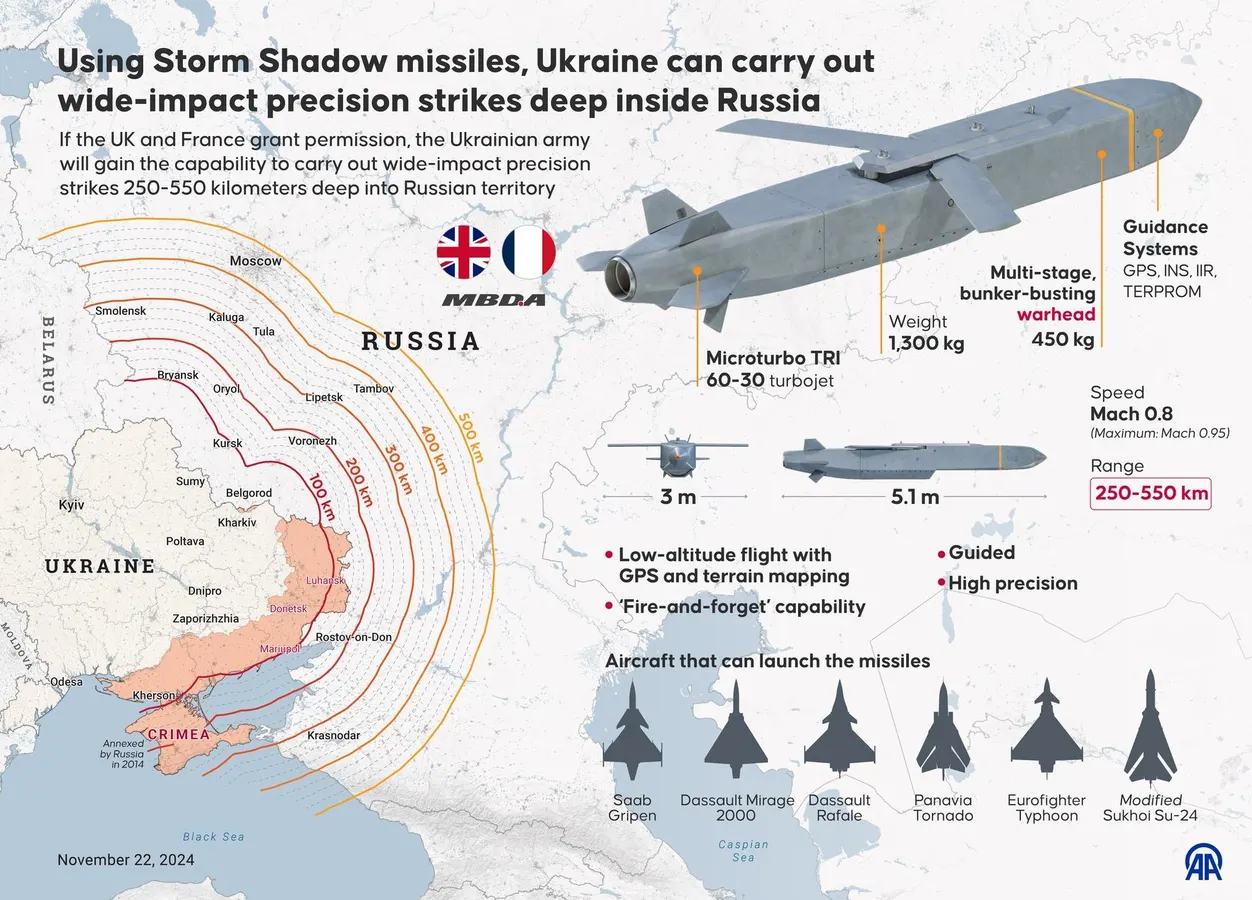
UK Prime Minister Andy Burnham touched down in Ukraine on its Independence Day hand-carrying blueprints for the embattled democracy to co-produce French-British Storm Shadow missiles, to launch precision strikes deep inside Russia. (Photo by Murat Usubali/Anadolu via Getty Images)Anadolu via Getty ImagesJust days after Russia threatened to retaliate against Britain for providing Kyiv with explosive drones, and despite the Kremlin’s rocket blitzes across Ukraine, UK Prime Minister Andy Burnham defied Moscow by hand-carrying blueprints to assemble long-range cruise missiles into the embattled democracy.Burnham touched down in Ukraine on its Independence Day, bringing plans for Kyiv to co-produce cutting-edge long-range Storm Shadow missiles, co-designed by the British and French.The new prime minister said in a press statement that Ukrainian and French defense tech experts would “establish local assembly lines in Ukraine” for the bunker-buster missile.Burnham’s widely heralded arrival in Ukraine came right after the Russian Embassy to the UK issued an ominous but amorphous threat to all of Britain. “Reports that the Kiev regime is using British drones to carry out strikes deep inside Russian territory confirm that London is deliberately opting for an escalation of the Ukraine crisis,” the Russian diplomats said in a message posted on Telegram.“The United Kingdom is acting as an accomplice and co-perpetrator of the bloody crimes and terrorist attacks committed by Ukrainian neo-Nazis, seeking to contain Russia and inflict maximum damage on it by proxy.”MORE FOR YOUThe Kremlin calls Ukraine’s democratic freedom fighters, and their popularly elected Jewish President Volodymyr Zelensky, “neo-Nazis,” even though it is Russia itself that has revived the war strategies and mass bombings of civilians, cathedrals and synagogues that the Third Reich spearheaded during its bombshell invasions across Europe. “London’s actions will inevitably carry consequences for which it will have to answer,” added Vladimir Putin’s envoys in London.“The deeper its involvement in the conflict and the greater its support for Kiev’s terrorist machinery, the higher the price it will pay.”As Russia steps up its aerial strikes on Ukraine, the embattled democracy could turn the tides by co-producing and launching squadrons of French-British Storm Shadow long range missiles. (Photo by Nicolas Economou/NurPhoto via Getty Images)NurPhoto via Getty ImagesPeter Dickinson, a leading scholar on the Ukraine clash, and the competing weapons technologies and war strategies and political systems of democratic Ukraine and autocratic Russia, told me in an interview that the new threat is part of Moscow’s long-running hybrid war against Ukraine’s backers across Europe.This shadow war, he says, has included the Kremlin’s sending a drone packed with explosives into an east German airport, near NATO and Ukrainian military aircraft, firing a cruise missile 90 kilometers into Polish territory, and plotting the assassination of an American inside Poland.American intelligence agencies, he told me, have even predicted that Russia could launch a limited armed attack on a NATO state sometime this year.All these acts of aggression, he says, are aimed at splintering NATO without sparking a full-scale war with the alliance.“An escalation to more direct military aggression remains unlikely,” he predicts.Without a forceful Western response to Russia’s shadow war, he says Moscow is bound to continue pumping up its provocations against NATO.Prime Minister Burnham’s defiant summit with Zelensky, and his aid in helping Ukraine turn out fleets of Storm Shadow rockets that can hit targets deep inside Russia, underscore Britain’s “unwavering commitment to Ukraine,” Burnham said.“The UK is four-square behind Ukraine’s independence, and Russia's threats only strengthen the UK's resolve.”“We will not back down until there is a just and lasting peace.”"The friendship between our two countries,” he added, “will long outlast Russia’s illegal war.”The widely popular prime minister added he is pushing forward the British-French formation of a defense “Coalition of the Willing” “to secure Ukraine’s long-term security” and “committing £25 billion in funding, including £16 billion in military assistance and £5.6 billion in non-military support.” Peter Dickinson, a globally influential scholar at the Atlantic Council, one of the top defense and diplomacy think tanks in Washington, DC, told me that Moscow has aimed many of its hybrid war maneuvers at Britain, which is depicted across the Kremlin’s corridors of power as Public Enemy Number 1.“Russian hostility toward Britain and suspicion of Britain dates back to the imperial rivalry of the nineteenth century, when Russian expansion into Central Asia brought the tsarist empire closer and closer to the borders of British India.”“Throughout this era, Britain and Russia engaged in a complex competition for empire and influence involving military, diplomatic, and commercial elements that came to be known in British history as ‘The Great Game’.” This, he adds, “is the foundation of modern Russia’s deep distrust and demonization of Britain, which is often depicted in Kremlin propaganda as the scheming mastermind behind all of Russia’s misfortunes.”On the Ukrainian battlefront, he says, Russia “cannot possibly acknowledge being beaten militarily by the Ukrainians.” “It is therefore extremely useful from a Kremlin perspective to blame everything on the British and claim that Russia is actually at war with Britain and other Western powers.” “By pointing the finger at Britain and accusing London of orchestrating attacks inside Russia, Putin can distract from the embarrassing reality of Ukraine’s growing ability to bring the invasion home to Russia.” Moscow’s next moves to intensify its shadow war against the UK, he predicts, could extend to “more sabotage efforts targeting British infrastructure and sites associated with support for Ukraine, and more targeted killings.”President Putin, a onetime KGB mastermind of subterfuge, has a long history of sending state-organized squads of assassins into the UK to eliminate those deemed “enemies of the state.”The British parliament commissioned an extensive investigation into the world-watched demise of Alexander Litvinenko, a longstanding critic of Putin who was given asylum in the UK, and later died an excruciating death after being poisoned by two Russian agents with the radioactive element polonium.The British parliament ordered an in-depth investigation into the demise of a longstanding critic of Putin who was given asylum in the UK, and later died an excruciating death after being poisoned by two Russian agents with the radioactive element polonium. (Photo by London Stereoscopic Company/Hulton Archive/Getty Images)Getty ImagesThe British investigators, who were able to trace the radioactive substance all the way back through a Russian aircraft that carried the suspected assassins on a flight from Moscow to London, also found that the polonium was produced inside a Russian state-controlled nuclear reactor, and then administered to the target via a poisoned pot of tea.The British team of investigators reported that the Kremlin-orchestrated assassination was quite likely personally approved by President Putin.While top Kremlin commissars have led the world in terms of assassinating their enemies across Russia and around the world, at least since the communist revolution of 1917, Putin has surpassed all of his Soviet Russian predecessors in terms of dispatching teams of hitmen to take out pro-democracy activists and other political foes via exotic poisons, says Elena Grossfeld, a prominent expert on Russian intelligence operations at King’s College London who has written extensively on the topic.The most prominent critics of Putin are subject to death-by-super-poisons exclusively controlled inside the highest rings of power, including the president and his closest military and security lieutenants, she told me in an earlier interview.Using specialized state-perfected poisons, like the fissile polonium, sends out a powerful message that the Kremlin has hand-crafted this instrument of terror - a message that is clear to dissidents across Russia, and to government leaders around the world, she says.After the Kremlin sent another cabal of assassins into the UK to terminate former Russian intelligence agent Sergei Skripal with the banned Soviet-developed chemical weapon Novichok, Keir Starmer, then UK Prime Minister, stated that “President Putin himself authorized the operation to poison the Skripals with deadly nerve agent Novichok.” “This Novichok was developed and held by Russia in contravention of the Chemical Weapons Convention.”After expelling a group of Russian diplomats from the UK and imposing sanctions on the GRU, Russia’s military intelligence organization, Starmer, an Oxford-trained legal scholar, said: “The UK will always stand up to Putin’s brutal regime and call out his murderous machine for what it is.”“Today’s sanctions,” he added, “are the latest step in our unwavering defense of European security.”Scholar Peter Dickinson says that with its latest threats, Moscow aims to spread fear across the entire British populace.“It seems the main goal is to intimidate and influence British public opinion against continued support for Ukraine by indicating that this support will place British people in danger.” Russia, he adds, “is trying to signal that this could lead to painful costs.”Moscow is swiftly stepping up its hybrid war on Britain and other NATO Allies, he says.“The past few months have seen a sharp increase in the quantity of incidents, while Russia is also growing bolder.”“The pattern is clear and it is a pattern of escalation.” “Each new incident is a test,” he adds. “Russia is watching to see how NATO reacts.” NATO troops conduct an exercise in Estonia, one of the Baltic states that could be a target of Putin's hybrid warfare in the future. (Photo by Sergei Stepanov/NurPhoto via Getty Images)NurPhoto via Getty Images“This is bringing us closer to the moment when a misjudgment on either side could bring Europe to the brink of a military clash with Russia.”“Time will tell.”
Defying Russia, UK Leader Brings Missile-Making Plans To Ukraine
Defying Russian threats and intensifying airstrikes, UK Prime Minister Andy Burnham hand-carried blueprints to assemble long-range cruise missiles into embattled Ukraine.
1,535 words~7 min read