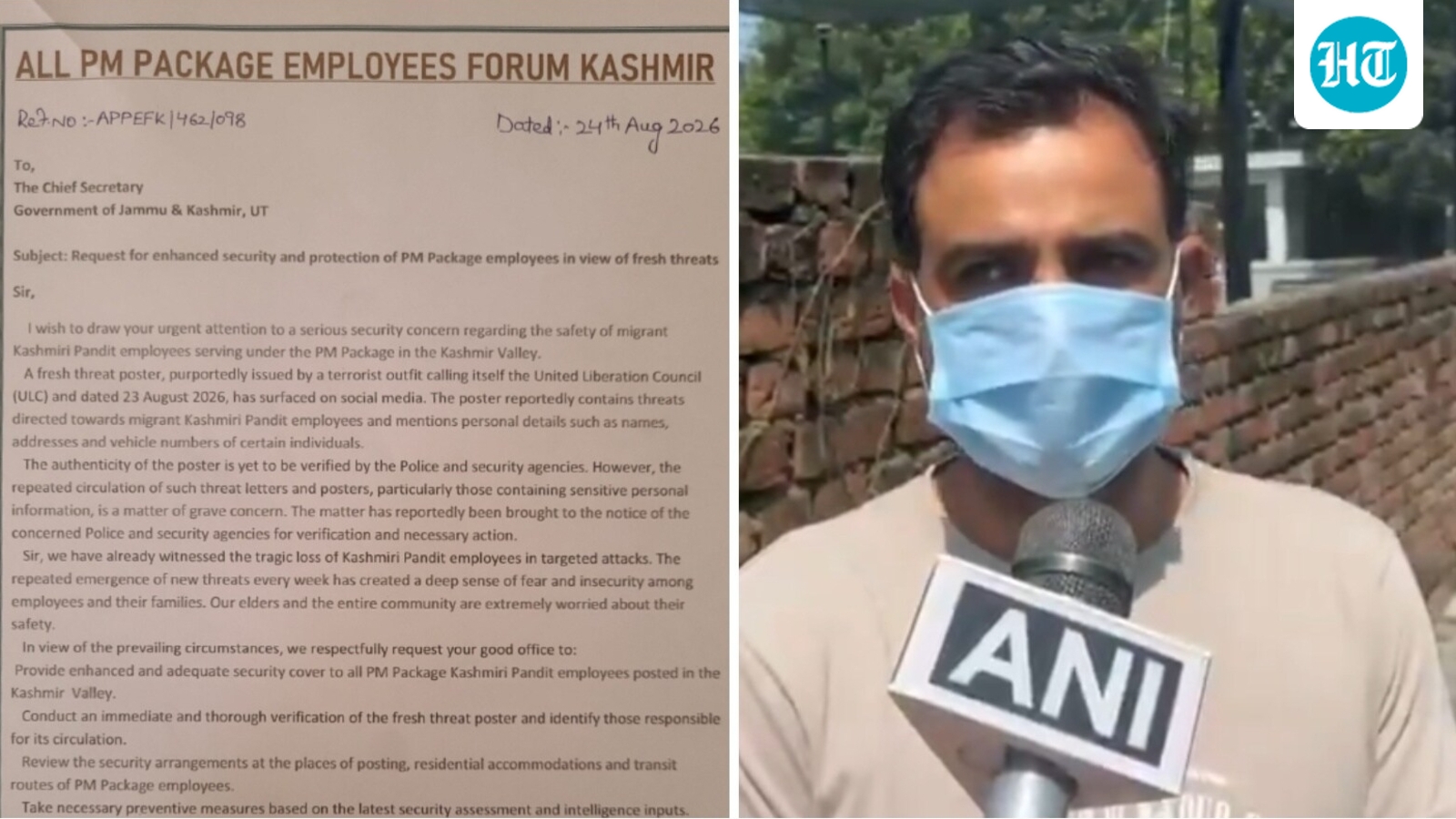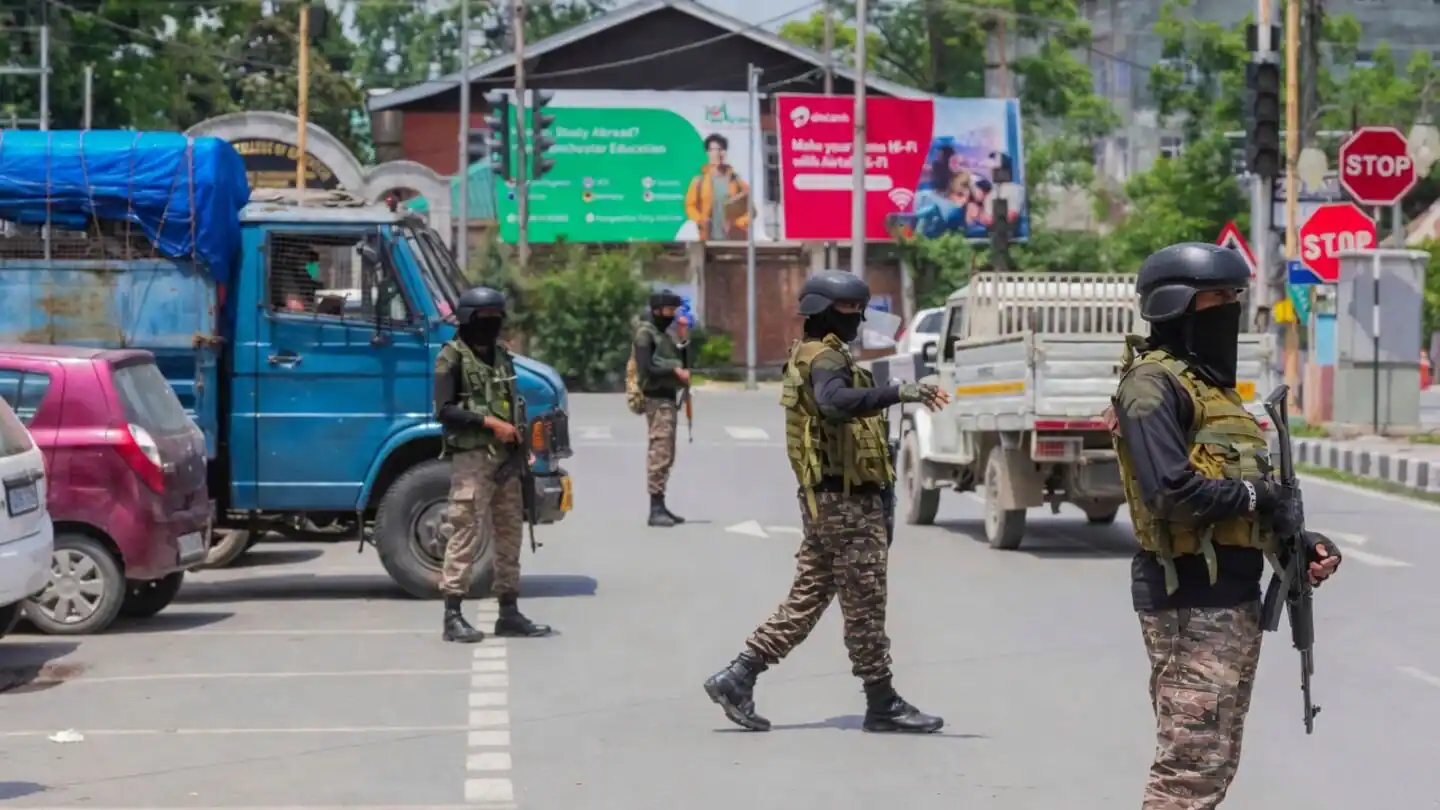
Amid “fresh threats” being issued via United Liberation Council (ULC), an offshoot of Lashkar-e-Taiba (LeT), to Kashmiri Pandit employees working in Kashmir valley, former DGP SP Vaid on Monday coined the suggestion of arming vulnerable Pandit employees with small firearms for their self-protection.Amid “fresh threats” being issued via United Liberation Council (ULC), an offshoot of Lashkar-e-Taiba (LeT), to Kashmiri Pandit employees working in Kashmir valley, former DGP SP Vaid on Monday coined the suggestion of arming vulnerable Pandit employees with small firearms for their self-protection. (PTI File)Vaid was the officer who formed village defence committees (VDCs) during peak militancy to combat Pakistani terrorists in remote and hilly villages.“This latest threat to Kashmiri Pandits must not be taken lightly.The fact that the threat letter contains names, addresses, vehicle numbers and mobile numbers suggests that someone with access to sensitive information may be involved,” said Vaid in a post on X.He asserted that the source must be identified and booked under law.“At the same time, Kashmiri Pandits must be given proper threat-awareness, do’s and don’ts, and basic tactical training. Wherever legally feasible, those facing credible threats should be considered for licensed small arms and trained in their safe and effective use. The ability to defend themselves can itself serve as a deterrent,” he said.“Wherever possible, vulnerable employees (Pandit) should also be posted to secure government premises such as deputy commissioners’ offices, the secretariat and protected directorates, rather than leaving them exposed as soft targets,” he added.He said that the J&K administration needed a high-level security action plan, led by the chief secretary, DGP, ADG CID and other security chiefs, specifically to protect Kashmiri Pandits.“This threat must be taken seriously. Prevention is better than mourning another tragedy”, he added.The J&K unit of the BJP has strongly condemned the latest threat letters reportedly targeting Kashmiri Pandit employees.Chetan Wanchoo, state executive member and state co-convener, department of trainings, BJP, has called for an immediate, high-level and time-bound investigation into the entire chain behind these threatening communications.He said the reported inclusion of names and personal contact numbers of Kashmiri Pandit employees was a matter of serious security concern and cannot be dismissed as an isolated incident.“The biggest question is who is providing the names and contact numbers of these employees, and how are these details reaching those issuing the threats? Security agencies must trace the source of this information and investigate every link involved in its collection, leakage and circulation,” Wanchoo said.He demanded that agencies identify not only those directly issuing the threats but also anyone found knowingly assisting, facilitating or supplying information to such elements.Wanchoo appealed to Union home minister Amit Shah and lieutenant governor Manoj Sinha to ensure that the matter received the highest level of attention and that the security apparatus conducted a coordinated investigation.Roughly around 6000 Pandit employees have been provided jobs in Kashmir under PM’s employment package in a bid to ensure their dignified return and rehabilitation in the Valley.Two back to back targeted attacks in July had set alarm bells ringing in the security establishment.On Sunday, a fresh letter, purportedly issued by the ULC, caused panic among the Pandit community.While HT independently can’t vouch for the veracity of the fresh threats letter, its contents raised concern among those in the security establishment.
Fresh threat to Kashmiri Pandit employees in Valley prompts calls for enhanced security, probe
Amid “fresh threats” being issued via United Liberation Council (ULC), an offshoot of Lashkar-e-Taiba (LeT), to Kashmiri Pandit employees working in Kashmir valley, former DGP SP Vaid on Monday coined the suggestion of arming vulnerable Pandit employees with small firearms for their self-protection
542 words~2 min read