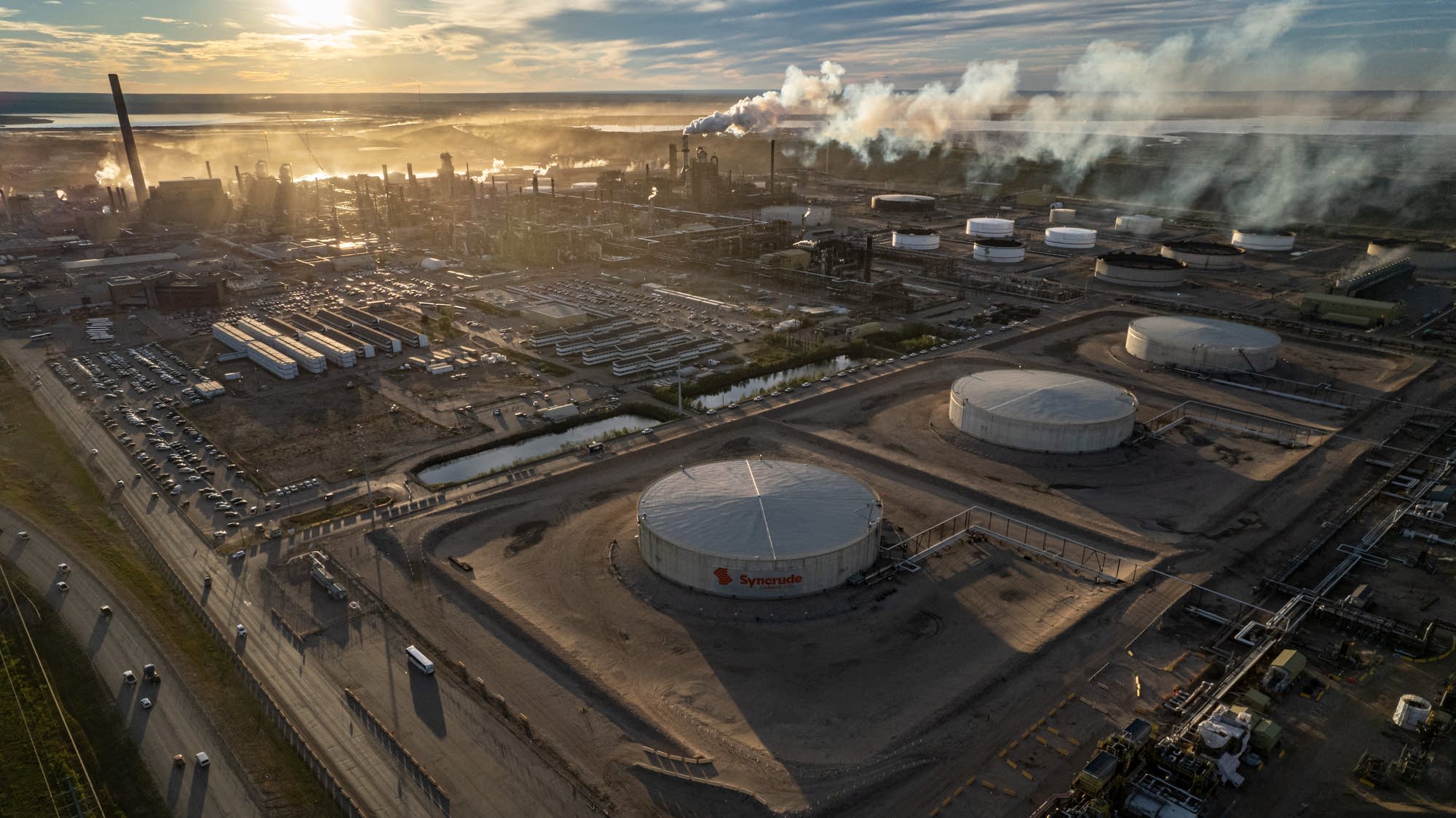
As trade tensions between the U.S. and Canada continue to escalate, Canadian leadership has been hesitant to involve its biggest export to the U.S. in trade negotiations: oil. Canada sends millions of barrels are sent to U.S. refineries each day to make gas, jet fuel, and diesel. If energy were to become seriously entangled in the trade feud, it could mean mutually assured destruction.The U.S. depends heavily on Canadian crude oil, much of it coming from Alberta’s oil sands. “The U.S. imports 4 million barrels a day of Canadian crude oil, and it comprises a very significant proportion of the heavy crude oil diet that the midcontinent refineries have gotten very used to,” said Susan Bell, senior vice president of downstream solutions research at Rystad Energy. A lot of U.S. refineries were actually specifically tailored to process the heavy crude that Canada produces. As for Canadian oil producers, “you got to have a market to sell stuff in,” said Charles Mason, economics professor at the University of Wyoming. “If they can secure contracts to deliver stuff to U.S. refineries, that's a very useful market for them.” Around 90% of their crude oil exports go to the U.S. These neighboring countries rely on each other, said Kevin Birn, head of carbon research at S&P Global Energy.“The U.S. provid[es] Canada with security of demand,” Birn said. “The U.S. is the largest consumer of heavy sour crude oil in the world, and Canada correspondingly provid[es] security of supply.”But Canada’s opinion of the U.S. has taken a turn, and that has led to more support for Canada to find other buyers of its crude oil, said Joe Calnan, a fellow at the Canadian Global Affairs Institute.“I think that this mutual dependence on energy,” Calnan said, “and Canada's sense of vulnerability to the United States on energy — both economically and also for the energy supply to Eastern Canada — has prompted proposals for a few major projects that are explicitly meant to diversify Canadian energy trade.” He said there’s a strong sense of anger and vulnerability that has shifted Canadian attitudes. “There has been renewed interest and openness to pipeline and LNG export projects — which is something that I never would have thought would happen — but is now in the cards, potentially,” Calnan said.While Canada and the U.S. may continue to mutually benefit from trading billions of dollars in crude oil, Calnan said recent tensions are giving Canada motivation to build new energy relationships.
The U.S.-Canada trade fight has not touched oil ... yet
Canada sends about 90% of its oil exports to the U.S., roughly 4 million barrels per day. But growing frustrations between the two countries have given our northern neighbors motivation to build new energy relationships.
412 words~2 min read