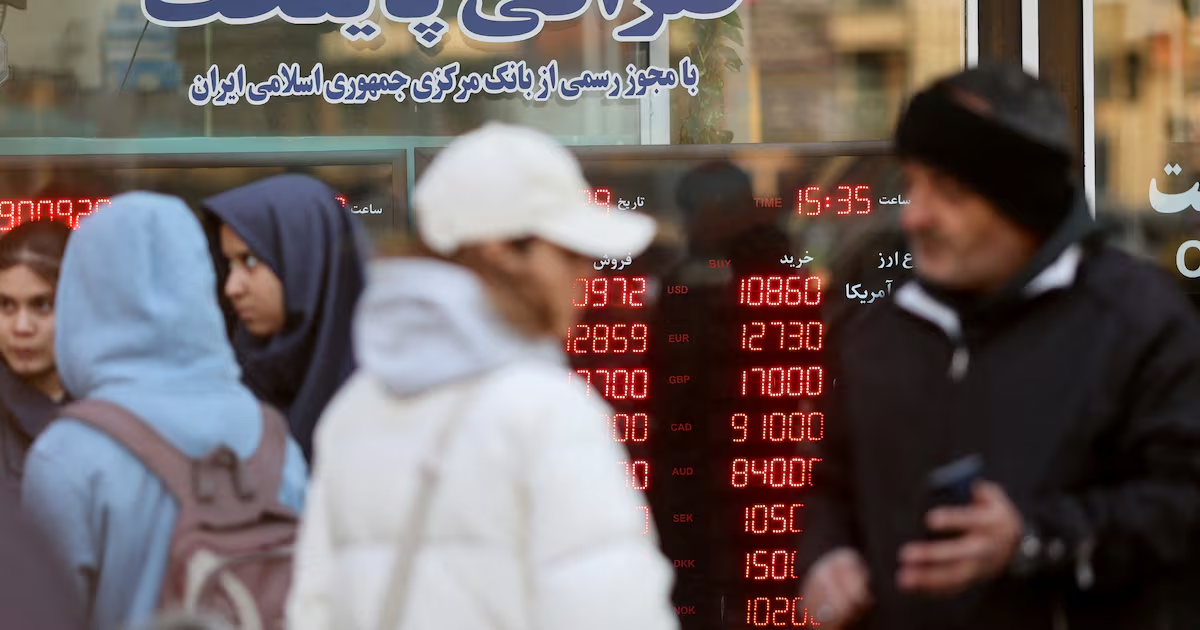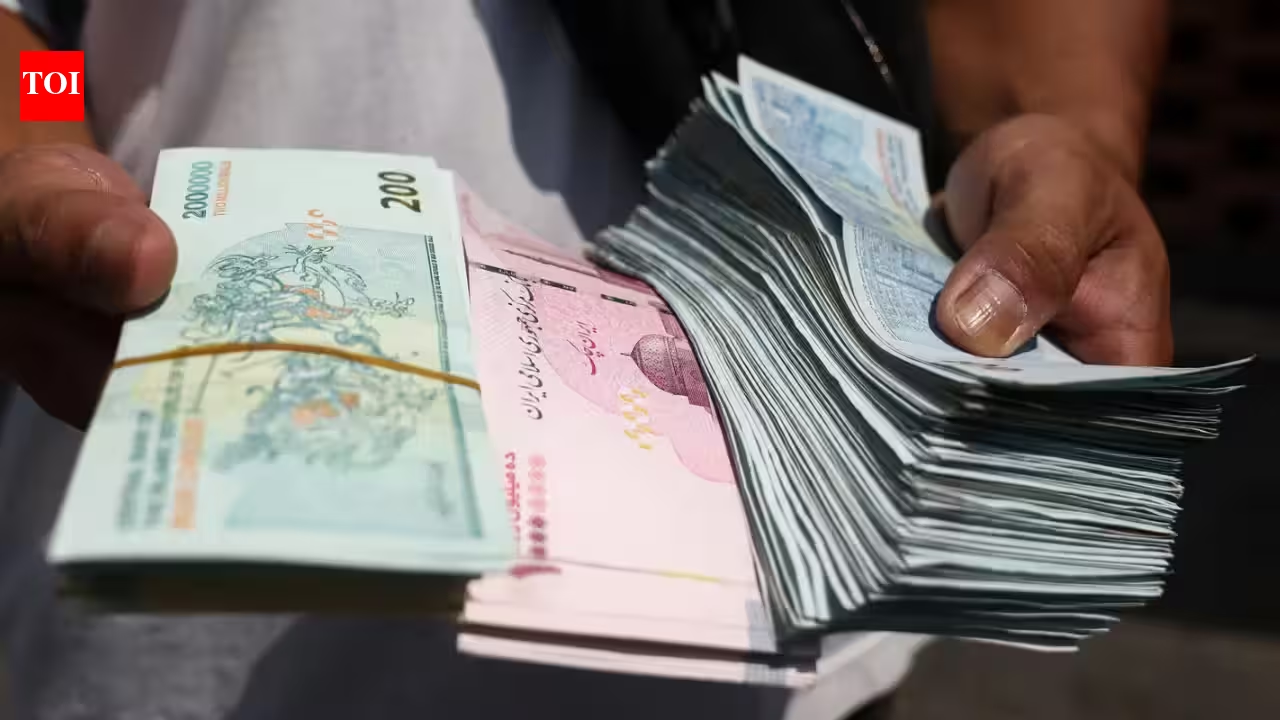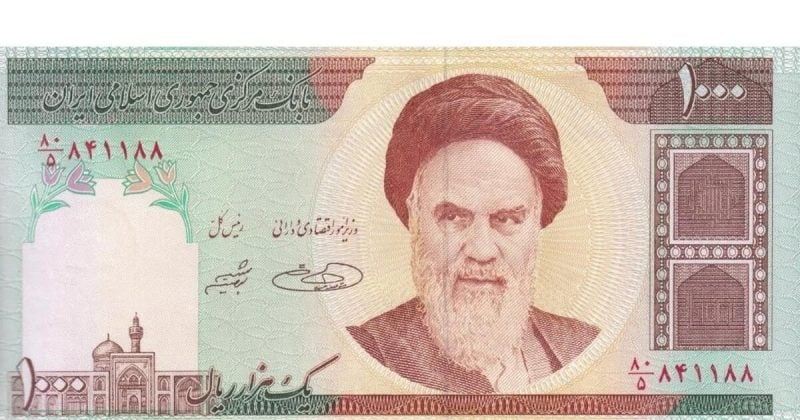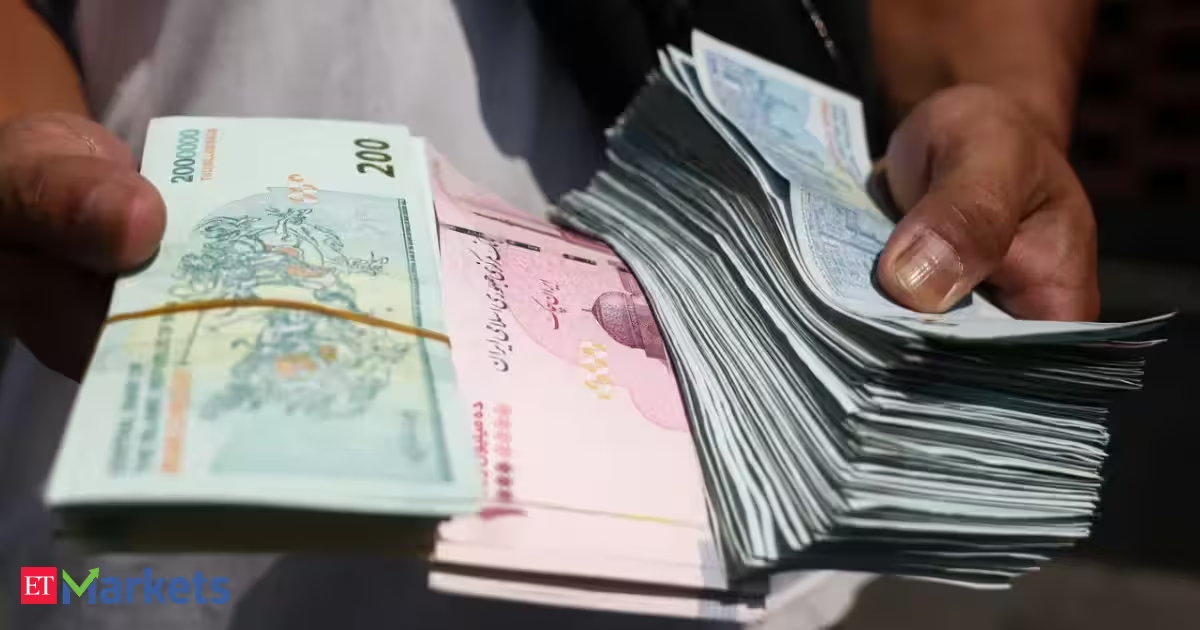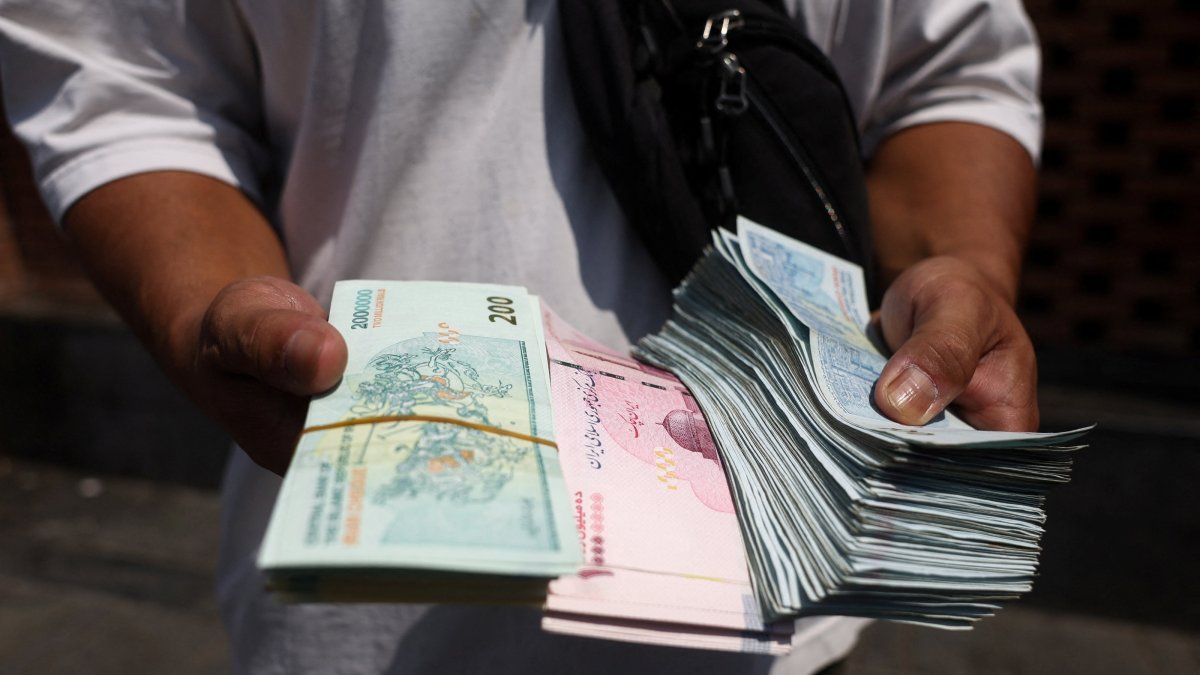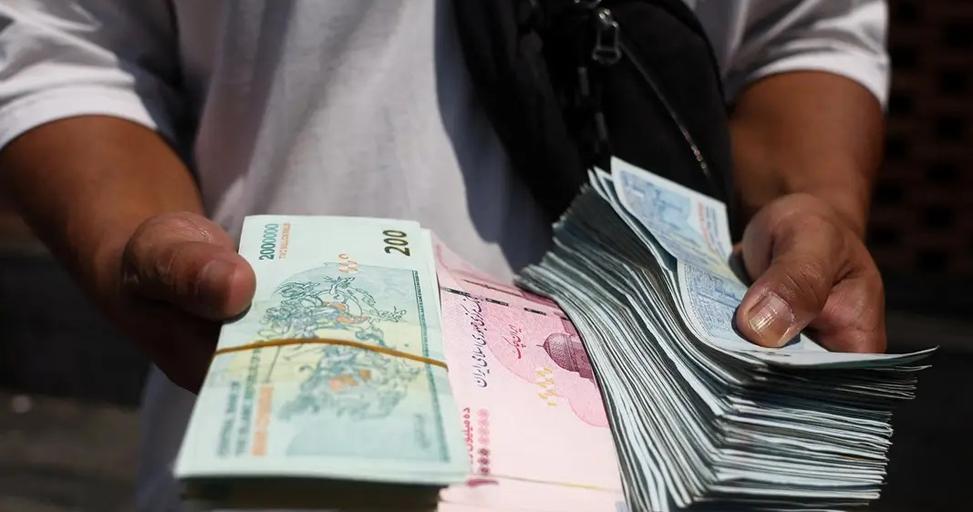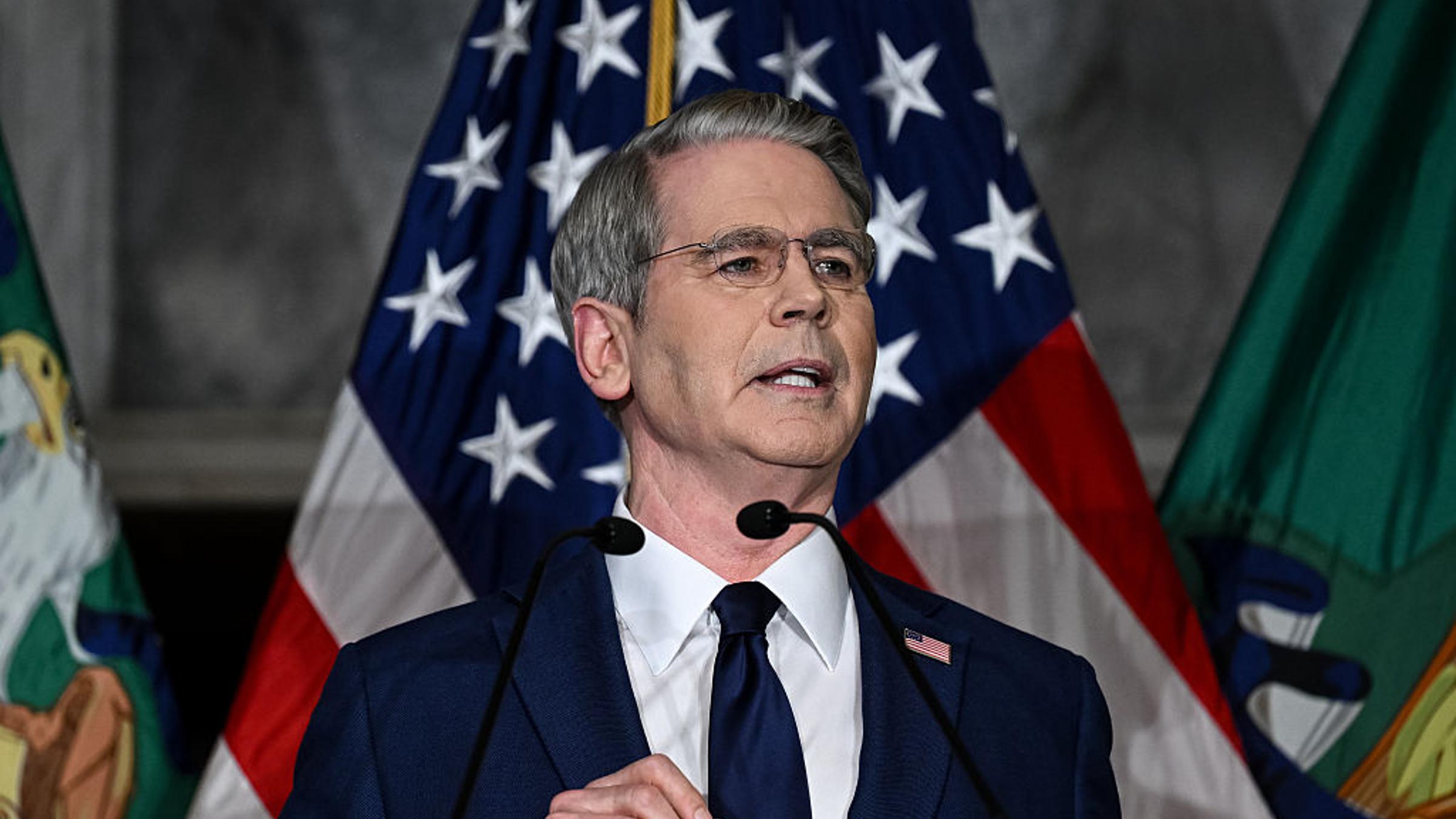
Iran’s currency plummeted in value Monday, hitting a record-low open-market rate of 2.02 million rials to the dollar, amid the White House’s launch of “Operation Economic Outcast,” which aims to force concessions from Iran through isolation and a financial stranglehold.Treasury Secretary Scott Bessent warned Sunday that an “economic D-Day” was coming, and he shared a first sense of what that might look like at a press conference the following day."D-Day marked a historic campaign with our allies,” Bessent said Monday. “Today, in that same spirit, we are launching an economic onslaught against Iran's financial connections around the globe."The U.S. announced sanctions on more than 60 targets while expanding sanctionable sectors to digital assets, technology, gold, aviation, and shipping—which Bessent described as some of the country’s “most vital lifelines.”The government may also impose secondary sanctions on Iran’s trade partners, Bessent said, adding that those sanctions could roll out in a matter of weeks. The threat is meant to deter countries from bolstering the country’s waning economy and “collapse every last option for Iran,” Bessent said, describing it as "economic asphyxiation." Though Bessent didn’t identify which Iranian partners might be targeted by a new round of sanctions, he did name one financial institution: Bank Melli, the Iranian government-owned bank with branches in about a dozen countries. Bessent said that “every branch” of the bank must be “shuttered and dark” or it will lose access to the U.S. dollar. The Treasury has previously claimed that the bank provides services to entities that support Iran’s nuclear and ballistic programs.Since the start of its war with Iran on Feb. 28, the Trump Administration has applied both military and economic pressure to achieve its goal of dismantling the nation’s nuclear program.Bessent’s remarks elaborate on President Donald Trump’s announcement on Aug. 19 that the U.S. would launch “the most crushing economic operation ever mounted” against Iran. Iran initially dismissed the threat. Its foreign minister, Abbas Araghchi, on Sunday called the U.S. “desperate.” And Mohsen Rezaei, secretary of Iran’s Supreme National Security Council, told state television on Aug. 22 that Iran would turn against any neighboring Gulf states that yield to the U.S. in what he called an “economic war.” “Any country that takes part in imposing economic restrictions on us will be regarded as an enemy,” he said.Given Iran’s sustained control over passage through the Strait of Hormuz, any retaliation could push Brent crude oil above Monday’s closing price of about $92 per barrel or the wartime high of about $120 per barrel.In a war that has been largely defined by its threat to the global economy, experts wonder whether sanctions against Tehran’s trade allies will further isolate it—and if that will succeed in forcing Iran to capitulate to the demands of the United States.Could U.S. sanctions force Iran to end the war?The Trump Administration has argued that in tightening sanctions against Iran, the country will face unprecedented isolation and economic pain.But Trita Parsi, the executive vice president of the Quincy Institute for Responsible Statecraft, tells TIME that the move doesn’t guarantee compliance. “We really need to keep in mind here that Iran has been under U.S. sanctions for the last 40 years, and we've had several moments in which we have done some sort of a major escalation,” he says. “And each time, it has failed to translate into a policy change from Iran.”Parsi notes that neither Bessent nor Trump has outlined specific demands for Iran—focusing more on maximum isolation rather than defining clear, achievable diplomatic terms. Because of this, he argues that Iran is even less likely to succumb to increased pressure.“What we know of the pattern in the past is that the Iranians will not capitulate—they will escalate,” Parsi says. “This is the same miscalculation Trump made when he thought that the threat of war would cause them to surrender, and instead they prepared themselves for war, and they fought back. And six months later, we're here.”Further complicating matters is the fact that Iran is meeting with its neighbor, Oman, about regulating passage through the Strait of Hormuz, through which one-fifth of the world’s oil formerly passed. Oman’s foreign minister, Sayyid Badr Albusaidi, is visiting Tehran on Tuesday to continue high-level talks on “bilateral and regional issues.”Controlling the waterway—a pain point for the global economy—has been Iran’s greatest strength in the war. Any agreement could affect Iran’s leverage over the waterway, although Oman has not publicly endorsed Tehran’s broader demands.Trump last week threatened that the U.S. would target Oman next if it cooperated with Iran on this matter, telling Fox News: “We’ll bomb the s— out of them.” Experts have said, however, that this is an idle threat and that bombing Oman would be a mistake. Continuing to enforce its blockade on the Strait does, however, come at a cost to Iran. A June analysis from the Foundation for Defense of Democracies estimated that Iran may be incurring economic damages of about $435 million per day while enforcing it. How is the plummeting value of the rial affecting Iranians?Ryan Costello, the policy director at the National Iranian American Council, tells TIME that implementing additional sanctions may not achieve the desired result—but will likely hurt Iranians. “Regrettably, it has had very harsh impacts on ordinary Iranians—pushing millions out of the middle class, which is often seen as an engine for successful democratic change over time,” Costello says. “This currency depreciation has a real cost for ordinary Iranians, making their life ever more unaffordable.”According to the International Monetary Fund, Iran’s average annual inflation rate is projected to reach 68.9% in 2026. The depreciation of the rial—which was already the world’s least valuable currency before it dipped this week—will strain Iranian citizens who are already struggling to buy groceries and pay for monthly living expenses.There is a “real risk” of greater global market destabilization the longer the Strait of Hormuz is closed, Costello says. “Iran's leadership is signaling that it will respond to intensified economic pressure by further restricting energy flows, and it appears to have the capacity to act on their threat,” Costello says. In addition to its command of the Strait, he explains: "Iran and other aligned forces are demonstrating an ability to strike energy targets with missiles and drones, both in the Red Sea and the Persian Gulf. So Iran and/or its allies could target commercial ships, as well as pipelines, ports, refineries, and other critical energy infrastructure."And there’s a second major risk if the U.S. places sanctions on certain global powers who buy Iranian oil—particularly economic powerhouse China.“China could take steps to punish the U.S. economy in turn,” Costello explains. He says that both risks could be “very damaging,” with economic ramifications that span the globe.Why Trump is escalating economic pressure on IranThe U.S.-Iran war is nearing its six-month mark, and peace negotiations have effectively stalled.The memorandum of understanding established in June—which gave the nations 60 days to work out terms for Iran’s nuclear program and renew uninterrupted shipping through the Strait of Hormuz—expired Aug. 17. It unraveled in July as the U.S. struck hundreds of targets in Iran, and Tehran retaliated against its allies in the region, including Kuwait and Bahrain. But as the U.S. continued to draw down its munitions stockpiles, Iran held steady with its blockade of the Strait.Now, Trump has changed his tactics.“This is where the real problem is: He's going back to economic warfare because military warfare didn't work,” Parsi says. If additional sanctions fail to force Iran to yield to some of Trump’s demands, Parsi says the President may be running out of options.“The only exit out of this is actually through diplomacy,” he says. “Otherwise, the U.S. is just going to go back and forth between economic and military action.”One route to relief may come by way of Pakistan, which helped mediate the June ceasefire between the U.S. and Iran. It dispatched a high-level delegation, led by Field Marshal Asim Munir, to Tehran this week to encourage its leadership to work toward a more lasting peace agreement. But Parsi contends that the stream of threats from the U.S. may make Iran even less likely to reconcile, saying: “This does not end up becoming the end of the conflict. It just ends up becoming another cycle in the escalation spiral.”
Iranian Rial Hits Record Low as the U.S. Unveils New Sanctions
The rial traded at about 2.02 million to the dollar Monday as Treasury Secretary Scott Bessent warned of an “economic D-Day” for Iran.
1,373 words~6 min read