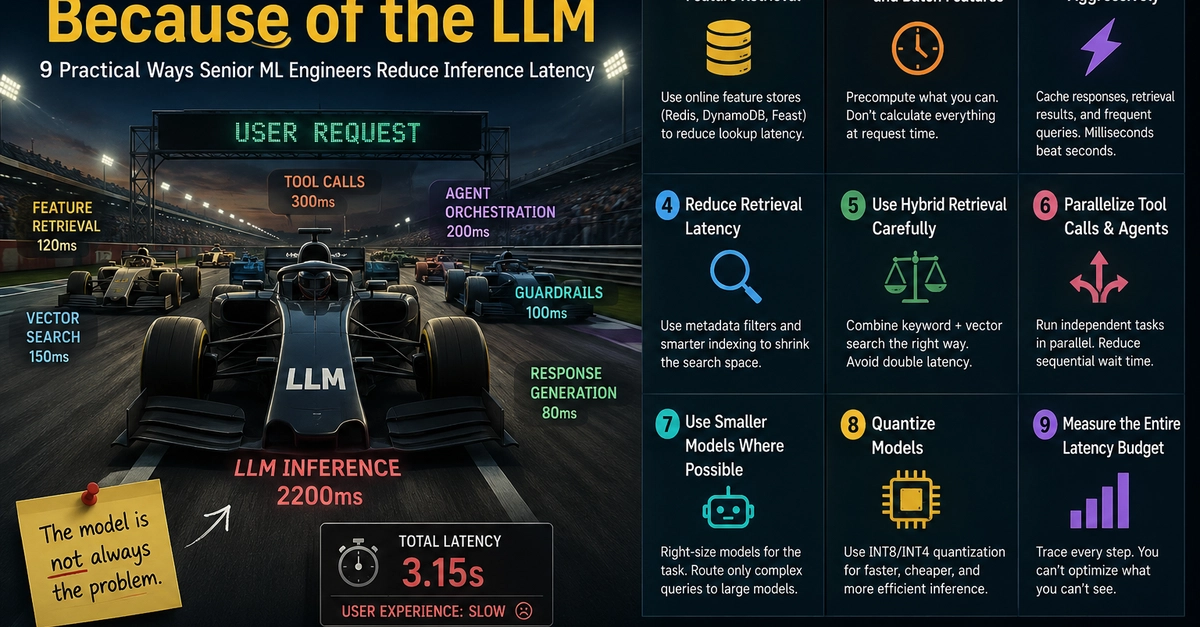
Free model access solves the cost problem and creates a latency problem, and most teams measure the wrong number. My position is direct: the p95 of your time-to-first-token determines whether users perceive your product as fast, and a single afternoon of measurement will tell you more than any benchmark leaderboard. The free tier is not a compromise; it is a constraint that exposes how much latency your architecture can actually tolerate.
Why Latency Is the Hidden Tax on Free Tiers
Every API call has a distribution of response times, and the tail is where users feel it. A model that averages 800 milliseconds but spikes to six seconds at p95 will produce a product that feels broken, regardless of the average. Free endpoints often share infrastructure with busier tenants, which makes the tail longer and less predictable.
Average latency hides the experience of the slowest users.
Shared infrastructure means your latency is someone else's variable too.