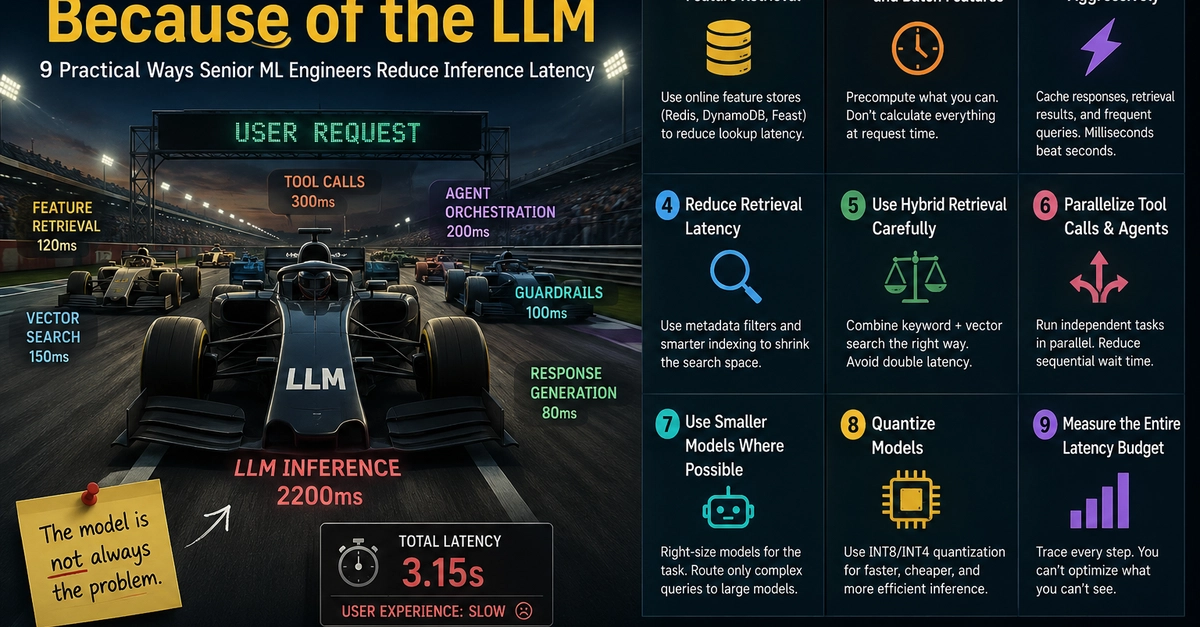
Most teams blame the model when an AI application feels slow.
In reality, the model is often only one part of the latency budget.
A typical AI request may involve:
User Request
↓
Most teams blame the model when an AI application feels slow. In reality, the model is often only...
In production systems, LLM inference is just 78% of end-to-end latency; feature retrieval, vector search, and agent orchestration dominate the rest. Optimizing the full pipeline—caching, online feature stores, quantization, parallelization—reduces infrastructure costs and user latency more effectively than pursuing faster foundation models.
Most teams blame the model when an AI application feels slow.
In reality, the model is often only one part of the latency budget.
A typical AI request may involve:
User Request
↓
A founder pinged us with a UX problem disguised as an engineering question. His team had launched an...
AI agents look simple at first. You take a model, add a prompt, maybe connect a tool, and it works....
Most teams assume the fastest way to reduce AI costs is to switch to a smaller model. In reality,...

Monitor your AI agent’s reliability, speed, and cost with Sentry. Get alerts for LLM errors, latency spikes, and budget overruns…
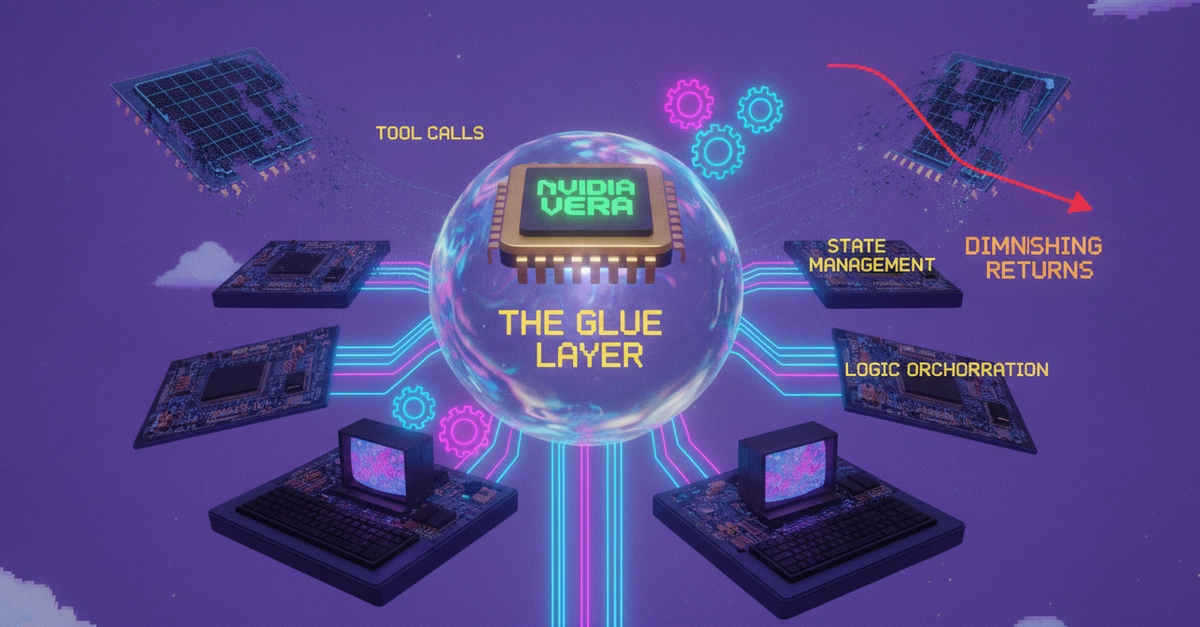
If you've been building agentic systems lately, you've probably hit the same wall: the model isn't...
Production LLM workloads rarely fail because of model intelligence. They fail when latency spikes, context windows overflow, or…