Originally published on the Merlonix blog.
There are two different questions about your site and an AI answer engine, and people collapse them into one. The first is can the engine reach your page — a crawling question, answered by robots.txt and your edge. The second is once it has the HTML, can it tell what your page is — a parsing question, answered by structured data. You can pass the first and fail the second completely: the crawler fetches a page it can read but not understand, so it has to infer from rendered prose whether this is a product, an article, a company, or an FAQ. An engine that has to guess cites less confidently, and often cites the competitor whose page told it plainly.
Structured data — specifically schema.org JSON-LD — is how you tell it plainly. This is the same structured data that's driven Google rich results for a decade; what's new is that it now does double duty as the machine-readable meaning layer AI answer engines lean on to form a confident, citable entity. Here's what it is, the failure that isn't "missing schema," the types and fields that actually matter, and how to check yours.
What JSON-LD Is (and Why It, Specifically)
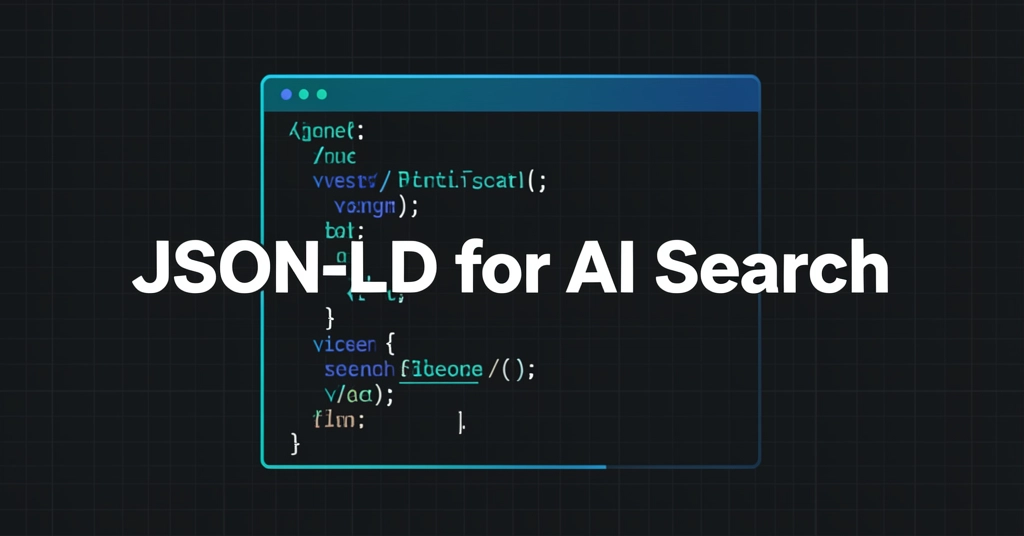
JSON-LD is a <script> block you drop in your page's HTML that describes the page as structured data, using the schema.org vocabulary: