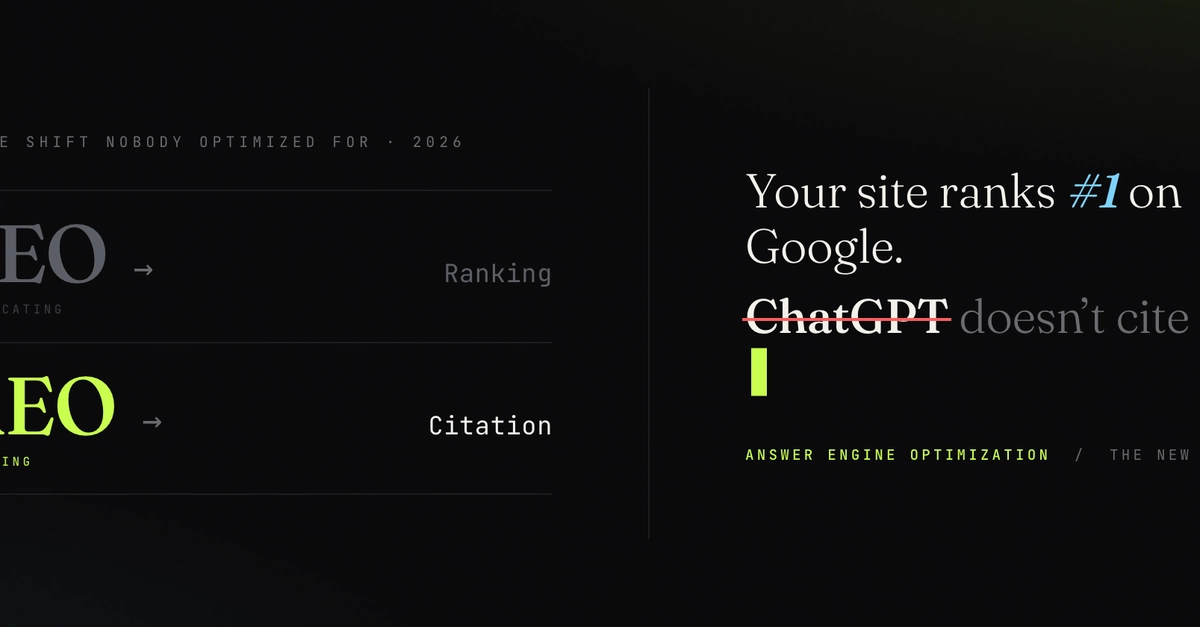
Search behavior is shifting. A growing share of information queries now resolve inside AI-powered answer engines: ChatGPT, Perplexity, Google AI Overviews, Claude, and Bing Copilot. These systems don't rank ten blue links. They synthesize an answer from sources they trust, cite those sources inline, and move on.
For content teams, this creates a new optimization discipline: Answer Engine Optimization (AEO), sometimes called Generative Engine Optimization (GEO). The question AEO asks is: will an AI answer engine cite your content when a user asks a question you should own?
For headless CMS teams specifically, the answer depends heavily on how content is structured at the API level. This post covers what AEO is, why structured content is the technical foundation it runs on, and what you need to do in your CMS today to start winning citations in AI-generated answers.
What Is Answer Engine Optimization (AEO)?
Answer Engine Optimization (AEO) is the practice of structuring, formatting, and distributing content so that AI answer engines can reliably extract, trust, and cite it. It overlaps with traditional SEO (domain authority, backlinks, and freshness still matter) but adds new requirements around content structure, answer completeness, and machine-readable metadata.