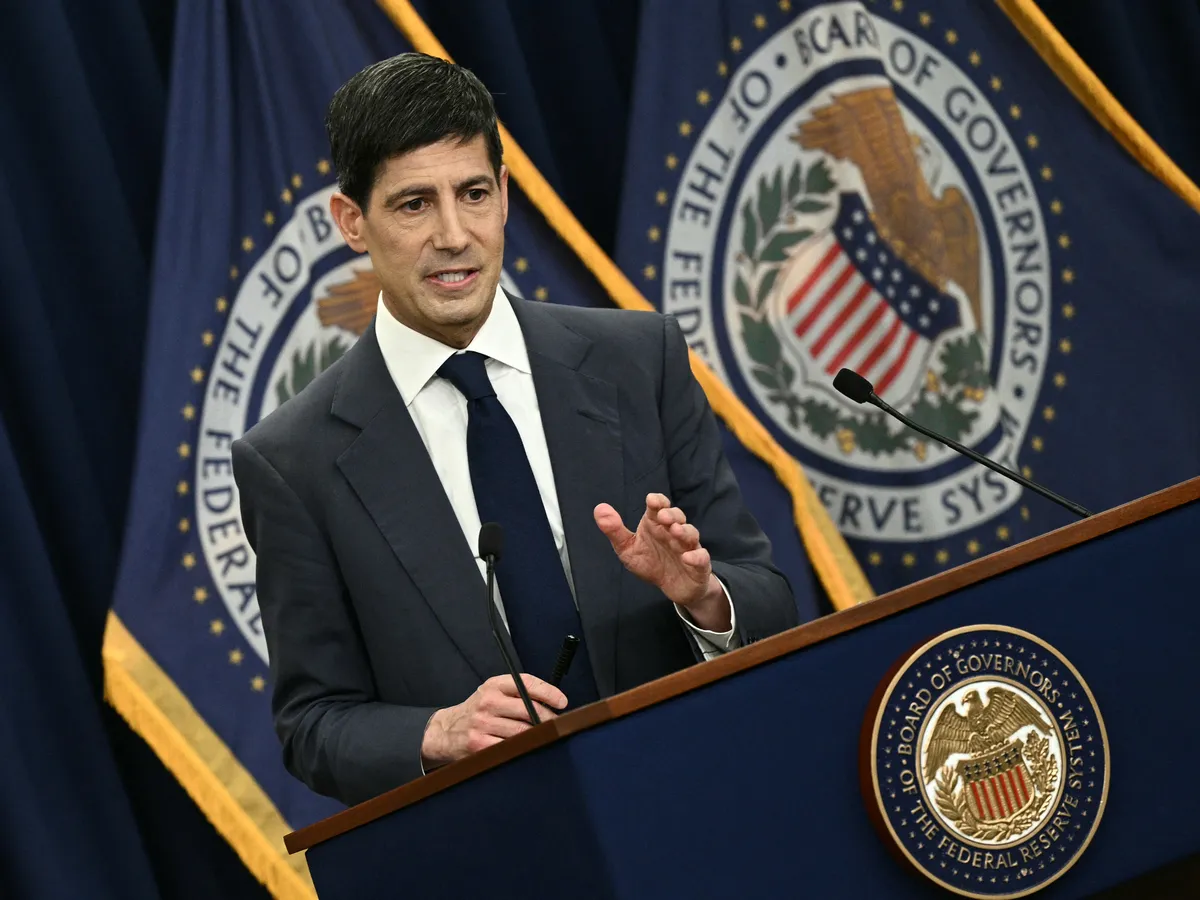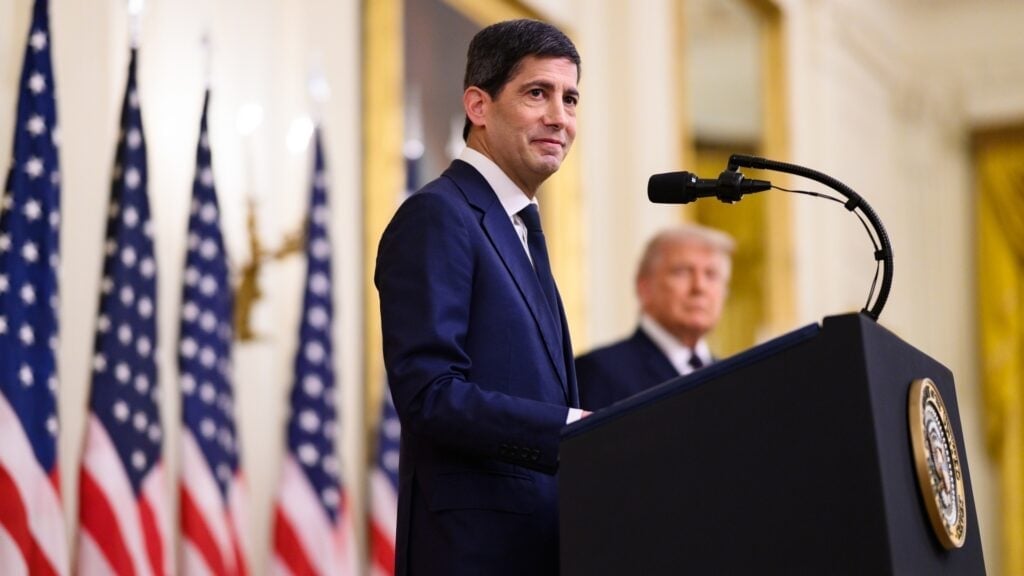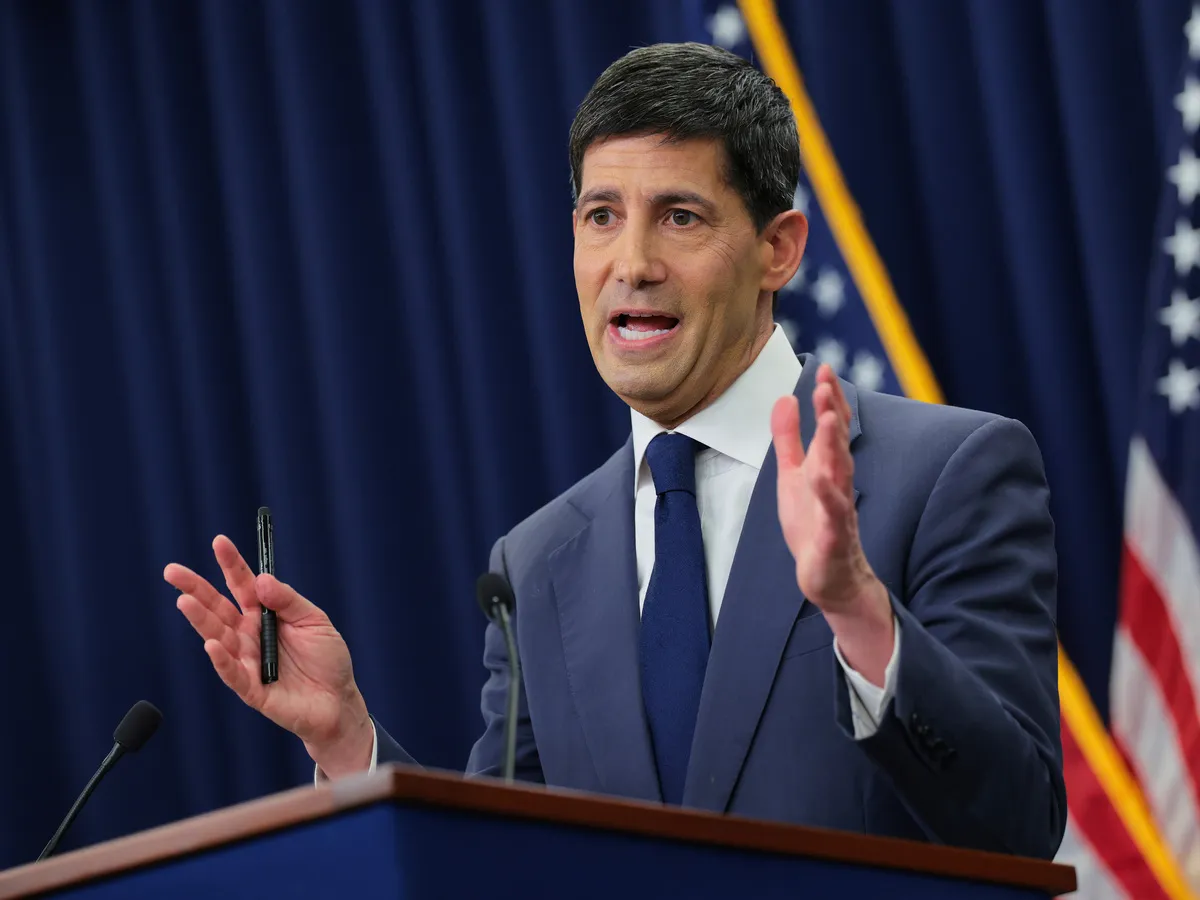
Skip to Content News Archives Economy Energy Oil & Gas Renewables Electric Vehicles Mining Commodities Agriculture Real Estate Mortgages Mortgage Rates Finance Banking Insurance Fintech Cryptocurrency Work Wealth Smart Money Wealth Management Investor Personal Finance Family Finance Retirement Taxes High Net Worth FP Comment Executive Women Puzzmo Newsletters Financial Times Business Essentials More Innovation Information Technology FP500 Podcasts Small Business Lives Told Tails Told Shopping Financial Post Store Obituaries Place a Notice Advertising Advertising With Us Advertising Solutions Postmedia Ad Manager Sponsorship Requests Classifieds Place a Classifieds ad Working Profile Settings My Subscriptions My Offers Newsletters Customer Service FAQ News Economy Energy Mining Real Estate Finance Work Wealth Investor FP Comment Executive Women Puzzmo Newsletters Financial Times Business Essentials HomeFinancial TimesKevin Warsh seeks to reassure investors as U.S. economic strains worsen'What is unsettling is Warsh’s unwillingness to provide a clear and open assessment of the current situation and the outlook for the U.S. economy'Author of the article:Last updated 1 hour ago Kevin Warsh has stripped back the U.S. central bank’s communications with investors, drastically reducing guidance on future interest rates. Photo by Chip Somodevilla/Getty ImagesUnited States Federal Reserve chair Kevin Warsh will seek to soothe investors’ nerves in a crunch week as mounting signs of economic strain threaten to cast a shadow over the annual Jackson Hole symposium.Subscribe now to read the latest news in your city and across Canada.Exclusive articles from Barbara Shecter, Joe O'Connor, Gabriel Friedman, and others.Daily content from Financial Times, the world's leading global business publication.Unlimited online access to read articles from Financial Post, National Post and 15 news sites across Canada with one account.National Post ePaper, an electronic replica of the print edition to view on any device, share and comment on.Daily puzzles, including the New York Times Crossword.Subscribe now to read the latest news in your city and across Canada.Exclusive articles from Barbara Shecter, Joe O'Connor, Gabriel Friedman and others.Daily content from Financial Times, the world's leading global business publication.Unlimited online access to read articles from Financial Post, National Post and 15 news sites across Canada with one account.National Post ePaper, an electronic replica of the print edition to view on any device, share and comment on.Daily puzzles, including the New York Times Crossword.Create an account or sign in to continue with your reading experience.Access articles from across Canada with one account.Share your thoughts and join the conversation in the comments.Enjoy additional articles per month.Get email updates from your favourite authors.Create an account or sign in to continue with your reading experience.Access articles from across Canada with one accountShare your thoughts and join the conversation in the commentsEnjoy additional articles per monthGet email updates from your favourite authorsSign In or Create an AccountorU.S. public debt hit a record US$40 trillion last week and yields on the country’s long-dated bonds hit a 19-year high.Reciprocal tariffs announced by Canada and Washington’s threat to hit Iran with an “economic D-Day” could both deliver further economic blows.Warsh and Treasury secretary Scott Bessent, both of whom were appointed by U.S. President Donald Trump, are also facing mounting pressure over their approach to communicating economic policy.Get the latest headlines, breaking news and columns.By signing up you consent to receive the above newsletter from Postmedia Network Inc.A welcome email is on its way. If you don't see it, please check your junk folder.The next issue of Top Stories will soon be in your inbox.We encountered an issue signing you up. Please try againSome investors said Bessent’s abrupt announcement of bond buybacks last week reduced the credibility of the Treasury’s guidance.Warsh has stripped back the U.S. central bank’s communications with investors, drastically reducing guidance on future interest rates.On Friday, the Fed chair will address central bankers and economists for the first time since his appointment at the Kansas City Fed’s Jackson Hole gathering, where he is expected to set out the framework behind his pared-back style.In a poll of academic economists conducted for the FT by the University of Chicago’s Booth School of Business, a majority said they were concerned that inflation would take longer to tame than had been the case earlier in the year.Some also criticized the Fed chair and Bessent’s approach to communications.Nearly 60 per cent of those polled said it would take the central bank longer to get back to its two per cent target than when Warsh was confirmed as Fed chair by the Senate in mid-May.Inflation has been running above the Fed’s two per cent goal for more than five years and the conflict between Tehran and Washington has pushed up oil and diesel costs, putting fresh upward pressure on prices.Trump’s latest bout of tariffs on Canada and his administration’s threats towards countries it deems to be aiding Iran could add to that.“What is unsettling is Warsh’s unwillingness to provide a clear and open assessment of the current situation and the outlook for the U.S. economy,” said Christiane Baumeister of the University of Notre Dame. “This gives rise to unnecessary speculation, which has the potential to jeopardize stability and raise concerns about the Fed’s credibility.”More than 60 per cent of respondents said concerns over the U.S. central bank’s credibility had either a very substantial or a somewhat substantial impact on the rise in long-term yields since Trump nominated Warsh in late January.Robert Barbera of Johns Hopkins University said Bessent’s bond market intervention had made the “dollar look iffy.” A depreciation of the U.S. currency would raise inflationary risks by increasing the price of imports.Eric Rosengren, a former head of the Boston Fed, said that while Warsh could remain silent on future decisions, he needed to explain current ones. “The communication strategy is driving a loss of Fed credibility,” Rosengren said.Almost three-quarters of those polled said the shift from the more open communications strategy of his predecessors — Jay Powell, Janet Yellen and Ben Bernanke — was the most important change Warsh had made since becoming chair in late May.A large majority of respondents — 75 per cent — said Warsh’s overall performance during that period was in line with their expectations.Warsh has previously said that he hoped breaking the feedback loop between the Fed and investors would mean that markets would focus less on scrutinizing officials’ remarks and more on economic data.“The Fed had become more and more entwined in micromanaging markets, to the detriment of the functioning of the capital market,” said Deborah Lucas, a professor at the Massachusetts Institute of Technology. “Warsh is willing to stand up against the vested interests in the status quo to try to reverse this. I commend him for it.”Jon Faust, a fellow at Johns Hopkins who worked as an adviser to former Fed chair Powell, said Warsh had allayed concerns that he would pander to pressure from Trump, who has consistently called for the U.S. central bank to slash borrowing costs despite high inflation.“He has pretty much overcome the sock-puppet fears and he hasn’t gone in and caused turmoil inside the Fed,” said Faust. “There have been some horror scenarios that have been pretty firmly ruled out.”© 2026 The Financial Times Ltd Join the Conversation This website uses cookies to personalize your content (including ads), and allows us to analyze our traffic. Read more about cookies here. By continuing to use our site, you agree to our Terms of Use and Privacy Policy.
Kevin Warsh seeks to reassure investors as U.S. economic strains worsen
Economists criticize Fed chair's communication strategy as policymakers prepare to gather at Jackson Hole symposium. Find out more here
1,215 words~6 min read