The Pew Research Center analyzed nearly half a million English-language web pages for AI-generated content. Since ChatGPT launched, the share of machine-written text online has climbed sharply.
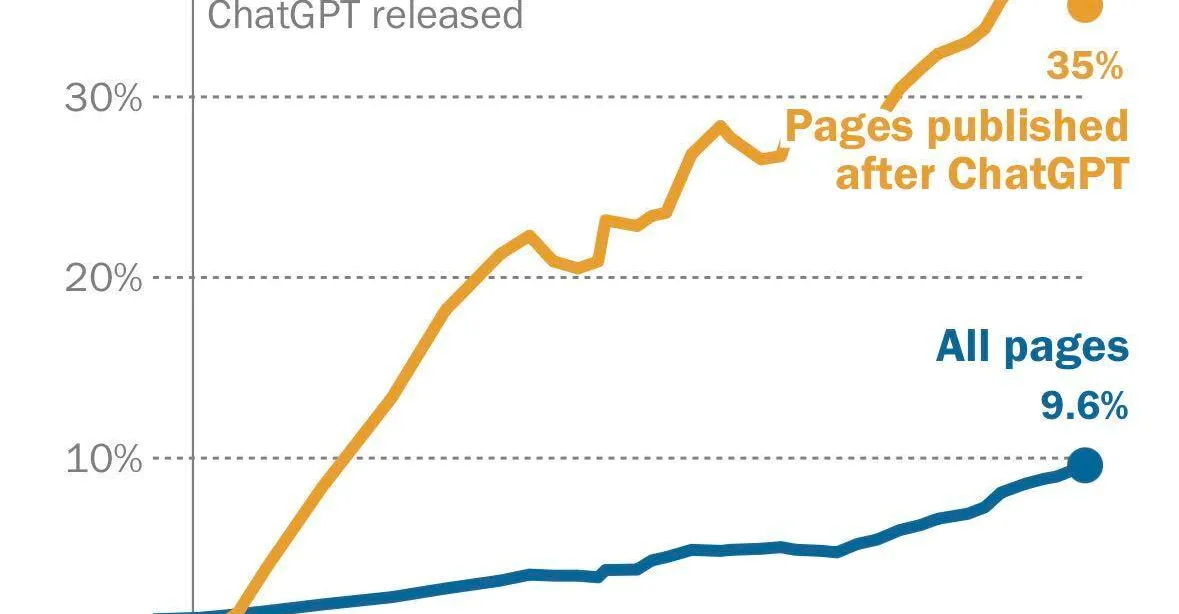
The texts came from the Common Crawl web archive and were checked for signs of machine authorship using the AI detection tool Open Pangram. In a sample from July 2026, about 10 percent of all pages examined showed clear signs of AI authorship.
Filtering the sample to only include pages published after ChatGPT's release changes the picture dramatically. More than a third of those newer pages show signs of AI authorship, according to the analysis. The trend kicked off with ChatGPT in late 2022, and the share of likely AI-generated web content has climbed steadily ever since.
The share of pages with AI-generated text has grown sharply since ChatGPT's release. | Image: Pew Research Center
About one in ten pages with a .com domain shows signs of AI authorship, while .org domains sit at 4.6 percent and .edu and .gov domains come in at only about 1 percent each. That makes commercial websites roughly ten times more likely to contain AI-written text than pages from schools or government agencies.