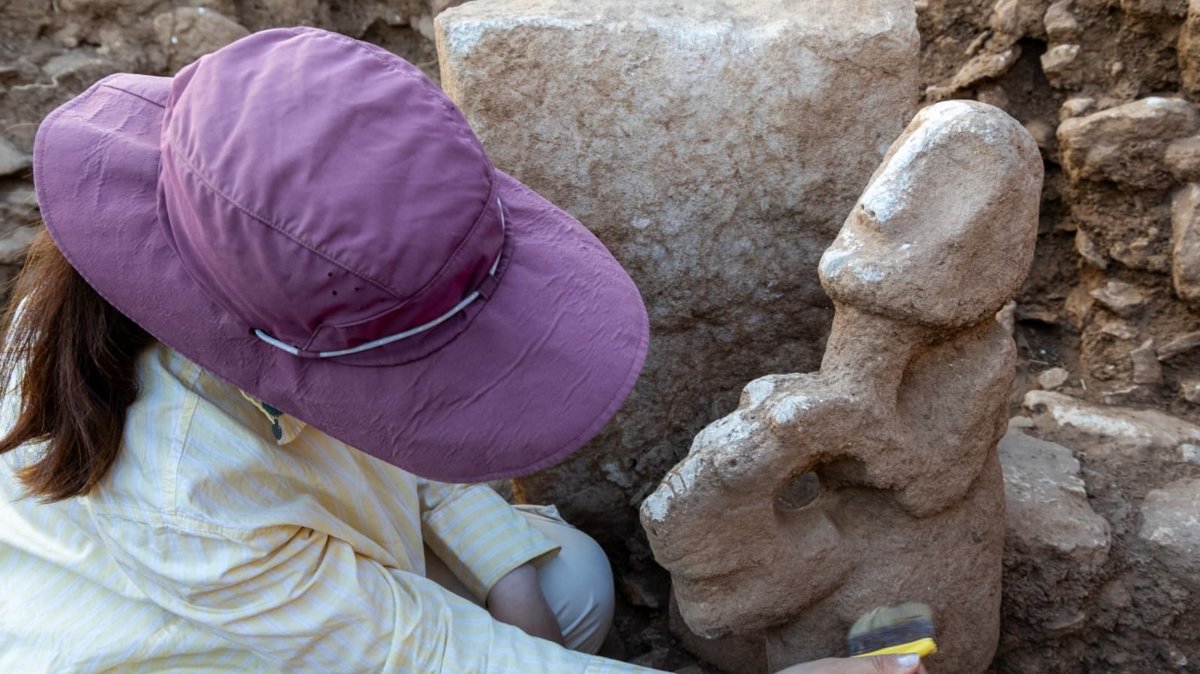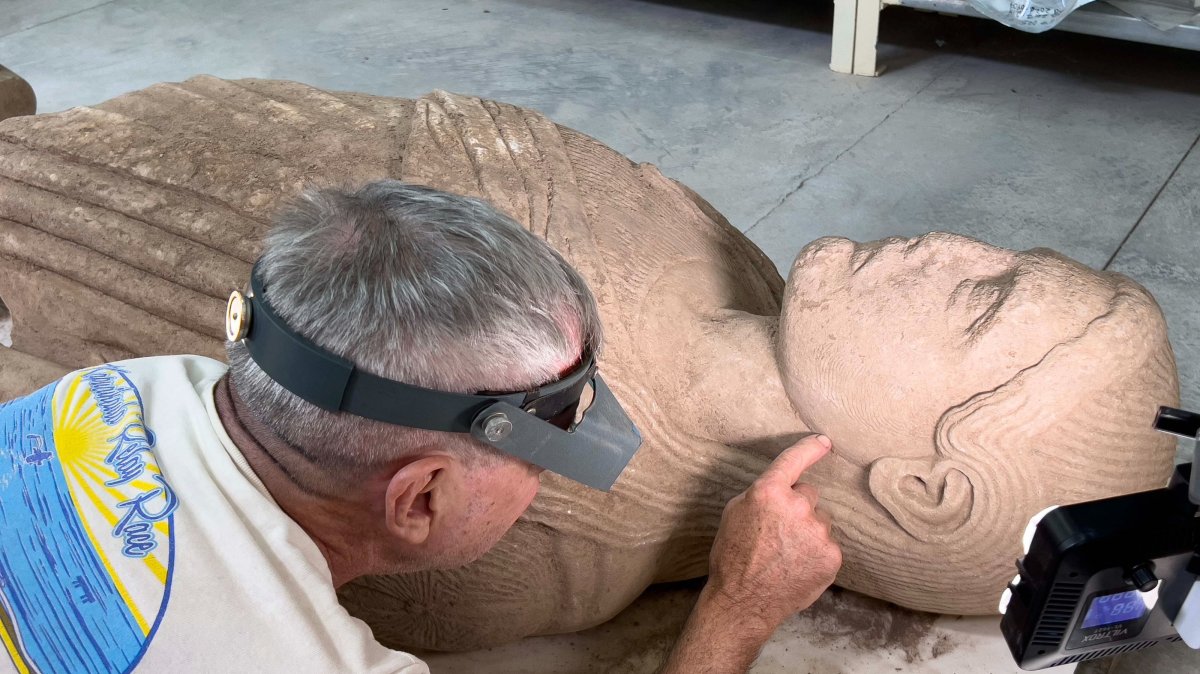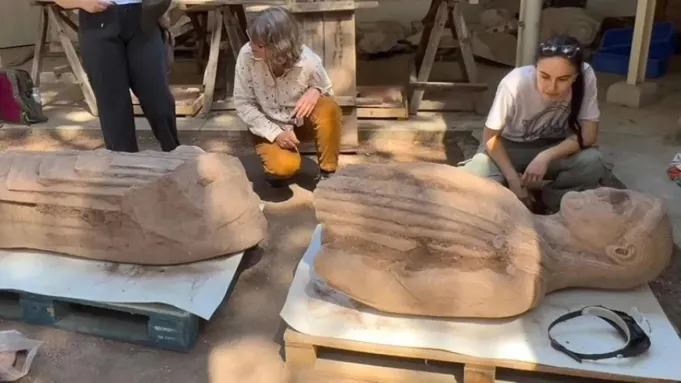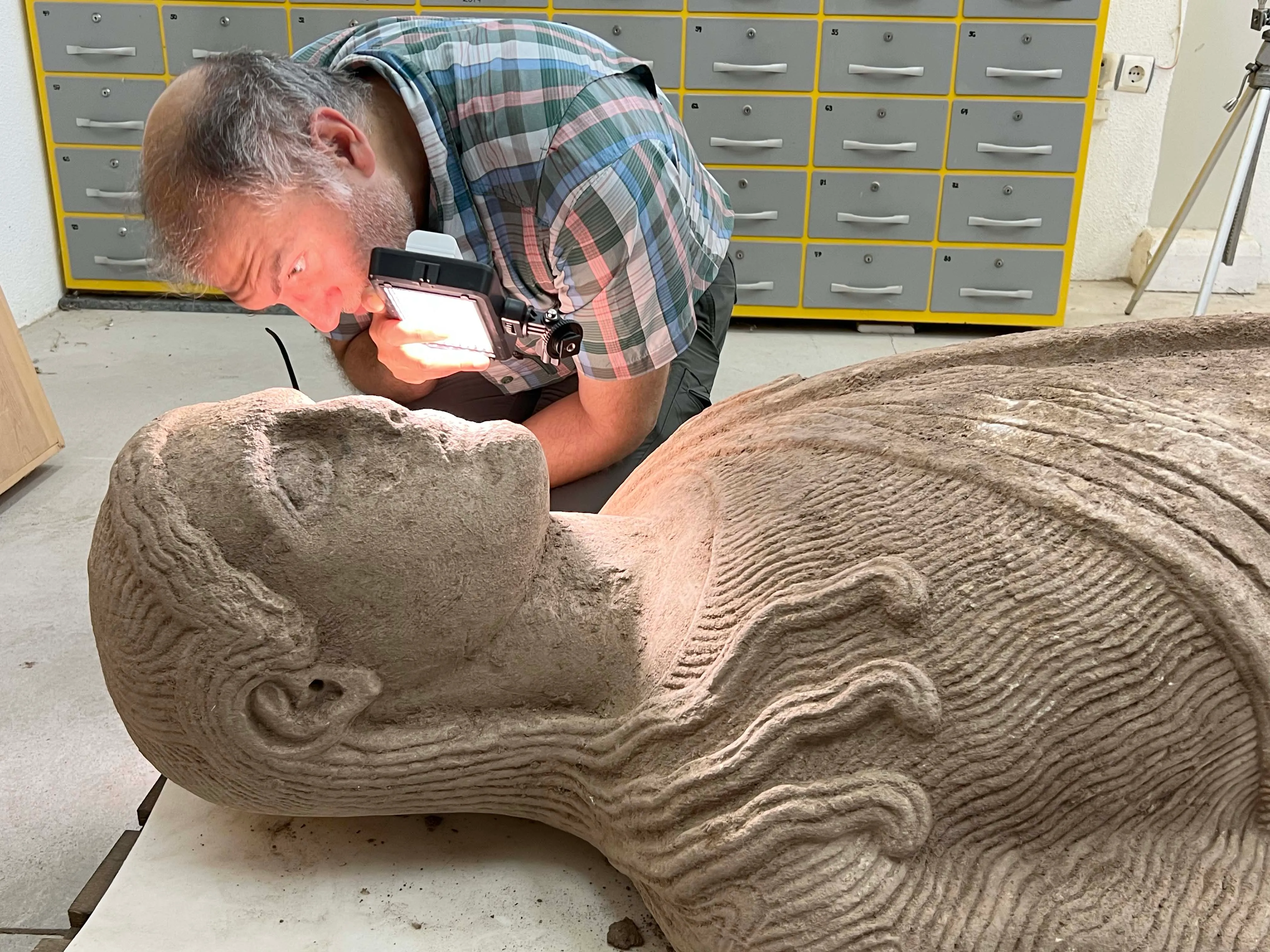
Researchers with the long-running Harvard-Cornell Archaeological Exploration of Sardis have unearthed a larger-than-life statue, estimated to be nearly 2,500 years old.
The discovery is remarkable for several reasons, said Nicholas Cahill, the field director of the AES team and a professor of Greek and Roman art and archaeology at the University of Wisconsin-Madison.
“It is very rare to find such monumental sculptures of this period anywhere in the Mediterranean, and this exceptionally well-preserved, unique monument casts important new light on the major arts of Lydia, and on the Lydians’ ties to their own past,” he said.
The excavation is sponsored by the Ministry of Culture and Tourism of the Republic of Türkiye and by Harvard University Art Museums. The Turkish site was named a UNESCO World Heritage Site last year, cementing its position as a critical site for understanding the ancient world.
Researchers made the discovery in late May while examining a major Roman colonnaded avenue. The statue had been broken in two main pieces and reused, face down, as paving stones in the ancient thoroughfare.