The massive growth of generative AI has fundamentally altered data center design. As distributed model training scales to span hundreds of thousands of GPUs, the scale-out network connecting these nodes has emerged as a first-order performance bottleneck.
For decades, traditional off-the-shelf Ethernet has been the undisputed king of enterprise and cloud networking. It is cheap, standardized, and highly effective at handling general-purpose, high-entropy web traffic. However, when traditional Ethernet is forced to handle the massive, highly synchronized communication patterns required by AI architectures, it hits a physical wall.
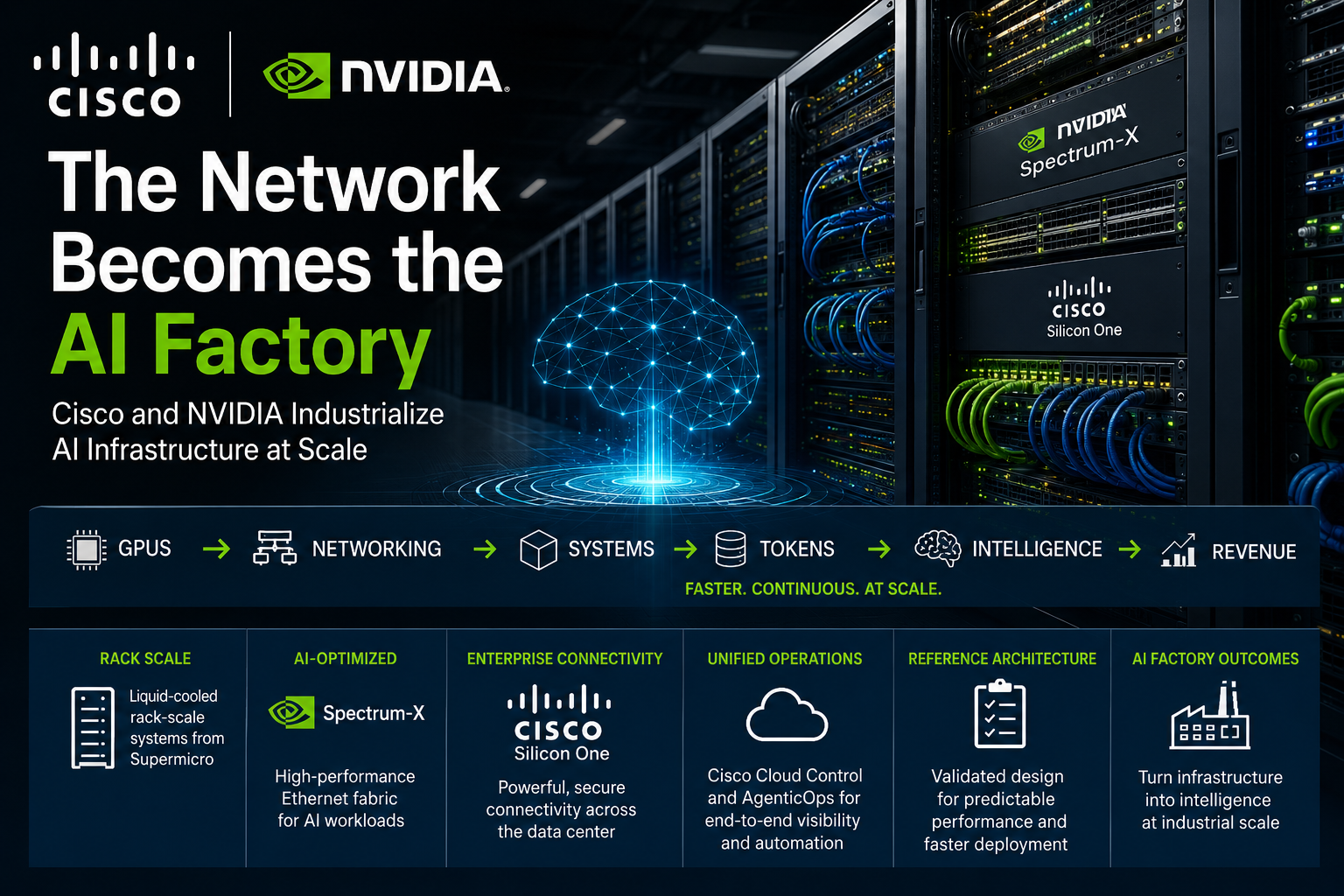
To bridge this gap, NVIDIA introduced Spectrum-X Ethernet, a hardware-accelerated networking architecture designed from the ground up for giga-scale AI factories. Unlike traditional Ethernet, which relies on decades-old routing and congestion control paradigms, Spectrum-X Ethernet co-designs high-performance switches and host-side network interface cards (NICs) to deliver predictable low latency, high fabric utilization, and robust resilience under extreme load and stress.
This post explores the structural limitations that make traditional Ethernet ill-suited for AI workloads, deconstructs the unique architectural principles of Spectrum-X Ethernet, and explains how Spectrum-X Multiplane technology maximizes bisection bandwidth and accelerates Time-to-AI.