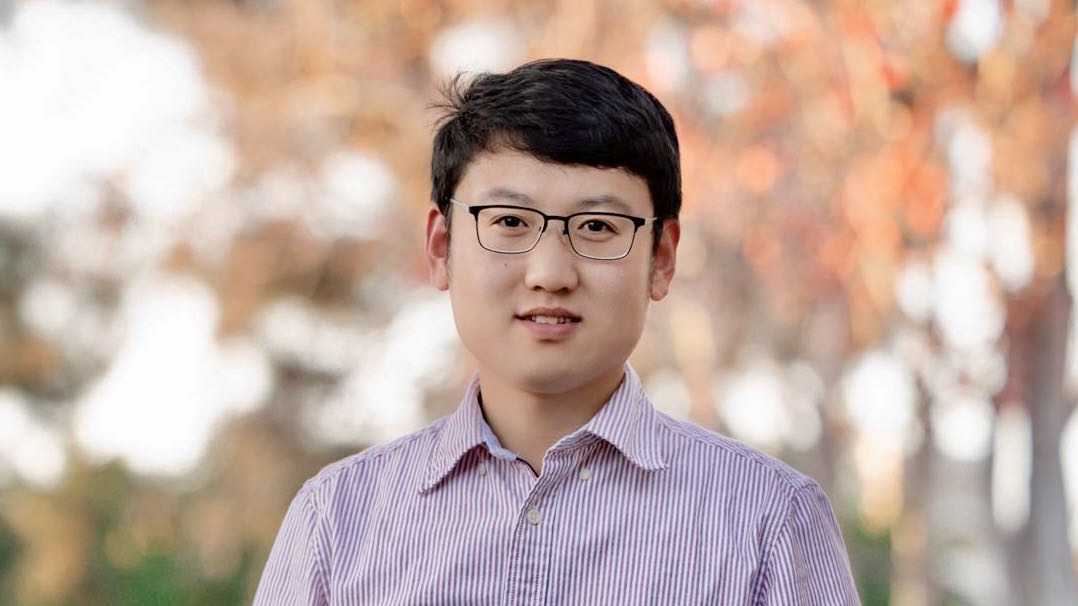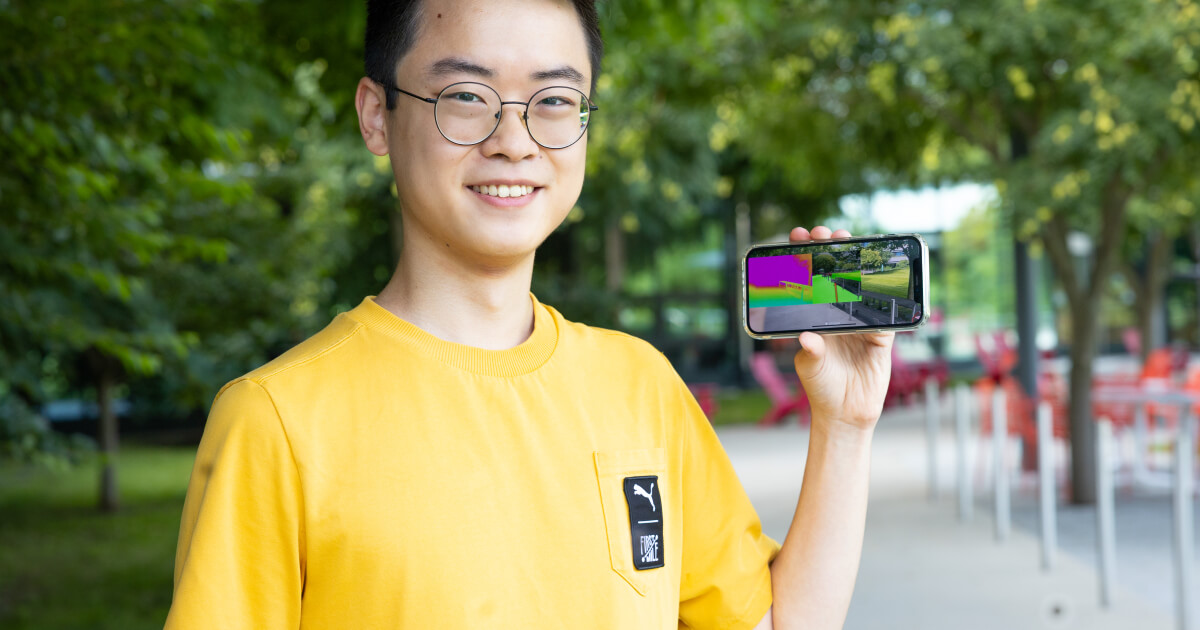
Hundreds of millions of people have blindness or moderate to severe visual impairment which limits independent navigation.When Raymond Liu’s brother lost his sight due to an injury, everything changed. Liu was already interested in computer science, but as he pursued his bachelor’s in the subject at Princeton University, he developed a focus: finding a way to use it to improve the quality of life for people living with disabilities."One of the things that I was thinking about when I was an undergrad was what I wanted to do in life,” he said. “I knew I wanted to be able to have a positive impact on people. Being able to do research on a project that personally motivates me and could potentially help a lot of people is a great way to do that.”After graduating from Princeton, Liu came to the Harvard John A. Paulson School of Engineering and Applied Sciences (SEAS) where he joined the laboratory of Patrick Slade, Assistant Professor of Bioengineering to develop a smartphone-based navigation assistant for people who are blind or visually impaired. He is currently a Ph.D. student in computer science, co-advised by Slade and Elena Glassman, Assistant Professor of Computer Science.“The Slade Lab is very focused on assistive technology,” Liu said. “I had read a paper by Patrick Slade when I was an undergrad. He’d developed a smart cane, which was a white cane with a bunch of sensors and a motorized wheel attached to it, that helped people navigate. I knew that Patrick's lab would be a great fit for what I wanted to work on. Patrick is an amazing advisor and I’ve really flourished with his mentorship.”
Family history inspires accessibility research
Ph.D. student Liu hopes computer science can improve lives
855 words~4 min read