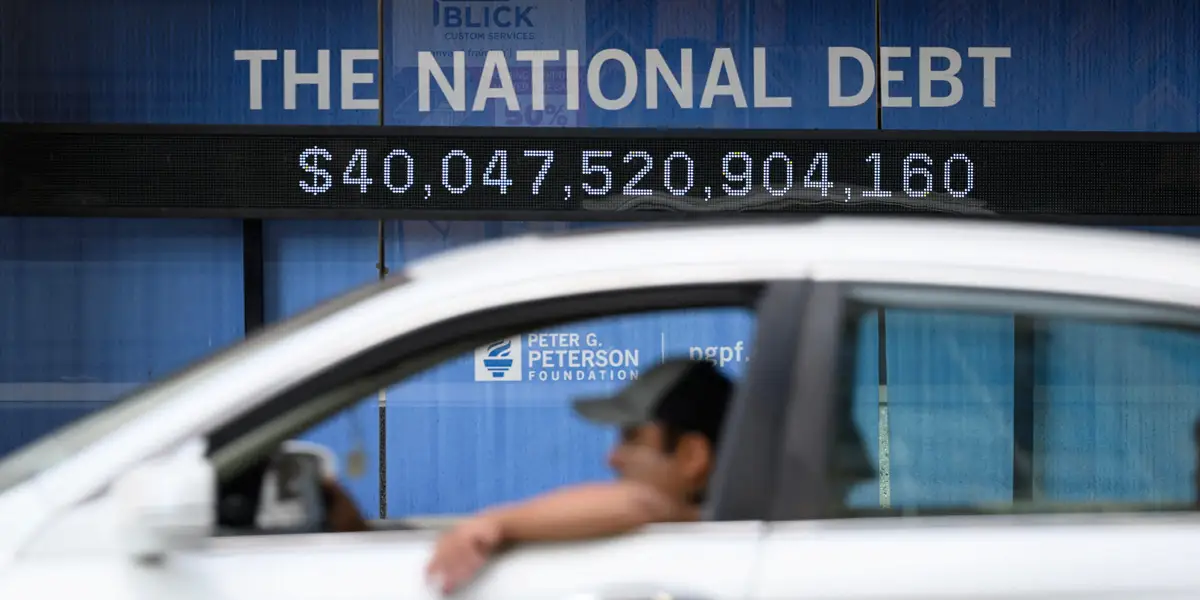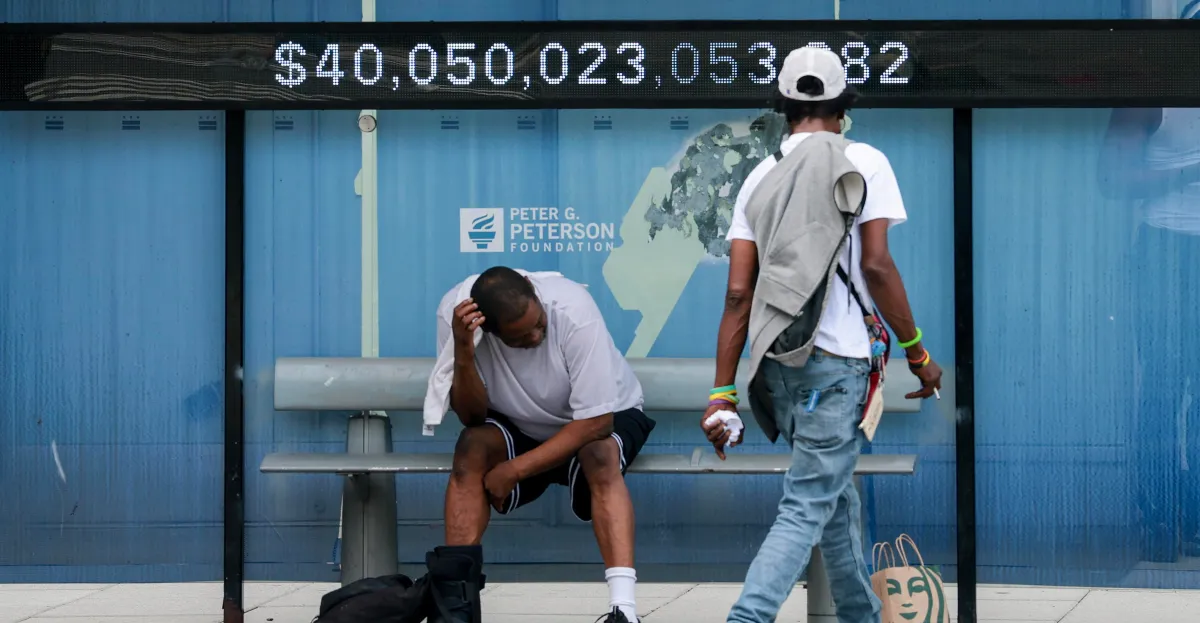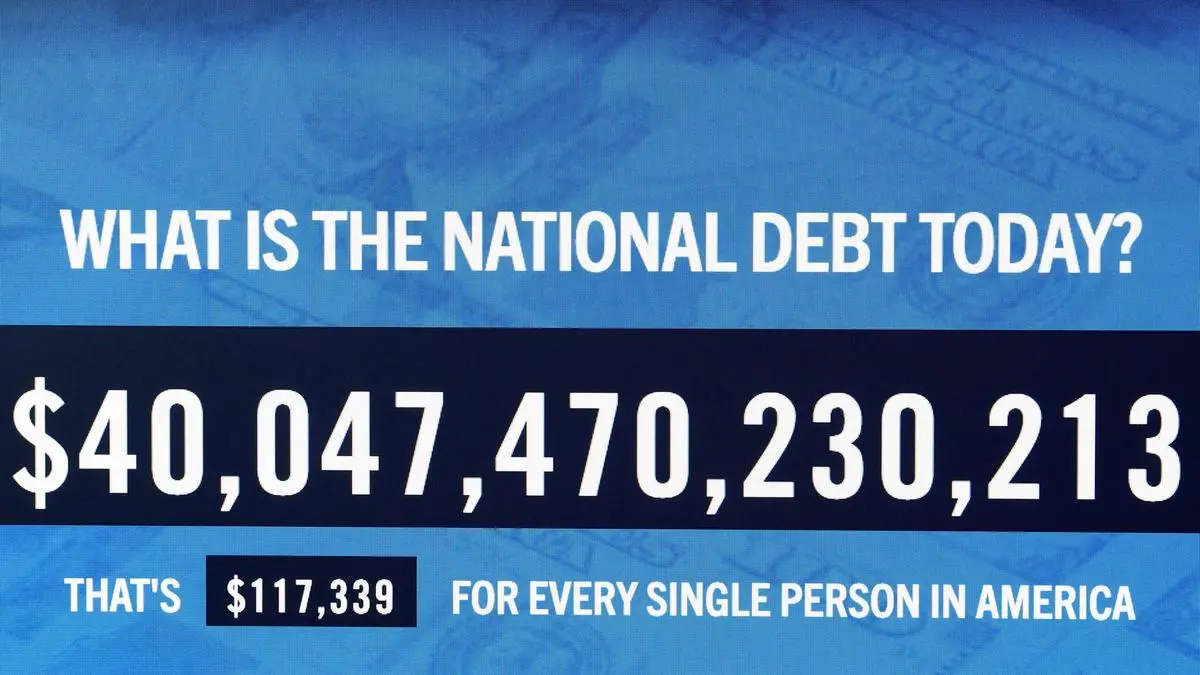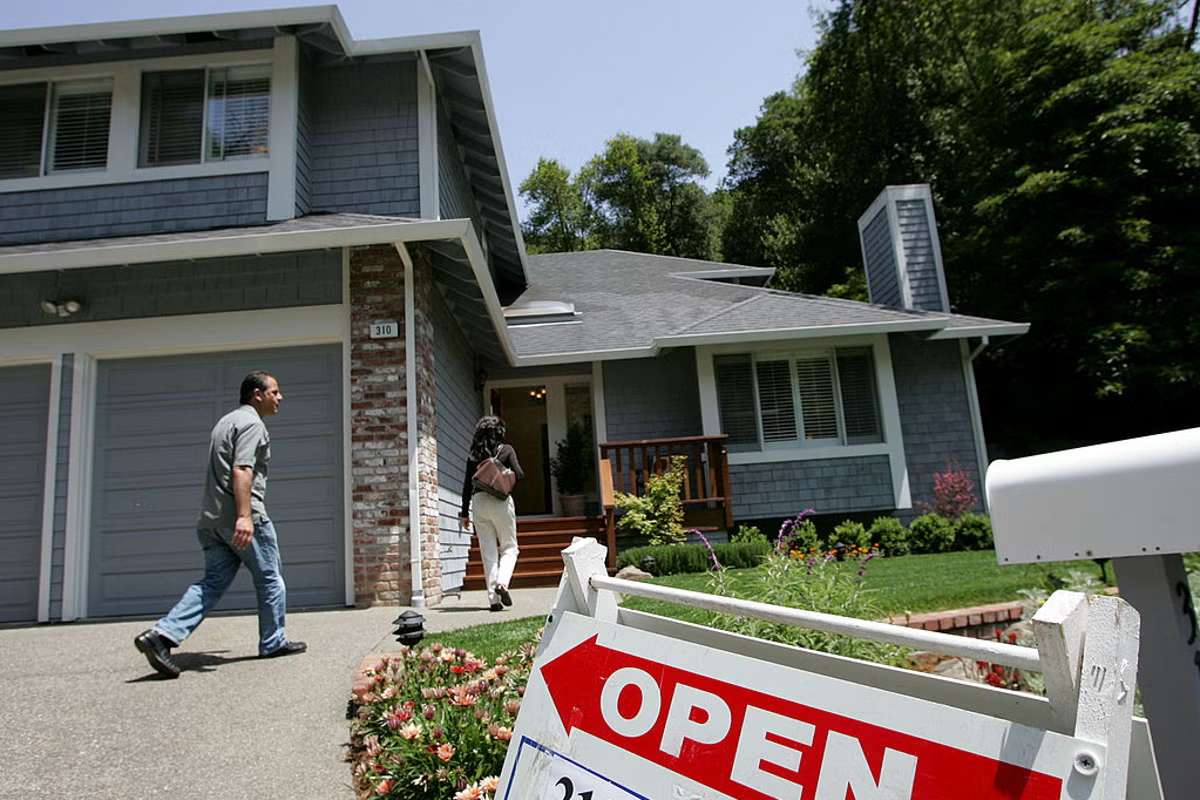
Facing a high mortgage rate? You can thank the $40 trillion in national debt for that.The United States passed this unfathomable milestone for the first time last week as President Donald Trump’s Iran war and tariffs have ballooned a deficit that was also heavily impacted by economic decisions of previous administrations.That $40 trillion figure has a direct impact on Americans’ personal finances. A high national debt forces the government to sell bonds - similar to loans - to raise money for its budget. The more bonds the government sells, the higher their interest rate goes. And as bond rates go up, the cost of borrowing money for a mortgage goes up, too, said Leo Chen, an assistant professor at the University of South Florida’s Kate Tiedemann School of Business and Finance.“As federal borrowing costs rise, so do rates on mortgages, auto loans, credit cards and business loans,” Chen said. ‘The highest mortgage rates of the year hit right in the middle of summer, and that’s pulling back contract signings,’ one expert said (Getty)Two days before the Iran war, mortgage rates were 5.98 percent and have since shot up to 6.65 percent, according to federal data, the highest rate in around a year. That difference of nearly 0.7 percentage points can cost a homeowner an extra $511 a month on their mortgage payment based on the average home sales price through June, according to federal data. Higher interest rates, coupled with home prices at near 19-year highs, have made it harder for the average American to buy a house. Gas prices and inflation rates have also hit multiyear highs, so money that might normally be saved for a down payment is going toward necessities.In the meantime, home sales have slowed. Contract signings for existing homes fell 2.3 percent month-on-month and 2.2 percent year-on-year, according to the National Association of Realtors. Pending home sales have reached their lowest point in 2026. The West was hit the hardest, dropping 4.7 percent monthly and a staggering 7.1 percent year on year. “The highest mortgage rates of the year hit right in the middle of summer, and that’s pulling back contract signings,” said NAR Chief Economist Dr. Lawrence Yun. “Home prices are at record highs so houses for sale are sitting on the market longer, and fewer buyers are bidding above the asking price than a year ago, though there are large local market variations.”How bad is the housing market right now? Pending contracts are 30 percent lower than what they were in 2019, Yun said. However at some point in the next few years, the slow market should turn into a booming one, Yun said. While mortgage rates are high, employment figures are strong - that indicates pent-up demand that could open the floodgates of homebuying if prices and rates ease. On the rates side, mortgage rates might drop, in theory, if bond rates go down because the government can corral its debt and cut back on its need for loans.
The $40 trillion national debt is fueling high mortgage payments
Pending home sales were 30 percent lower in July than seven years ago
497 words~2 min read