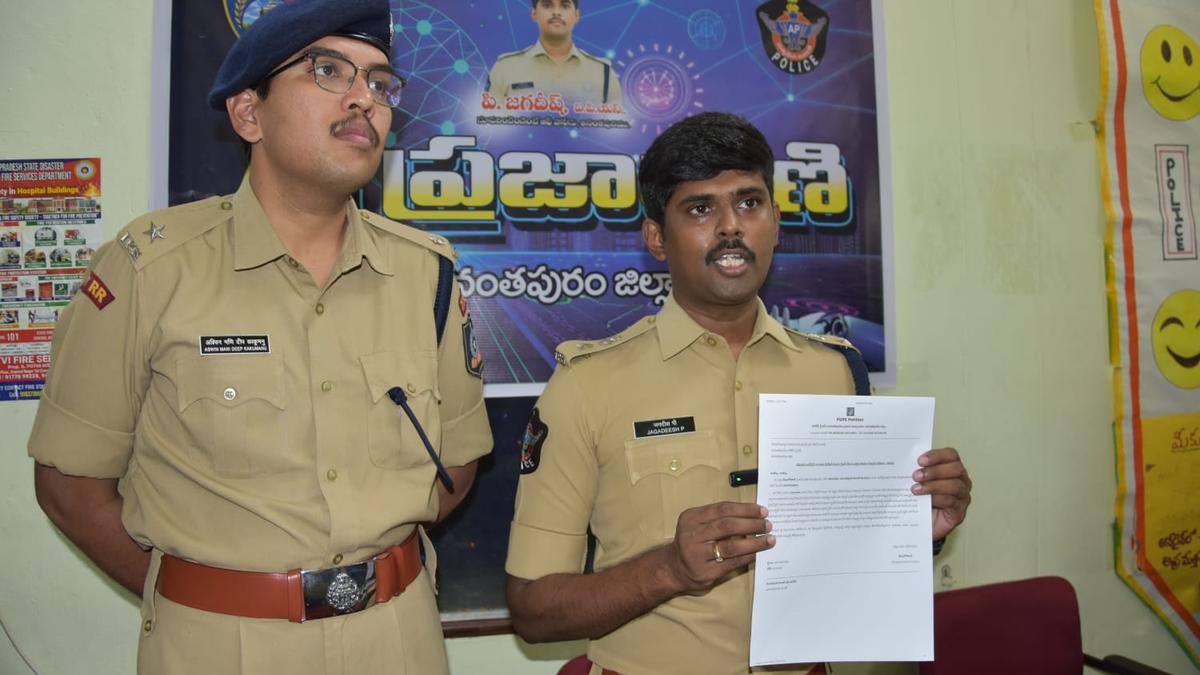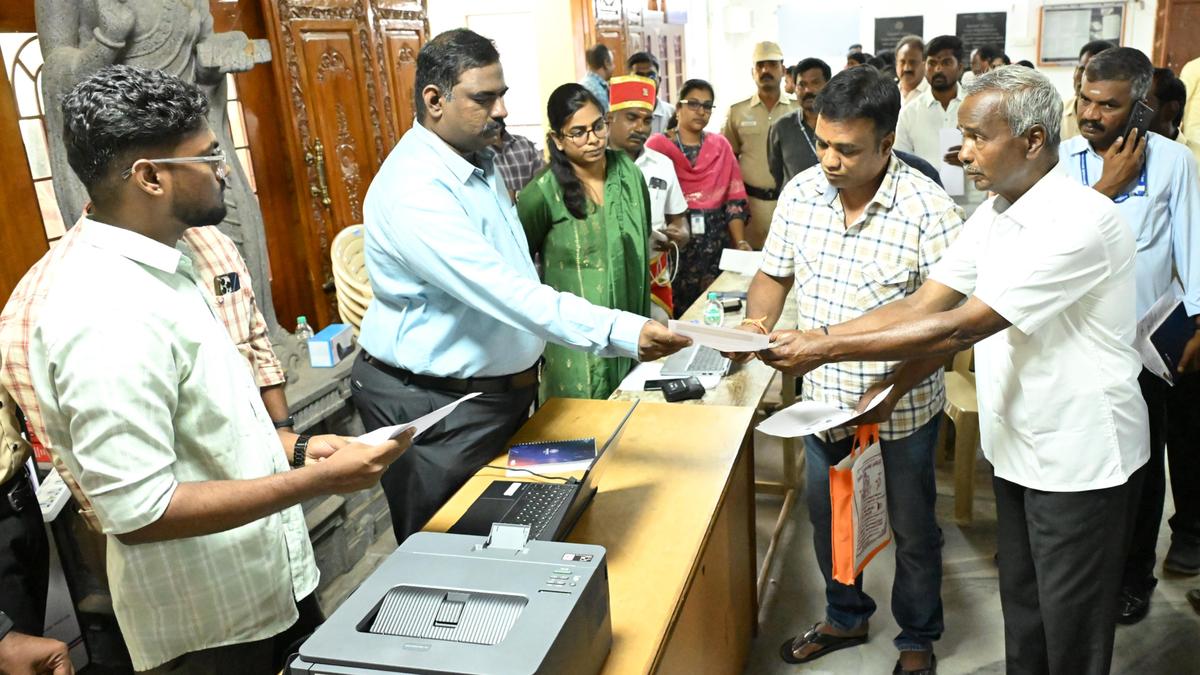
A voice identification AI interface for typing out petitions of public was introduced by Collector C. Dinesh Kumar at the Collectorate on Monday.
| Photo Credit: BASHKARAN N.
An Artificial Intelligence (AI)-based application for end-to-end handling of public grievances petition, from the drafting stage to the final numbering on the Chief Minister’s portal, has been introduced for trial run at the Krishnagiri Collectorate on Monday (August 24, 2026).The voice dictation AI, based on the Large Language Model (LLM) will help draft the grievance petitions and see it through to the final stage in 15 seconds.Collector C. Dinesh Kumar said that every week, 500-800 petitions were received from the public during the weekly grievances day.When the Collector took charge, he introduced a helpdesk comprising six people to assist the public in drafting petitions, who would otherwise have had to type out petitions for a fee of ₹50. Now, as an upgrade, the Collector has introduced an AI-based application. “When people come with a grievance, they should not have to move from pillar to post, and that is the aim of this interface,” he said.Before uploading, the petitions are manually categorised under Land, Revenue, and other amenities, and facilities-related petitions such as road, drainage, house, toilets or welfare schemes and are uploaded on to the portal. The process flow takes about 1.20 seconds per petition.The application will convert a dictation into a petition. One copy is given to the petitioner, while one is uploaded.The trial began with voice dictation for a petition requesting a hearing-aid. The petitioner from Singarapettai panchayat only had their Aadhar card, which the application utilised, allotted the petition to the Uthangarai taluk and uploaded the petition to the Welfare of the Differently Abled Persons Department. The registration number was generated in 15 seconds.The AI application will function in three ways. First, when petitioners submit petitions that may not be very clear, these can be converted into legible documents via scanning. Second, there is a voice dictation option for articulating their grievances. Third, petitioners can directly upload written petitions.The LLM segregates the petition first instead of uploading using the drop-down menu. The LLM has already be updated with Department categories, and the district structure of 10 unions and eight taluks.Different petitions have different work flow. “For instance, Updating of Revenue Record (UDR) correction can only be done by the DRO; patta correction by the RDO and patta issue by Tahsildar. This is already fed. As interface will be based on LLM, it will learn to urgrade as per usage,” the Collector said.According to the Collector, the AI application will require three weeks for corrections to be incorporated. Once completed, the AI model will be submitted to the CM for emulation across the State. Published - August 24, 2026 08:54 pm IST