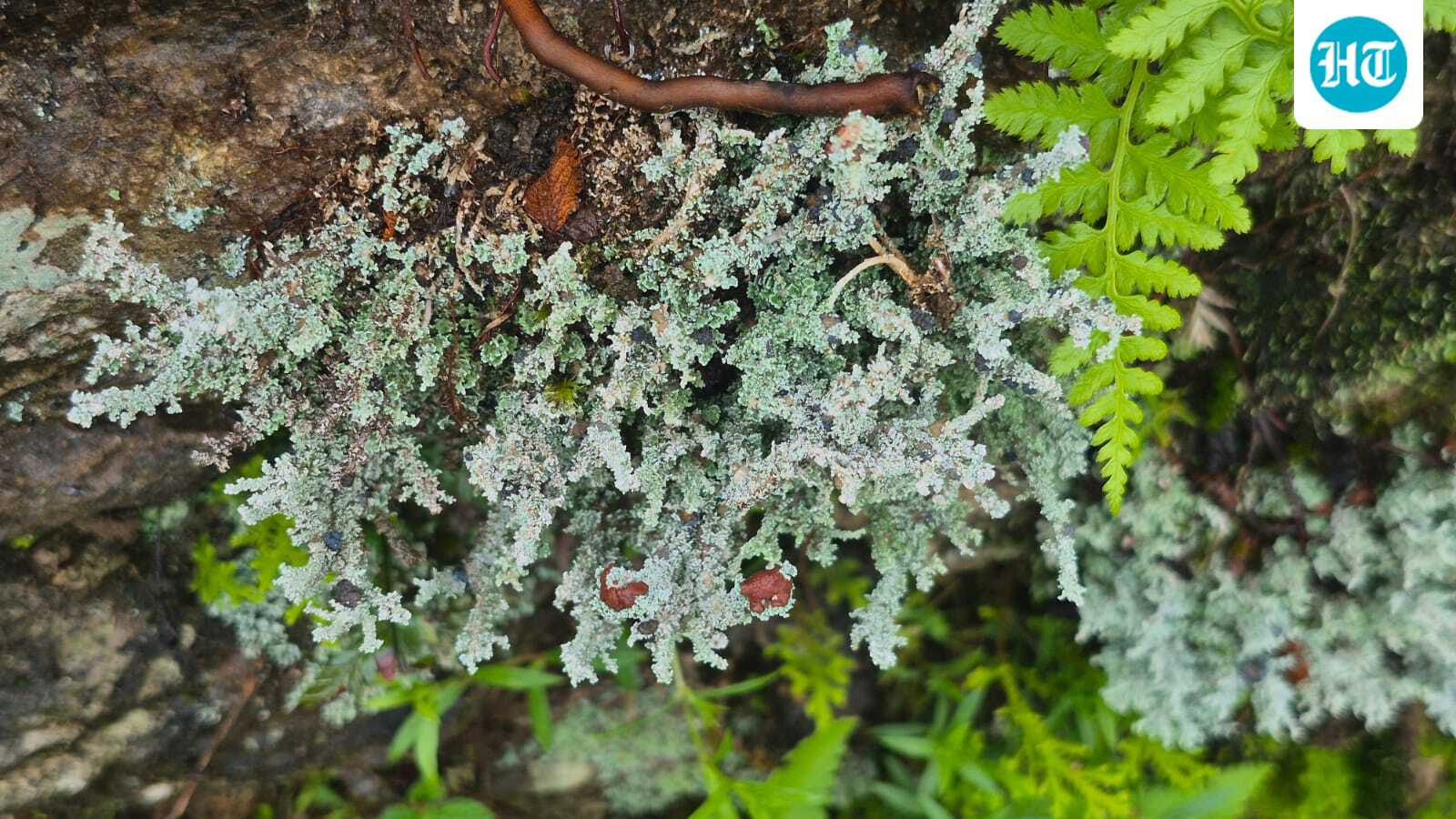
One of the world’s top 100 worst invasive species was brought to India in the 19th century as an ornamental garden plant. But Lantana camara, which now occupies 40% of India’s tiger habitats, was not the only one. The ornamental horticulture industry is recognised as a key global pathway for introducing invasive alien species. A new study examining India’s online ornamental plant trade has found that a majority of these plants sold online are alien species, many of which are known to be invasive or naturalised in other countries.The study, published in Environmental Conservation, also revealed that 57 species already declared invasive in India were available for purchase online, including Lantana camara and the highly-invasive Parthenium hysterophorus.Invasive alien species are recognised as one of five major drivers of global biodiversity decline. “They outcompete our native species and the cost is enormous,” said Kesang Bhutia, the study’s lead author and a graduate student at Ashoka Trust for Research in Ecology and the Environment (ATREE), Bengaluru.“Not all alien plants are a threat. There is a continuum,” explained Bhutia. A newly-introduced plant cannot survive without human care. Some escape cultivation, enter native ecosystems and naturalise, reproducing independently. Others can go further to become invasive.As part of her research, Bhutia compiled an inventory of 1,856 ornamental species sold online using data from three of India’s largest online plant retailers that ship nationwide. Of these, 1,371 species (over 70%) were alien species, outnumbering the 480 native species on the list. Cross-checking against global databases showed that 327 species were invasive elsewhere, while 639 had naturalised outside their native ranges.Lantana camara for sale in a nursery. The plant is native to the American tropics, and is highly invasive in India. Image by Kesang Bhutia.“What was particularly alarming is that species already known to cause ecological harm in India are still easily purchasable and deliverable to homes; there’s practically no barrier between ‘known invasive’ species and adding them to your cart,” said Aravind NA, Senior Fellow at ATREE and the study’s supervising author.Among the invasive species researchers found listed for sale online were the common water hyacinth (Pontederia crassipes), bitter vine (Mikania micrantha) and mesquite (Neltuma juliflora). Since many invasive weeds first appeared as ornamentals, “online retail presents an important but underexamined pathway for potential invasions”, Aravind added.Ornamental plant trade and the InternetWhile less than 10% of introduced ornamental species escape cultivation, the volume of the ornamental plant trade contributes significantly to the spread of potentially invasive species, the study notes. “A lot of ornamental plants are coming in through high-tech nurseries and overseas imports,” said Mam Singh, Principal Scientist (greenhouse floriculture) at ICAR-Indian Agricultural Research Institute, who was not a part of the study. India has many native ornamental species. But imported plants are often aesthetically-appealing and profitable for nurseries, he pointed out, adding that “customers always want something new, which may not be suitable for the local environment.”With the rise of e-commerce, online platforms now ship seeds, bulbs and live plants directly to people’s homes across India, expanding the trade’s reach, volume and frequency. This increases the geographic spread of what researchers call “propagule pressure” (the number and frequency of introductions into a new environment) as well as the number of “escape attempts” a species makes, explained Aravind. E-commerce, he added, often bypasses biosecurity checkpoints as no quarantine inspections exist for plants shipped domestically by courier. As this gap between identifying a species as invasive and allowing it to be sold nationwide persists, the propagule pressure and geographic spread continue to grow, making post-establishment control costlier than prevention.Globally, nearly three-fifths of the world’s seed-plant species, including over 500 invasive species, are traded daily through platforms like eBay. Studies in Australia and the US have also documented regulated and invasive species being sold despite biosecurity policies. “In India, where plant trade regulations are less strict, the situation is arguably more vulnerable to this issue than in countries with more rigorous controls,” observed Aravind. The prevalence of alien species in online trade indicates a “systemic issue”, he said, as the market centres around exotic, fast-growing, and easily propagated plants that tend to have invasion-prone traits.Traits like high seed output and resistance to herbivory that make ornamental plants easy to cultivate often help them naturalise and spread as invasive as well, according to Anzar Khuroo, professor of Botany at the University of Kashmir who has compiled alien flora inventories of India and the Himalayan region. Khuroo, who was not associated with this research, called the study a “valuable contribution” and noted, “Although alien plant inventories in India have been assembled over the last decade, a list specifically focusing on those alien plants traded online for ornamental use was lacking for the country.”A preliminary screening toolThe study found that herbs were the dominant life form among the inventory’s native, alien and invasive taxa. Most alien species originated from Southern and Northern America, possibly due to climatic similarities with India allowing them to establish easily.Apart from similar climatic conditions between a species’ native and introduced range, another key indicator of a species’ invasiveness is its history of being “invasive elsewhere” – a common metric used as part of Weed Risk Assessments globally. “The rationale behind it is that a species problematic in one area can be problematic in another area which has similar climatic conditions,” explained Bhutia.The authors determined each species’ native range using Plants of the World Online database. They then cross-checked the inventory against three databases of alien and invasive species – Indian Alien Flora Information (ILORA), Global Register of Introduced and Invasive Species (GRIIS), and Global Naturalised Alien Flora (GLONAF) – further categorising them based on invasion risk.Thirty-nine species naturalised in India and invasive in other regions comprised the high-risk group, highlighting their potential to become invasive in India as well. A total of 239 species recorded as invasive in other countries but not yet naturalised or invasive in India were identified as moderate-risk species, while only two species naturalised in India and elsewhere but not invasive globally were identified as low-risk.“[T]his tool functions as a screening method, not a prediction,” clarified Aravind, adding that it has a “solid precedent” as “invasive elsewhere” questions have demonstrated strong predictive accuracy in Australian and Hawaiian Weed Risk Assessments. The authors suggest the lists be used to prioritise species for thorough risk assessments.These lists can also help raise awareness among consumers and the industry, said Khuroo. Given the relatively weak online trade regulation in the country, he noted, the study calls for the development of an “early warning mechanism” to minimise invasion risks. But he cautioned that alien species posing high invasion risk in India’s warmer tropical areas may not pose the same risk in temperate colder regions. Since “the data has been collected at national scale, but India has diverse agroclimatic zones at regional scale,” Khuroo recommended that future studies assess regional applicability as well.Bridging regulatory gapsMore than half of the alien species recorded globally since 1950 had never been documented as established anywhere until they first appeared. This means the databases this study relies upon possibly underestimate the threat, Bhutia pointed out.“While we have tried to take three of India’s largest online retailers, they are only part of the picture,” she added, highlighting the need to examine social media and smaller informal sellers as well. Another limitation, according to Aravind, is that the study only assesses what is available for sale, which leaves the causal link between online sale and new invasions in India still to be traced.The authors say no country-specific WRA framework currently exists in India. While researchers have developed Weed Risk Assessment tools, these have not yet been implemented as regulation. The Plant Quarantine (Regulation of Import into India) Order, 2003 also lists 57 quarantine weed species, of which only one (Anthemis cotula) is recognised as invasive by ILORA – “a striking mismatch between the regulatory list and the species actually known to be problematic domestically,” observed Aravind.Building on previous recommendations, the study suggests a blacklist-based ban on species confirmed invasive in India – a cost-effective measure, he said, since they are already listed on the ILORA database. Other measures include opt-in risk labelling, promoting native alternatives and implementing a certification model like California’s PlantRight programme, which reduced invasive plants carried by participating retailers. From an industry perspective, “these are all very feasible,” noted Singh.As per existing regulations, he explained, any planting material imported into India must be contained and monitored in post entry quarantine facilities for some months to ensure it is not harmful to public or environmental health. Singh added this on-ground monitoring needs to be more strictly enforced.“The knowledge is there,” said Bhutia. “How to merge that knowledge with regulations would be the next step.”This article was first published on Mongabay.
Online ornamental plant trade could be pathway for invasive species into India
Retailers ship ship seeds, bulbs and live plants directly to people’s homes but there are feasible solutions to check this.
1,472 words~7 min read