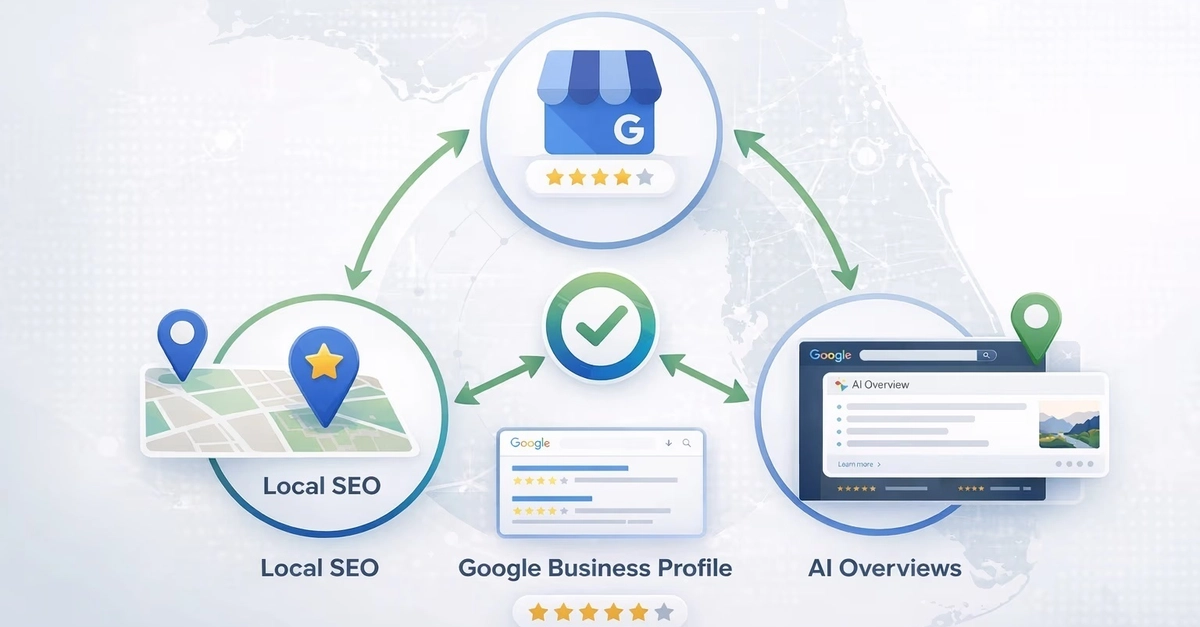
Hastimal Jangid is Director at Coozmoo, AI-powered digital marketing agency built to skyrocket revenue for small & medium-sized businesses.gettyFor most of my career in product and technology leadership, "search" has been the default interaction model: type a keyword, scan a list, pick the best-looking option. That model is breaking down. Across mobility, retail, enterprise software and support, search bars are giving way to interfaces that reason with you instead of just retrieving results.Google Maps' recent AI evolution is a useful example—not because it's unique, but because it's a large-scale test of how people want to interact with AI. The same pattern is showing up in enterprise search, support bots and retail apps: reasoning is replacing retrieval as the default interaction model. From Retrieval To ReasoningThe old model put the burden of precision on the user. You typed "coffee shops near me" and did the reasoning yourself—parking, noise level and hours. A conversational interface flips that: Ask, "Where can I charge my phone without waiting in a coffee line?" and get one reasoned answer instead of ten pins to sort through.I've seen this pattern recur across nearly every product category I've worked in: a search bar puts the burden of precision on the user; a conversational interface puts it on the product. That's a different design problem, and a lot of teams are still underestimating how different it is.Two things I'd flag for any leader wanting to understand this shift:1. Trust becomes the bottleneck. A wrong answer on page three of a results list is easy to ignore. A single confidently wrong conversational answer is a trust event—especially in moments like driving or checking out, where the user can't easily verify it against ten other tabs.2. The durable advantage is proprietary data plus reasoning, not either alone. Reasoning is commoditizing fast. Once it does, the differentiator becomes what a company has to reason over—usage data, verified reviews, transaction history—not the model layered on top.The New Currency: Being Surfaced, Not RankedThis shift also changes how businesses get found. For twenty years, discoverability meant ranking on page one, but conversational AI now returns one synthesized answer instead of a list. Because of this, "rank first" gives way to a new goal: Being confident and verifiable enough to be mentioned at all. In a RankRabbit AI analysis of more than 350,000 business profiles, only a small fraction were ever surfaced by AI assistants when users asked for recommendations. As the researchers noted, this is because these systems weigh confidence, not just relevance, and exclude what they can't verify.That's a different bar than SEO, and every customer-facing leader should understand it. A few things I've seen actually move the needle:• Consistency beats cleverness. Conflicting details across your listing, website and reviews are read as unverifiable, which gets excluded.• Specific reviews outperform generic praise. "Fast service, easy parking, quiet for calls" gives a model something to match. "Great place!" gives it nothing.• Structured data does more work than it used to. Machine-readable hours, categories and attributes let a model verify a claim fast enough to include it in an answer.• Completeness is a trust signal. Because a profile with gaps reads as unverified, filling every field is one of the cheapest ways to improve your odds of being mentioned.Optimizing for a keyword is being replaced by optimizing for verifiability. This is a harder standard to game, and one that will leave businesses that treat their online presence as a chore effectively invisible to AI-mediated discovery.Personalization's Trust BoundaryA conversational assistant is only as good as what it's allowed to know about you, which raises a question every leader building a personalized product will eventually answer publicly: How much of a user's digital life should one product draw on?The most defensible answer is limiting the scope of personalization to the data shared with a given product instead of a user's entire digital footprint, because your answer to the question above will be continuously tested by regulators and users as these features mature. The more personal an answer feels, the more scrutiny its data-sourcing deserves, and that scrutiny should be anticipated, not discovered by users after the fact.When AI Reasoning BreaksNone of this arrives without friction. For instance, MIT researchers have found that AI-driven discovery features have been rolled out unevenly across different markets. There have also been reports that AI-powered discovery features can sometimes share misleading information about images.These incidents are important reminders that systems are only as good as the data they're trained on and that the long tail of data documenting the physical world is still being filled in. Confident-sounding answers in under-documented areas deserve an equal amount of skepticism.None of this is a reason to slow adoption, but building guardrails from the start will be essential for building trust with users. Any team shipping a reasoning-based interface needs a clear answer to "what happens when the model is confidently wrong" before a clever answer to "what can the model do." Reliability has to be a launch requirement.Why This MattersIt's tempting to file this trend under "nice quality-of-life update," but I believe that doing so undersells its importance. What's changing is the interface layer between people and the physical world — the same reasoning capability that will eventually underpin autonomous vehicles, delivery robots and agents that act in the world, not just answer questions about it.The interface layer between people and the physical world is fundamentally changing. Beyond answering questions about the world, AI's reasoning capability will eventually underpin autonomous vehicles, delivery robots and agents that act in the world.To understand how this will impact them, leaders need a view on three questions: What happens to discoverability when ranking gives way to reasoning? Where's the line between personalization and overreach? And what does trust cost when your product is wrong once, in a moment the user can't verify? By answering these questions proactively, companies can ensure they are still seen and trusted once conversation, not search, is how people find what they need.Forbes Technology Council is an invitation-only community for world-class CIOs, CTOs and technology executives. Do I qualify?
How AI Search Is Transforming Local Businesses
Across sectors, search bars are giving way to interfaces that reason with you instead of just retrieving results.
1,013 words~5 min read