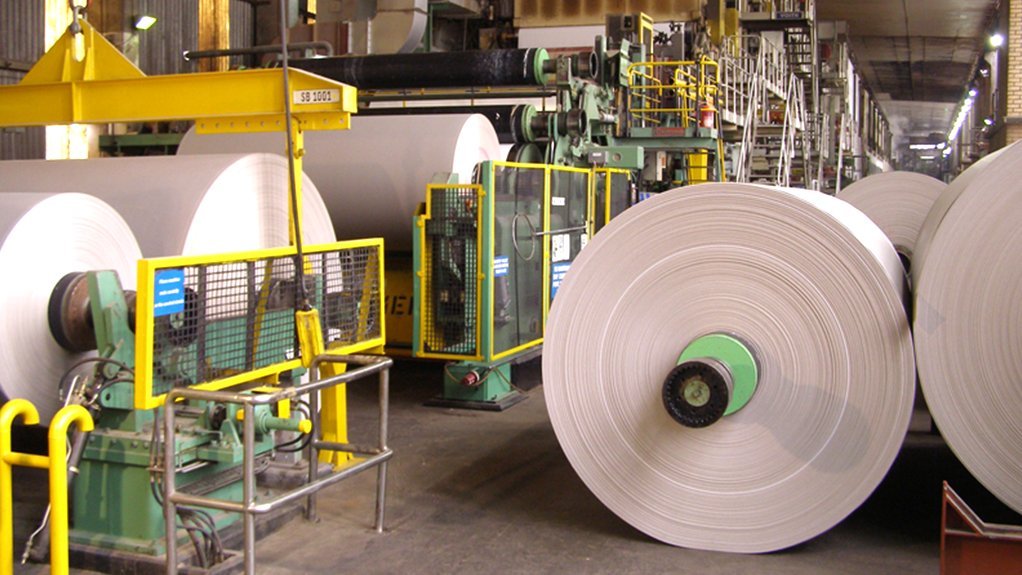
Mpact has more than doubled cash generated from operations and reduced its debt in the first half of 2026, but weaker paper prices and higher input costs weighed on earnings, with HEPS falling by more than half.Cash generated from operations rose to R448m in the six months ended June, from R173m in the previous period, while net debt fell to R2.6bn from R3bn, the company said on Monday.HEPS from continuing operations fell to 48.1c from 104.1c a year earlier, as a weaker performance in the company’s paper manufacturing division outweighed gains in its paper converting and plastics divisions.Revenue increased 1.1% to R5.96bn, while earnings before interest, tax, depreciation and amortisation (ebitda) from continuing operations fell 4.4% to R614m. Underlying operating profit, which excludes special items, fell 15.7% to R284m.Mpact declared an interim dividend of 15c a share, down from 30c a year earlier.The company said paper manufacturing was the main drag on the group, with containerboard sales volumes increasing 2.9%, but lower selling prices and higher input costs put pressure on margins.The business has been affected by a global cyclical downturn in paper, weaker industrial demand in South Africa and competition from imported containerboard. Higher electricity and other input costs, as well as increased depreciation after the capitalisation of the Mkhondo mill upgrade, also weighed on profitability.Mpact said it was pursuing import protection and other measures to improve the competitiveness of its paper operations.The company’s paper converting division delivered a 2.4% increase in revenue, driven by higher sales volumes, while operating profit increased modestly, supported by improved performances from its foodservice and cardboard packaging businesses.In plastics, revenue increased 5.7% to R989m, while operating profit rose to R45m from R7m. Bins and crates recorded higher volumes, particularly in jumbo bins and export crates, while FMCG Wadeville benefited from a better product mix. The company said it also reduced fixed costs after restructuring.The company is also dealing with the fallout from the closure of the coated cartonboard machine BM6 at its Springs mill, which was shut on May 10 and classified as a discontinued operation.BM6 reported an underlying ebitda loss of R25m for the period, while the closure resulted in R299m in one-off restructuring, impairment and retrenchment costs. Of this, R104m was cash retrenchment and restructuring costs, with the balance largely relating to non-cash impairments.The closure is part of Mpact’s efforts to reduce costs and align production capacity with demand, while the group is also reducing its recycling collection network.The company said it is now focused on improving returns from recent investments rather than expanding its asset base.Mpact said it is still optimising its Mkhondo mill upgrade, with the upgraded pulp mill meeting its throughput and quality targets. However, demand for soluble lignin sulfonate (SLS), a lignin-based product produced as part of the upgraded process and used in applications such as concrete additives, animal feed and dust suppression, has been weaker than expected.The group expects trading conditions to remain difficult in the short-term, with elevated fuel, freight, polymer and other input costs continuing to affect margins and demand.Paper manufacturing margins are expected to remain under pressure in the third quarter, with both containerboard mills fully sold and no planned commercial downtime.Agriculture remains a more positive demand driver, as expected growth in citrus exports supports demand for cardboard cartons and plastic crates, while flooding in the Eastern and Western Cape could cause short-term disruptions.Business Day
Mpact generates more cash despite a tough paper market
Paper manufacturing woes offset gains in converting and plastics divisions
562 words~3 min read