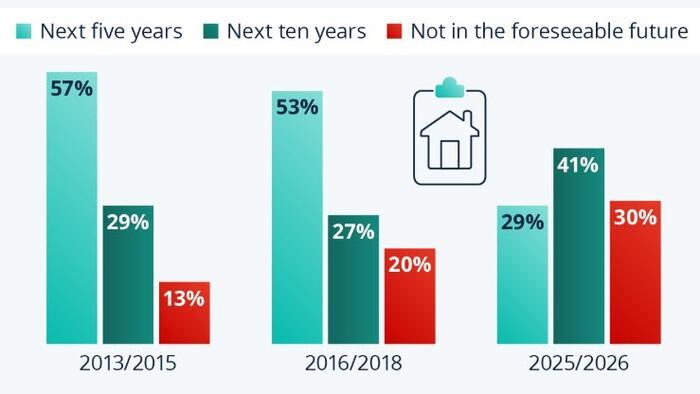
The dream of buying a home appears beyond most people under the age of 35, new research suggests, with a sizeable majority now actively considering social housing or long term renting. The annual PTSB Reflecting Ireland Housing and Homeownership report highlights how 52 per cent of people under-35 do not believe they will ever be in a position to buy a home. It also points to 61 per cent of the same cohort who say they are considering social housing and 55 per cent who are looking at long-term renting as ways to secure a home. While the percentage of young people who are gloomy about ownership has climbed, more broadly the proportion of people who believe they will never be in a position to buy a home has fallen by four points to 39 per cent, according to PTSB. However, sentiment towards Ireland’s housing market remains negative with 72 per cent expressing concern about the current situation, up three points on last year’s figure. Over nine in 10 respondents think that house prices will continue to rise and that future generations will face even greater hurdles to home ownership. Among those who do have a mortgage, 47 per cent are considering switching mortgage provider, up five percentage points since last year, according to the research. Awareness of ways to reduce monthly mortgage repayments has also increased, with more people aware of the potential for savings by switching providers, up 15 percentage points to 50 per cent.The study highlights how property price remains a key factor in bidding on a home with 69 per cent of buyers saying it was the key factor. Beyond that 26 per cent identified having a garden as important to them, with similar percentages highlighting energy efficiency and proximity to family as critical influences on their decision-making. Saving for a deposit remains the biggest hurdle to overcome, with 47 per cent saying it is difficult compared with 58 per cent last year suggesting perceptions have perhaps shifted on that score. Family support is playing an increasingly important role. Around half of first-time buyers expect they will get some assistance through gifts, loans or inheritance. There is a significant increase in those who plan to retrofit their home once their mortgage is paid off, up 11 percentage points to 72 per cent. Solar panels represent the largest gap between ambition and action with 62 per cent planning to install them but only 19 per cent having done so. Cost remains the most significant hurdle to retrofitting, but 73 per cent say additional grant support would make them more likely to proceed. Concerns about the economy have risen, with 53 per cent expecting economic conditions to worsen over the next 12 months, up from 45 per cent last year. The proportion of people expecting economic conditions to improve over the next 12 months dipped to 16 per cent, from 20 per cent. The cost of living remains the dominant concern, selected by 78 per cent among their top three issues, while the price of housing ranks next at 50 per cent and access to affordable healthcare coming in third at 35 per cent. PTSB spokeswoman Leontia Fannin said she was encouraged by the fall in the number of people who believe home ownership is completely out of reach but noted that the findings “show a clear shift in attitudes among younger adults, many of whom are increasingly considering alternatives such as long-term renting and social housing”.“This reflects the reality of today’s housing market and the hurdles many people continue to face on their journey to home ownership.”
Owning a home now out of reach, most young people believe beyond them – research
PTSB report says younger adults believe renting or social housing will be their paths to securing a home
600 words~3 min read