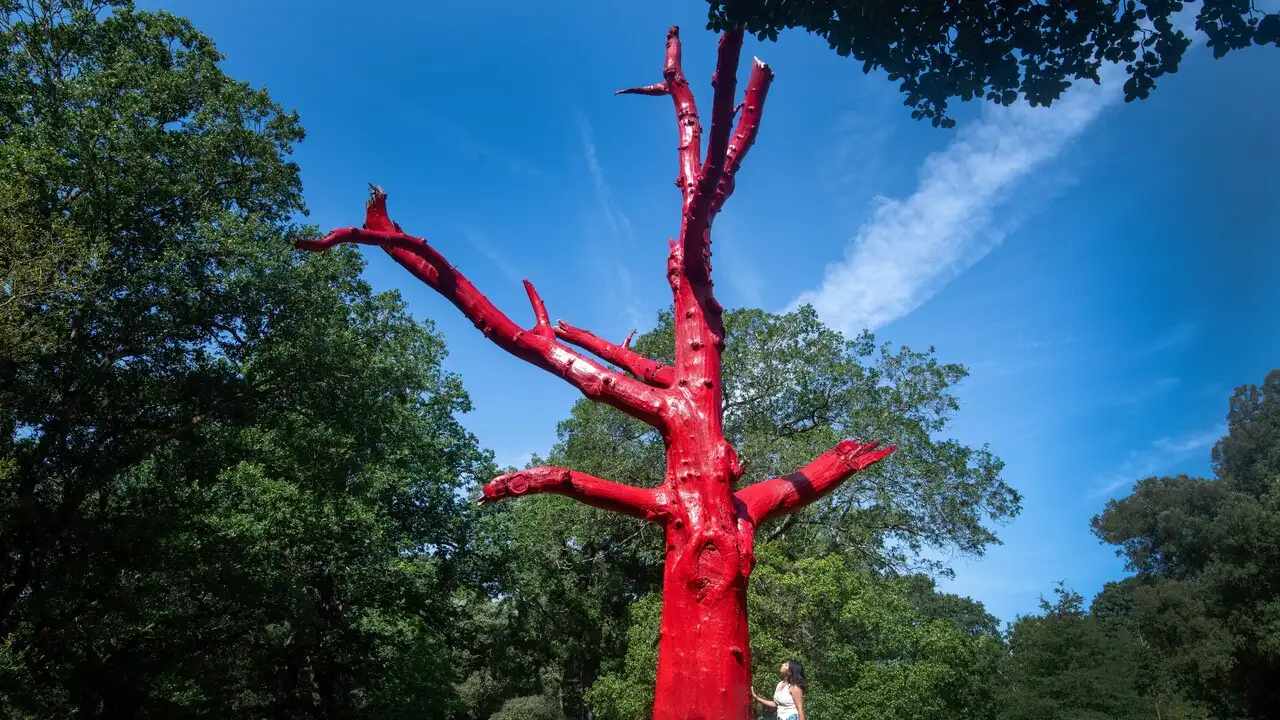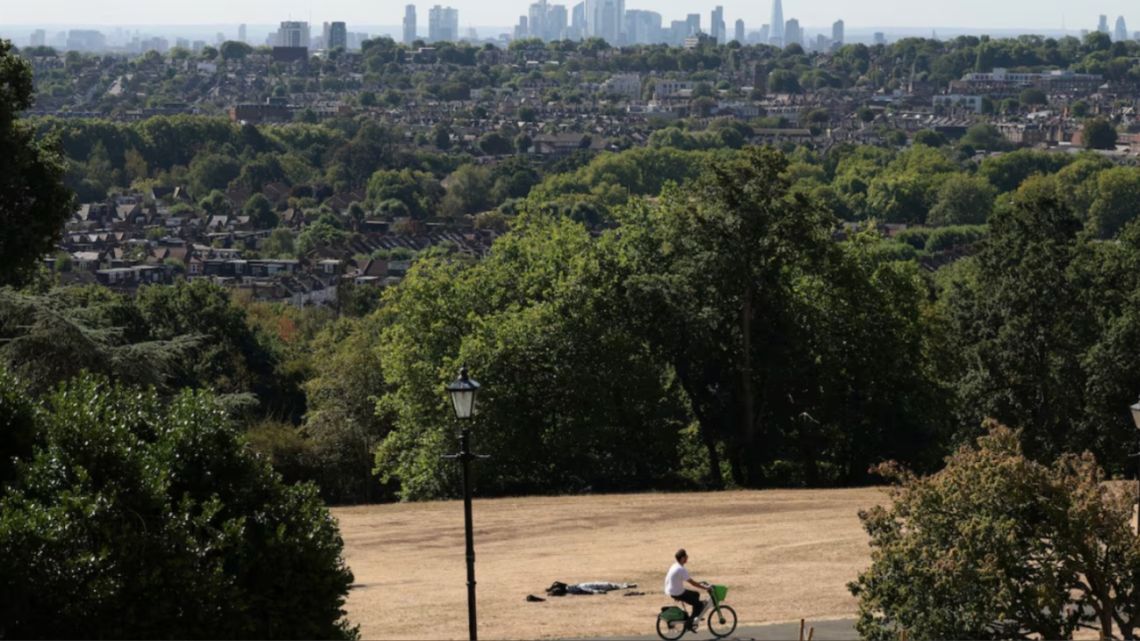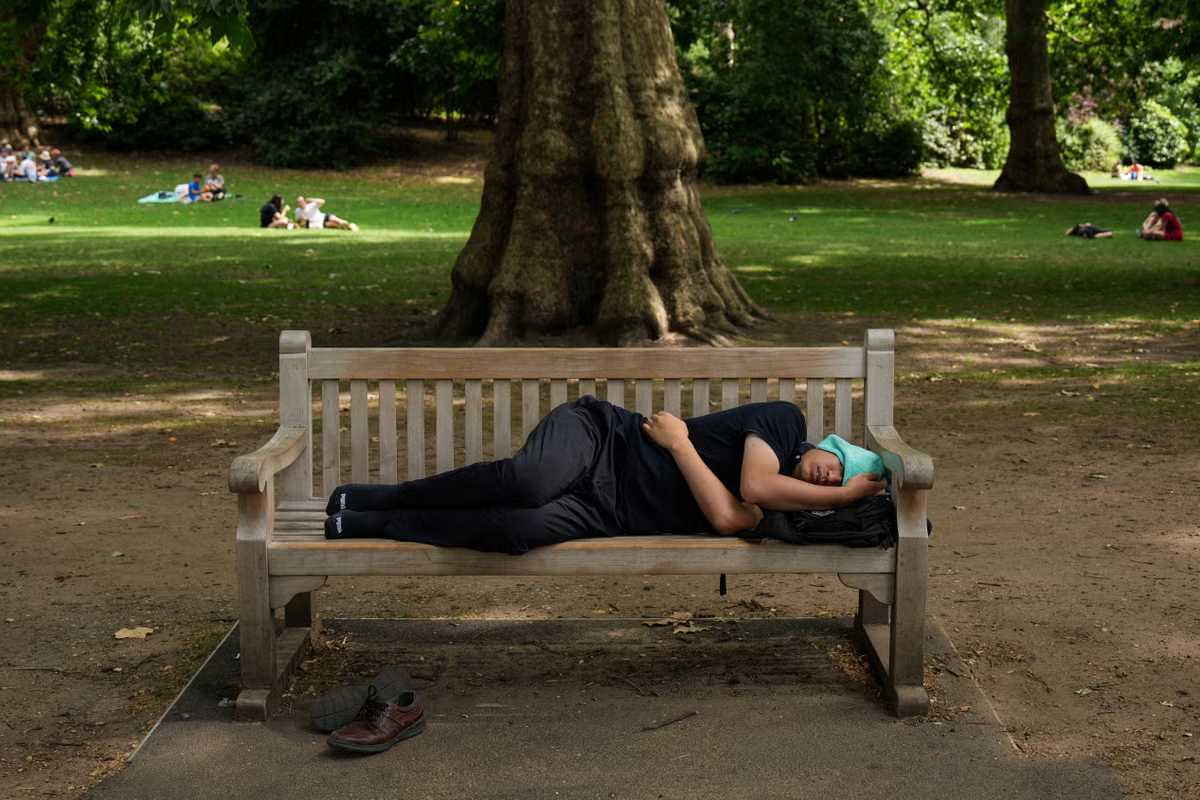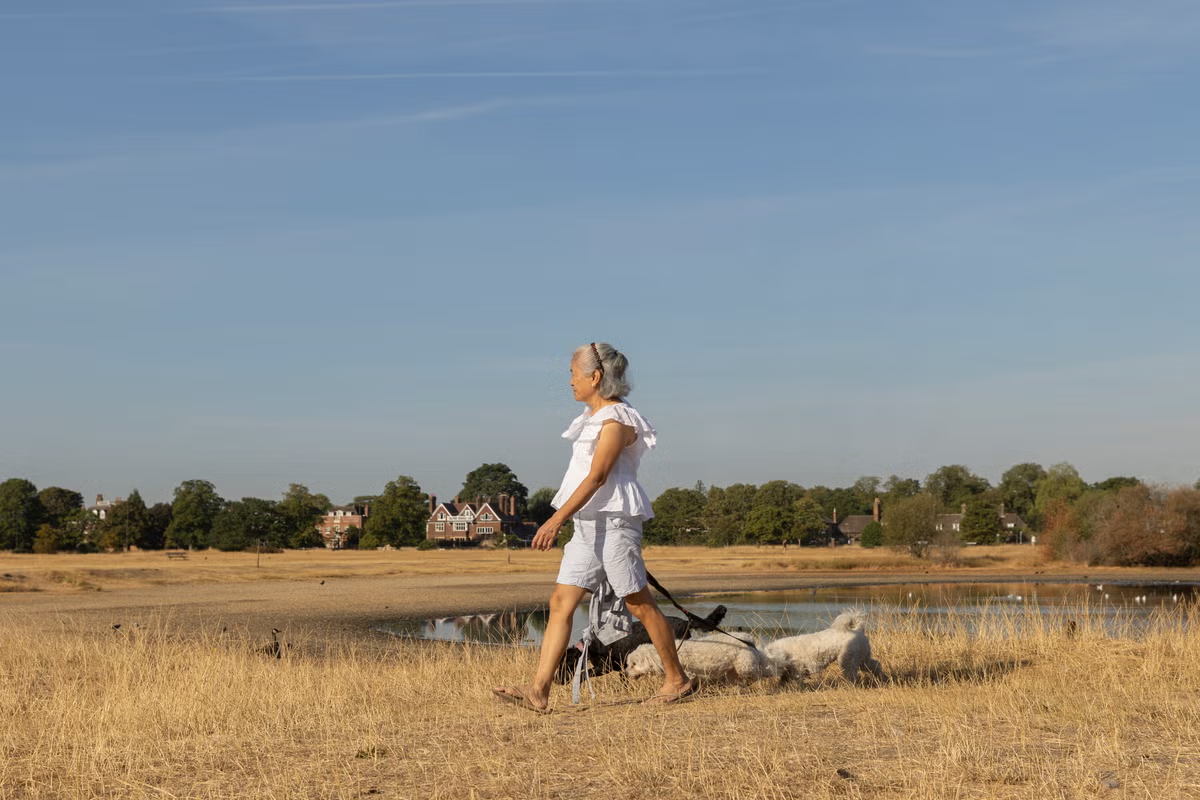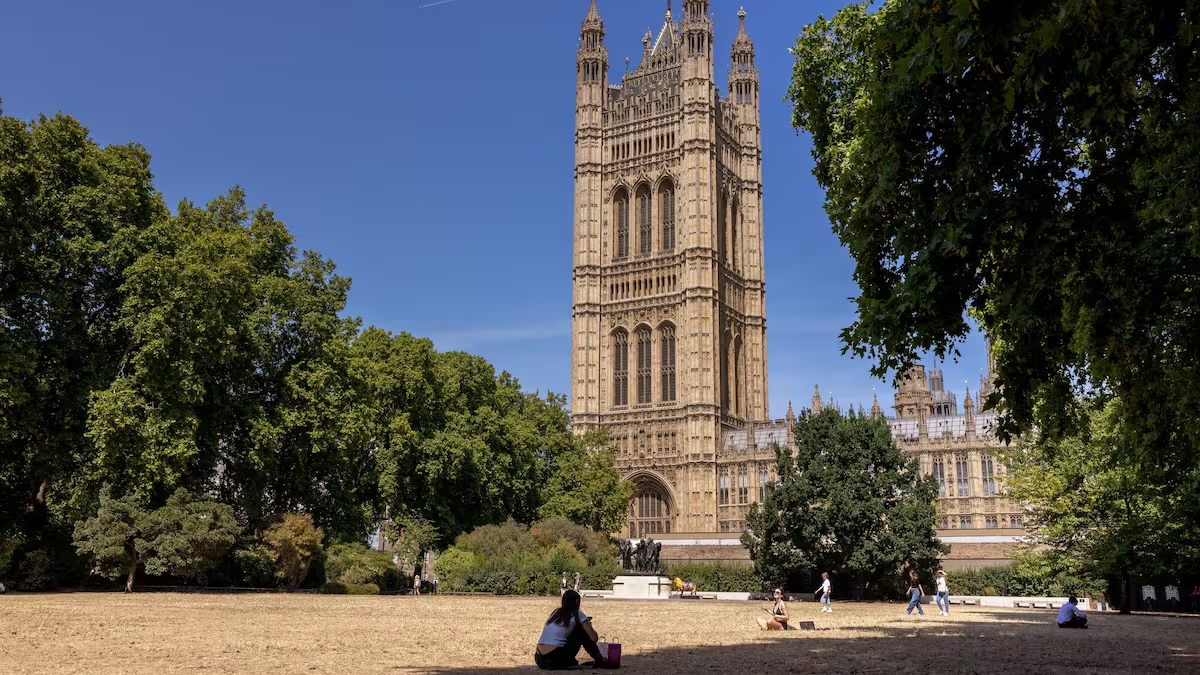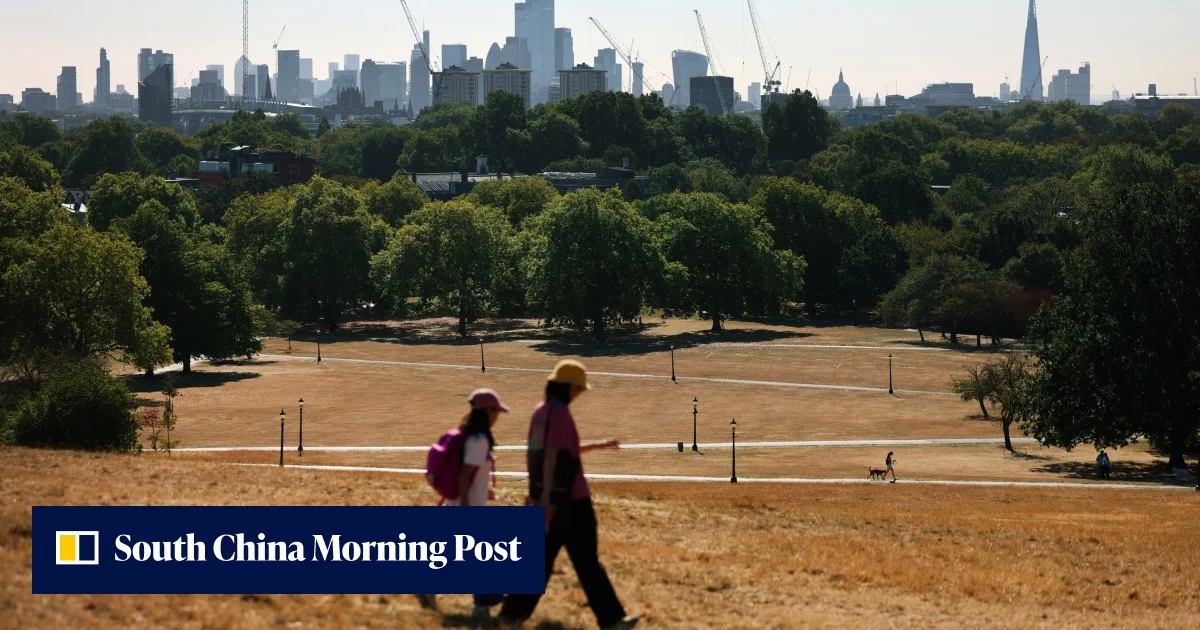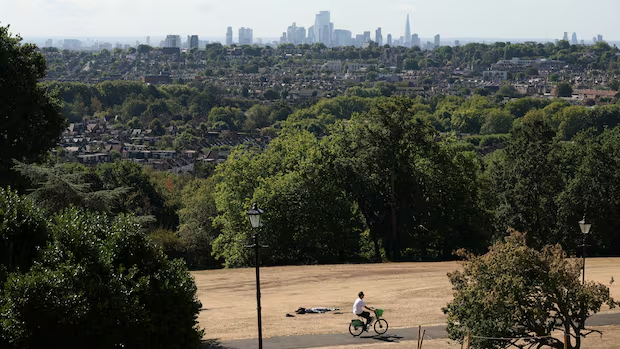
WorldLeaves are shriveling, and branches cracking from this summer's heat and drought. Researchers at Kew Gardens in London have assessed more than a million public trees in the city and determined that 73 per cent are at risk due to climate change by the end of the century.Successive heat waves and drought are putting stress on London's treesVerity Stevenson · CBC News · Posted: Aug 24, 2026 4:00 AM EDT | Last Updated: 1 hour agoListen to this articleEstimated 5 minutesThe audio version of this article is generated by AI-based technology. Mispronunciations can occur. We are working with our partners to continually review and improve the results.A person cycles across dry grass at Alexandra Park, with the City of London financial district seen behind, as drought weather conditions continue in London in August. (Isabel Infantes/Reuters)In the middle of a heat wave and severe drought this summer, Divya Hariramani was pruning a plum tree in south London when she noticed something wrong with one of the tree's branches. The branch was beginning to split completely from the tree. The workers at Mitcham Community Orchard told her it was because the fruit tree was stressed. "Because of the heat essentially. Like, when the trees can't provide enough water to its parts and like some parts will just drop," said Hariramani, who documents fruit trees and the people who tend to them across the city on a social media account called Fruity Walks. While London’s stone architecture may be more famous to some tourists, the 2,000-year-old city is also renowned for its mature urban forest, which has been called the largest in the world.Divya Hariramani documents fruit trees and the people who tend to them across London on her social media account Fruity Walks. (Submitted by Divya Hariramani)This year has proven difficult for the normally lush canopy, though, as five successive heat waves and a serious lack of rain have strained plants and wildlife. And it’s projected to get much worse for the city’s eight million trees.By the end of the century, according to a recent report from Royal Botanic Gardens Kew forecasting the vulnerability of London’s urban forest, some 73 per cent of the city’s trees could be at risk of dying due to climate change.Driest July on recordThe Kew Gardens tree collections and arboriculture team worked with the Greater London Authority to assess a sample of over a million public trees and found that 62 per cent of them already have "low suitability" to the climate conditions that can be expected by 2090 without action to reduce emissions. On top of that, nearly 11 per cent are “vulnerable."It’s not just a future problem. In 2022, 400 of Kew's 11,000 trees died amid extreme heat and drought conditions. The gardens have left the skeleton of one red oak standing, and painted it red as a symbol of what climate change is already doing to London's trees.Kevin Martin, head of tree collections at Royal Botanic Gardens Kew, views a willow beech tree suffering from drought dieback in 2024. Martin led a recent report from Kew Gardens estimating how much of London's urban tree canopy is at risk due to climate change. (Toby Melville/Reuters)Kew highlighted the findings and unveiled the red tree ahead of Climate Action Week in June, when Britain and Europe were already in the throes of a second heat wave. By August, there had been two more and a major drought was declared in much of England and Wales. Virtually no rain fell in July, resulting in the driest July on record in Britain.Britain's 'exceptionally serious' drought tests a country famous for its rainFarmers lost crops, warned of food shortages and had to dip into winter feed reserves for cattle. Wildfires in parts of the country prompted an emergency cellphone alert in August. In the city, park grass turned yellow and brittle; tree branches and leaves looked droopier than usual. In some places, trees lost their leaves altogether, giving an autumnal look to the ground in the middle of summer.The week in June when Kew publicized its report, Hariramani, in an ironic twist of fate, had to cancel a group walk she had organized in light of Climate Action Week due to the heat."Literally one of the most important walks in a way, for such an important situation and we couldn't even do it," said Hariramani, whose day job is in sustainable design.More like Barcelona?With a London that’s getting warmer than its current trees can handle, botanists are exploring whether they should start planting different trees."From most projections, we're expecting the climate in London in 2050 to look more like Barcelona's is now," Joe Richomme, a botanical horticulturist at Kew Gardens, told CBC on a recent visit to Kew’s Carbon Garden, where 35 trees and 6,500 plants have been selected to show how different species respond to changing conditions.The Carbon Garden in London's Kew Gardens is meant to raise awareness about climate change through its wide range of plants showing how biodiversity can remain resilient amid warming temperatures. (Lyza Sale/CBC)Richomme explained that Kew has been exploring what types of tree species could fare better in hotter, drier weather, while also being able to withstand England’s notorious wetter winters.For example, English oak, which are native to Britain, have struggled in the heat, but have also adapted to grow in warmer places, such as the southern United States.'They’re irreplaceable’Paul Wood has written four books and two maps about London's trees, which he attributes to growing up playing in the forests of southern England — and also, his name."It's called nominative determinism," Wood said over the phone in mid-August with a chuckle, referring to the idea that people gravitate toward work that suits their name.Paul Wood is the author of a blog and several books about London's trees. (Submitted by Paul Wood)He too has made a career of writing about the British capital's storied tree canopy, and the cooling and relaxing benefits it brings to residents and visitors.But these days he worries about what could happen to London's leafy streets and pockets of ancient woodland in the future as he sees the city struggling in record extreme heat and drought. "Places like Highgate Woods and Sydenham Hill Woods, Oxleas Woods, Hampstead Heath, where there is native woodland which is really struggling in the current climate," Wood said. Trees as old as 1,000 years live in some of those places, meaning they’ve stood through the Norman conquest, the Magna Carta and Shakespeare. They saw Victorian railways being built and felt the first rumblings of the London Underground. "That would be really devastating to lose," Wood said, noting it's not just the trees' history that's valuable but the biodiversity they support as well. "They're irreplaceable."ABOUT THE AUTHORVerity is a reporter for CBC in Montreal. She previously worked for the Globe and Mail, Toronto Star and the New Brunswick Telegraph-Journal.
London's famed urban forest is cracking under this summer's heat. Scientists are planning for the future | CBC News
Leaves are shriveling, and branches cracking from this summer's heat and drought. Researchers at Kew Gardens in London have assessed more than a million public trees in the city and determined that 73 per cent are at risk due to climate change by the end of the century.
1,143 words~5 min read