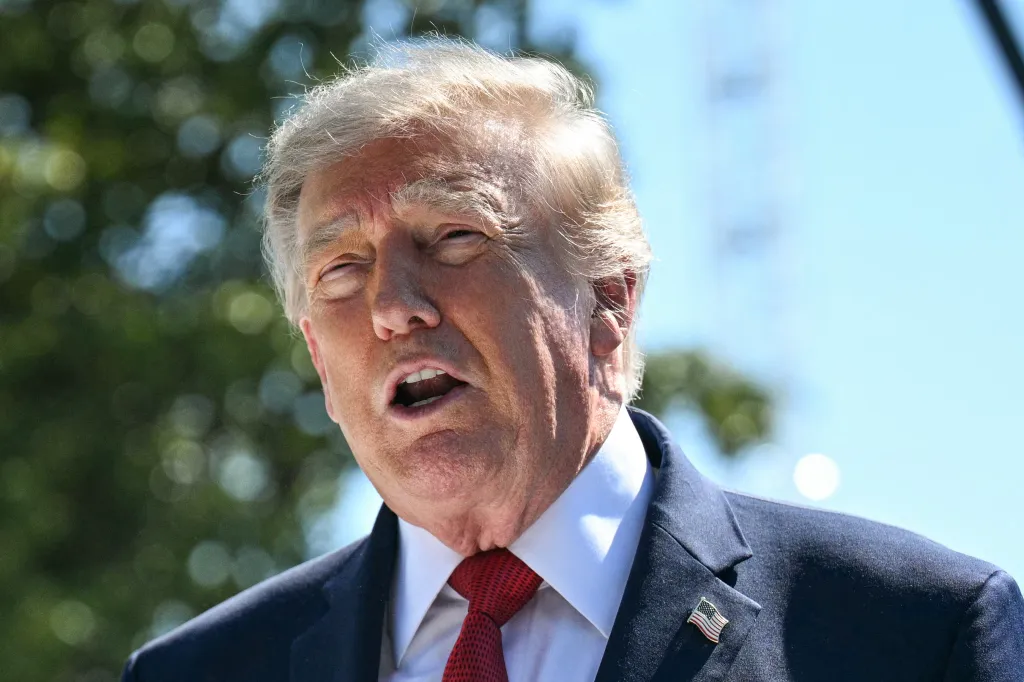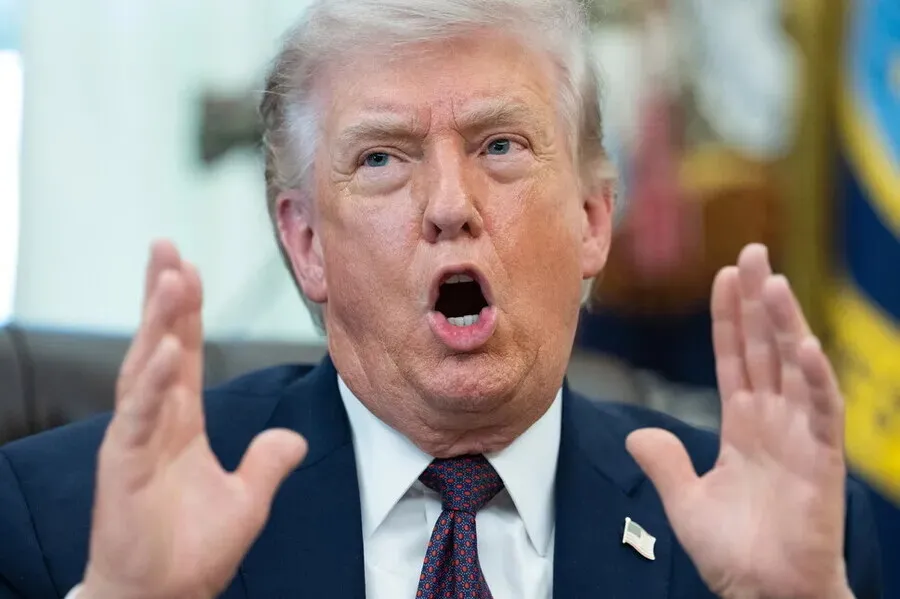
US President Donald Trump speaks to reporters from the Oval Office after signing an executive order on March 31, 2026. (AFP/Yonhap)
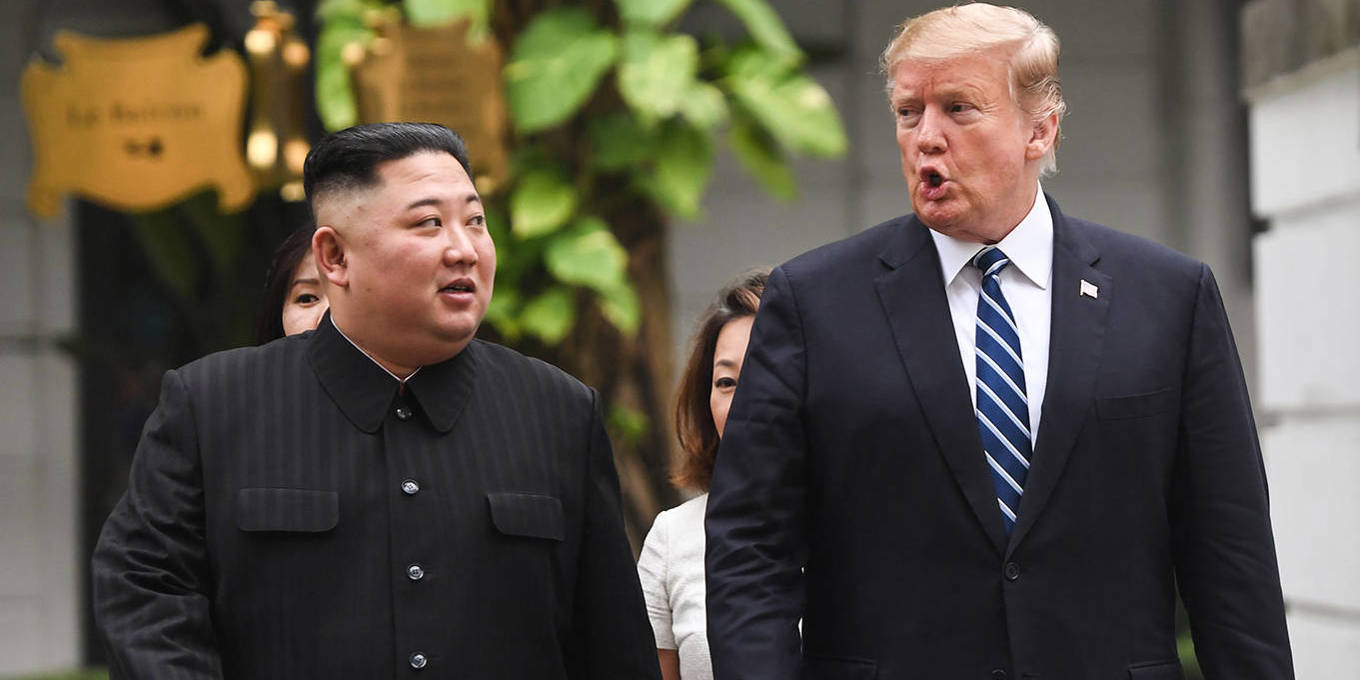
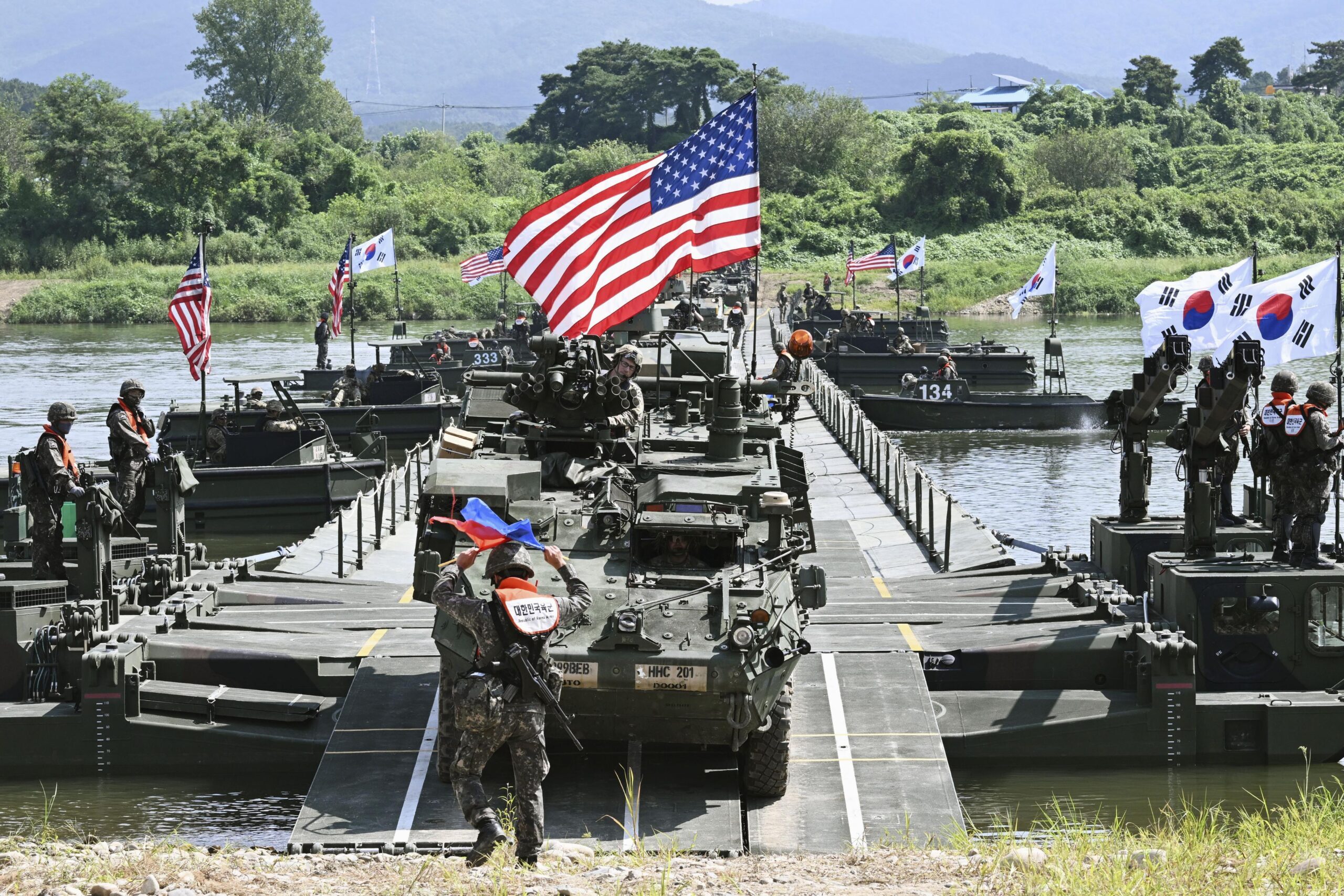
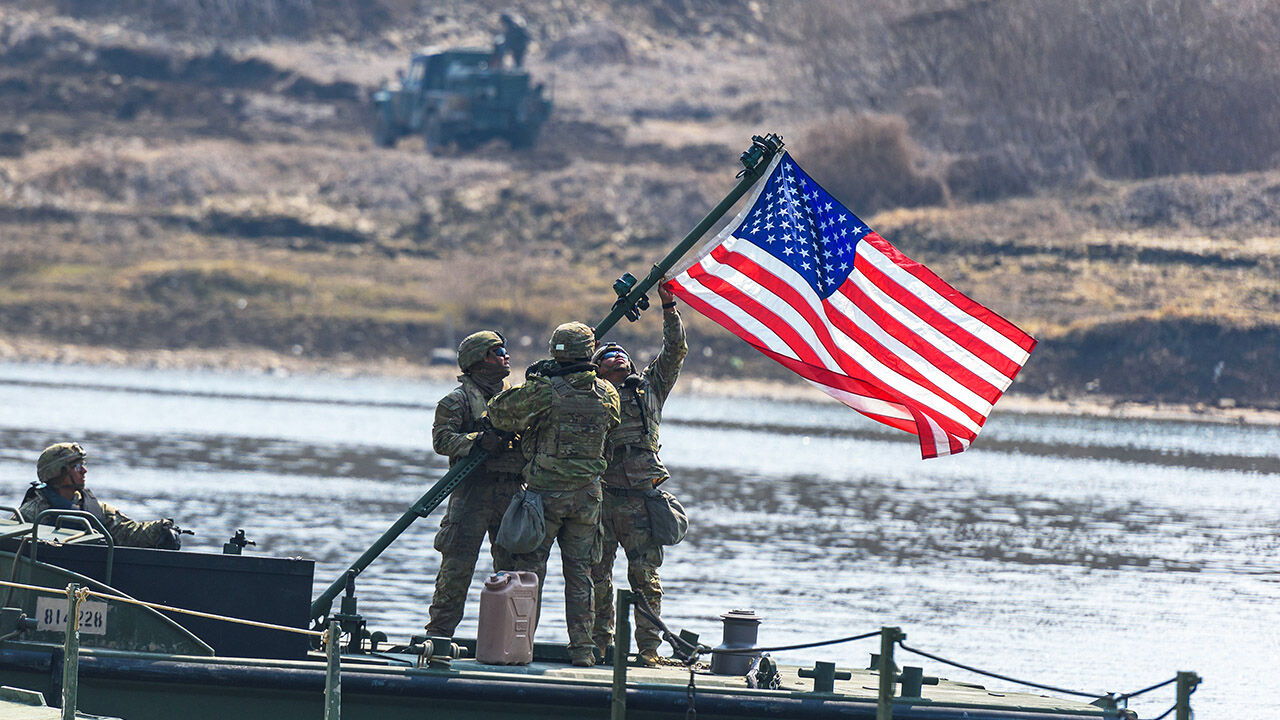
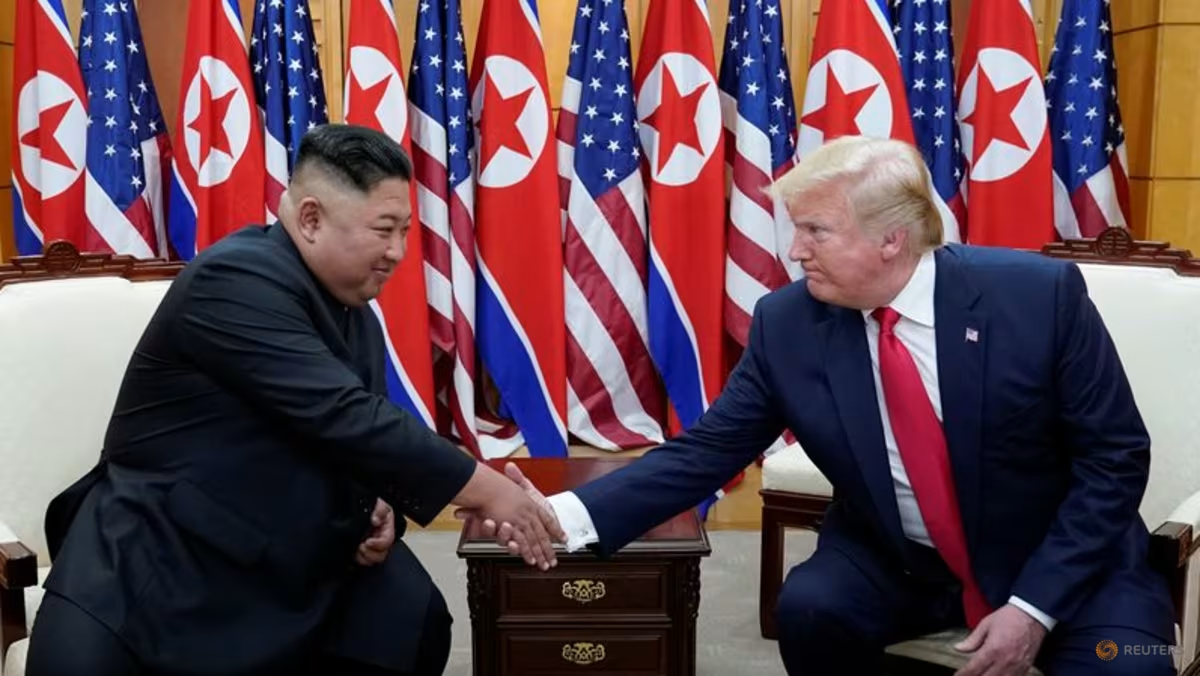
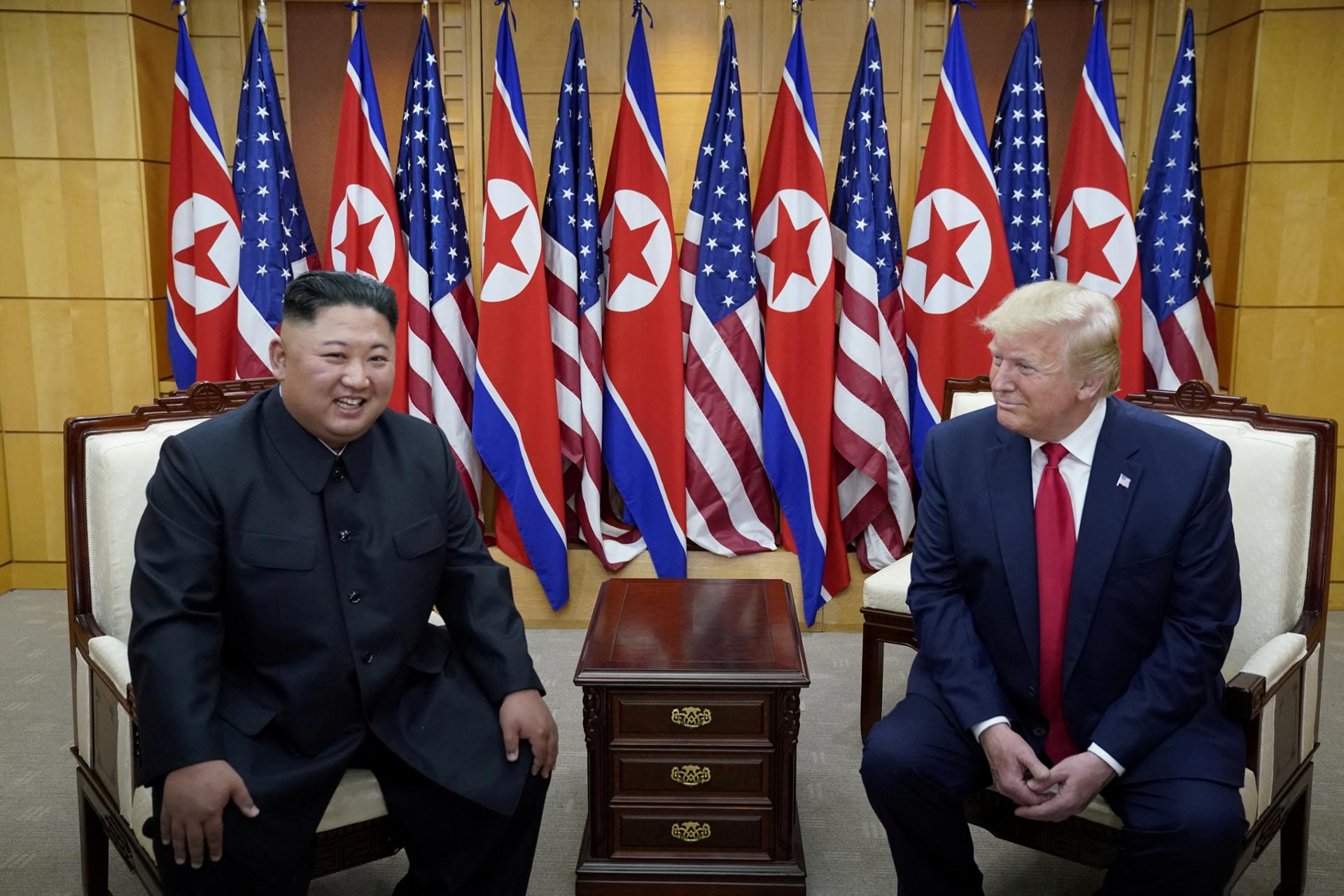
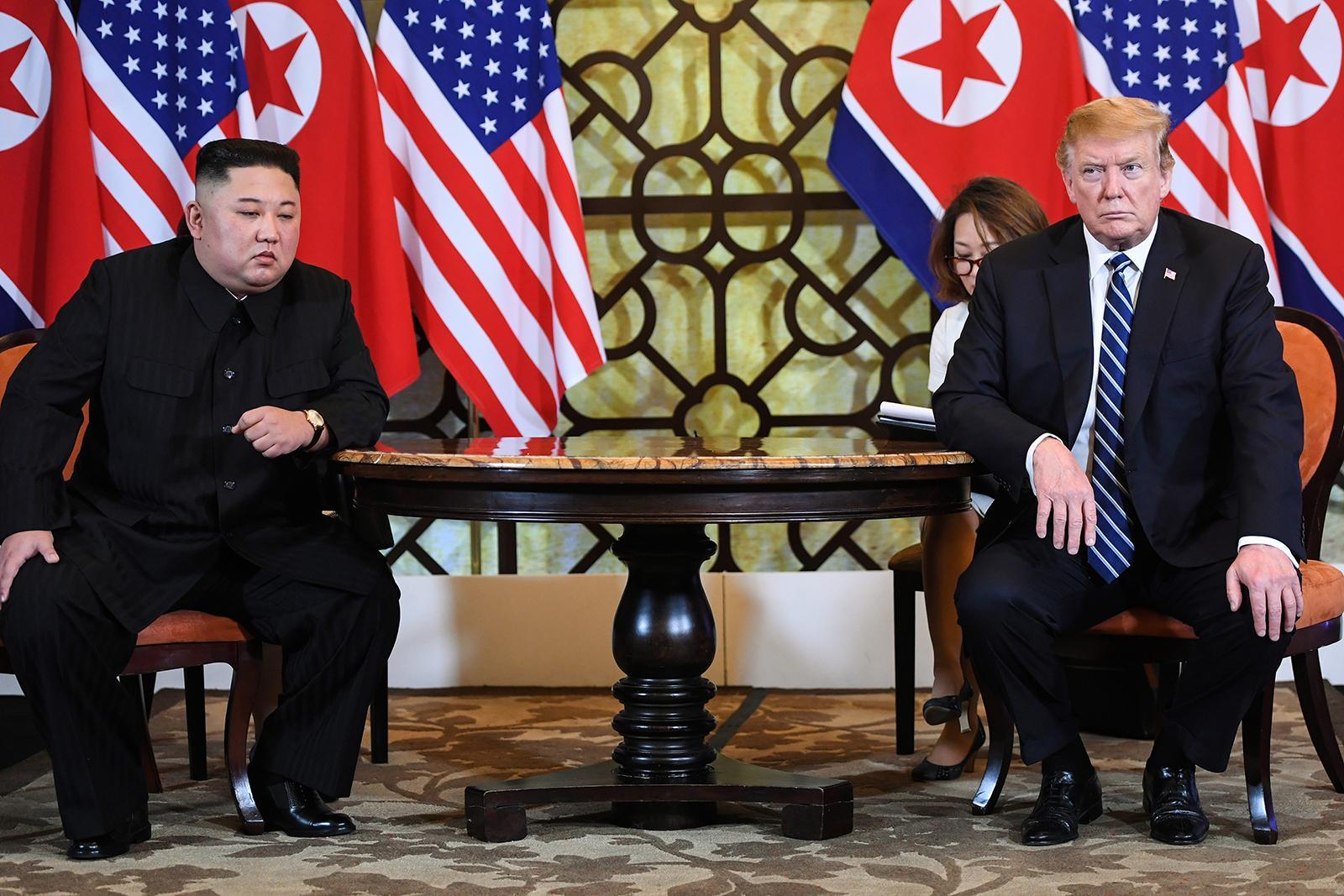
By John Feffer, author and director of Foreign Policy in Focus at the Institute for Policy StudiesIn a fit of pique, Donald Trump recently scaled back the big annual military exercise between the United States and South Korea. He would have canceled it altogether if the 11-day Ulchi Freedom Shield training hadn’t already started. The US president cited as the reasons for his action the cost of the exercise and the fact that it was “totally inappropriate and hostile” toward North Korea. Trump also rationalized his show of disrespect for South Korea — or, at least, for the South Korean military — by complaining that Seoul hadn’t given him enough support for the US-Israeli war against Iran. Back in April, at a press conference where he lambasted NATO for not sending warships to help open up the Strait of Hormuz, Trump said, “Who else didn’t help us? South Korea.”Of course, neither did North Korea. In fact, Pyongyang quickly sided with Tehran after the initial attacks, denouncing the “illegal and reckless act of aggression” and adding that “the growing acts of US hegemony witnessed by the international community are a clear example of its destructive role in undermining world peace and stability and the grave consequences that follow.”Although accurate, Pyongyang’s statement was not exactly the basis for a warm relationship with an American president.The strong bond North Korea has with Iran and the ritual anti-Americanism in Pyongyang’s official statements didn’t stop Trump from once again proclaiming his undying friendship with North Korean leader Kim Jong-un. Nor did the two ballistic missile tests that North Korea just conducted across the East Sea seem to have any effect on Trump’s affections. Just before the decision to scale back the military exercises with South Korea, Trump posted that “Kim Jong Un and I get along GREAT!” Trump’s moves immediately elicited outrage among policymakers and commentators. “China and Russia are watching how easily this president abandons America’s allies, and they will remember it the next time they test us,” declared Senator Jack Reed, a top-ranking Democrat on the Armed Services Committee. “A handshake with Kim may make compelling television,” writes Shim Jae-yun in The Korea Times. “A weakened alliance with South Korea would leave a far more dangerous legacy.”No one should be surprised by Trump’s moves. During his first term, he consistently bent over backwards to make a deal with North Korea and frequently berated South Korea for not spending more on its alliance commitments. In the end, not much changed. North Korea didn’t give up its nukes, and US military exercises with South Korea continued. Frustrated by the lack of a win, Trump refocused on other less intractable conflicts.This time around, the South Korean government is in the hands of a progressive, Lee Jae Myung, who is also eager to mend fences with North Korea. Indeed, the Blue House’s response to Trump’s declarations has been remarkably positive. After all, Lee has pushed hard to improve inter-Korean relations. He has acknowledged North Korea’s nuclear capabilities even as he has outlined a three-stage process of denuclearization. He has renounced any path to reunification that involves the absorption of North Korea into South Korea. With no signs of progress in bilateral discussions, Lee has gone so far as to call for the resumption of a multilateral approach in his recent National Liberation Day speech on Aug. 15. Trump’s statements would seem to encourage such steps forward in reunification. His reduction of US participation in military exercises could also function as a goodwill gesture to coax North Korea back to the regional discussions that Lee proposes.But none of this speculation takes into account North Korea’s perspective.The bottom line is that Kim Jong-un no longer seems to trust either the United States or South Korea to live up to their promises. From Pyongyang’s perspective, democracies are inherently untrustworthy because different parties rotate in and out of power. The commitment of the Clinton administration to the first nuclear deal — the Agreed Framework of 1994 — was eventually undercut by a Republican-controlled Congress. The deals negotiated by South Korean leaders Kim Dae-jung and Roh Moo-hyun were diluted by their conservative successors.Compared to the United States and South Korea, Russia and China are reliable allies. Vladimir Putin has been in power for more than a quarter of a century, and he has delivered on his promises of economic and military assistance to Pyongyang. Xi Jinping is effectively leader for life in China, and he too has been more-or-less consistent in his support for the North Korean system (despite frustrations concerning Pyongyang’s nukes and its refusal to follow the Chinese version of economic reform).Don’t judge Kim Jong-un’s intentions simply by his proclamations, like when he promised earlier this year to completely destroy South Korea if it threatens the North. His administration has destroyed virtually every symbol and initiative of peaceful reunification negotiated with South Korean leaders, from the Arch of Reunification that once stretched across the “Reunification Highway” in Pyongyang to the inter-Korean liaison office that once stood in the ancient capital of Kaesong. Thanks to Kim, the North Korean constitution no longer mentions peaceful reunification and identifies the South as a permanent enemy. Meanwhile, despite all the love Donald Trump has shown the North Korean leader, there’s no indication of reciprocity, at least not since those first three meetings in Trump’s first term went nowhere. Trump, of course, has insisted that Kim has responded positively to his overtures, but he has provided no proof. On top of the general unpredictability of US policy, there’s no reason for Kim to think of Trump as reliable. The US president has threatened allies like Canada and Denmark. He has repeatedly changed his mind about helping Ukraine, resolving the conflict in Gaza, and handling the ongoing war with Iran. As for Lee Jae Myung, North Korea has seen its share of progressive leaders come and go. What hasn’t changed in South Korea is a sizable and powerful hard-line constituency that demands reunification exclusively on South Korean terms. For their part, progressive leaders have routinely presided over significant increases in military spending that the North sees as threatening. Also, these South Korean leaders have almost always deferred to US military decisions, as required by alliance commitments.Lee Jae Myung, for all the perspicacity of his policy recommendations, has had little effect on inter-Korean relations. And Donald Trump is largely irrelevant to developments on the Korean peninsula. The tenor of the relationships — across the peninsula and between Washington and Pyongyang — is determined largely by North Korea. And right now, Kim Jong-un prefers the predictability of Moscow and Beijing to the policies of hot and cold coming out of Washington and Seoul. That could change in the future — but it won’t likely result from anything that Donald Trump says or does, no matter how fervent his social media posts or the “love letters” he exchanges with Kim Jong-un.Please direct questions or comments to [english@hani.co.kr]