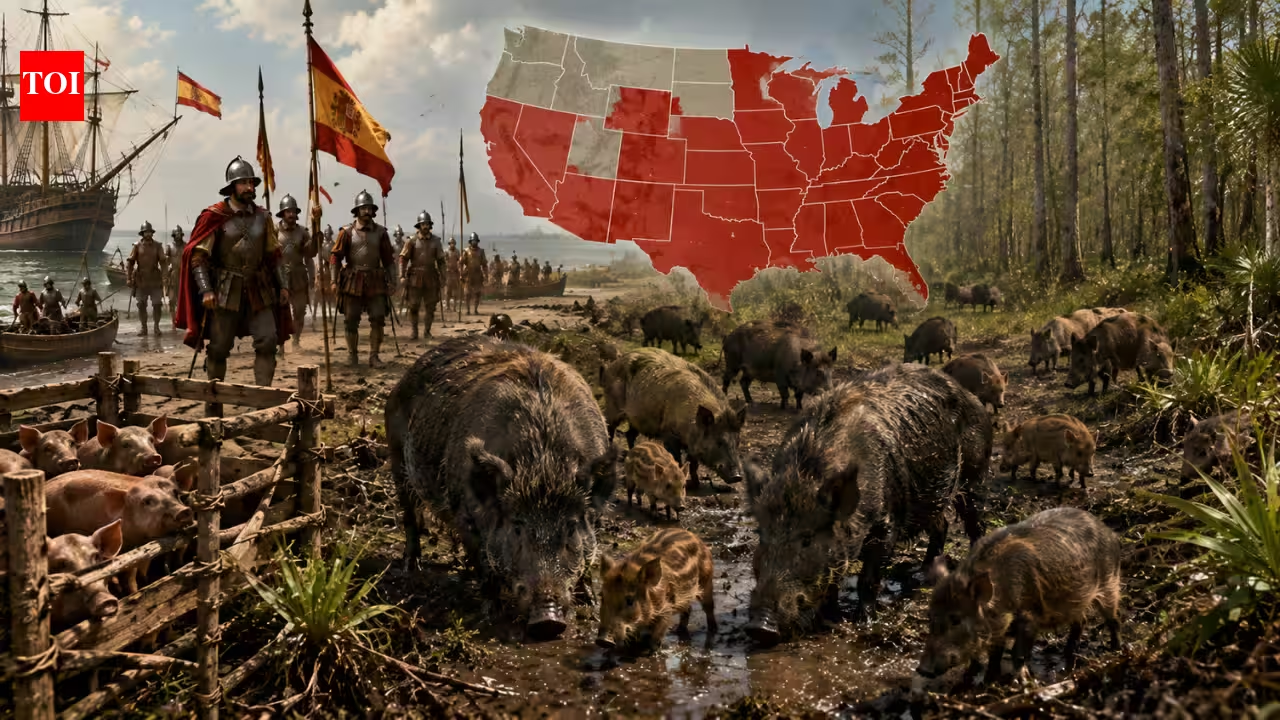
That program was active in selected counties in 10 hog-plagued states: Alabama, Arkansas, Florida, Georgia, Louisiana, Mississippi, North Carolina, Oklahoma, South Carolina and Texas. Starting in 2020, the U.S. Department of Agriculture funded private landowners’ purchases of trapping equipment, on-farm trapping efforts and restoration of land the hogs had damaged.Originally slated to end in 2023, the program was given $105 million more to spend through 2029 in the major budget and immigration package Congress passed in July 2025. Through Sept. 21, 2026, the government is accepting grant applications for the first $35 million allocation from that money.A useful question, before spending all that money, is how effective the first test of the program was.Hunting feral hogs from helicopters is just one way people have sought to control their spread and damage. AP Photo/Eric Gay
Reducing hogs’ damage to cornfields
Our research team of agricultural economists at the University of Tennessee and the University of Arkansas set out to examine the program’s performance.
We used federal data on crop insurance claims to compare crop damage in counties where the program was active against counties where it was not, both before and after the federal trial began.