What happens in terms of tax when a couple who are living together for, say, eight years, have two children and a joint mortgage but are not married and may or may not have a mirror will?One is self-employed and the other a primary schoolteacher. They also have set up pensionsOMYour situation must mirror the position of many people in today’s Ireland. You are a family by any generally accepted description but you are not married.You have set up pensions and you seem to have set up wills – something we’ll return to in a bit. I am not sure whether you are talking about tax on a day-to-day basis or inheritance tax in this question but issues arise in either case that are worth going through.Joint assessment for income tax can work very well for couples, allowing them to transfer most tax credits and reliefs between them as well as maximising the benefit of the standard rate income tax band.It is particularly useful where one of the couple does not earn enough to maximise their benefit from the standard 20 per cent tax band. Most importantly, Revenue accepts that a couple can never be taxed more under join assessment than under individual assessment so there is a win-win element to it.The fact that one partner is self-employed does not preclude joint assessment.But, critically, joint assessment is available only to those who are married our in a recognised civil partnership – and neither covers your position.Now, if each of you is able to make full use of your credits, reliefs and tax bands under individual assessment, that’s not necessarily an issue but it could limit your ability to extract maximum benefit from your tax position as a family if you find yourself in a position where one or other of you is out of work for any reason or moves to a lower paying job.That this remains the position in 2026 Ireland seems something of an anachronism. There is nothing unusual nowadays for a couple to decide to commit to each other and raise a family without formalising the arrangement with a marriage.I can understand why Revenue would want to ensure that any tax “break” designed to benefit families would not be abused but the law here seems to have some way to go to catch up on reality. It is not beyond the wit of the Oireachtas to find a form of words that ensures joint assessment continues to operate as intended while reflecting the changing nature of family composition.Of course, for some people, the opposition to marriage is a religious issue more than anything else. Traditionally here, marriage took place in a church or chapel, with the civil recognition of the union simply tacked on at the end when the formal registrations are made. But it doesn’t have to be.Religion has fallen out of favour with many people for reasons that the churches really only have themselves to blame. But it is perfectly possible to have a civil marriage – either at a registry office or, increasingly, with a celebrant at the wedding celebration venue.Revenue has no interest in whether you went through a religious service; that’s entirely up to each couple. All Revenue needs to be comfortable with is that you are married in the eyes of the State.The bottom line, for now at least, is that if you are not married, you cannot be jointly assessed and that can cost you as a family.If the system can work against you as an unmarried couple when it comes to income tax, it can really become a problem when you consider inheritance tax.The basic rule is the same – married couples get a benefit not available to unmarried couples – but the stakes can be so much higher.As an couple building your lives together, with a home and children, there is every chance that, over time, you will accumulate assets of significant value.But what happens if one of you dies?First, there are succession rights and then there is the issue of tax.Under succession rights, if there is no will in place, a spouse has the right to at least two-thirds of the dead partner’s estate, with the children sharing the remaining third.But if you are not married, in the absence of a will, the entire estate would be divided equally between the children.What about if there is a will?A spouse has certain rights once there is a will – regardless of what the will says. This is called the “legal right share”. If there are no children, the surviving spouse is entitled to at half of the dead spouse’s estate. Where there are children, that minimums falls to one-third.You mentioned that you might not have mirror wills. Mirror wills is a term that described the position where two people have will that mirror each other – they each provide that the partner or spouse is the main beneficiary in the event of their death and there is a shared destination for estate assets in the event that they both die together – for instance, that they be shared equally among children.You don’t need to be married for mirror wills to be a device available to you but equally, there is no requirement for spouses or otherwise to have mirror wills.What sets a mirror will apart from a joint will is that each of you has control over your own decisions and can change the terms of your will at your own discretion.Anyway, the fact that you may not have mirror wills is neither here nor there. Once you have wills of any sort, you can leave your estate to whomever you please. As you are not married, the legal right share is not an issue for either of you.Where it does get very messy though is when it comes to tax.Whatever a married couple leaves to each other in a will – or indeed what they might gift to each other while alive – is entirely exempt from tax.You hear a lot about tax-free thresholds on inheritance but it is immaterial for a married couple. They can receive any amount without having to worry about thresholds or tax.That is very much not the case for unmarried couples – regardless of how long they have been together, whether they have children or their shared ownership of assets, such as a home.Thresholds loom large for people in your position.While anything your children receive from either of you would be covered by the highest Category A threshold of tax relief – currently €400,000 – anything you leave to each other would be assessed under the lowest threshold, Category C.That means the surviving partner would be taxed at 33 per cent on anything above €20,000. And that €20,000 includes anything they might have received previously as a gift worth more than €3,000 from their partner or any inheritance they might have received from anyone other than close blood relatives.Given the assets that naturally accumulate over a shared life – most particularly the family home – the decision not to get married will certainly prove costly when one or other of you dies.For this reason alone, I know many couples who have decided to get married. Where people have decided on principle not to marry, it seems unfair that they should be forced to do so simply to avoid punitive tax on the life they have built together but, as it stands, that is the position in Ireland.Choosing not to marry is very much a personal choice for you and your partner. But you need to be aware that in tax terms, it can carry a high price.Please send your queries to Dominic Coyle, Q&A, The Irish Times, 24-28 Tara Street Dublin 2, or by email to dominic.coyle@irishtimes.com with a contact phone number. This column is a reader service and is not intended to replace professional advice.
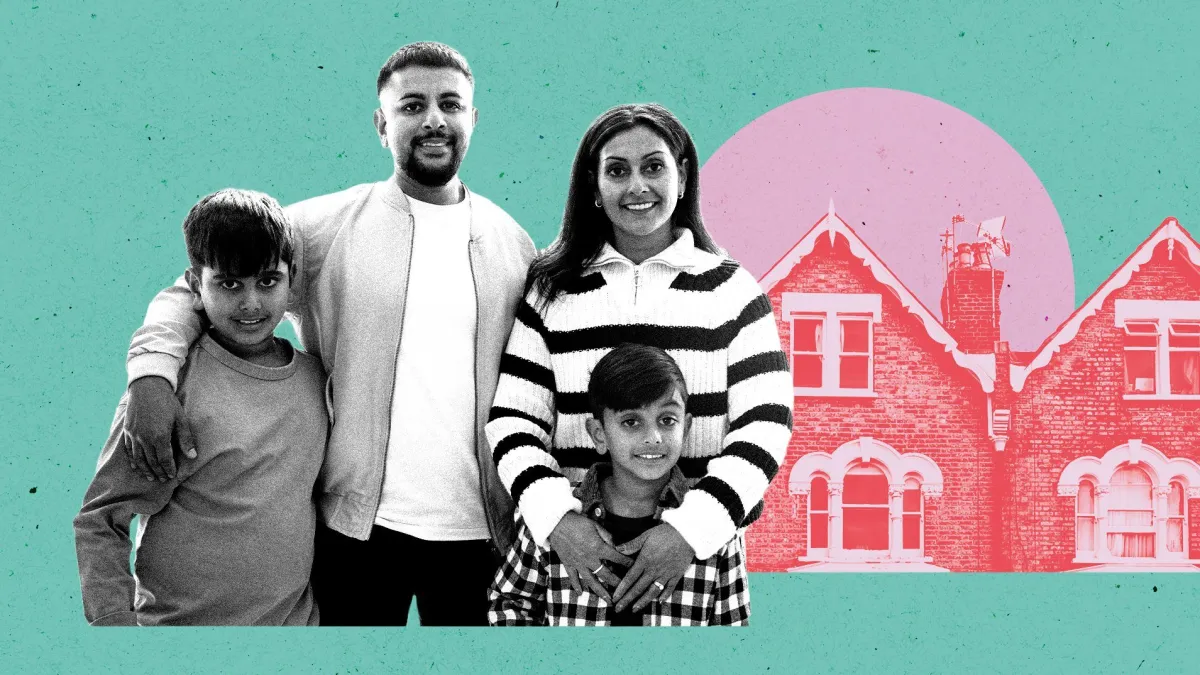
We have kids and a mortgage but are not married. What happens to us on tax?
Taxes on income and inheritance can be significantly impacted by whether a couple is married or not
1,314 words~6 min read