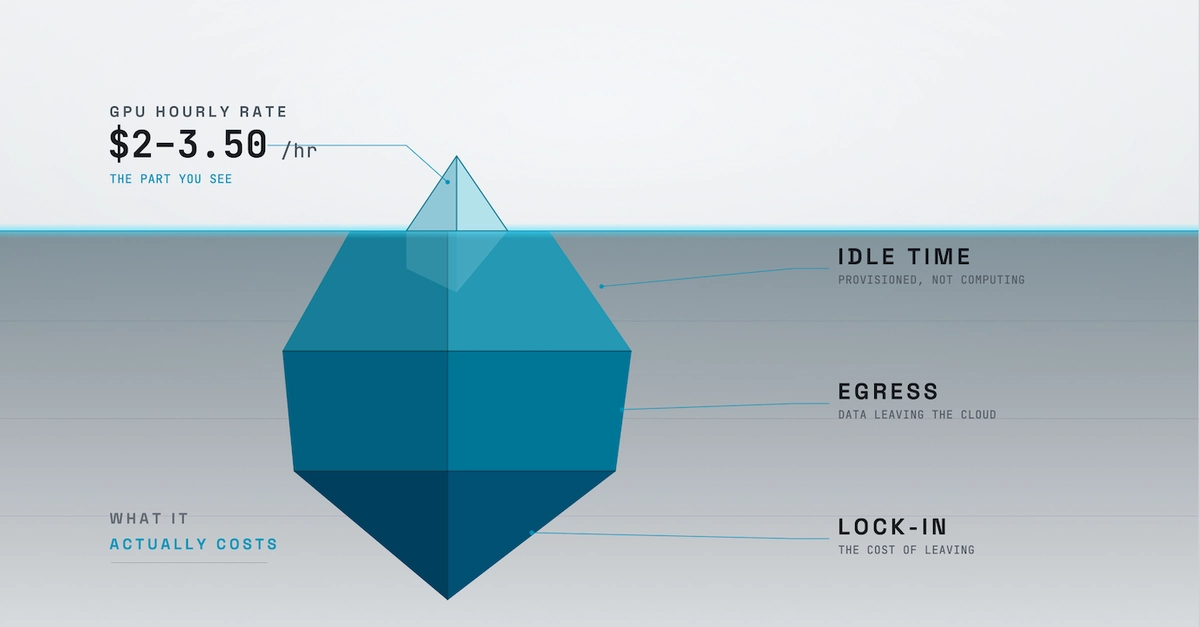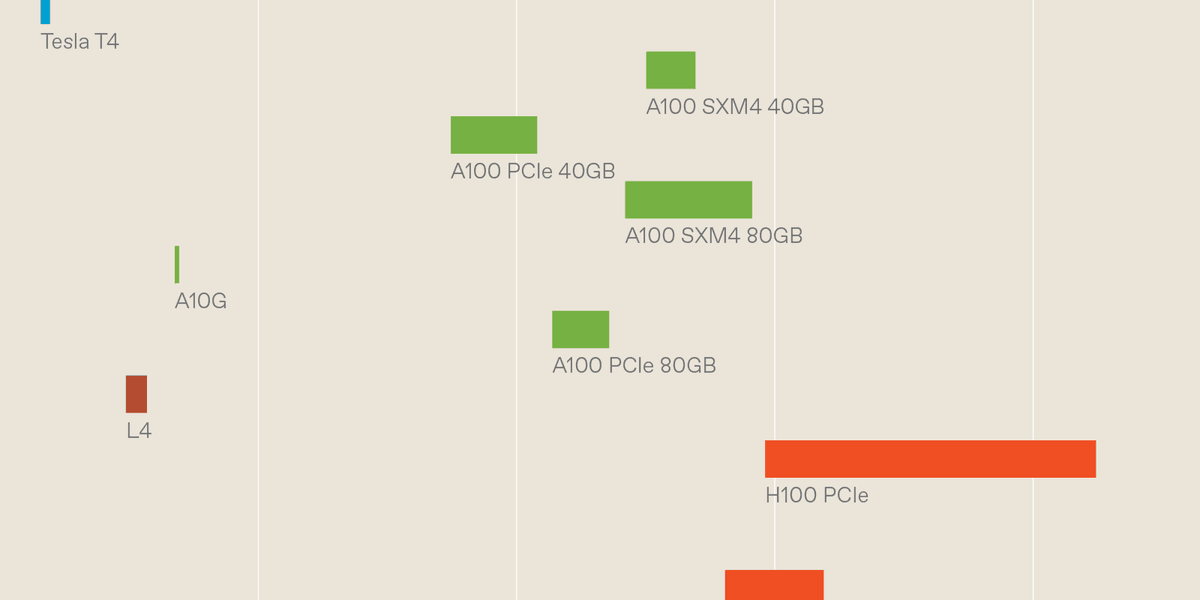
Every GPU cloud comparison I see is a table of dollars per hour. Provider A is $2.10 an hour for an H100, provider B is $1.89, the newcomer is $1.40, therefore the newcomer wins. I understand the appeal, one number, easy to sort. It is also how teams end up paying more for GPUs while believing they got a deal, because $/hour is the least important number in GPU economics once you are running real workloads.
Here is what the hourly rate hides, and what I actually compare instead.
The number that matters is $/unit-of-work, not $/hour
You do not buy GPU time to have GPU time. You buy it to train a model, serve inference, run a batch. The honest metric is cost per unit of work done, cost per token served, per training run, per job. A GPU that is 20% cheaper per hour but delivers 40% less throughput on your actual workload is more expensive, full stop.
Throughput per dollar depends on things the hourly rate says nothing about: the exact GPU generation, memory bandwidth, interconnect, and how well your framework is tuned for that hardware. Two "H100" listings can perform differently depending on networking and host. Benchmark your workload, not the spec sheet.