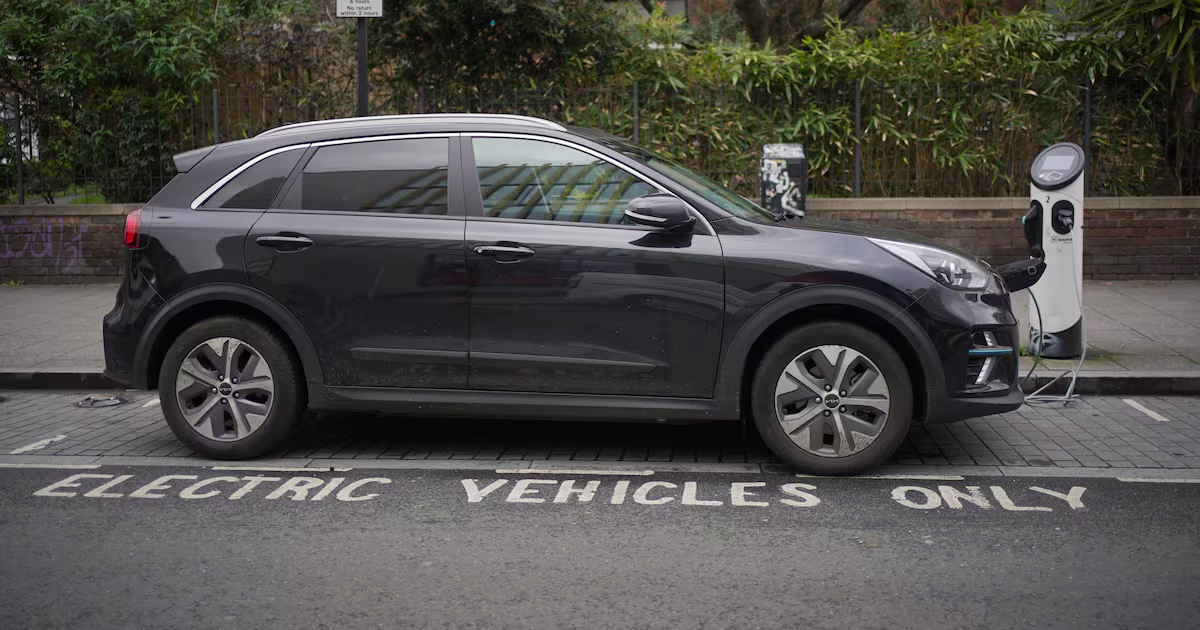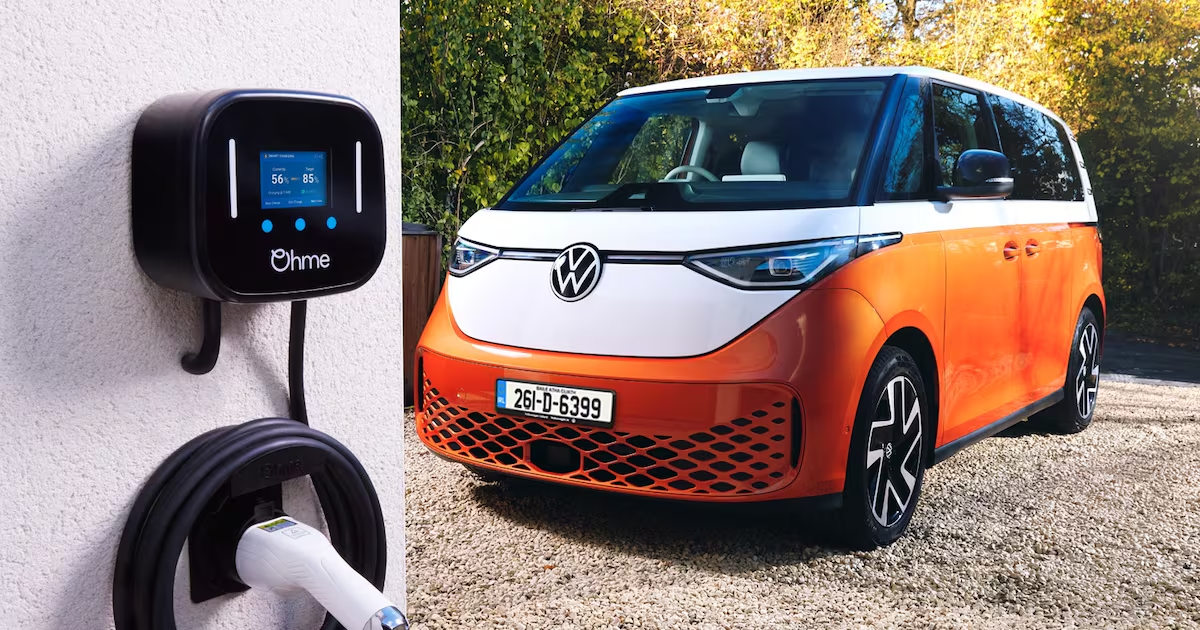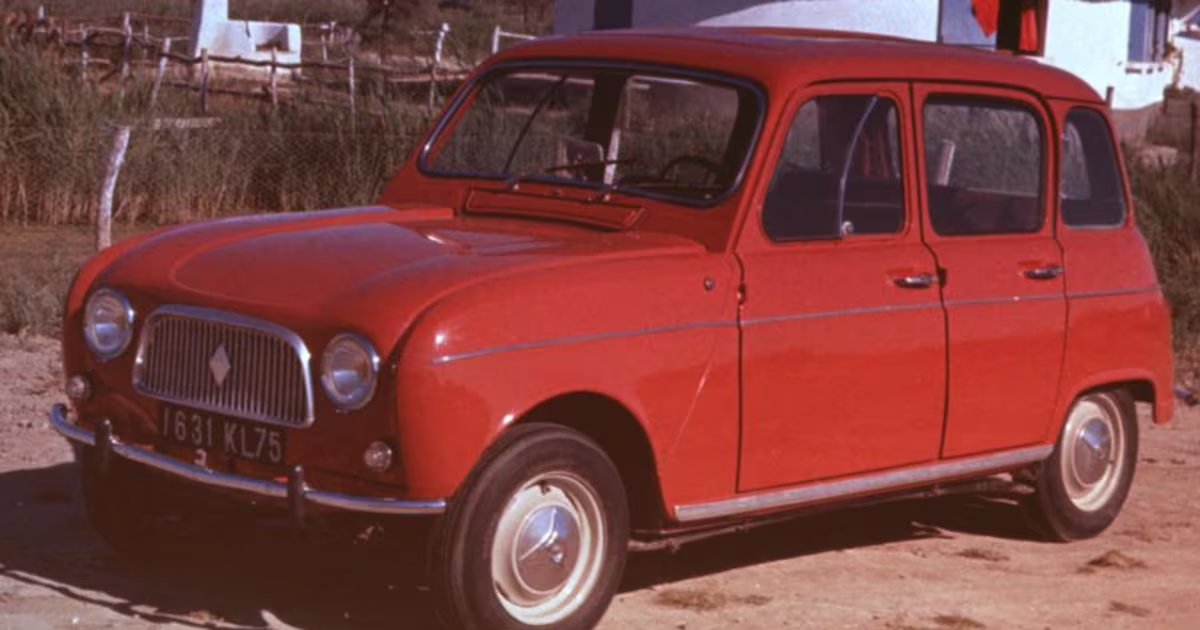
Our first car – more than 50 years ago – was a second-hand Renault 4. Its floor eventually rusted away at about 10 years old. Today’s cars last at least twice as long. While at one level it makes sense to keep rather than scrap vehicles that took a lot of carbon to build, the downside of their longevity is how long it takes to replace our current fleet with planet-friendly electric vehicles (EVs). Any new fossil fuel cars bought today will be around for decades, so without an immediate complete switch to EVs, it could be the 2040s before total car emissions are close to being eliminated. While the recent scrappage scheme to encourage a switch to EVs was a success in advertising their cost-saving advantage, to do this on an expanded scale would be prohibitively expensive for Government. But dearer petrol is pushing the change: the recent Iran war price shock has led to a near doubling in EV sales. That’s producing a sensible response from drivers who know an EV will save them money. Blunting this vital price signal by continuing the “temporary” excise tax reductions at the petrol pumps makes no sense. We could make much better use of the revenue forgone by redeploying those funds to targeted relief for those in energy poverty, alongside income tax measures to stabilise the average tax rate on earnings. For most people living in rural Ireland, cars will remain the essential mode of transport. While Local Link has been a success, it’s not a substitute in a rural area for a car that can bring you door to door at the time you want to travel.Dubliners drive about 13,000 kilometres a year, while people from Roscommon do almost 20,000. With their higher mileage, the priority must be to encourage rural drivers to switch to EVs.In our cities, especially Dublin, public transport is the key to reducing emissions and making life easier for those who live there. To wean people from commuting by car, public transport must be reliable, frequent and fast. This poses a big challenge. The Dart and Luas have been hugely successful, enticing many people who live nearby from their cars. The Luas is fast, very frequent and reliable. Extending it to Finglas, and any future Dunsink development, is a priority.[ Luas Finglas line could begin construction in 2028, Minister saysOpens in new window ]The alternative of bus transport for Dublin commuters not serviced by rail or trams is less attractive, even though there have been significant improvements in routes and connectivity. Even with bus lanes, buses get snagged in traffic. This can make bus transport less reliable. For many journeys, bus is much slower than driving your car. Those issues of reliability, frequency and speed need to be addressed if Dublin’s buses are to encourage more people to switch out of their cars. Interestingly, price is not the main barrier to using public transport – as experience from Berlin to Brasília has shown. Germany dramatically cut the cost of rail travel for a few months in 2022 and saw passenger numbers rise sharply. Studies showed, however, these were not people switching from their cars, but were mainly new journeys taken for leisure. The increased demand brought huge congestion and train delays for regular travellers. To visit us in Dublin, our Berlin friends, committed green travellers, stood for hours on their train journey across Germany and Belgium to the ferry to England. The price experiment was a very costly way to save emissions. Every tonne of carbon dioxide reduced through the lower fares experiment cost about €2,000. Cycling’s share of journeys is much lower today than in the 1980s and 1990s. Photograph: Susannah Ireland/AFP via Getty Images We are spending significant sums upgrading our cycling infrastructure. This is important both for road safety, and to encourage cycling. As someone who cycled to work in the city centre for 40 years, I would have greatly appreciated the modern cycle facilities. But the figures show that cycling is a very limited alternative to car travel, and indeed cycling’s share of journeys is much lower today than in the 1980s and 1990s. It appears that many of the increased bike journeys seen in Dublin are made by people who would previously have walked or used the bus, rather than people who drove.Research elsewhere suggests that some switch from driving may happen if a bike is used to access public transport, reducing emissions.What this highlights is the importance of planned development in public transport in our cities. Dublin is way behind other big cities in its lack of a metro. London’s Underground dates back to the 1860s, Paris and Budapest metros began around 1900. It’s more than time to make a start in Dublin.
Temporary excise tax cuts undermine the greening of Ireland’s transport
Fossil fuel price rises on the back of Iran war have delivered surge in EV sales, so why blunt the message?
793 words~4 min read