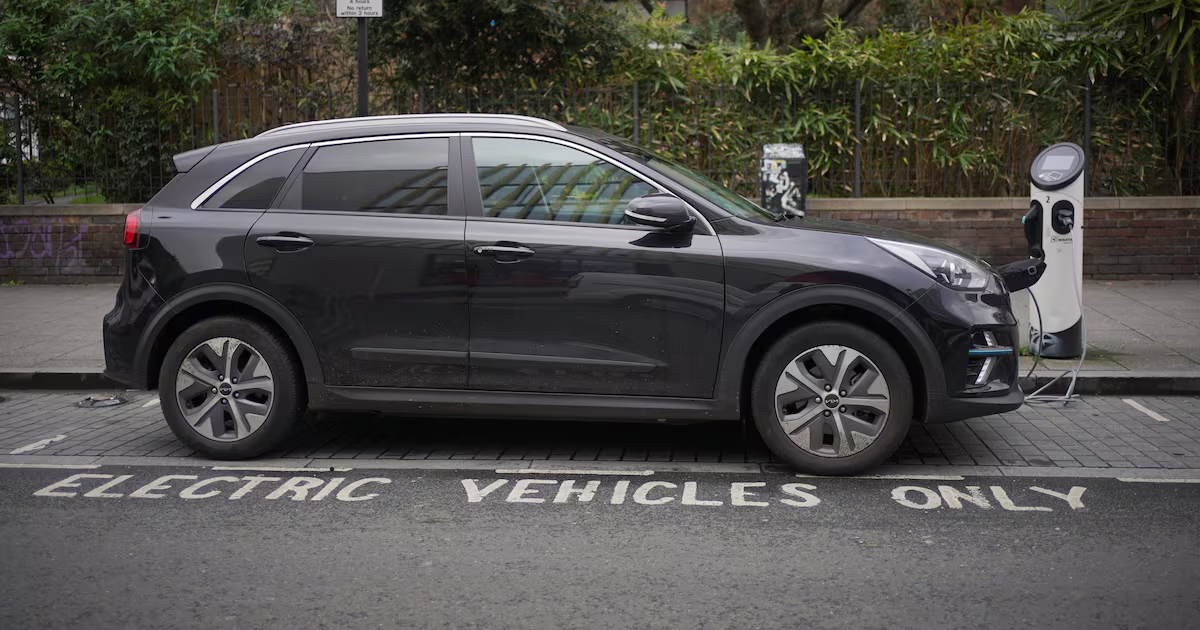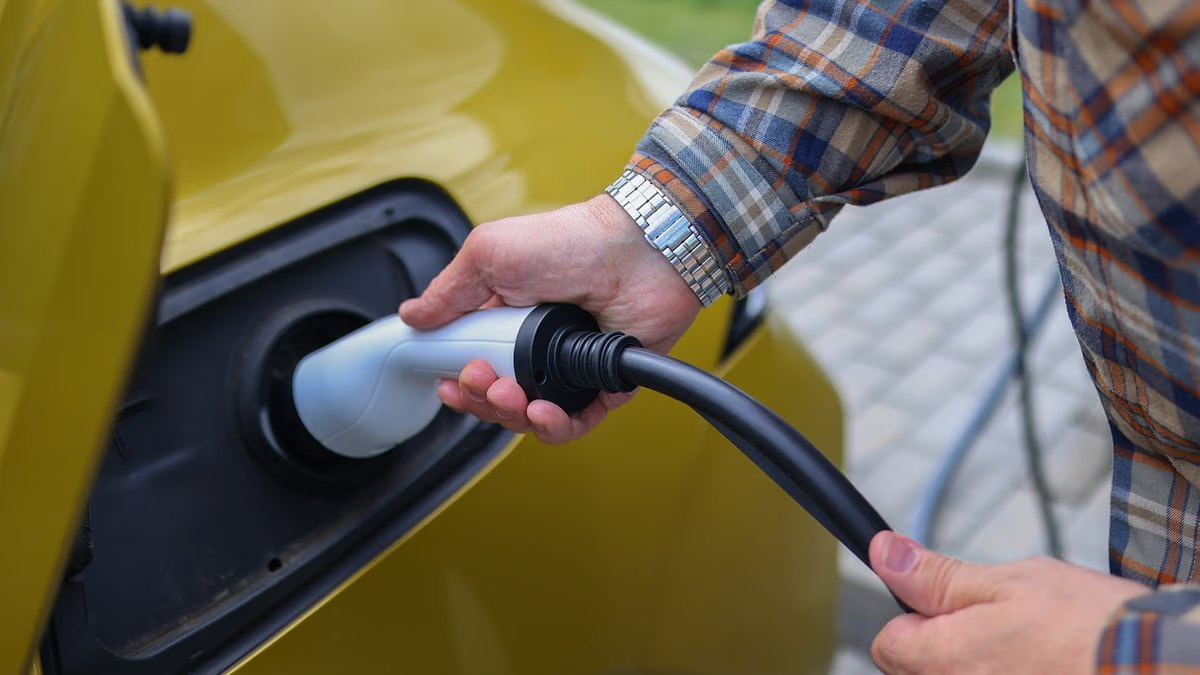
Despite slow progress towards transport emissions goals, there is some good news. Sales – or at least registrations; the two aren’t necessarily the same thing – of electric vehicles (EVs) have risen dramatically this year, and that’s ignoring the possible effect of the Government’s “ICE2EV” scrappage scheme.Registrations of new electric cars rose by almost 48 per cent up to the end of July, so there are now a lot more EVs on our roads. Full battery power is now only second in the charts, having beaten out petrol and diesel, and it’s now closing in on hybrid. However, it’s still not enough. According to the State’s Climate Advisory Council, carbon emissions from transport fell only by 1.3 per cent from 2023 to 2024. The Environmental Protection Agency (EPA) estimates that of the planned for 50 per cent cut to transport emissions by 2030, we might only actually reach 8.7 per cent. So, how can we do better? Private cars are only part of the problem – public transport, haulage and air travel all play a part – but it’s a significant part. Private-car energy use dominated and accounted for just over 41 per cent of transport energy use in 2024. How can we bring that down?James Nix, vehicles policy manager at Brussels-based eco think tank Transport & Environment (T&E) says significant change is now needed. “Ireland needs to use its pivotal position as EU Council president to help member states to strengthen, not weaken, EV supply. The EU car CO2 targets have been one of the biggest drivers of more affordable EV models coming to market. Now those targets are up for review, and Ireland’s presidency can help the EU keep its eyes on the prize of cheaper, better EVs. “Charging remains a barrier to entry. Prices at too many public chargers remain excessive, and there are still too few – or none – in key places. But more EVs on the road will improve the business case for charging-point operators to expand their networks. The Government needs to step in with some form of support to fill the remaining gaps.”These might be described as the carrots, but Nix reckons stick will be needed too, especially when it comes to weaning Irish buyers off larger, less efficient cars. “The last two reports of the Tax Strategy Group in the Department of Finance have supported adding a VRT surcharge to the biggest new cars sold,” says Nix. “This makes sense to defend urban space, protect vulnerable road users and avoid excessive energy use. Such a VRT surcharge needs to form part of Budget 2027, and Government Ministers should be asking their officials to prepare it for application from January 1st.”Nix contends that the eligibility for any follow-on version of the ICE2EV scrappage scheme should also be tightened up, not loosened, pointing out that a similar scheme in France was limited to applicants who live more than 15km from their workplace, on a route that is not served by public transport.Polestar only produces electric vehicles, no hybrids Jordan Killen is brand director for Polestar in Ireland, and the Sino-Swedish car maker is one of the very few which focuses exclusively on all-electric cars. You won’t find a hybrid or plug-in hybrid in his showroom (well, not since the ultra-limited-edition Polestar 1 coupe at any rate). So how does he feel Irish EV sales could be increased?“The challenge is now less about the vehicles themselves and more about creating the right conditions for people to make the switch,” he tells The Irish Times. “That means providing long-term policy certainty rather than short-term incentives that change from one budget to the next. Consumers need confidence that choosing a BEV [battery electric vehicle] will continue to make financial sense over the lifetime of the vehicle. “Investment in reliable public charging, particularly for people without access to home charging, also remains essential. For most households in Ireland, the private car is and will remain a necessity. Consumers switching to an EV is one of the fastest and most effective ways to reduce transport emissions over the coming decade.”While prices for new electric cars are coming down rapidly, the fact is that many models are still on the pricey end of things, and so car finance may have to play its part in making EVs not just cheaper to buy but, critically, protecting consumers from the vagaries of depreciation and unreliability – after all, we can’t wait around for this new tech to find its natural level; there’s a climate imperative.Investment in reliable public charging is essential Peter Pedlow, director of sales at Close Brothers Motor Finance says: “Beyond Government, finance providers need to play their part. New approaches to financial products can make EVs accessible to even more drivers, so that they too can switch to an EV. Our PCP product, for example, helps drivers access newer, often more expensive vehicles with lower monthly repayments than traditional hire purchase and provides certainty around vehicle depreciation with a minimum future value guarantee. Our recently launched dealer funding product, meanwhile, is empowering motor dealers to broaden the range of vehicles on Irish forecourts.”There’s a final warning from Transport & Environment, though. Ireland has previously shown itself keen to lean into the use of biofuels, especially hydrogenated vegetable oil (HVO) as a potential carbon salve. However, Cian Delaney, biofuels policy manager at T&E says: “It’s important that Ireland, both at home and during its EU presidency, does not fall victim to the biofuels fallacy, especially for road transport decarbonisation. “Compared to electrification, biofuels are a highly inefficient and unscalable alternative fuel, serving more as a costly distraction than a proper long-term solution. Battery electric trucks are the best solution, being vastly more efficient than hydrogen and more scalable than HVO. But there are massive bottlenecks in getting grid connections for truck and bus depots. This needs to be made a priority for ESB Networks.”
Many more EVs on the road, but still we’re falling short of our emissions goals
Irish consumers need long-term policy certainty rather than short-term incentives
985 words~4 min read