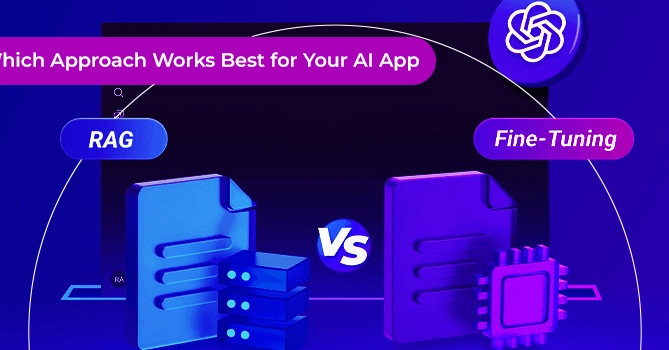
A field-tested comparison of retrieval-augmented generation and parameter-efficient fine-tuning — scored on cost, latency, freshness, and failure modes, with a decision rule you can apply today.
A logistics company in Dubai called me in to fix a support bot that kept hallucinating their shipping policy. Their previous consultant had spent three weeks fine-tuning a 7B model on their internal PDFs, spent a surprising amount of money on GPU hours, and shipped a bot that quoted policies from last year. The policy had changed in March. The fine-tune was trained on the version from January. Nobody noticed until a customer was promised a refund window that no longer existed.
When I asked why they fine-tuned instead of doing retrieval, the CTO shrugged and said, "Everyone said fine-tuning is how you make the model yours." That one sentence is the reason I am writing this article. RAG and fine-tuning are not the same job, they are not competitors in the way most articles claim, and picking the wrong one costs real money and real trust. I have now built both for enough clients to score them honestly, so let me do exactly that — with a table, real numbers, and a decision rule.
What Each One Actually Changes