Key Takeaways
Use RAG for knowledge retrieval, changing data, and rapid iteration. Use fine-tuning for style, format, narrow classification, and cost at scale. Start with RAG — 70% of production problems don't need fine-tuning.
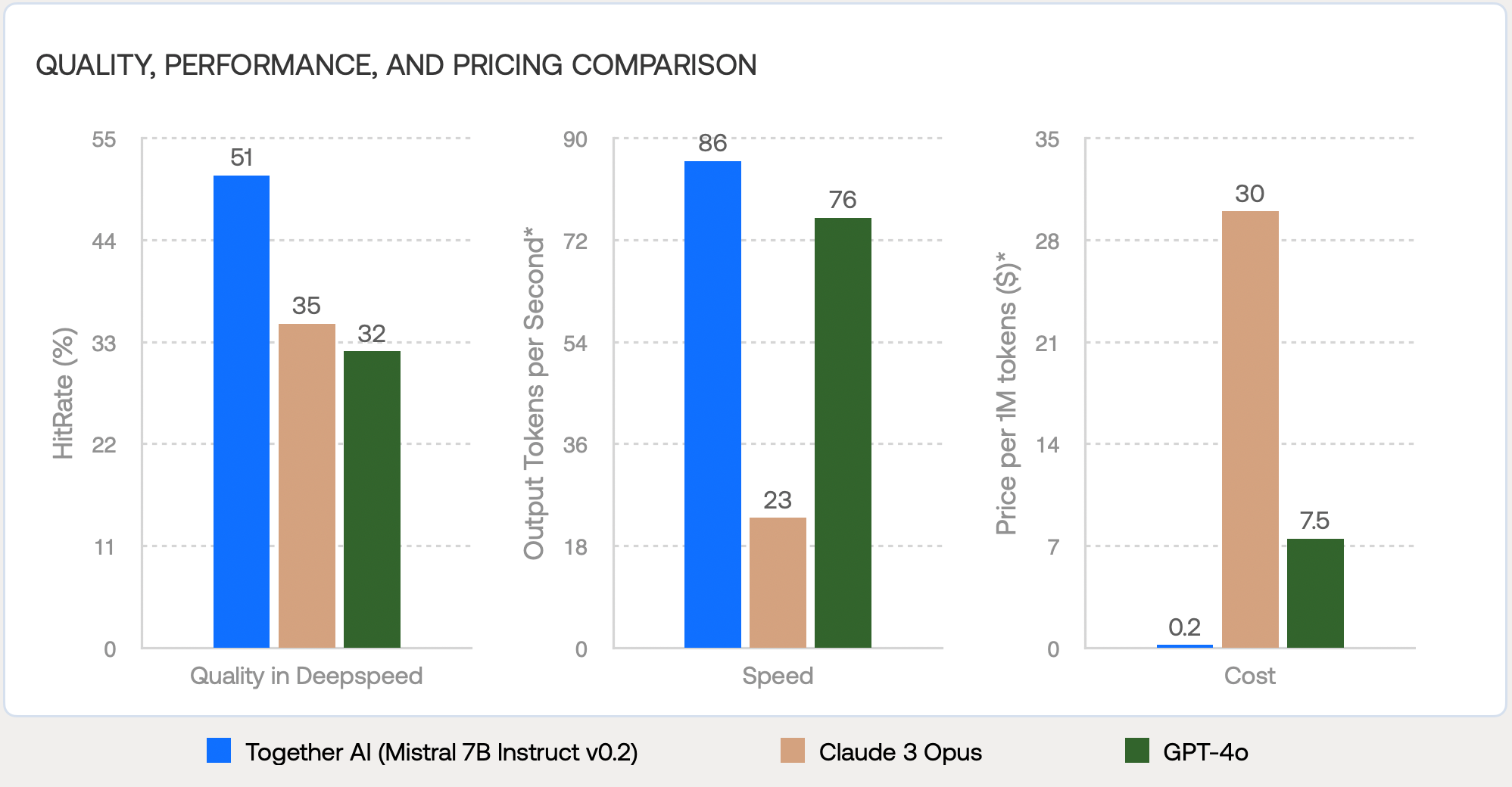
Fine-tuned Qwen2.5-7B reached 88% accuracy on a proprietary classification task vs 31% for prompted Claude 3.5 Sonnet — at $789/M vs $11,485/M tokens. The gap is real, but only relevant at the right problem type.
RAG adds latency (one extra retrieval round-trip) and retrieval failure modes that fine-tuning avoids. Fine-tuning adds a training pipeline, data curation overhead, and a retraining loop RAG avoids.
LoRA and QLoRA make fine-tuning accessible on a single A100 or even consumer GPUs. You don't need a cluster.