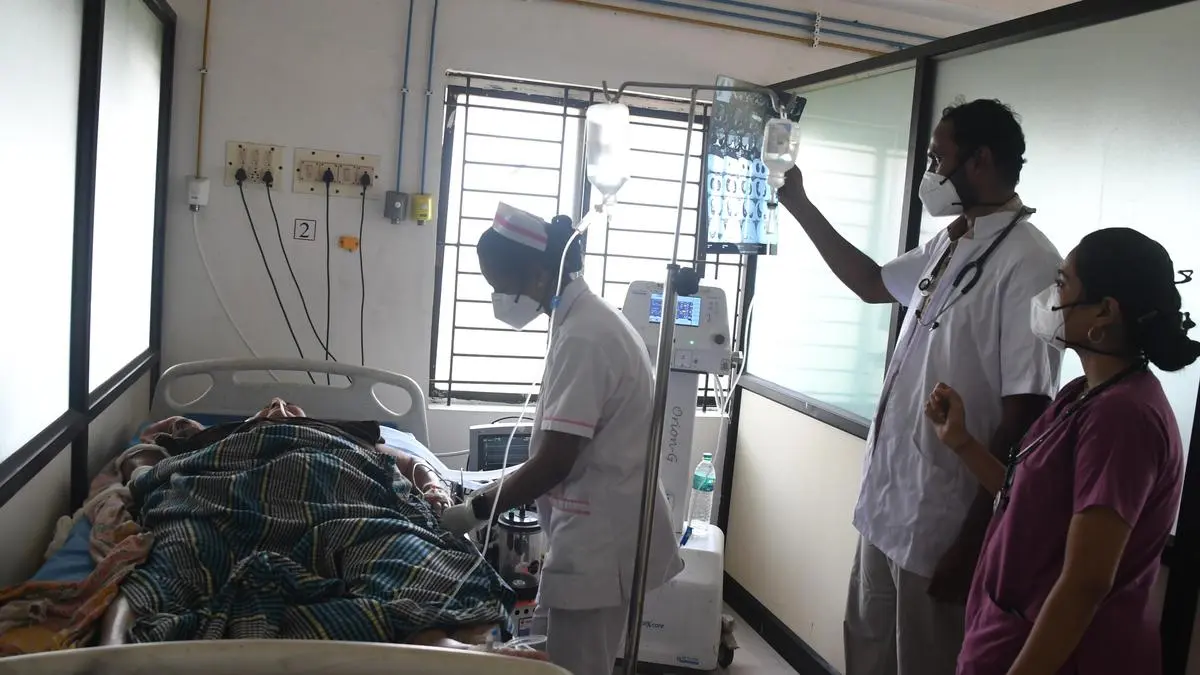
Small nursing homes, trust-run hospitals and large corporate chains — India is dotted with these institutions delivering healthcare services, some for many years now.A recently tabled parliamentary panel report, though, has put them under the spotlight, flagging issues related to treatment pricing, investment and healthcare financing, among other things. The report comes as patient families grapple with rising hospital bills, opaque procedures and inadequate insurance cover. Pointing to the rising “corporatisation” in healthcare, the report notes that the “unchecked influx of foreign capital is facilitating the monopolistic acquisition of cost effective, mid-sized hospitals by large corporate entities”. So, does the colour of money — whether from a private equity group, or overseas investor, for example — influence the functioning of a hospital, making it less care-oriented and more profit-centric?Vishal Bali, Executive Chairman, Asia Healthcare Holdings, says it is wrong to think that “every private equity fund is only looking at skimming every enterprise… and then passing that cost on to the patient and making patient care unaffordable”. Pointing to the AHA example, he says private equity TPG and GIC (Singapore’s sovereign wealth fund) are invested for about 10 years and the conversations are not on rising prices. “You run your business the way that you want to run it. We don’t want to compromise patient care. Now that is the stated goal,” he says. Bali has worn multiple hats, including helming corporate hospital chains Wockhardt and Fortis, in the past.The parliamentary report expresses concern over the growing influence of foreign direct investment (FDI), often exceeding 51 per cent stake, in the operational management of private hospital chains: “this aggressive corporatisation is fundamentally transforming healthcare from a public service sector into a purely capitalistic enterprise, artificially inflating the cost of medical procedures and triggering a cascading effect of price hikes across the entire healthcare ecosystem,” it says.Bali says the reports don’t do justice to the complexity of the sector. “If India was spending 5-6 per cent of its GDP on healthcare, maybe half of this privatisation would not have happened. If the government was giving a better quality of healthcare on the other side... All of Europe goesto public institutions and gets treated over there. But that is because those countries spend 7-8 per cent of their GDP on healthcare and then the government takes the ownership of the delivery side.” Healthcare is a shared responsibility, he says, calling on the government to play the role of an enabler.The panel report also points to the low government health expenditure (GHE) andbudget allocations and calls for moving towards 5 per cent of GDP, rather than the earlier benchmark of 2.5 per cent of GDP, which has not been achieved.Capital sourceIndranil, Professor at OP Jindal Global University, says it is naïve to think that large funding entities do not change the nature of healthcare organisations. Patients and doctors “don’t have the agency to navigate these systems”, he says, adding that there is a “simmering dissatisfaction… among many (medical) practitioners”, as “corporatisation” is not “service delivery”. He points to Kerala, where small nursing homes cede ground to large institutions. Dilip Jose, Managing Director and Chief Executive Officer, Manipal Health Enterprises, counters that the “colour of the capital” does not make a difference, as those who invest in enterprises want it to perform in clinical outcomes as well. Private money coming into the sector is not harming it because it has backed a sector when no one else did, for 30 years now, he says, adding that “a lot of the capacity has been created by… their inputs, their backing, and their investment”. Manipal Hospitals has had TPG for 11 years and continuing, besides Temasek, he says, adding, “I have not come across a situation where the character of the organisation has changed… because capital is from a particular source.”On whether large corporates are snuffing out smaller healthcare organisations, Jose says healthcare is fragmented. Out of nearly 300 crore OPD consultations a year, Manipal Hospitals (the largest network in the country) does about 80 lakh. “Bulk of India’s healthcare delivery is done by neighbourhood hospitals, nursing homes and small clinics.”Bali adds, “Nursing homes, for the longest period of time, provided a certain quality and level of care.” If a nursing home is following good clinical practices, it should exist, he says, adding “they are the first port of call for any patient in that community.”Public health voice and virologist Dr Gagandeep Kang observes that the PE-buyout models are followed in the US and “and it would be great if we didn’t have to follow that model”. The aim here is to deliver affordable, accessible healthcare, and that needs standardisation, treatment protocols and continuing medical education for doctors to ensure that quality service is delivered, she adds.Published on August 24, 2026
Is the colour of money changing the healthcare landscape
Explore how foreign investment and corporatisation are reshaping India's healthcare landscape and affecting patient care and costs.
795 words~4 min read