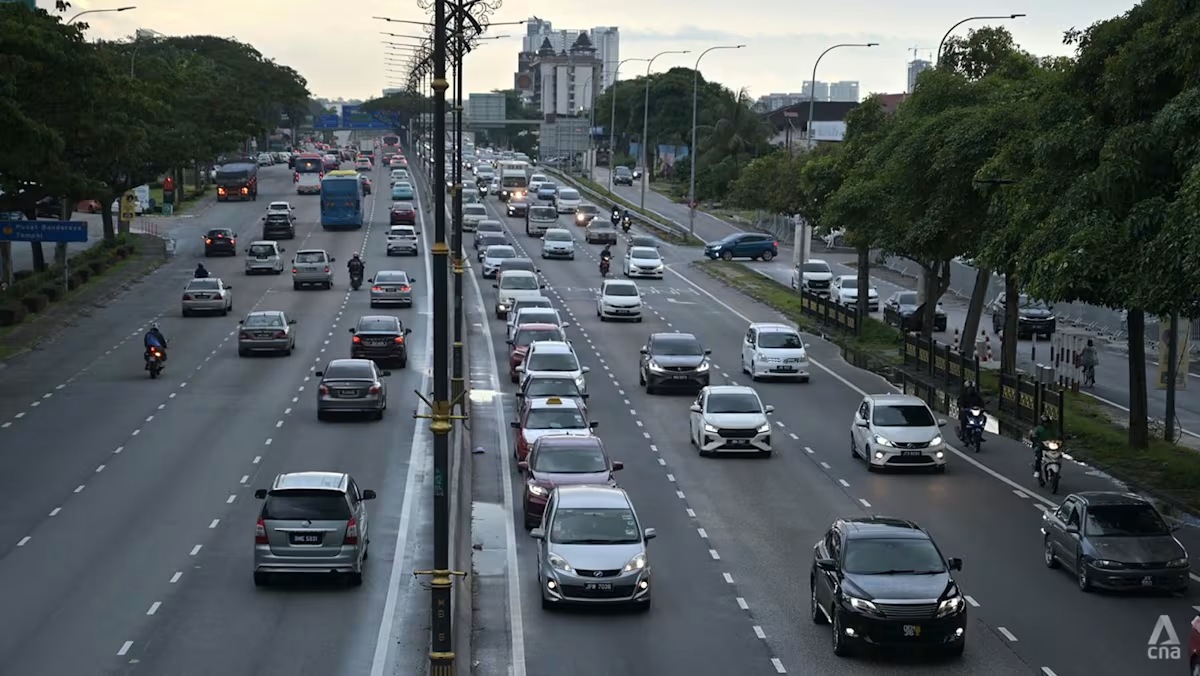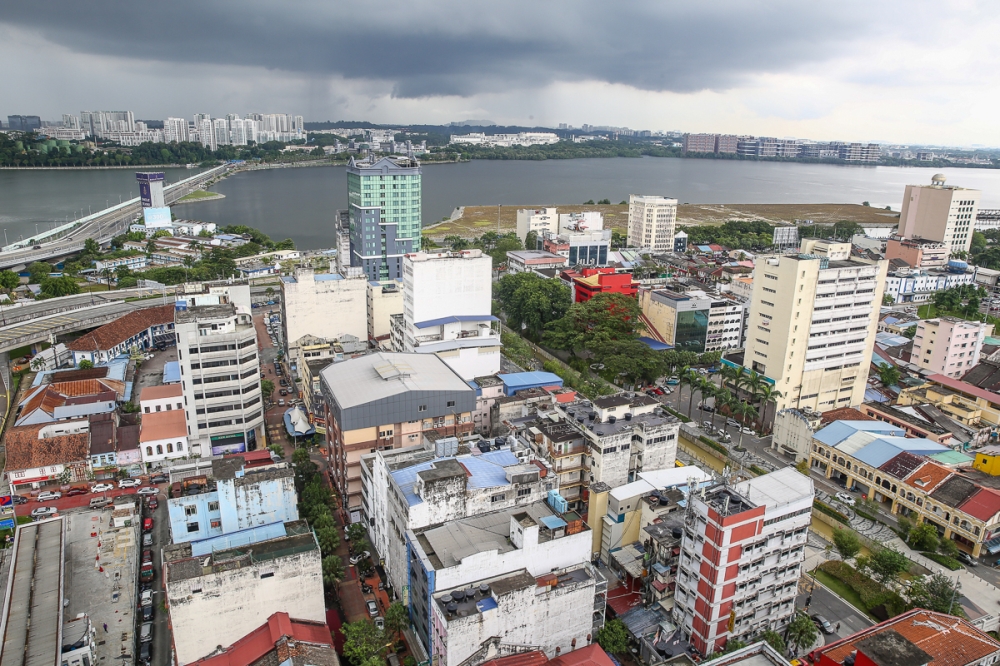
JOHOR BAHRU: On a typical afternoon, the streets of Johor Bahru’s central business district are a hive of activity: office workers rushing out for lunch, tourists moving between malls and, most prominently, cars and motorcycles weaving through packed streets.Some stretches of pedestrian walkways and bicycle lanes - part of efforts to create a more car-lite city centre - are pockmarked with potholes or obstructed by haphazardly parked vehicles.Elsewhere, pockets of prime land in the heart of the central business district (CBD) sit vacant and neglected, some strewn with rubbish.Along the refurbished Sungai Segget canal a short walk from the popular Johor Bahru City Square mall, Malaysian Johnson Anthony told CNA recently that walking around central Johor Bahru has become more pleasant in recent years, but remains far from “what it should be”.
Johnson Anthony, 71, a Malaysian who works in Singapore as a security officer, speaks during an interview in Johor Bahru on Aug 6, 2026. (Photo: CNA/Zamzahuri Abas)
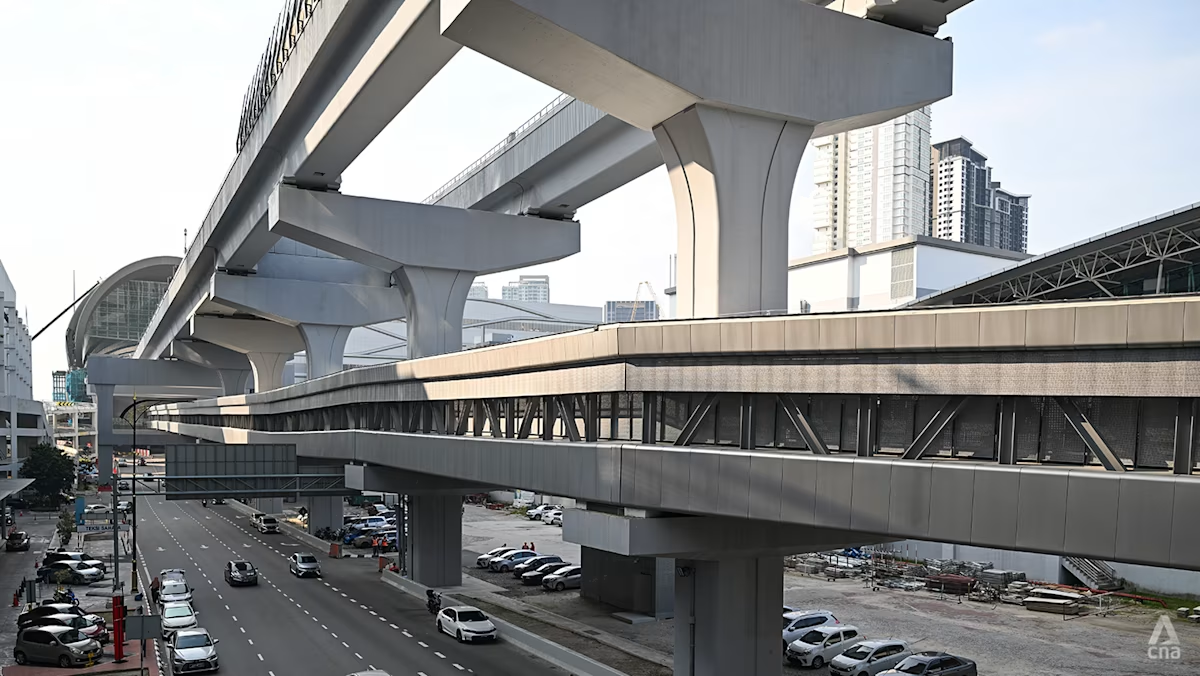
“It’s cleaner now than before, but there are ways to make it more comfortable and convenient for pedestrians,” said the 71-year-old security officer, who works in Singapore and was visiting Johor Bahru on his day off.“There’s still too many cars,” added Anthony, who said he had struggled to cross a road at a traffic light that morning because vehicles did not stop.Anthony, like many in Johor Bahru, is keenly anticipating the opening of the Johor Bahru-Singapore Rapid Transit System (RTS) Link and, with it, an elevated pedestrian walkway connecting the Bukit Chagar station with other transport nodes, including taxi stands and a bus bay, as well as nearby malls such as Johor Bahru City Square and Komtar JBCC.Johor Bahru’s CBD, gazetted as the Ibrahim International Business District (IIBD), will encompass 101ha in the state’s southern economic region, roughly the size of 141 standard-sized football fields.