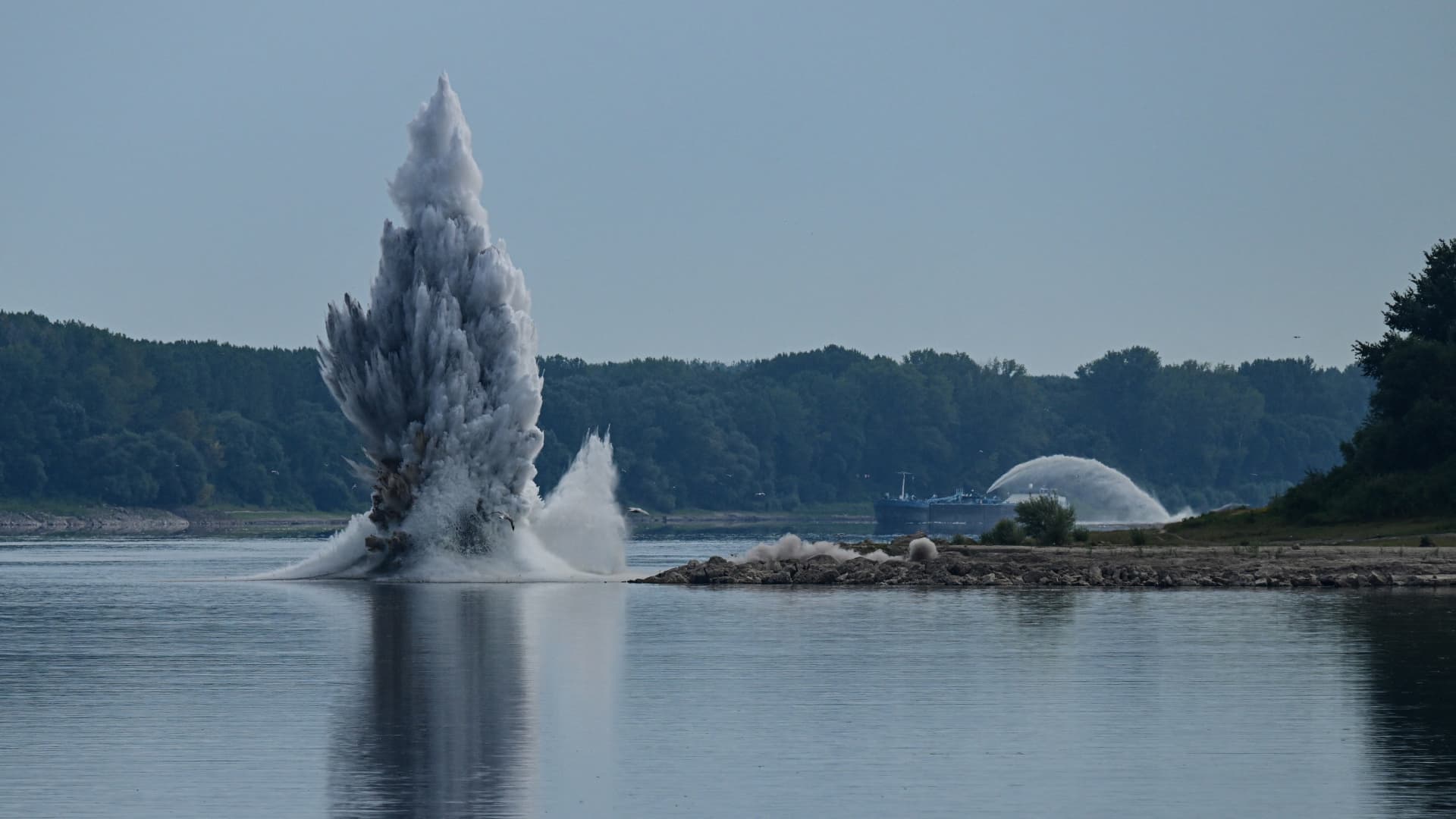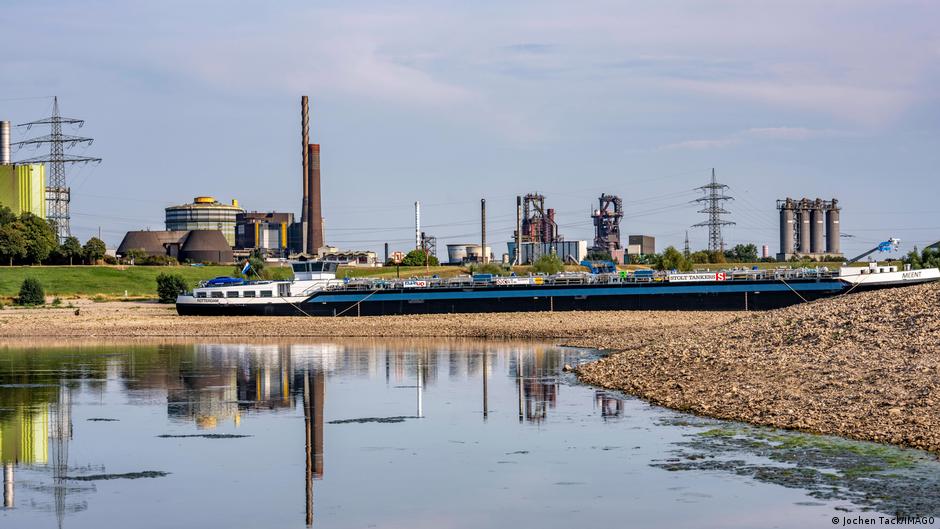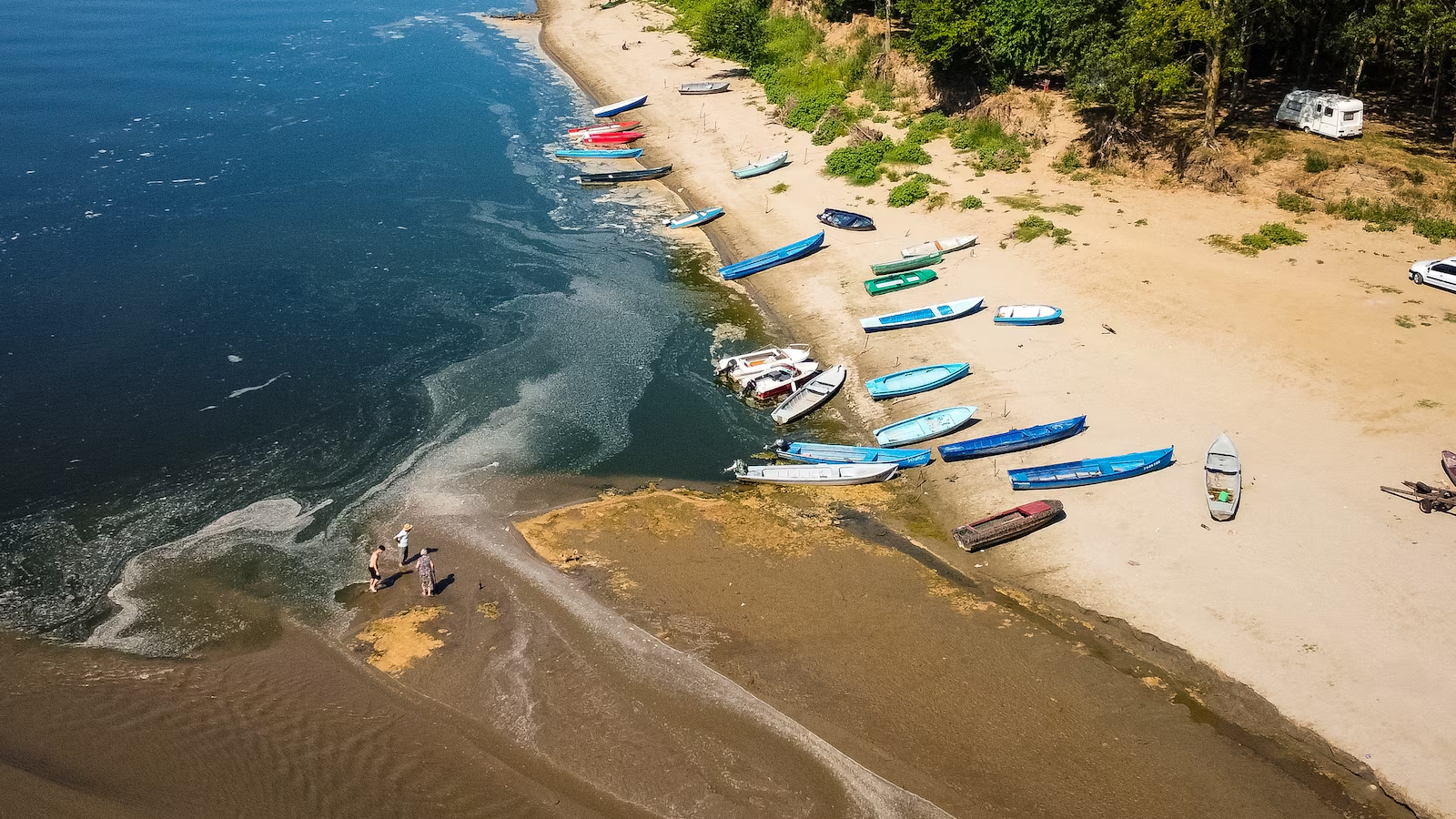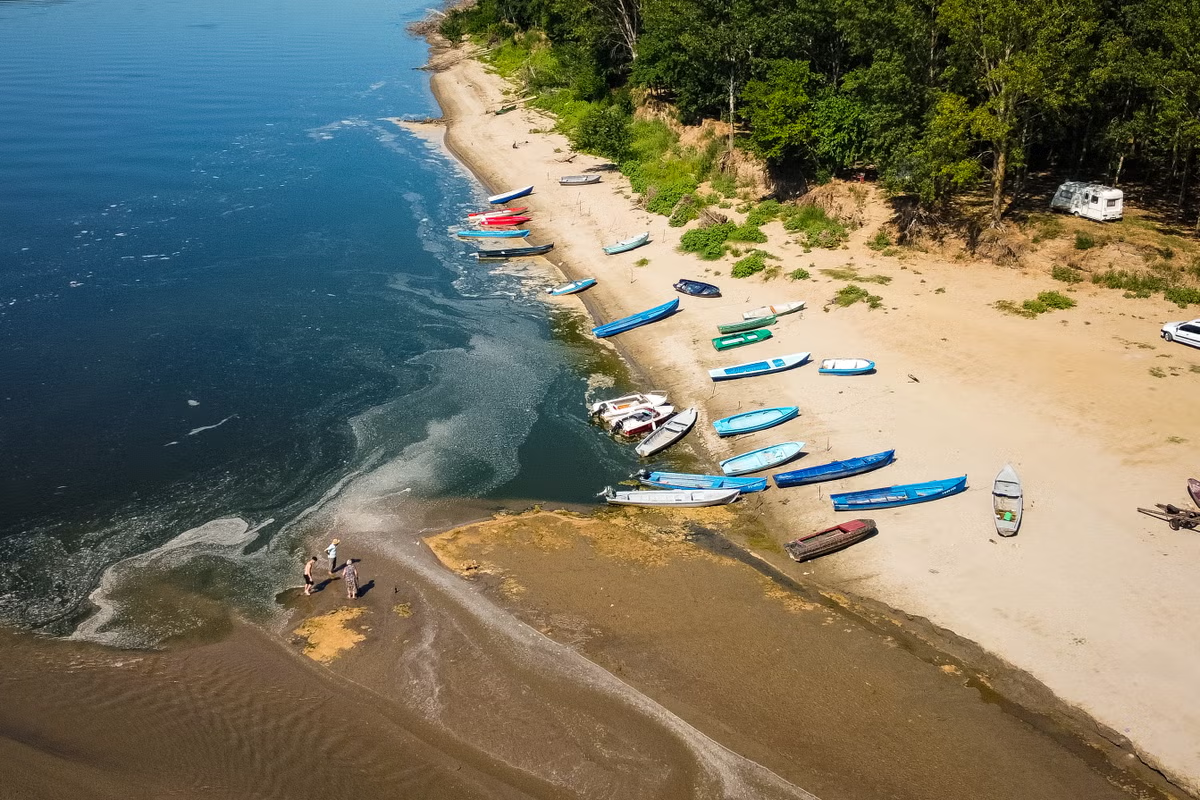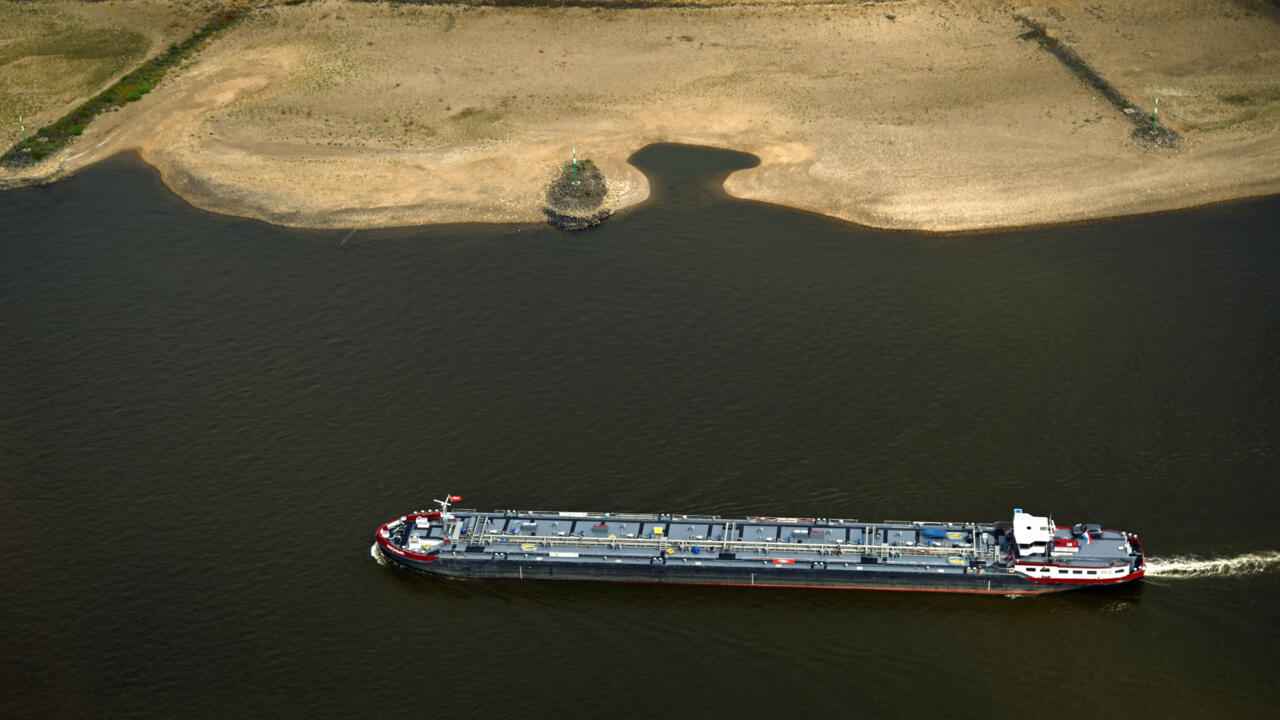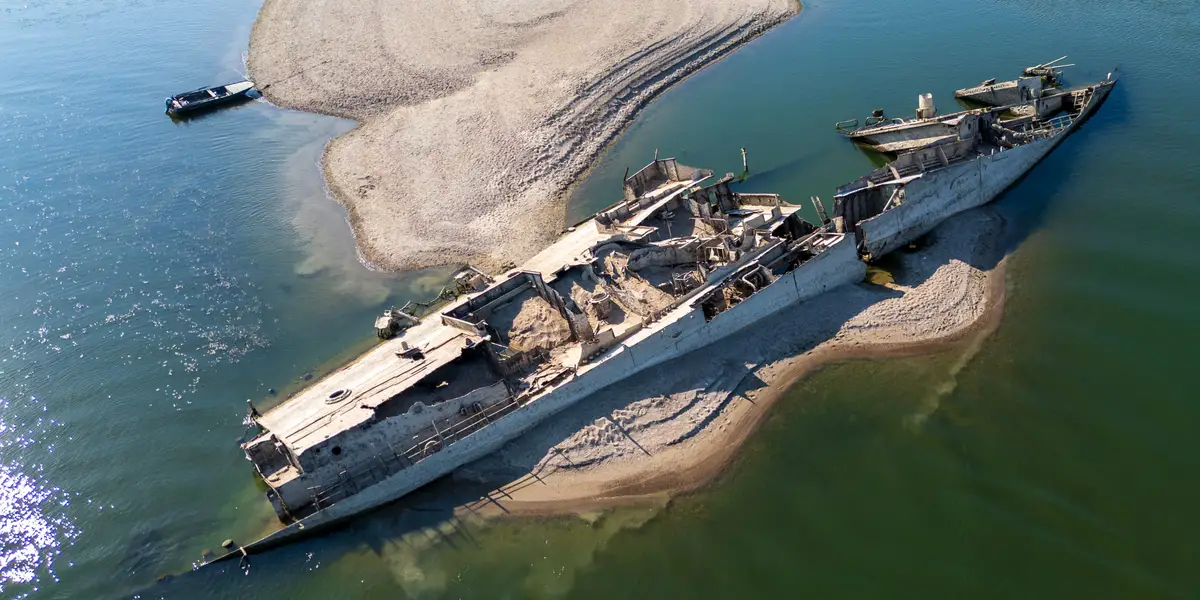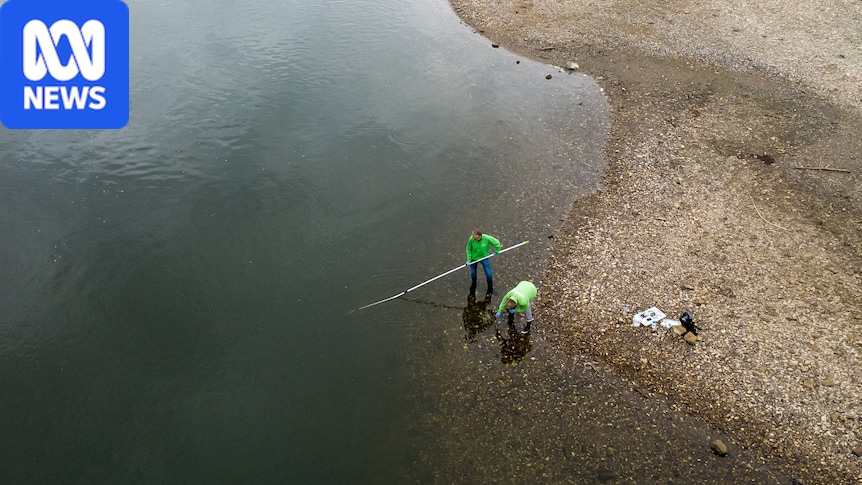
Across Europe, extreme weather is drying up rivers.From the Rhine to the Danube to the Po, critical waterways are falling to record lows.Cologne's Rhine gauge sank earlier this month to its lowest reading since 1816. At one of the river's shallowest stretches, Kaub, the water level gauge fell to 6 centimetres two weeks ago. The previous record low was 25cm in 2018.These rivers are small but critical arteries for inland navigation and transporting goods.They also provide drinking water, cool power plants, generate hydro-electric energy and draw in tourism.Experts say this summer's heatwaves are "exceptional" and the Rhine is at "breaking point", and Europe's economies will pay the price.What's happening to Europe's rivers?Rivers are reliable ways to transport liquid bulk, such as oil, gasoline and chemical products, as well as dry bulk, such as iron ore, coal and grain.It is rare that operations across these waterways would be hampered, said logistics expert Rommert Dekker from Erasmus University in Rotterdam."But then if it happens, it has huge consequences because everybody's used to it. There is no real backup," he said.When water levels on the Rhine River fell too low to carry the coal, chemicals and grains that Germany needed this summer, trucks took over instead.Boats lie in the partially dried-up Rheinauhafen harbour basin on the Rhine river in Cologne. (Reuters: Thilo Schmuelgen)All states in Germany, except one, were forced to temporarily ease a ban on trucks driving on Sundays.Professor Dekker said Germany's use of trucks and rail as an alternative to shipping were a costly way to transport products."Instead of one barge, you may need 200 trucks," he said."Then production is reduced because of this, because things cannot be supplied."How is it impacting the EU economy?The cost to the EU economy is staggering, with Triodos Bank estimating this summer could cost €180 ($295) billion, equivalent to about 1 per cent of GDP.Triodos Bank estimates that France will suffer the largest economic impact of extreme heat, and could lose 1.4 percentage points of growth, which would push the economy into a contraction.The report found that the next most affected countries were Italy and Spain, followed by the Netherlands, which could suffer a 0.8 per cent hit to its GDP growth.Europe has endured a sweltering summer of heatwaves. (Reuters: Guglielmo Mangiapane)Economist Ernst Hobma, who co-authored the Triodos Bank report, said the freight sector was one of three key contributors to the economic damage."The smaller channels are already closed for shipping, simply because there's too little water … they've become unnavigable," he said."That's caused disruption to supply chains for so many companies."All the companies sitting directly on the river and receiving inputs from them are affected."He said companies further downstream that relied on the supply chain flow were also being disrupted.Water from the rivers is also critical for crop irrigation, and there are fears poor harvests amid the drought will push prices higher."We just know yields will be lower if you experience extreme heat and drought like we are in Europe today," Mr Hobma said."That also will mean low yields going forward, probably pushing up food inflation and depressing GDP."Boats have been left stranded in Bezdan, Serbia. (Reuters: Zorana Jevtic)European cereals association Coceral said the June heatwave alone had wiped out 9 million tonnes of grain crops, resulting in a €2 ($3.3) billion revenue loss for farmers, according to one estimate by the Energy and Climate Intelligence Unit.It is also harder to work when it is extremely hot."That's most visible for people who work outside, so maybe people working in construction, for example," Mr Hobma said."They simply need more breaks and maybe need to adapt their hours, if it's even possible to do all the work that they had planned."The Triodos Bank report said reduced labour productivity was the largest contributor to the economic losses from heat, but was difficult to estimate."In poorly climate-controlled offices, we know that people perform cognitively less if it's extremely hot," Mr Hobma said."So all of these things together lead to labour productivity losses, and that adds quite some damage."Is the heatwave having other impacts?Low water levels in the Danube in recent weeks have forced sharp restrictions at Hungary's Paks nuclear plant, with water from the river providing crucial cold water needed for its reactors.In Romania, naval forces carried out a controlled explosion to blast apart a rock to divert water to the country's last working nuclear reactor, but the plant was later shut down.In France, where nuclear provides about 70 per cent of the country's electricity, reactors went offline due to a "massive influx of jellyfish", a phenomenon made more common by rising sea temperatures."Power plants have had to shut down [or reduce output] and that raises electricity prices on those grids. And again, hurts economic activity," Mr Hobma said.Mr Hobma said the shutting of power plants while Europe was making a push for more domestic energy sources was a "double whammy" coupled with the wars raging to Europe's east."I think that just shows that we need to build energy systems that are resilient even to more extreme climate scenarios," he said."If we really want to become independent as Europe, we have to try to lower our energy demand as much as possible."So insulating homes, for example, contributes to that because we simply would need less energy to get the same quality of life."Professor Dekker said the cost of the impact to the nuclear power plants was running into millions of euros per day."We have to use gas and coal … that is really costly so that has a huge impact," he said."There is a price to be paid."Will these weather conditions continue?The global energy crisis fuelled by the war in Iran and effective closure of the Strait of Hormuz has put pressure on oil supplies and the hip pocket of billions around the world.Professor Dekker said the European heatwave would have a further impact.The Paks Nuclear Power Plant uses water from the Danube River. (Reuters: Bernadett Szabo)"How much is due to the Iran crisis [and how much] to this long period of drought? It's difficult to say … but definitely prices will go up."He said the cost to European tourism was also clear, with river cruises across the continent cancelled or disrupted.This year's drought across large parts of Europe has helped fuel devastating wildfires in France and Spain, with more hot and dry conditions forecast into September, according to the European Commission, with continued risk of heatwaves.According to the European Drought Observatory, half of the EU and the UK is under drought at some level of intensity.The World Health Organization said in June data from five countries already showed nearly 10,000 excess deaths were linked to the extreme heat this summer. University of Reading climate science professor Richard Allan said Europe's recent extreme heat and drought signal that continued warming "will further intensify heatwaves, droughts and wildfires".It will also bring further flooding events from rising sea levels as ice melts and warmer oceans expand.Europe is the world's fastest-warming continent, according to the European Union's Copernicus Climate Change Service and the World Meteorological Organization."It is only by embracing long-term sustainable policies and practices that rapidly evolve our way of life to remove greenhouse gas emissions … that we can limit the mounting damage from our heating of the planet," Professor Allan said.
'Exceptional' summer heatwaves in Europe hurting economy
Experts say Europe's heatwaves this summer have been "exceptional", causing riverbeds across the continent to dry up. Now the flow-on effects are being felt economically.
1,213 words~6 min read