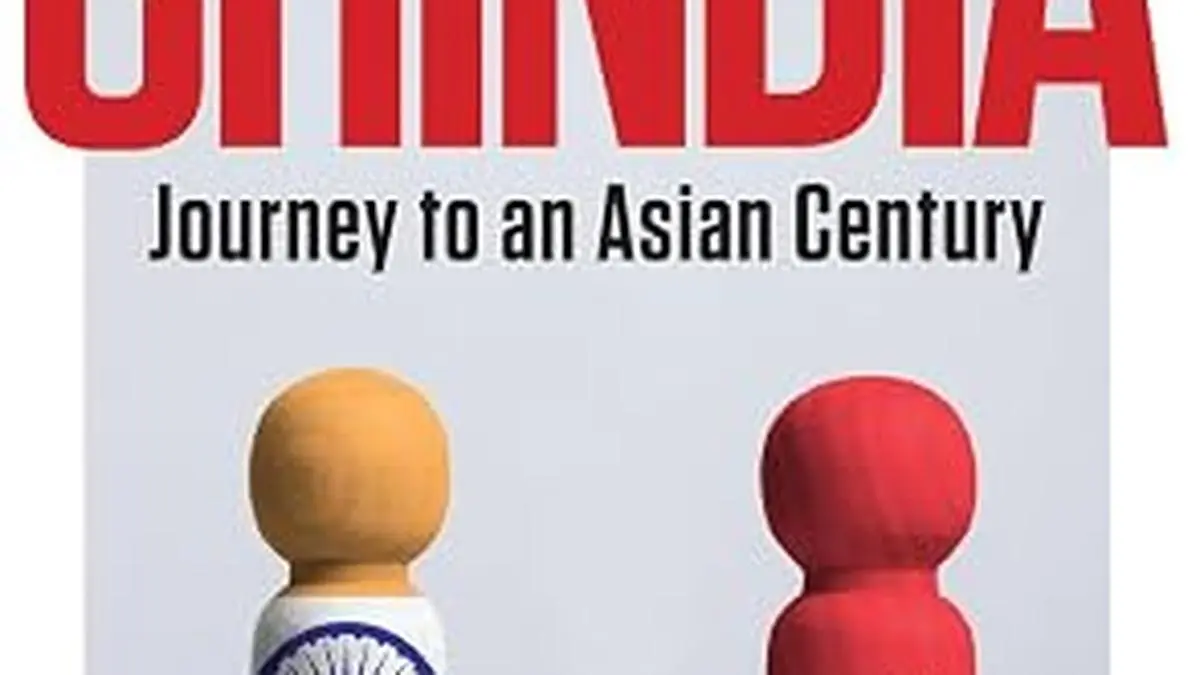
Indian writing on China was modest until recently, with barely one or two titles a year, usually academic studies of the 1962 war or China’s economic reforms. The pace quickened in the 2010s but remained uneven. After the Galwan clash of 2020, however, the trend shifted: books on China now appear every few months. Mostly, these books are memoirs based on personal recollections or official records, often looking back with the distance of hindsight.Chindia, by contrast, unfolds more like a diary — impressions and op-eds written in the moment, capturing the immediacy of lived observation rather than the weight of archival analysis. The author is a veteran journalist with over four decades of experience covering politics, diplomacy, and India-China relations.He is among the few Indians to have served within China’s state-run media, including China Daily and Global Times. He founded China India Dialogue in Beijing, and has contributed to European outlets such as Göteborgs Posten and Politiken. His books range from Chindia: Journey to an Asian Century to Beyond Binaries: The World of India and China (2024). This unusual career gives him a rare insider’s view of China’s official systems.The book is organised into four parts. The opening, Scoping Out China, draws on his years inside Chinese media to sketch everyday rhythms and the workings of Chinese systems. The second turns to India-China relations, split deliberately between disputes and cooperation, underlining his point that mistrust and engagement are inseparable. The third, All the World is a Stage, widens the lens to China’s global ambitions — Belt and Road projects, multilateral positioning, efforts to shape opinion. The final section looks ahead to the Asian Century, asking whether India and China, despite differences, can find enough common ground to share the future.Two approachesThe book can be read two ways: one is to engage with its central idea that India and China, despite deep mistrust, cannot pursue the Asian Century in isolation. Ramachandran traces the arc from Rajiv Gandhi’s 1988 visit to the Galwan clashes of 2020 to show how cooperation and confrontation have always coexisted, stressing that neither country can realise its ambitions alone and that the world cannot afford an Asian Century excluding either. Alongside this broad arc, the book carries a wealth of material on meetings and exchanges between leaders and officials, illustrating how diplomacy has repeatedly sought to manage rivalry and keep channels open even in moments of crisis. Much of this may have first appeared as standalone op-eds or be extracts of earlier essays, but here it is woven together more effectively, giving readers both immediacy and continuity. Yet he notes India scarcely figures in Chinese public debate, appearing only as a passing reference rather than as a sustained subject.The other way to read Chindia is as a window into Chinese society. His accounts of working inside Chinese media are especially vivid. He describes Xinhua, the national news agency, as not merely a press organisation but something akin to a think-tank — and more than that, a sprawling institution almost like a state within a state, shaping narratives and exercising influence over both media and government. CCTV, now CGTN, is similarly large though less dominant. He notes that readership of the English language press in China is extremely limited, confined largely to expatriates and a small group of Chinese readers using it to practise their English, which makes it subject to lighter scrutiny. Within this space, the longstanding China Daily remains placid and sedate, while the Global Times has, since its launch in 2009, thrived on flamboyance and deliberate nationalism — whether directed at Japan, Vietnam, the Philippines or the US. In tone it resembles China’s Fox News: brash, provocative, unapologetically sensational, and operating on the principle that all publicity is good publicity.In India, it attracts disproportionate notice, though its actual coverage of us is minimal; in 2009-10, the year he worked there, it carried only one op-ed on India apart from his own reports. He suggests the Chinese may even be having fun at India’s expense, baiting headlines that Indian media then magnifies, so that outrage here only amplifies the paper’s reach. He situates this within a broader critique of the Indian press, noting how our media often reacts emotionally to Chinese provocations, thereby sustaining the very cycle Beijing may be exploiting.Domestic transformationsBeyond media, his essays also touch on China’s domestic transformations. His sections on the one-child policy, anti-corruption campaigns, the efforts of the state to revive the bicycle dominance culture, the societal impact of the economic slowdown, etc., are brisk sketches attempting to capture the contrasts within China itself, showing how different groups absorb and respond to change and how ordinary Chinese citizens felt the impact of these shifts.Taken together, these anecdotes of living in Beijing and reflections on Chinese society lift the book beyond politics, humanising Chinese society for Indian readers and reminding us that behind abstractions of power politics lies a society negotiating its own contradictions.In the end, Chindia is less a manual than a reminder. It shows that India and China, though mistrustful, remain tied by geography and necessity. The book blends geopolitics with lived experience, making it useful reading for anyone seeking a clearer view of the Asian century and its unfolding realities.The reviewer is a retired banker, who was CMD Exim Bank of India and later non executive chairman of IOB . He was posted in SBI Shanghai, India’s first commercial bank in China in 2005 and had frequent dealings with China during his Exim Bank tenure tooTitle: Chindia — Journey to an Asian CenturyAuthor: Shastri RamachandranPublisher: AuthorsUpfrontPrice: ₹895Published on August 23, 2026
Tied by geography and necessity
The book is a window into Chinese society, humanising it for Indian readers
932 words~4 min read