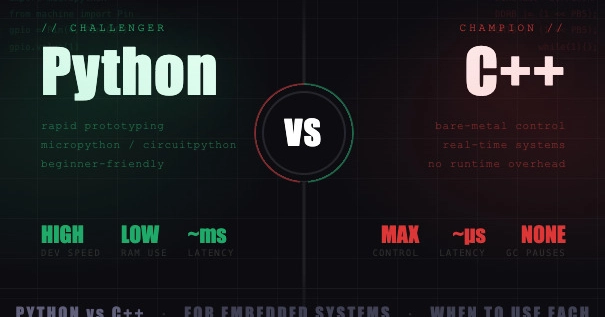
Python is a perfect language for Agile development, where requirements might change on the go. Especially if you are in a startup business, you will need to experiment and change things fast. However, Python is an interpreted language, and in certain situations you might need faster performance than what an interpreted language can provide. A common practice in these cases is using python-to-binary bindings, where the binary code is built with Rust, C++, or Go. In this article, I will explore bindings to Rust-based code.
How do the bindings work
The idea behind bindings is that you create a module with functions of a specific domain in a language that compiles to binary, and build it as a C-compatible dynamic library (.so on Linux, .dylib on macOS, .dll on Windows). Then a Python wrapper is built as a Python package and installed together with the dynamic library, allowing you to import and use functions that pass control to the corresponding functions in the dynamic library. On some occasions, classes can be used instead of functions. If any parameters are complex, they must be serialized in the wrapper and passed to the dynamic library as a JSON string or as a set of individual primitive parameters.