Originally published on tamiz.pro.
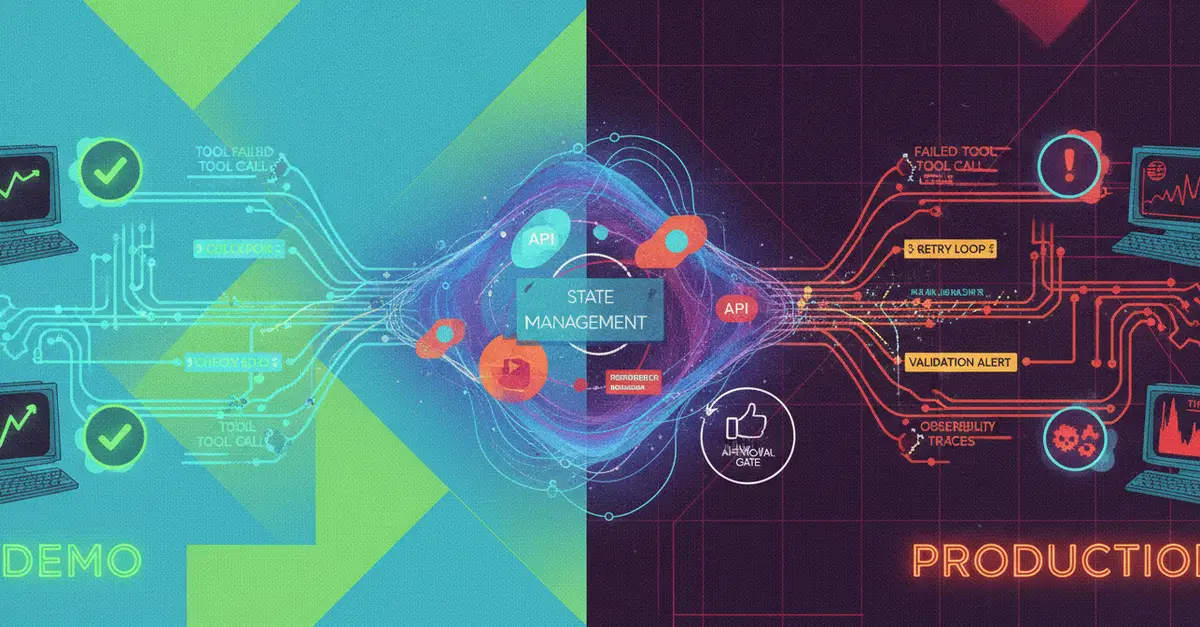
You prompt your agent to orchestrate a multi-step workflow. It generates a beautifully reasoned plan. Then it fails on step three. Or eight. Or quietly produces wrong output that no one notices until it's too late.
This isn't a prompt engineering problem. It's an architecture problem — one rooted in the fundamental mismatch between probabilistic language models and deterministic software systems. Understanding why agents fail to execute their own plans is the prerequisite to building ones that don't.
This article dissects the technical failure modes, traces them through the agent stack, and explores architectural patterns that close the gap between LLM-grade reasoning and production-grade execution reliability.
The Core Mismatch: Probabilistic Reasoning vs. Deterministic Execution