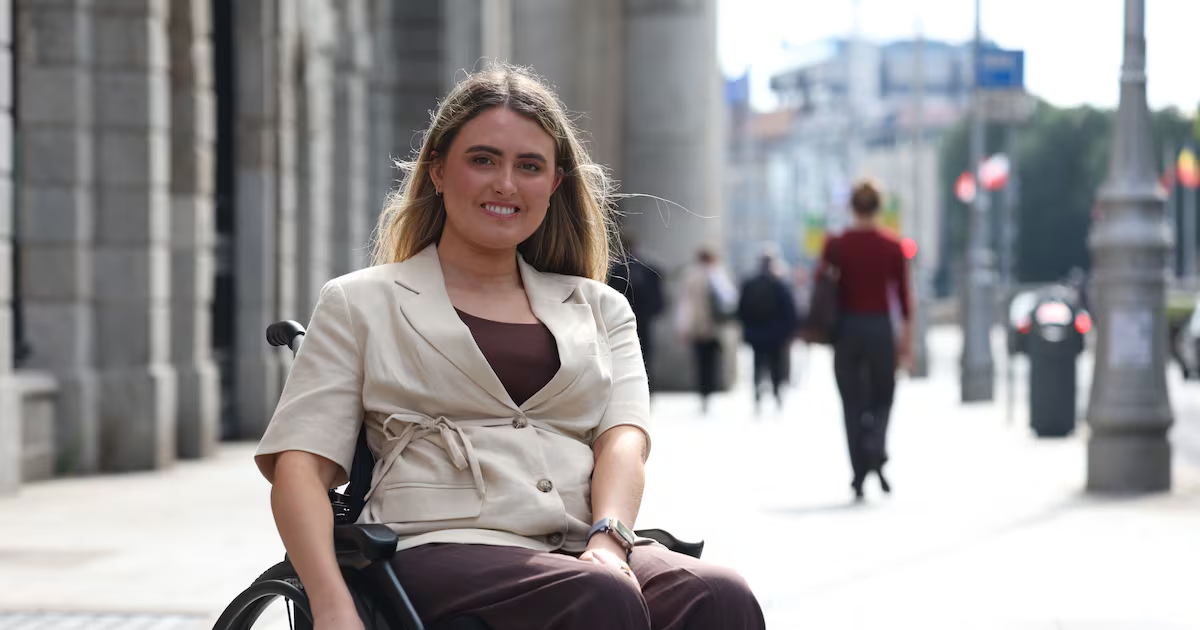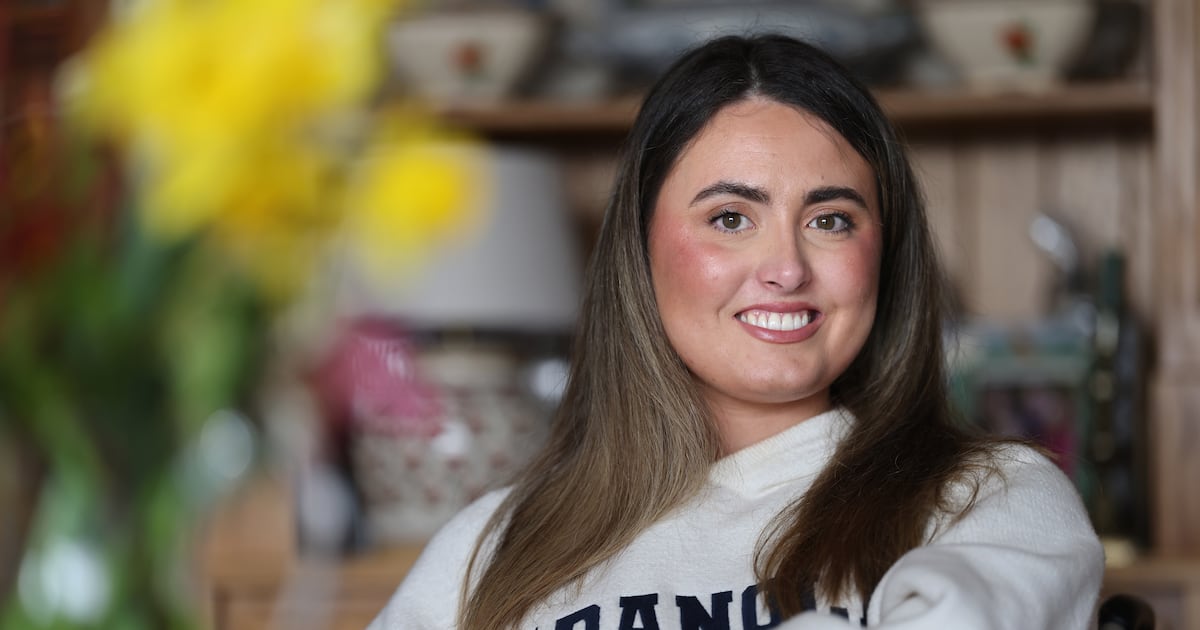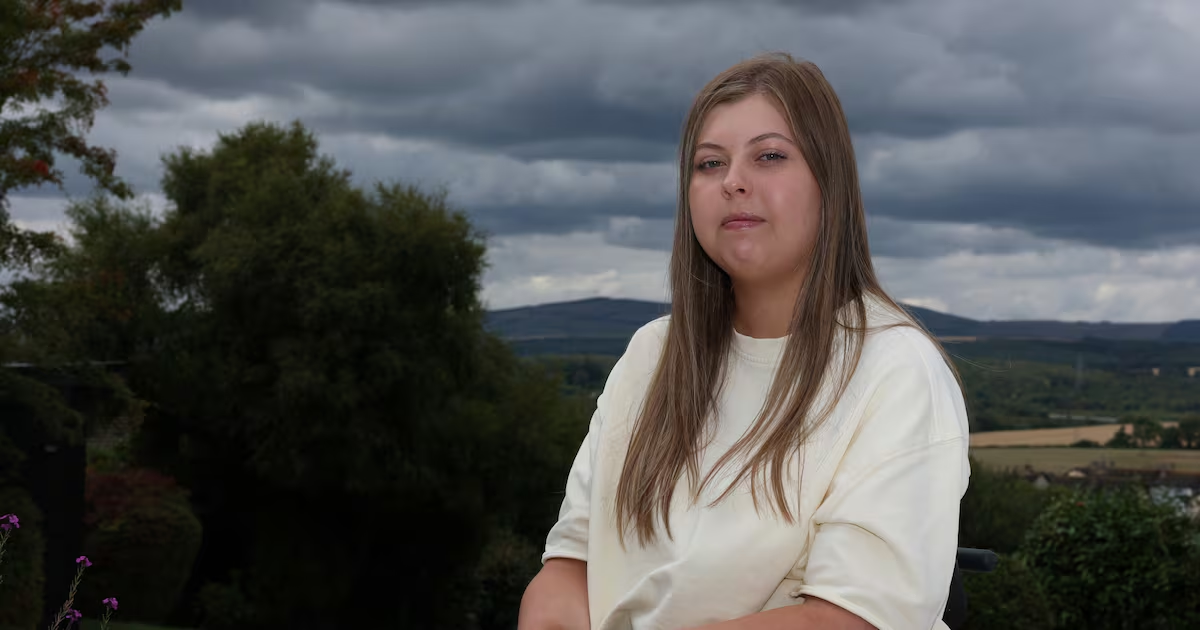
Isabella Travers was aged 12 when she was diagnosed with Friedreich’s ataxia (FA), a rare, progressive disease. Four years later, she became a full-time wheelchair user.The now 19-year old from Co Wicklow said she is “scared” for what the future holds. “That’s why it’s so important that we get Skyclarys just to preserve the abilities that we have today for as long as we can.”About 200 people in the Republic have the neuromuscular condition.In February 2023, the drug omaveloxolone, branded as Skyclarys, was approved in the US for the treatment of the disease. Europe followed suit 12 months later.Skyclarys is not a cure, but patients and advocates say it has the ability to slow the progression of FA by up to 55 per cent.Despite its EU approval, the drug remains out of reach in Ireland.Last December, the National Centre for Pharmacoeconomics issued an assessment on the “cost-effectiveness” of Skyclarys. It recommended that the drug not be considered for reimbursement by the Health Service Executive (HSE), stating it would cost about €280,000 per patient annually.On July 14th, the HSE Drugs Group did not recommend the drug for reimbursement and referred the application to the Rare Diseases Technology Review Committee “to seek further input”.On August 11th, following the committee meeting, the HSE Drugs Group recommended that the drug should not be reimbursed.A protest over the decision is being held on Sunday, starting at 12pm at the Garden of Remembrance in Dublin city centre.Isabella’s father, Aaron Travers, argues that the €280,000 figure is the published list price and does not necessarily reflect the price the HSE would ultimately pay following commercial negotiations.Isabella said she first developed symptoms of imbalance aged 11. After referral to a neurologist, she received her diagnosis and said it came as a “complete shock”. Her family had never heard of the condition before.Aaron said the diagnosis was “devastating”, especially finding out there were no available treatments or a cure.Isabella Travers: ‘Unless you’re affected by this condition, you don’t really understand how hard it is.’ Photograph: Clodagh Kilcoyne for The Irish Times “As of right now, I am very lucky I don’t have any other complications. I just have problems with my walk,” Isabella said.“It’s really upsetting to think that, you know, they don’t really want to invest in our lives and they don’t think that we’re worth the money. It is really hard to hear that.”She said the drug “could really make a difference for our lives”.“Unless you’re affected by this condition or you’re living with this condition, you don’t really understand how hard it is.” Aaron said the family were “trying to understand why” the HSE had refused to pay for the drug so far, insisting that its “efficacy ... is proven”.The family attended a public meeting on Thursday held in Buswells Hotel in Dublin where Dr David Lynch, of the Friedreich’s Ataxia Centre of Excellence in the US, spoke via video call.Aaron said Lynch told attendees of the “real-world practice” of treating more than 500 FA patients with Skyclarys. The doctor explained the benefits of the drug and how it was a “very well-tolerated” medication.“It’s approved in a lot of European countries ... what is wrong with the Irish Government? Why can’t we get this approved?” Aaron asked.He believes there needs to be “a lot of transparency and accountability”.Aaron is also calling for a review of the rare disease drug approval process. A final decision on reimbursement will be made by the HSE’s senior management team on Tuesday.Isabella said she was “nervous” in advance of the decision.Her mother, Claire Travers, said she was not 100 per cent hopeful as she had seen “how they can say no so heartlessly”.However, she said if the answer was no, “it won’t be the end of it” and they would “continue on this fight”.Kiara Lynch from Co Longford, who was diagnosed with FA through a blood test at 13, said the disease had impacted “every aspect” of her life.The 42-year-old experienced symptoms of imbalance at first. She was falling over a lot “for no obvious reason”.Her older brother also has FA.She is a full-time wheelchair user and her hand-eye co-ordination, hearing, speech, swallow and eyesight have all been affected. “As the years went on and you lose more and more of yourself ... it’s just devastating,” she said. “It’s just constantly a battle. “We just haven’t got time ... we just simply need a chance.”She said the possibility of the approval of Skyclarys was “the only glimmer of hope” for her and others in her position. “I have been fighting the never-ending relentless onslaught of this disease for 29 years now. “Every year since I was diagnosed, my doctors have been telling me ‘keep fighting, a treatment will be found soon’. “Now that day has finally arrived and my own Government are refusing to allow me to access the treatment because it is too expensive, I am utterly devastated.“Do we not at least deserve the opportunity to at least try?”[ Father of boy with Friedreich’s ataxia devastated over HSE recommendationOpens in new window ]Theresa Kane’s two children, Ciarán and Emily, both have FA.When her son was four or five, Kane and her husband noticed there was something wrong with his walk. After taking him to doctors and specialists, he was diagnosed at eight.They were “completely shocked” by the diagnosis.She said it was “devastating”. After receiving the news, she and her husband “cried the whole way home in the car”.“We stopped to get something to eat and I wouldn’t say there was anything eaten off the plate, like, the tears were just rolling down.”Her daughter was also diagnosed aged eight, after her primary school picked up on her symptoms.Following her daughter’s diagnosis, Kane said she was “nearly expecting it” but “it was awful”.Ciarán (15) and Emily (13) are “completely different children from what they were back then to what they are now”.Kane said Ciarán is a wheelchair user and everything has to be done for him. His voice is also starting to deteriorate and she has banked it before it progresses further. He has scoliosis and both children’s hearts are affected.Emily is also in a wheelchair but she can still do her own transfers.She said for social outings, “everything has to be planned”.“They can’t just go out and go off and meet their friends and go where they want with their friends, like any other teenager.”She first heard of Skyclarys when it was being trialled in the US. “I didn’t think we’d be fighting the way we are now for it, this far down the line.”[ Woman diagnosed with Friedreich’s ataxia sues HSE over access to drugOpens in new window ]Kane said it was “awful” to know there was something that could help her two children but the HSE would not approve it.“It’s heartbreaking. It just doesn’t make sense.”Kane said access to the drug would “stop everything else from progressing”.She is hopeful the drug will be approved on Tuesday but is worried to get her “hopes up and then be devastated again if they say no.“Their lives matter. It shouldn’t come to money.” The HSE has been contacted for comment.
Friedreich’s ataxia: ‘We haven’t got time. We just simply need a chance’
Patients and families are calling on the HSE to fund Skyclarys, a treatment they say could help slow progression of the rare disease
1,188 words~5 min read