Here's an uncomfortable fact about the container you're about to deploy. You wrote a small fraction of what's inside it. The rest, the base image, the OS packages, the dependencies, the dependencies of your dependencies, came from somewhere else, and most teams ship it all to production without ever really looking at what's in there. Container image security is mostly about closing that gap, knowing and controlling what's actually in the box you're running. Let me break down where it goes wrong.
Your base image is a decision, not a default
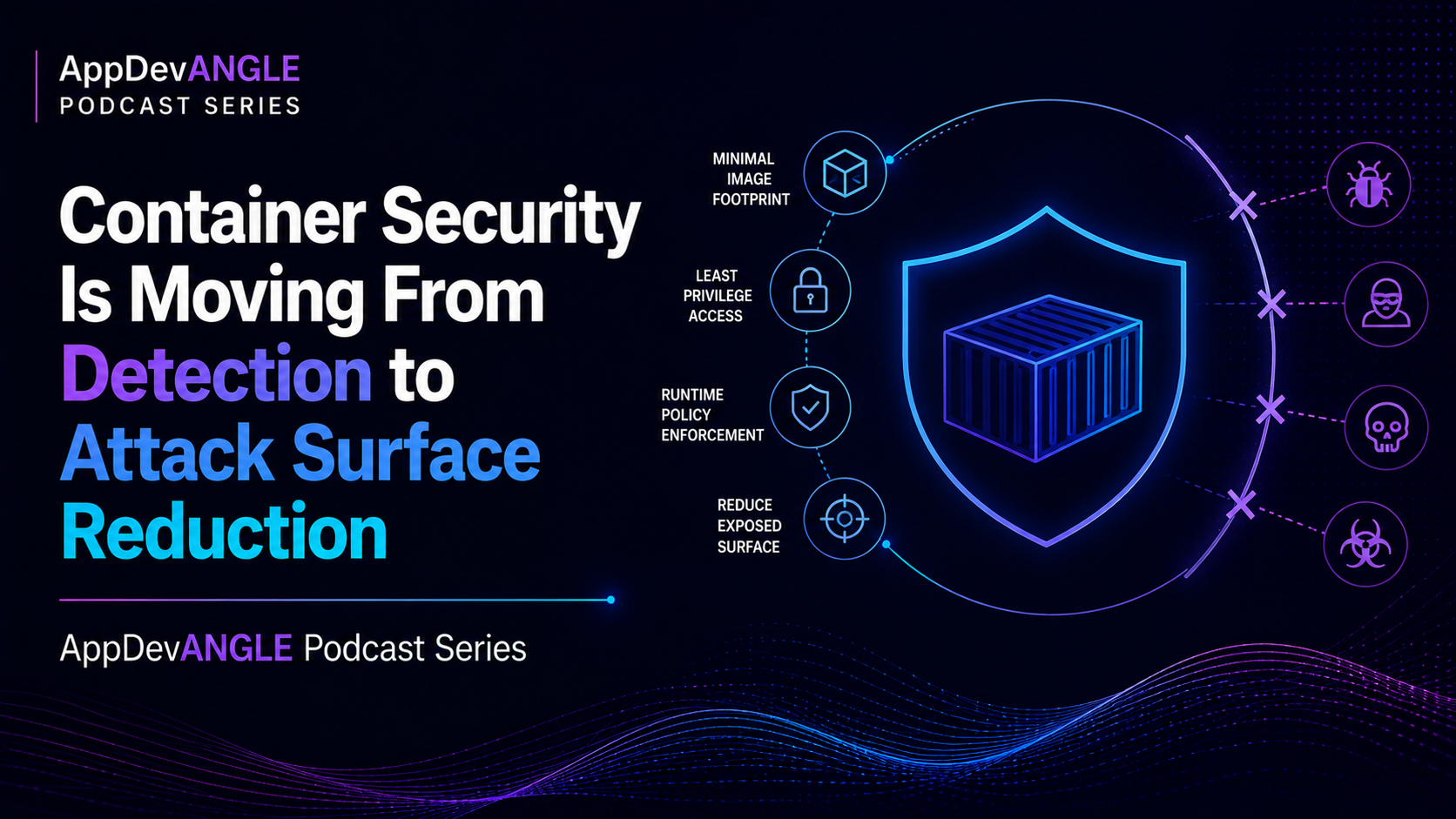
Almost every container starts FROM something, and that base image sets the tone for everything. The common instinct is to grab a big, familiar, full-featured base because it's convenient and everything you might need is already there. That convenience is a security cost. A large base image comes with a huge amount of software you're not using, and every one of those unused packages is potential attack surface, another thing that could have a vulnerability, another thing an attacker could use if they get in.
The move is to start minimal. Use small, purpose-built base images that contain close to only what your application actually needs. Less software in the image means less that can be vulnerable, less that can be exploited, and a smaller thing to reason about. Minimal base images aren't just smaller and faster, they're meaningfully more secure purely by having less in them to go wrong.