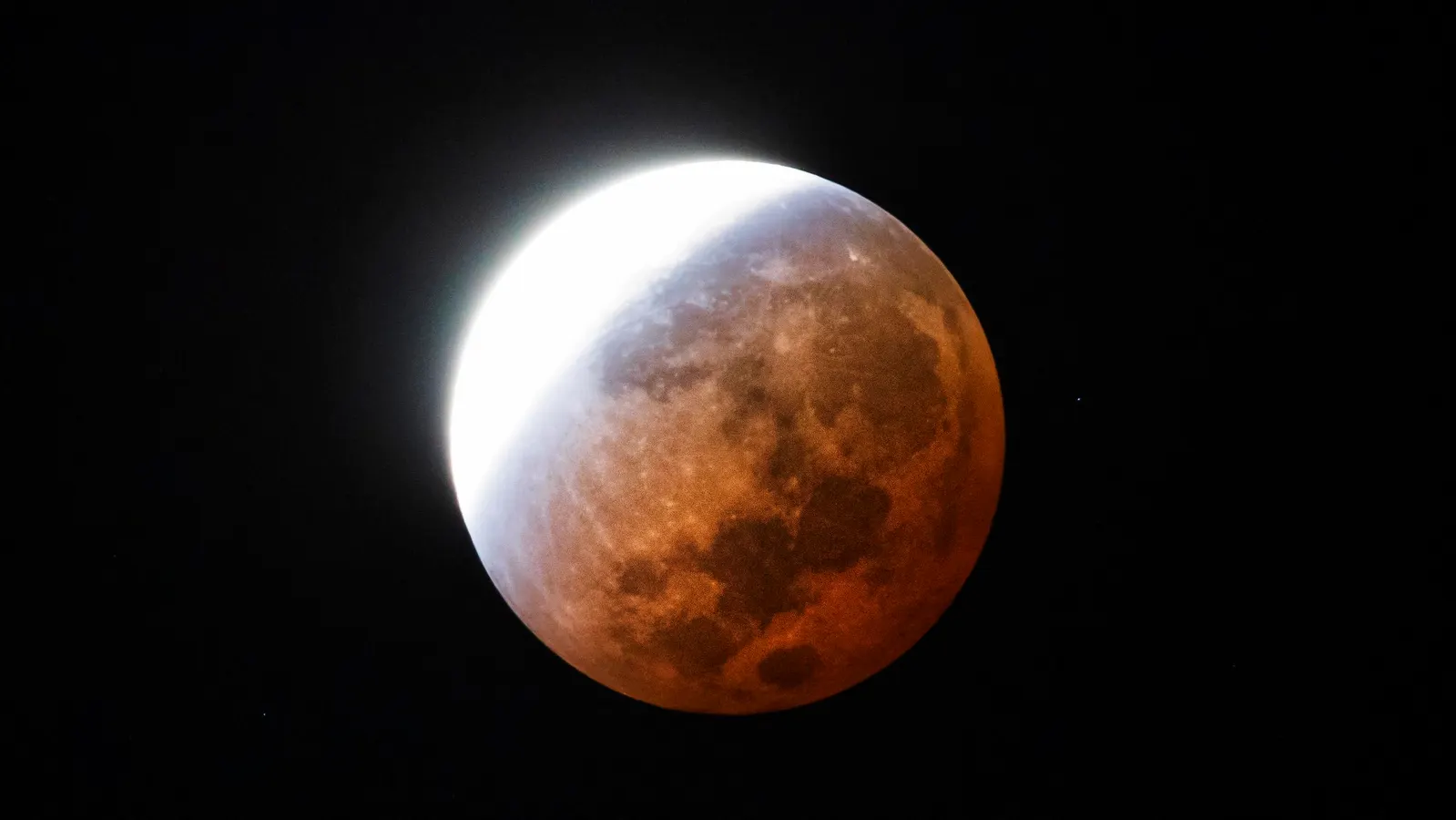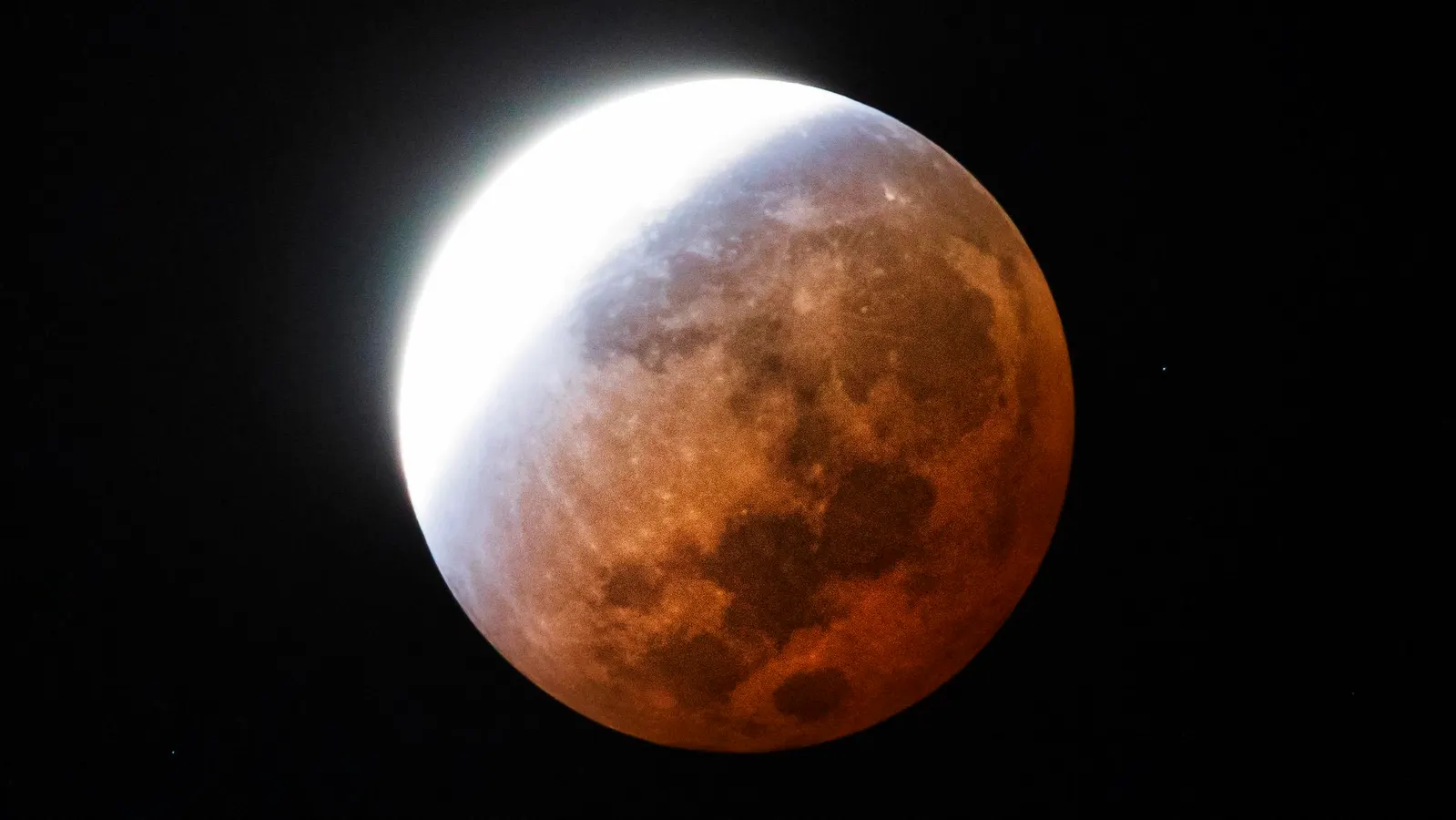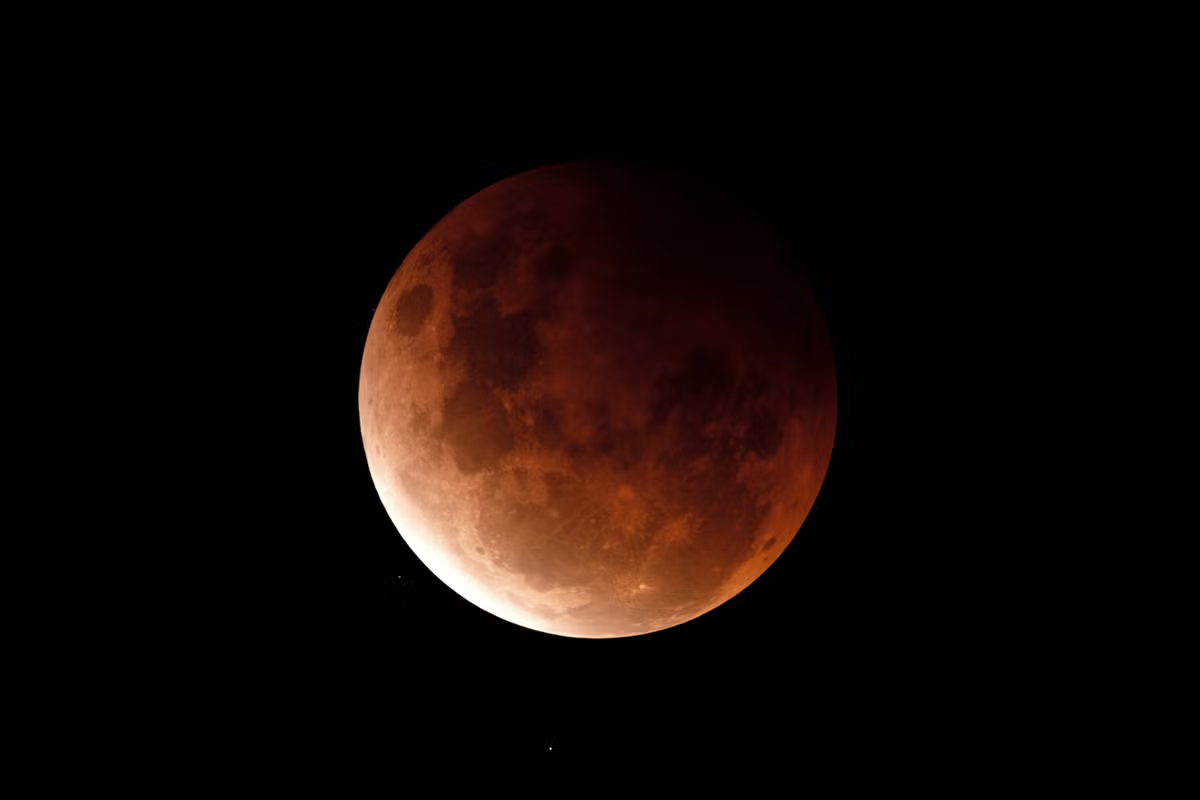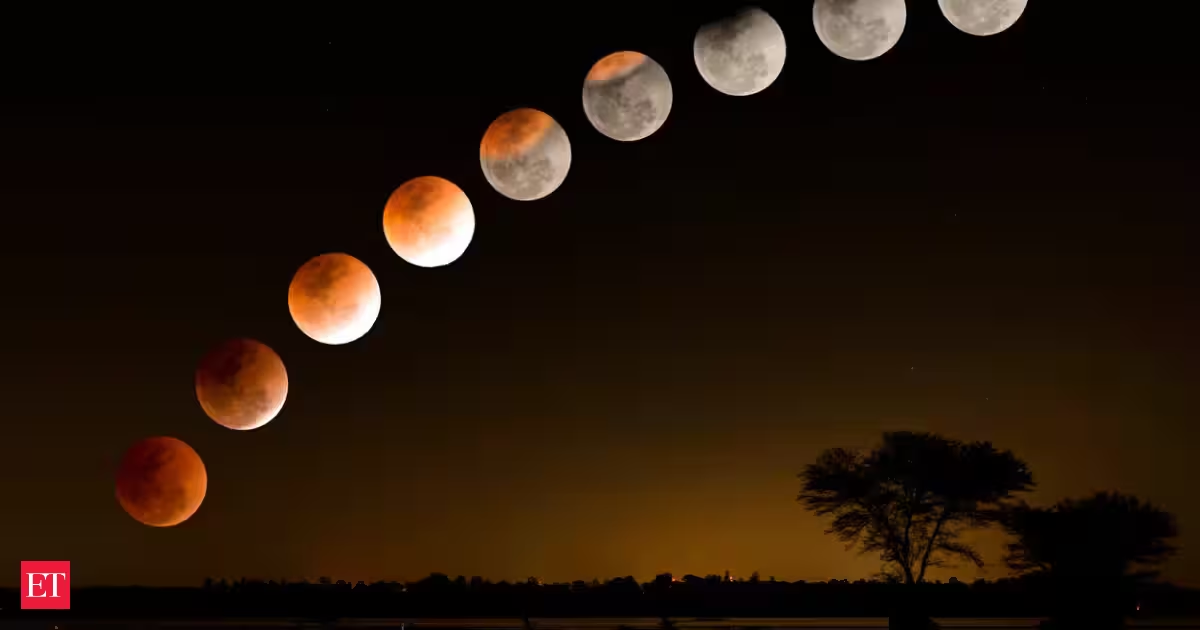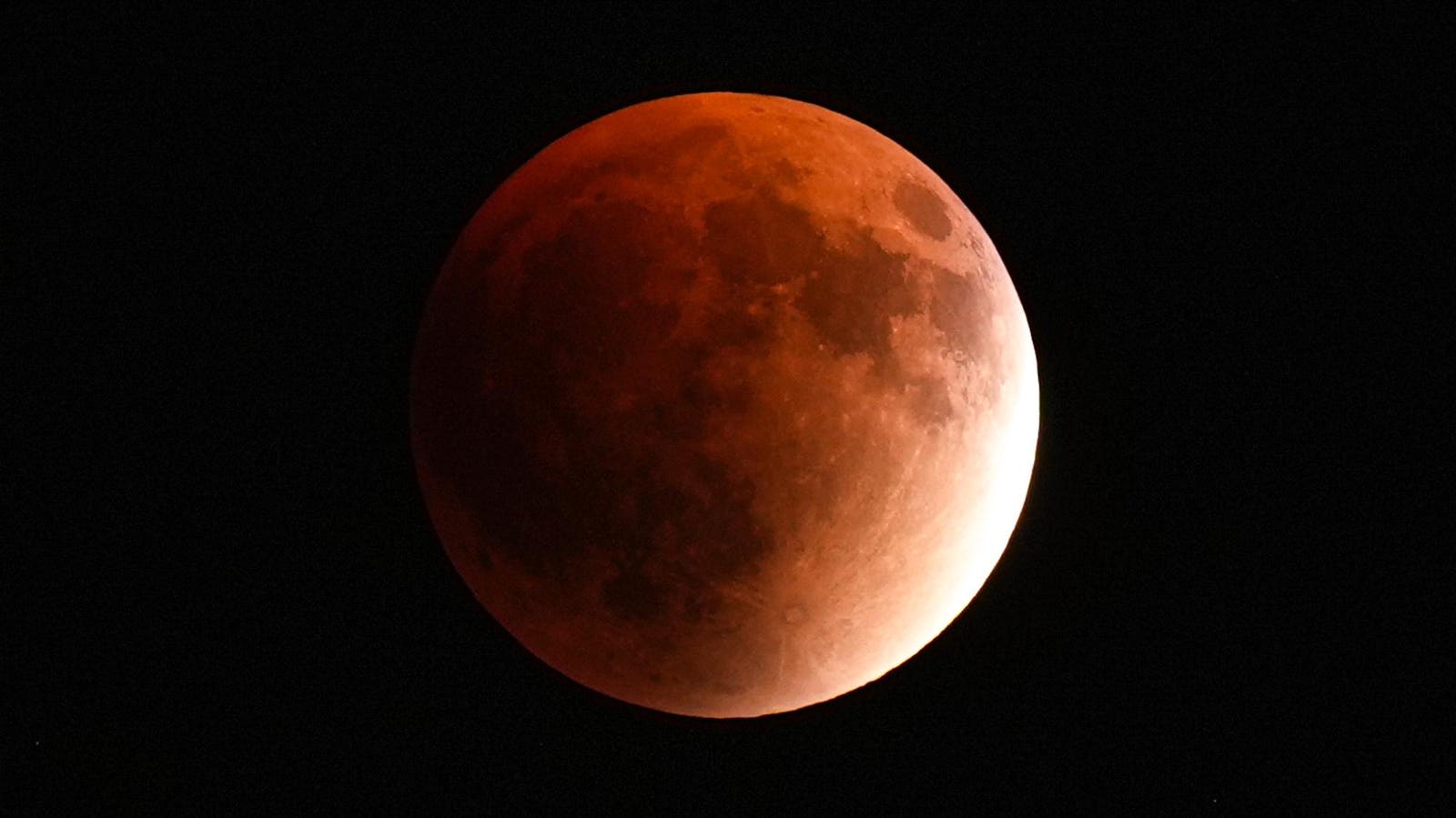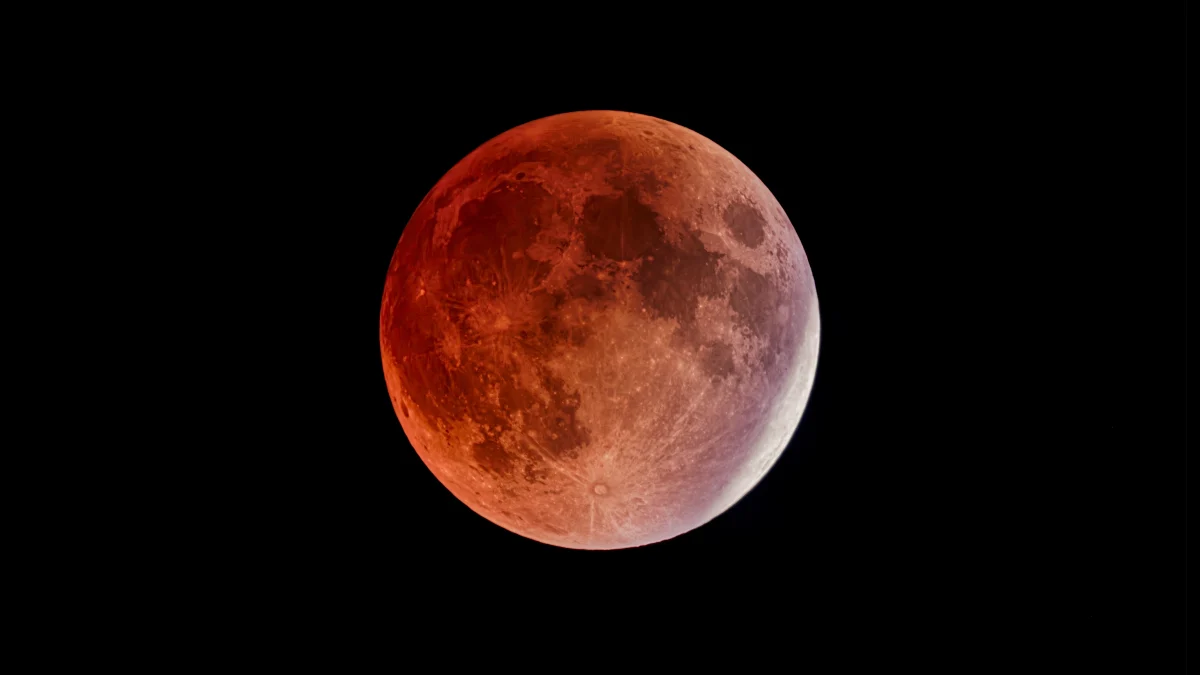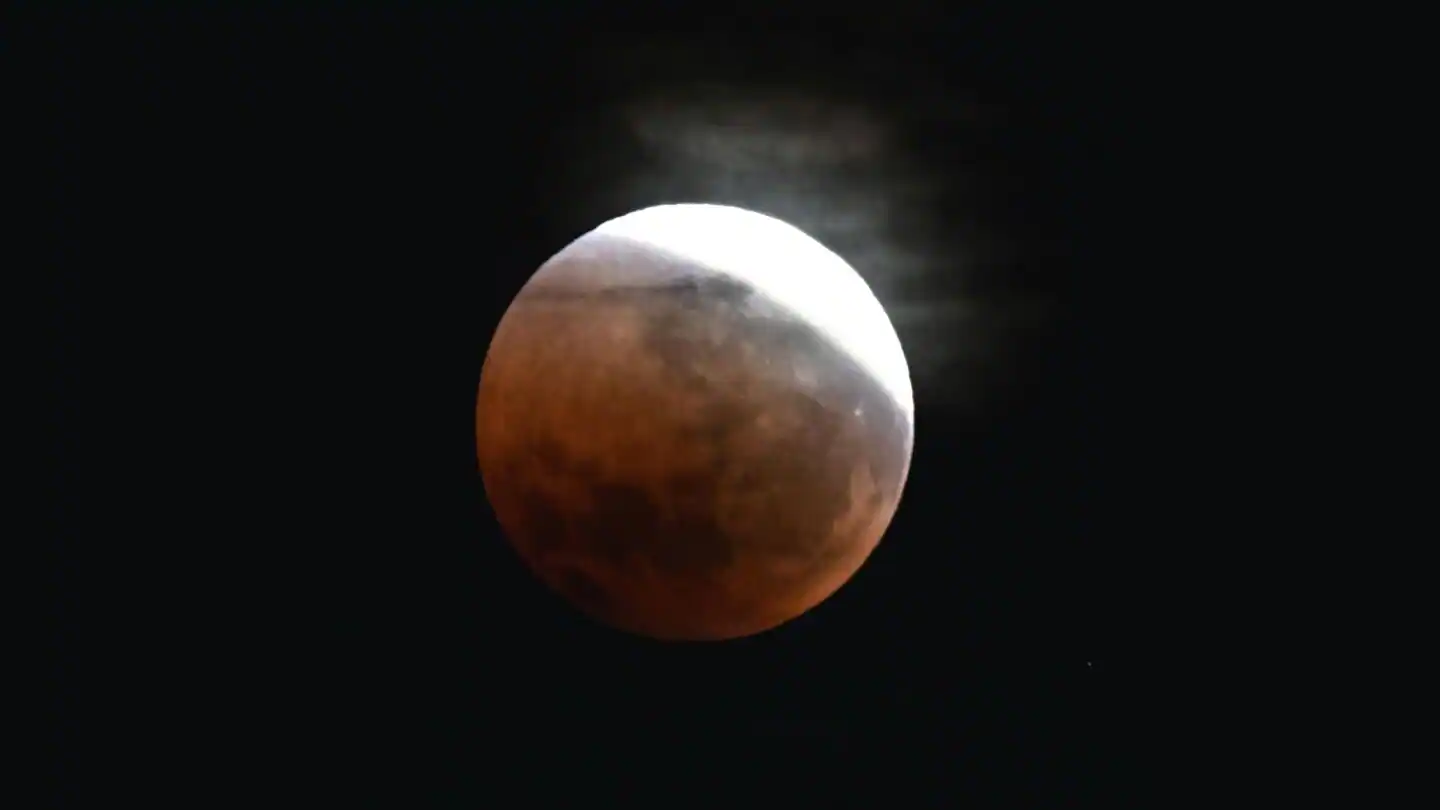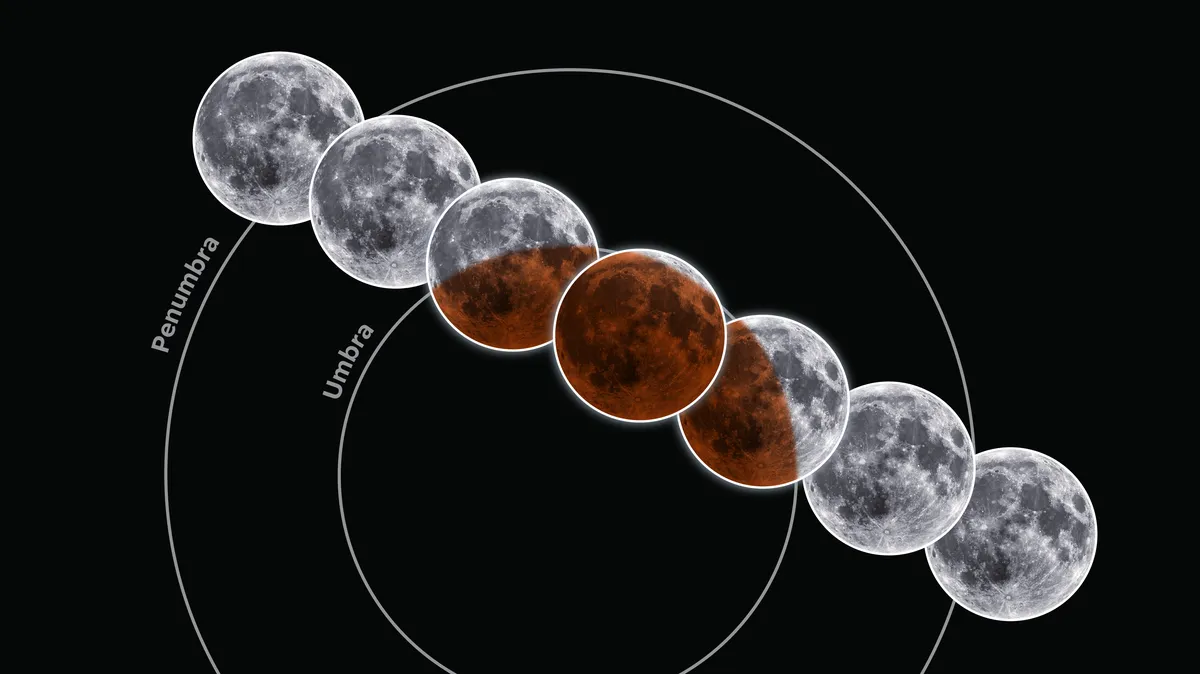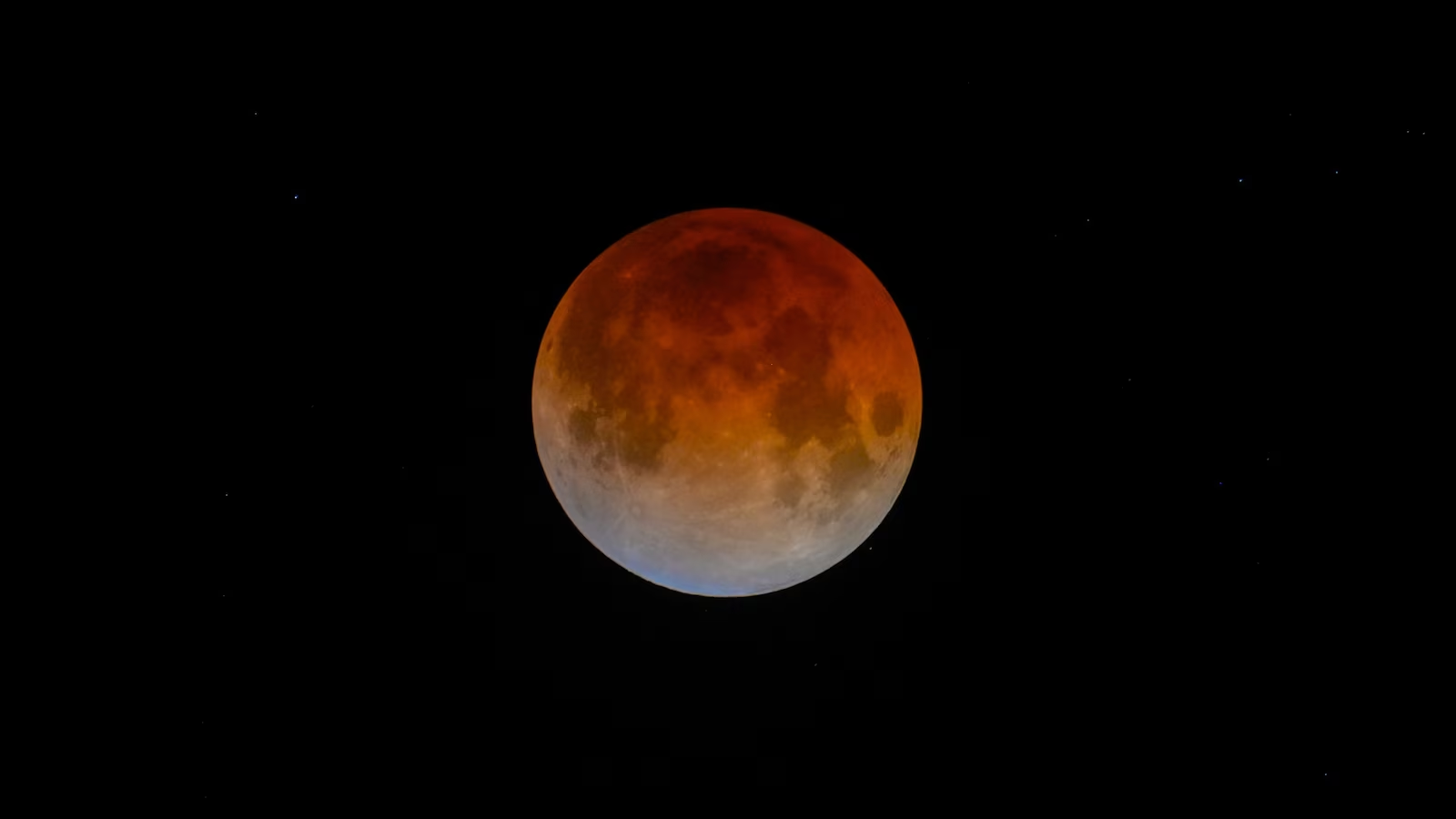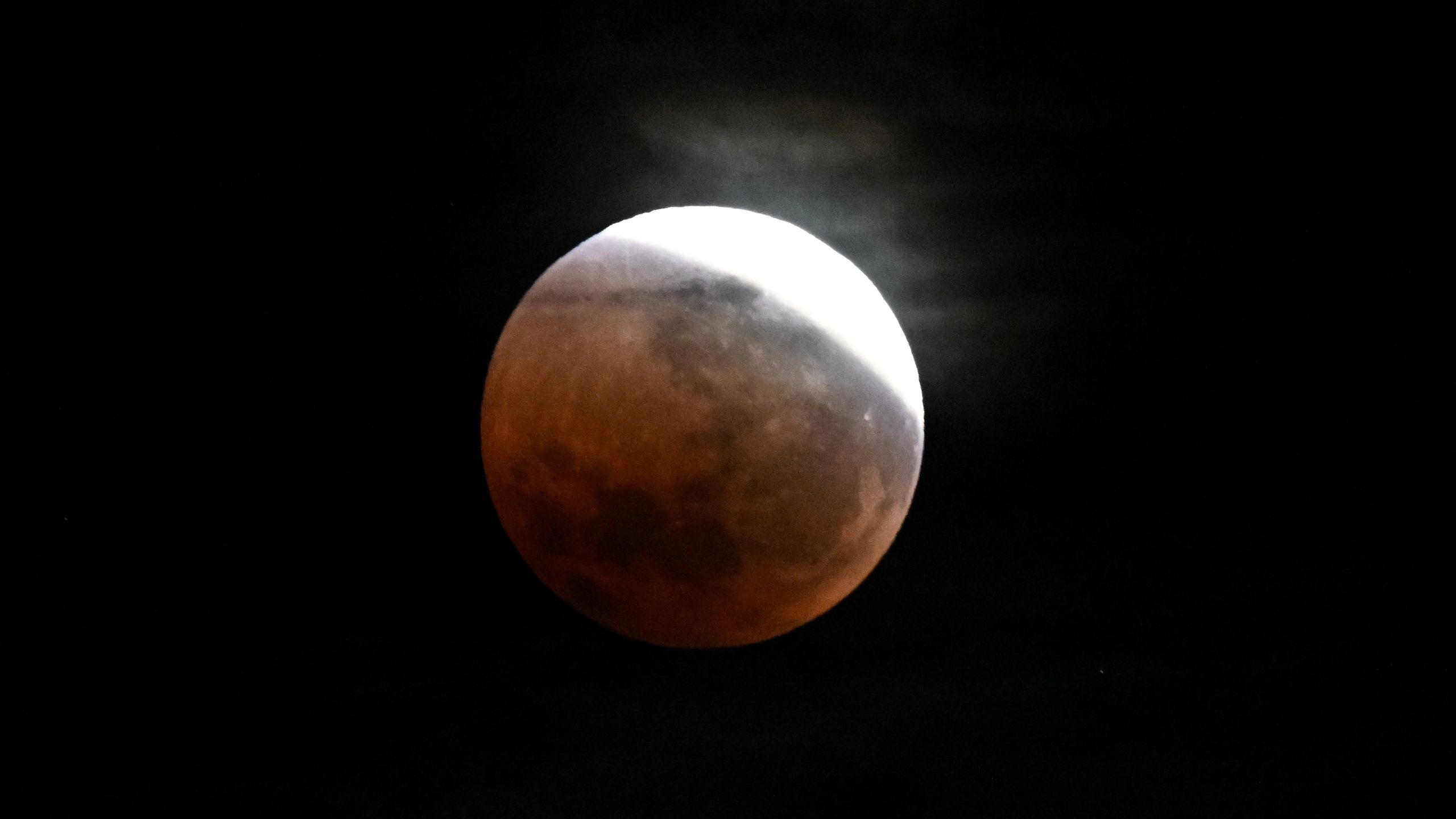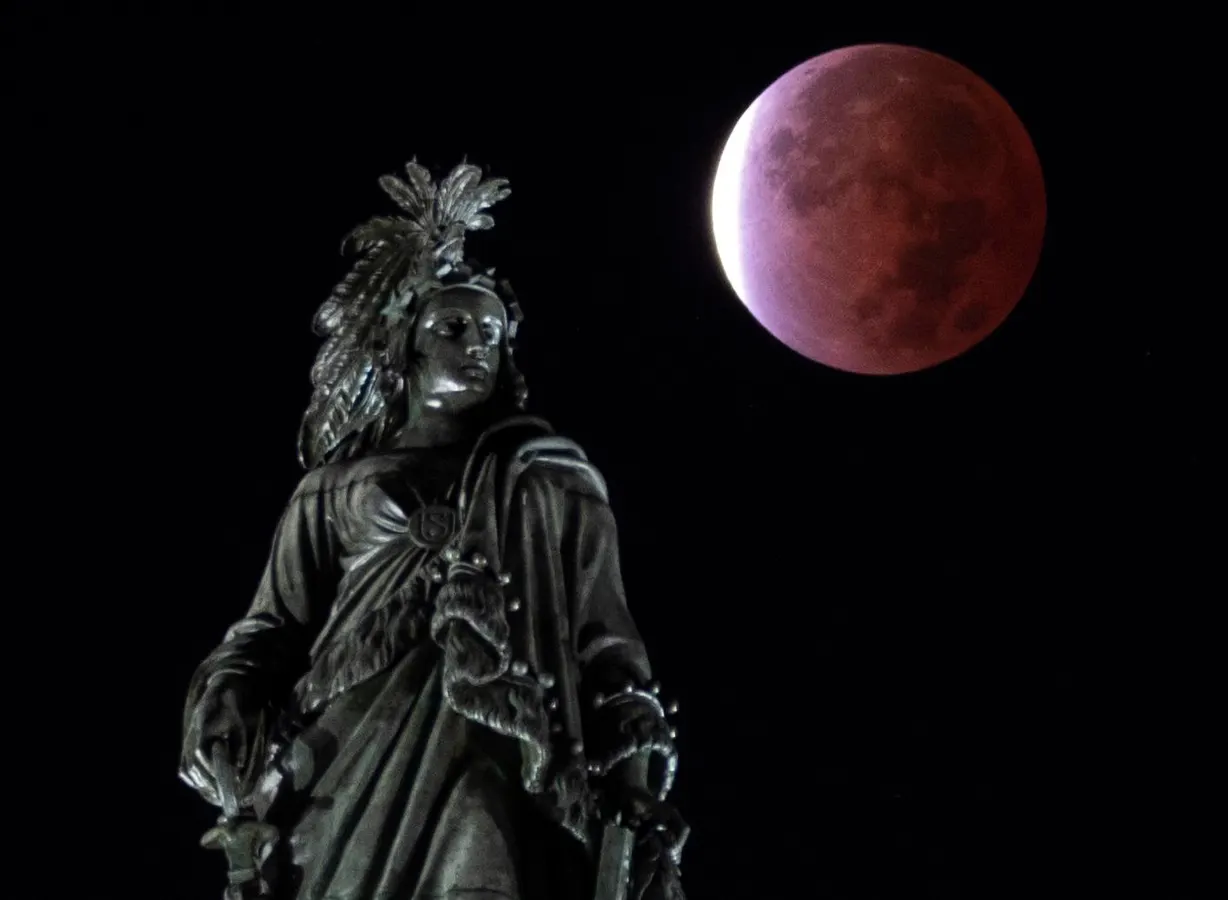
ToplineIf you missed the total solar eclipse on Aug. 12, the next major astronomical highlight of summer arrives this week. On the night of Aug. 27-28, the full Sturgeon Moon will pass almost entirely through Earth’s darkest shadow, creating a spectacular 96% partial lunar eclipse visible across North America, South America, Europe and Africa. Although it falls just short of totality, the moon will take on a deep reddish-orange hue, making this the most impressive lunar eclipse until the end of 2028 — and a dramatic finale to August’s eclipse season.During the Aug. 27-28 eclipse, however, the alignment will not be perfect. A narrow edge of the moon will remain outside Earth’s umbra throughout the event, preventing totality – but only just. Although much of the moon will appear reddish-orange, this will not technically be a true “blood moon,” a term usually reserved for a total lunar eclipse. (Photo by ANDREW CABALLERO-REYNOLDS/AFP via Getty Images)AFP via Getty ImagesKey FactsAt maximum eclipse, 96.2% of the moon will lie within Earth’s umbral shadow, the dark central part of its shadow in space. Although a thin sliver of the moon will remain in direct sunlight, almost the entire lunar disk will appear dramatically darkened, with much of it glowing a muted reddish-orange — almost a “blood moon.”The eclipse will be visible across Europe, Africa, North America and South America, clear skies allowing. North and South America will enjoy the best views, with observers able to follow the entire eclipse from beginning to end overnight. Maximum eclipse occurs simultaneously at 12:12 a.m. EDT on Friday, Aug. 28, which is 9:12 p.m. PDT on Thursday, Aug. 27.The eclipse will unfold gradually over 5 hours 38 minutes. Unlike the total solar eclipse on Aug. 12, this event is completely safe to watch with the naked eye. You don't need eclipse glasses or special equipment.What Is A Partial Lunar Eclipse?A lunar eclipse can occur only during a full moon, when Earth passes directly between the sun and the moon. As the moon moves into Earth’s shadow, sunlight reaching its surface has first passed through Earth’s atmosphere.Earth’s atmosphere scatters away much of the blue light while bending red and orange wavelengths into the shadow. As a result, the eclipsed moon often appears copper, orange or deep red. It’s as though every sunrise and sunset occurring around Earth at that moment is projected onto the lunar surface.During the Aug. 27-28 eclipse, however, the alignment will not be perfect. A narrow edge of the moon will remain outside Earth’s umbra throughout the event, preventing totality – but only just. Although much of the moon will appear reddish-orange, this will not technically be a true “blood moon,” a term usually reserved for a total lunar eclipse. For many skywatchers, the difference between 96% and 100% will be surprisingly subtle — the complete opposite to a total solar eclipse, where a 99% eclipse bears no resemblance whatsoever to totality.Why This Eclipse Is SpecialDeep partial lunar eclipses are relatively uncommon. With 96.2% of the moon immersed in Earth’s umbral shadow, this eclipse comes remarkably close to totality while leaving behind a striking sunlit crescent along one edge.That combination creates a view unavailable during a total lunar eclipse. Skywatchers will not only see the moon change color, but also witness the sharp, curved edge of Earth’s shadow steadily advancing across — and later retreating from — the lunar surface.According to Sky & Telescope, experienced observers should also look for a subtle turquoise band between the bright edge and the reddened portion of the moon. The unusual color is created by sunlight passing through Earth’s ozone-rich stratosphere before reaching the lunar surface.It also represents the second and final act of August’s eclipse season. The Aug. 12 total solar eclipse thrilled observers across Greenland, Iceland and Spain while millions more watched a deep partial eclipse elsewhere. Two weeks later, the moon passes through Earth’s shadow.When Is The Best Time To Watch?Although the eclipse lasts more than five and a half hours, the most dramatic views occur around maximum eclipse. In North America, maximum eclipse takes place at:12:12 a.m. EDT on Friday, Aug. 2811:12 p.m. CDT on Thursday, Aug. 2710:12 p.m. MDT on Thursday, Aug. 279:12 p.m. PDT on Thursday, Aug. 278:12 p.m. AKDT on Thursday, Aug. 27Observers on the East Coast can watch the eclipse develop from beginning to end, while those on the West Coast will see the moon rise already partially eclipsed before it reaches maximum darkness later in the evening.How To See The Milky Way During ‘Max Eclipse’Unlike a solar eclipse, which lasts only a few fleeting minutes, a lunar eclipse rewards patience. The moon slowly changes appearance over several hours, making it easy to step outside at different times and watch Earth’s shadow creep across its surface.Around maximum eclipse, the moon will be dim enough for many fainter stars — and, from dark locations, even the Milky Way — to become much easier to see. According to Sky & Telescope, that’s one of the unexpected pleasures of a deep lunar eclipse, briefly restoring a darker night sky despite the presence of a full moon.Binoculars or a small telescope reveal the subtle colors and the remarkably crisp edge of Earth’s shadow, but they’re optional. The eclipse is every bit as enjoyable with the naked eye.Further readingForbesIn Photos: Total Eclipse Dazzles Europe As U.S. Gets PartialBy Jamie CarterForbesAncient Egypt Will Soon Host The Century’s Longest Total Solar EclipseBy Jamie CarterForbesIt’s Exactly 18 Years Until The Next Total Solar Eclipse In The Contiguous U.S.By Jamie CarterForbes‘Exciting’ Earth-Like Planet Found Close To The Solar SystemBy Jamie CarterForbesDragonfly: NASA’s Most Exciting Mission This Century Is Taking ShapeBy Jamie Carter
Missed The Total Solar Eclipse? Now See A ‘Blood Moon’ Across The U.S.
On the night of Aug. 27-28, the full Sturgeon Moon will pass almost entirely through Earth’s darkest shadow, creating a spectacular 96% partial lunar eclipse n the U.S.
942 words~4 min read