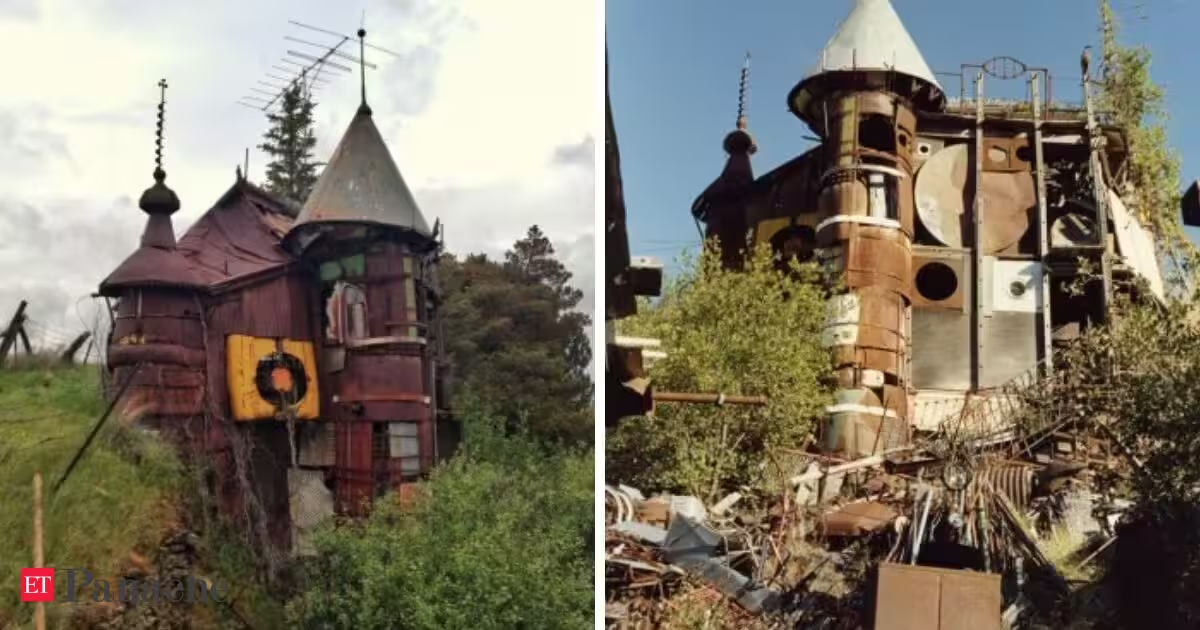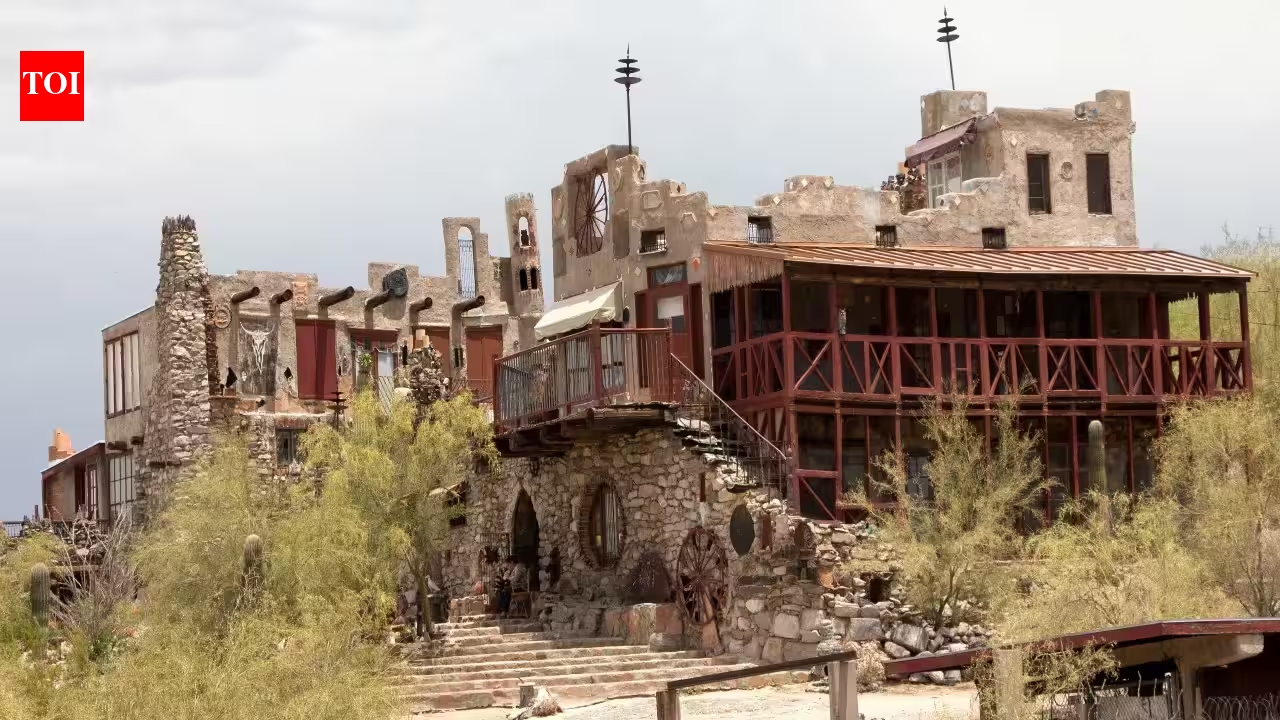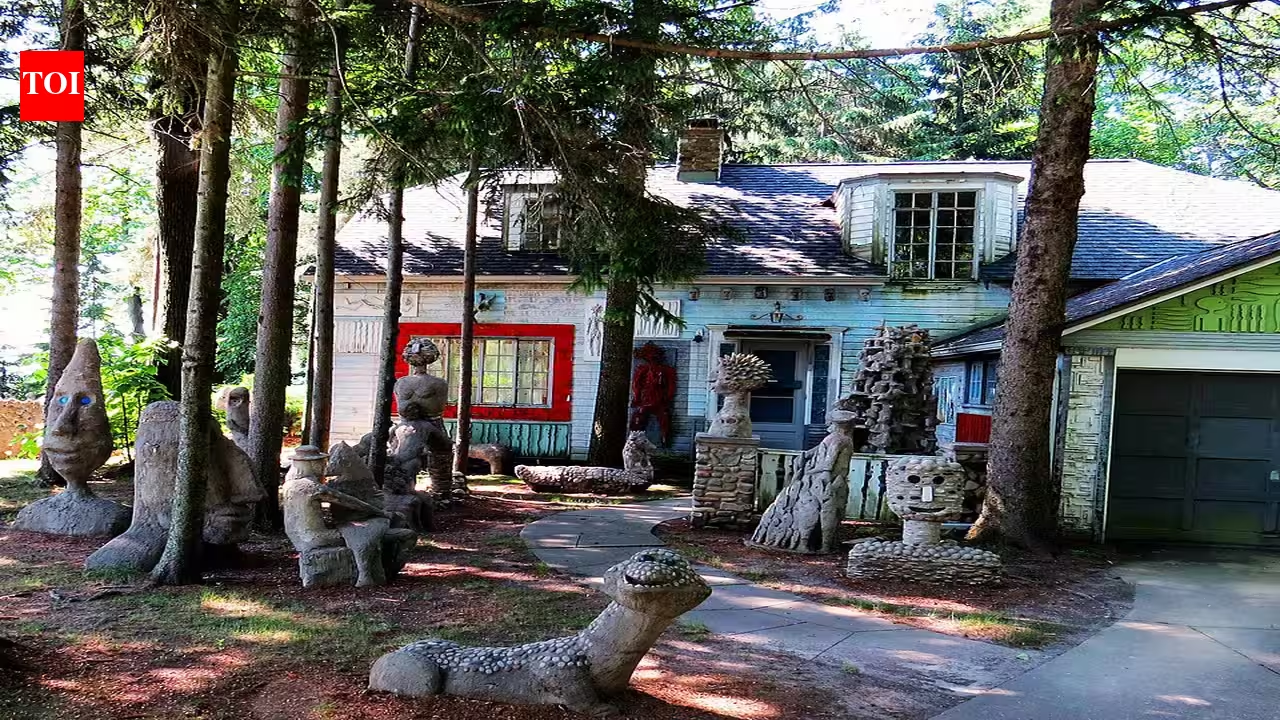
Artist Mary Nohl took her Wisconsin lakeside residence and metamorphosed it into an extraordinary artistic haven. Image Credits: Wikimedia Commons.A quiet lakeside house in Wisconsin gradually became something far stranger than a home. Over nearly four decades, artist Mary Nohl covered its walls with painted figures, filled its rooms with handmade objects and turned the surrounding garden into a landscape populated by concrete people, fish, birds, mythical animals and a towering dinosaur. What began as a deeply personal experiment eventually became one of Wisconsin’s most distinctive artist-created environments.According to the National Register of Historic Places, Mary Nohl’s family acquired the Lake Michigan waterfront property in Fox Point, Wisconsin, in 1924 as a summer retreat before eventually converting the cottage into a year-round home. Nohl, who studied at the School of the Art Institute of Chicago, lived on the property for much of her life. After her father died in 1961 and her mother moved to a nursing home in 1963, Nohl increasingly transformed the house and grounds into a total art environment. The 1.37-acre property eventually featured about 60 concrete sculptures, including people, fish, birds, mythical creatures and a towering dinosaur. She also altered the house and tool shed, covering their interiors and exteriors with artistic elements and turning the entire property into a unified work of art.A home became a giant canvasNohl did not treat the house as a finished architectural object. Instead, almost every surface became another opportunity for artistic expression. She covered parts of the exterior with painted wooden panels depicting stylised natural forms. Some figures were made from driftwood she collected during walks along the beach, while others incorporated carved and found objects. Together, these additions transformed the ordinary walls of the house into something resembling a giant sculptural relief.Inside, Nohl extended the same creative approach to every part of the house. She painted walls and furniture, made stained-glass windows and filled the rooms with paintings, ceramics, carved figures and wire sculptures. Everyday objects were also transformed into works of art. The National Register documentation, for instance, describes a fish-shaped mobile fashioned from old aluminium ice trays, as well as small human skeletons made from chicken bones and fixed to kitchen cabinet doors.The result was not simply a house with artworks displayed around it. The house itself had become part of the artwork. Nohl was creating what is often called an art environment, in which buildings, gardens, objects and sculptures are conceived as parts of one expanding artistic world. Her property was not designed according to a conventional architectural plan. It evolved through decades of additions, experiments and improvisations.Concrete creatures rose from the beachNohl built her outdoor sculptures around simple armatures made from metal rods, old pipes, fence wire and tin. She then shaped the forms with layers of concrete, working gradually from the ground upwards and allowing each section to dry before adding another. While the concrete was still workable, she textured its surface and pressed decorative objects into it, including stones collected from the Lake Michigan beach, marbles, reflector eyes, pottery and pieces of tile. The beach stones thus became visible elements of the sculptures themselves, adding colour, texture and character to their surfaces.This method allowed Nohl to create sculptures on a considerable scale. Some were modest in size, while others grew to weigh hundreds or even thousands of pounds. Their forms ranged from stylised human figures and groups of people to fish, mermaids, mythical creatures and architectural structures. Among the most striking was a 12-foot concrete dinosaur, which became one of the most recognisable features of the yard. Elsewhere stood the Wall of Faces, the Wall of People and two concrete towers that framed a path leading towards the woods. The sculptures were not simply placed randomly across the property. Paths, courtyards and clusters gradually developed around them. Nohl began constructing concrete paths in 1963, using small stones from the beach in their surfaces. These pathways helped divide the garden into spaces for outdoor sculpture, effectively turning the yard into a kind of open-air gallery.Mary Nohl’s living room from her Fox Point, Wisconsin, home, now preserved as part of the collection at the John Michael Kohler Arts Centre. Image Credits: Wikimedia Commons.Nearly four decades of transformationAccording to SPACES Archives, Nohl’s property evolved over nearly four decades, from 1963 until she died in 2001, as she gradually blurred the boundary between her artwork and everyday life. The lakeside setting that had shaped her childhood became a constant source of inspiration and material. She carved logs washed ashore, made rings and amulets from beach stones, and mixed shoreline sand and stones into the concrete of her outdoor sculptures. Inside the house, wooden reliefs of swimmers and boaters decorated the walls, while wind chimes brought the lake's movement and sounds into her living space. Her workshop, meanwhile, held the tools she used to keep building and modifying the property, making the house, studio and sculpture garden part of one continuous creative environment.The property eventually grew into an immersive artistic environment, with the house, workshop, sculptures and found materials becoming closely connected over the years. This made the site more than a collection of individual artworks, as elements of Nohl’s creative practice extended into the spaces where she lived and worked. Parts of the interior from her Fox Point home were later preserved in the collection associated with the John Michael Kohler Arts Centre, carrying aspects of that highly personal environment beyond the original property.
In 1963, a Wisconsin artist began transforming her family’s Lake Michigan home; nearly 40 years later, 60 concrete creatures filled the yard
A quiet lakeside house in Wisconsin gradually became something far stranger than a home. Over nearly four decades, artist Mary Nohl covered its walls with painted figures, filled its rooms with handmade objects and turned the surrounding garden into a landscape populated by concrete people, fish, birds, mythical animals and a towering dinosaur.
908 words~4 min read