Story audio is generated using AI
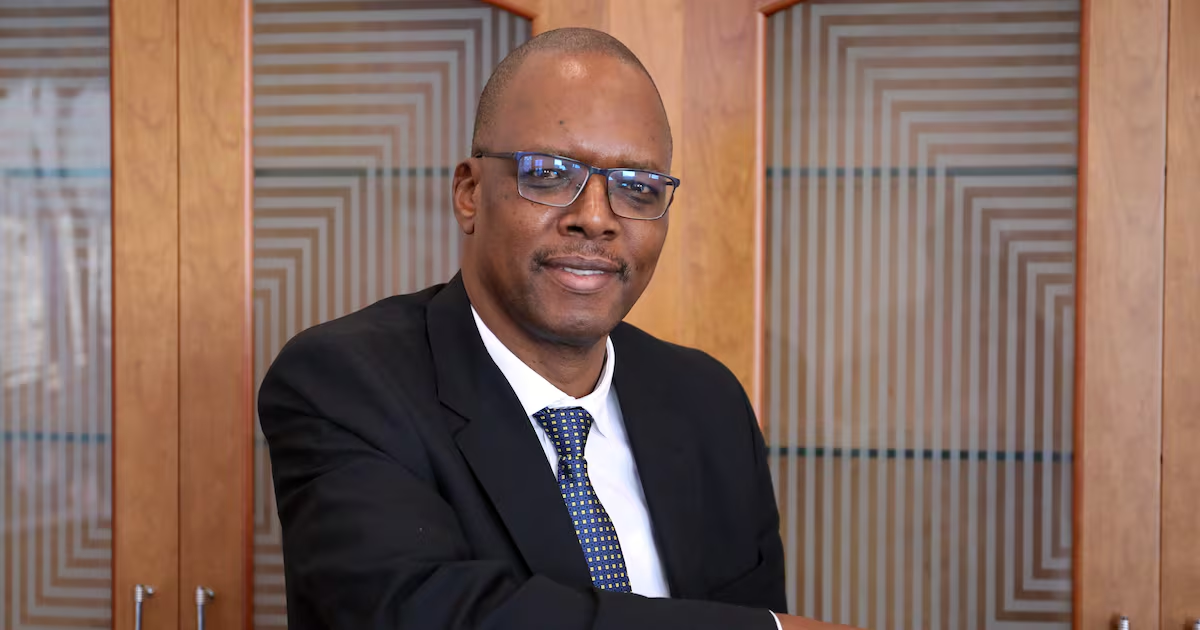
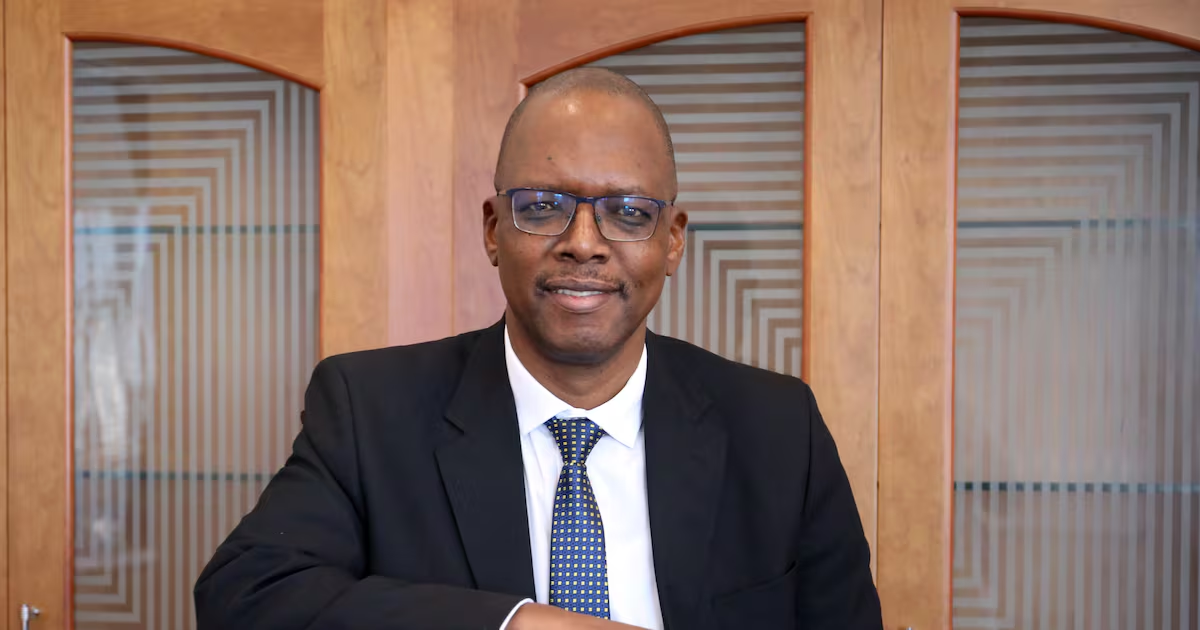
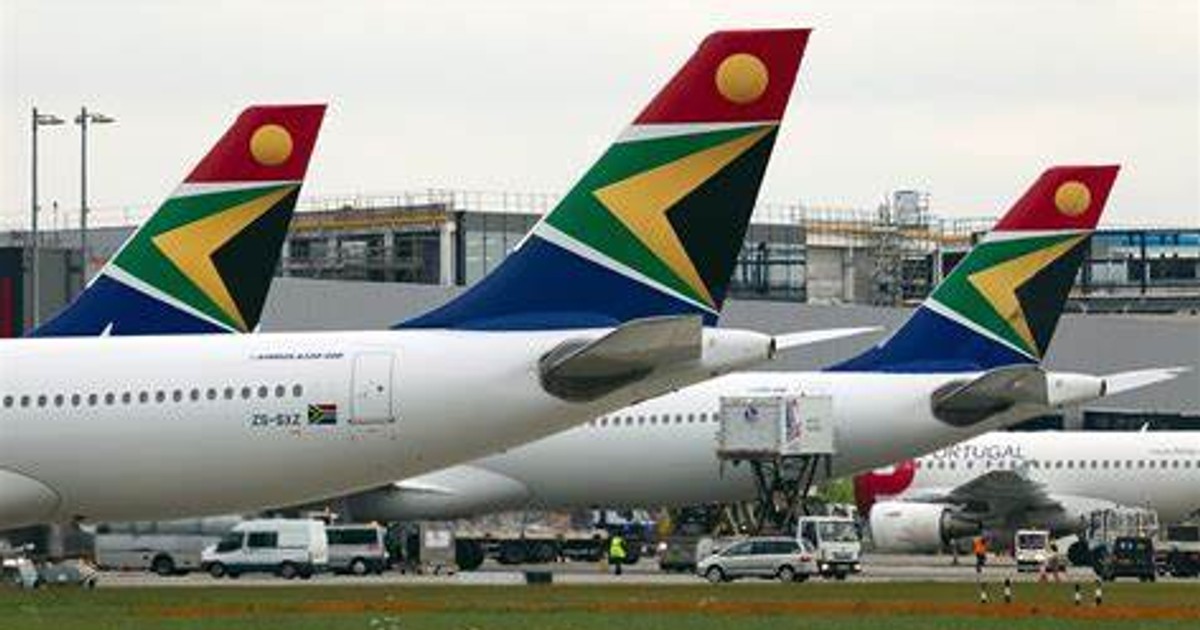
South Africans learnt on August 14 that acting SAA CEO Matshela Seshibe had been placed on immediate special leave while the board conducted an internal process. We should not rush to judgment. The board has said its decision is not a finding of guilt, and Seshibe deserves the justice any leader should expect. But there is another question we should be asking. Seshibe had occupied the acting position for only four months, after the resignation of John Lamola. Chief legal officer Koekie Mbeki now becomes acting CEO. She joins a remarkable list. Since 2010, at least 13 people have been CEO, acting CEO or interim CEO at the airline. Some lasted months. One, Nico Bezuidenhout, had two separate periods as acting CEO. Thirteen leaders in about 16 years. At some point, leadership turnover stops being simply a people problem and becomes a governance question. And that question becomes particularly interesting because SAA is not simply an airline in freefall. Its recent financial performance shows signs of recovery. For the 2024/25 fiscal year, the SAA Group reported a R155m net profit, while the airline itself reported a R30m profit. Revenue increased almost 36% to R8.8bn. SAA ended the year with almost R2bn in cash and cash equivalents and no interest-bearing borrowings. These achievements deserve recognition but alongside that improving commercial picture sits a considerably less comfortable governance picture. Too much of South Africa’s economic debate remains trapped between two ideological poles: state ownership and privatisation. The auditor-general issued disclaimers on SAA and SAA Technical, while irregular expenditure at group level reached R504m in 2024/25. Serious failings were identified in financial reporting, procurement and internal controls. This should make us think. Perhaps South Africa’s question about SAA is no longer whether it can make money. Perhaps it is whether we have designed an ownership and governance system capable of allowing it to succeed sustainably. I have thought about this for more than two decades. In 2001, I found myself stranded in Lisbon as the once-mighty Swissair fell into financial crisis. On October 2 that year, the airline ran out of fuel. About 260 aircraft were grounded and 19,000 passengers stranded. For someone familiar with Switzerland and the almost mythical status of Swissair, it was astonishing to watch. [I lived in Switzerland for 4.5 years.] Swissair was not simply an airline, it was “Switzerland with wings” and its collapse felt like a national funeral at which citizens literally wept. Yet Switzerland ultimately did something remarkably sensible. It grieved the institution without becoming imprisoned by its ownership structure. During the turmoil business was co-opted to stabilise the situation and probably convinced government that perhaps it was time to let go. The successor airline, SWISS, emerged with substantial support from the government, cantons and business. In 2005 Lufthansa bought it, the brand survived and Zurich remained its hub. Swiss aviation did not disappear because its ownership changed. The Swiss eventually differentiated between national interest and national ownership, a distinction South Africa struggles to make. We remain attached to the proposition that if something is strategically important, the government must own and operate it. Yet look at our ports. In December 2025, Transnet signed a 25-year partnership with global terminal operator International Container Terminal Services to upgrade and operate Durban Container Terminal Pier 2. Importantly, Transnet retains the majority shareholding while the private partner operates the terminal. The port remains a strategic national asset. The government accepted that preserving national ownership and bringing in private-sector operators are not mutually exclusive. Why should aviation be different? Too much of South Africa’s economic debate remains trapped between two ideological poles: state ownership and privatisation. There is an enormous space between them, called partnership. Indeed, SAA has already travelled some distance down this runway. The government spent years negotiating for the Takatso Consortium to acquire 51% of SAA. The proposed transaction envisaged R3bn in private working capital without government providing it. The transaction ultimately collapsed in 2024 after disagreements over the revised structure and valuation. Perhaps we abandoned the model when what failed was the particular deal. The percentages are less important than the principle. The government does not have to disappear; it needs to become a different kind of ownerThe answer need not be Takatso. Nor am I suggesting selling SAA to the highest bidder. Why not redesign SAA as a genuine public-private partnership? The government could remain a significant shareholder, protecting clearly defined national interests. A strategic global airline partner could bring capital, fleet economics, technology, route expertise and international networks. South African institutional investors could participate and employees could own a stake. The percentages are less important than the principle. The government does not have to disappear; it needs to become a different kind of owner. There is much in SAA worth preserving: its brand, operating rights, technical capability, institutional knowledge and aviation expertise. We should also remember its contribution to transformation. In 1994 there were four black pilots, by July 2015 there were 145. That transformation legacy is worth preserving as it, too, is a national asset. But preserving a legacy does not mean preserving an organisational structure forever. Sometimes stewardship involves letting go. Boards know this. Families running businesses eventually learn it. Successful countries learn it. Which brings us back to last Friday’s announcement. We will understandably want to know what happened with Seshibe. The board will eventually have to provide answers but we should resist making this another episode of South African personality politics. We have spent too many years searching for heroic CEOs to rescue institutions whose underlying architecture makes sustained leadership difficult. Perhaps this latest turbulence offers an unexpected opportunity. Not another bailout. Not another ideological fight over privatisation. And certainly not simply CEO number 14. Instead, the government could assemble the aviation industry, organised labour, institutional investors, tourism, business and potential international partners around one deceptively simple question: If we were designing South Africa’s national capability from scratch today, would we design SAA as it currently exists? If the answer is no, we should have the courage to redesign it. Switzerland eventually did, proving that national pride does not reside in the percentage of shares a government owns. It resides in whether it works. Perhaps it is time for South Africa to make the same discovery. Pillay is a former economic diplomat to Switzerland, governance practitioner and faculty member at Wits Business School. He writes in his personal capacity