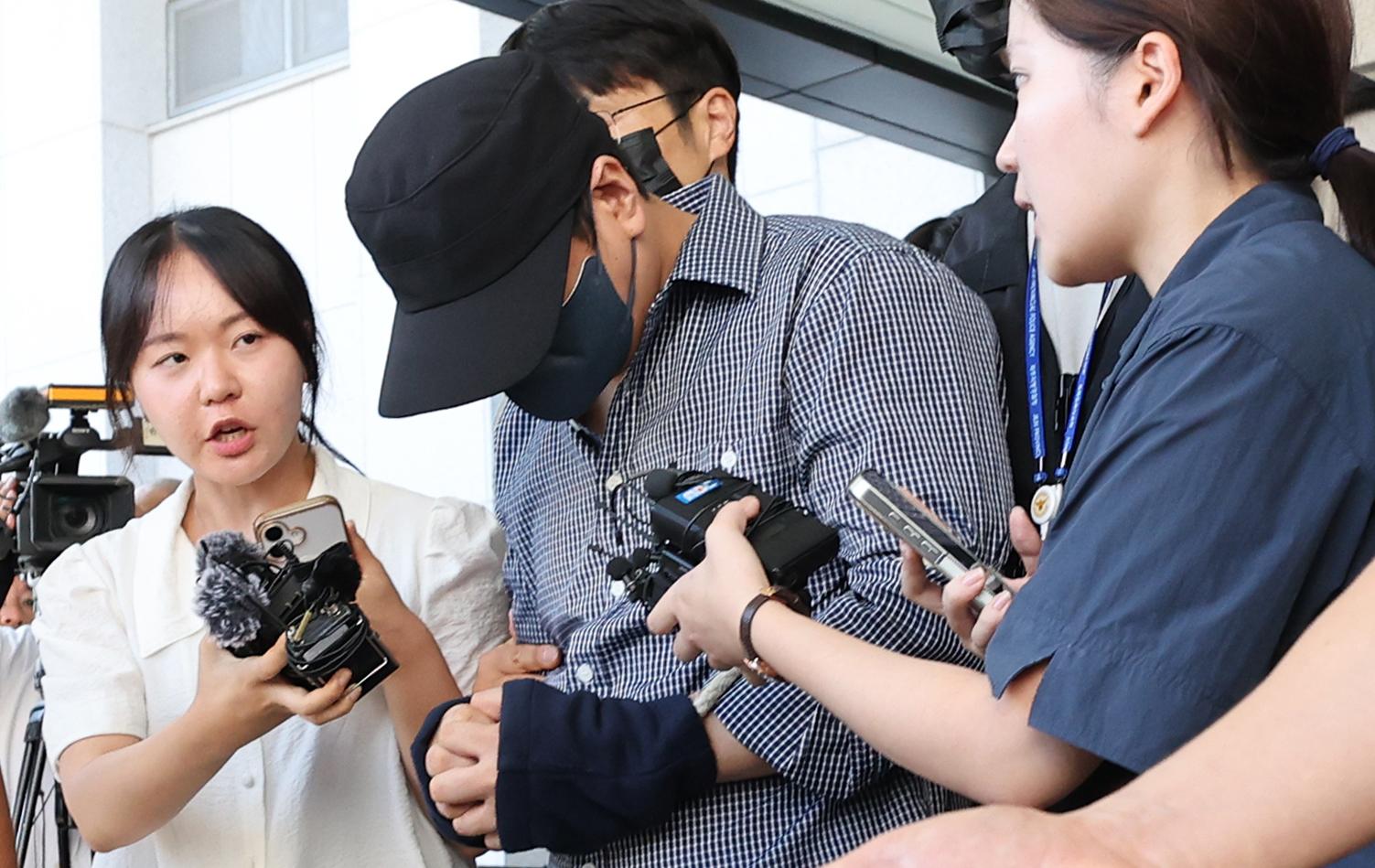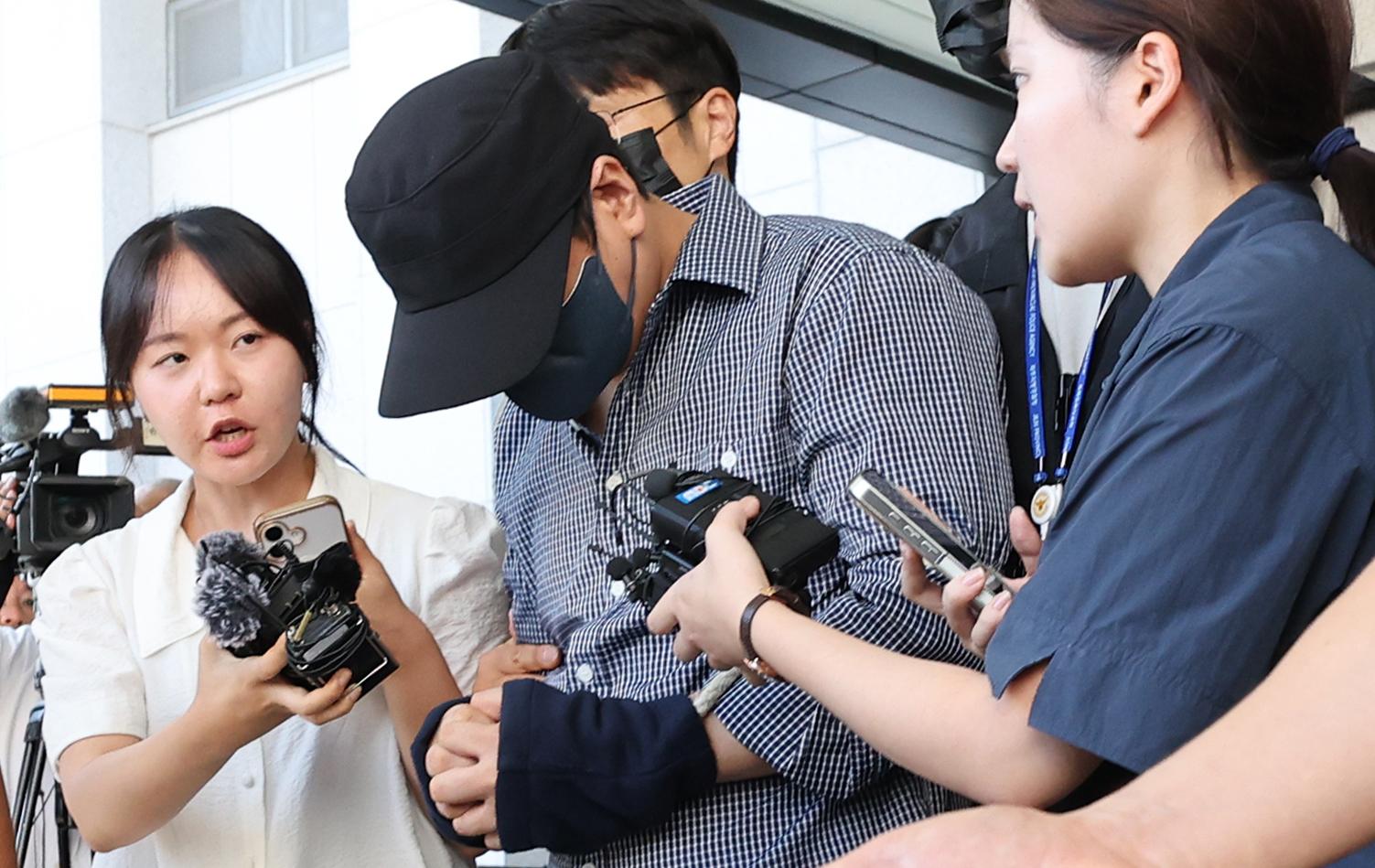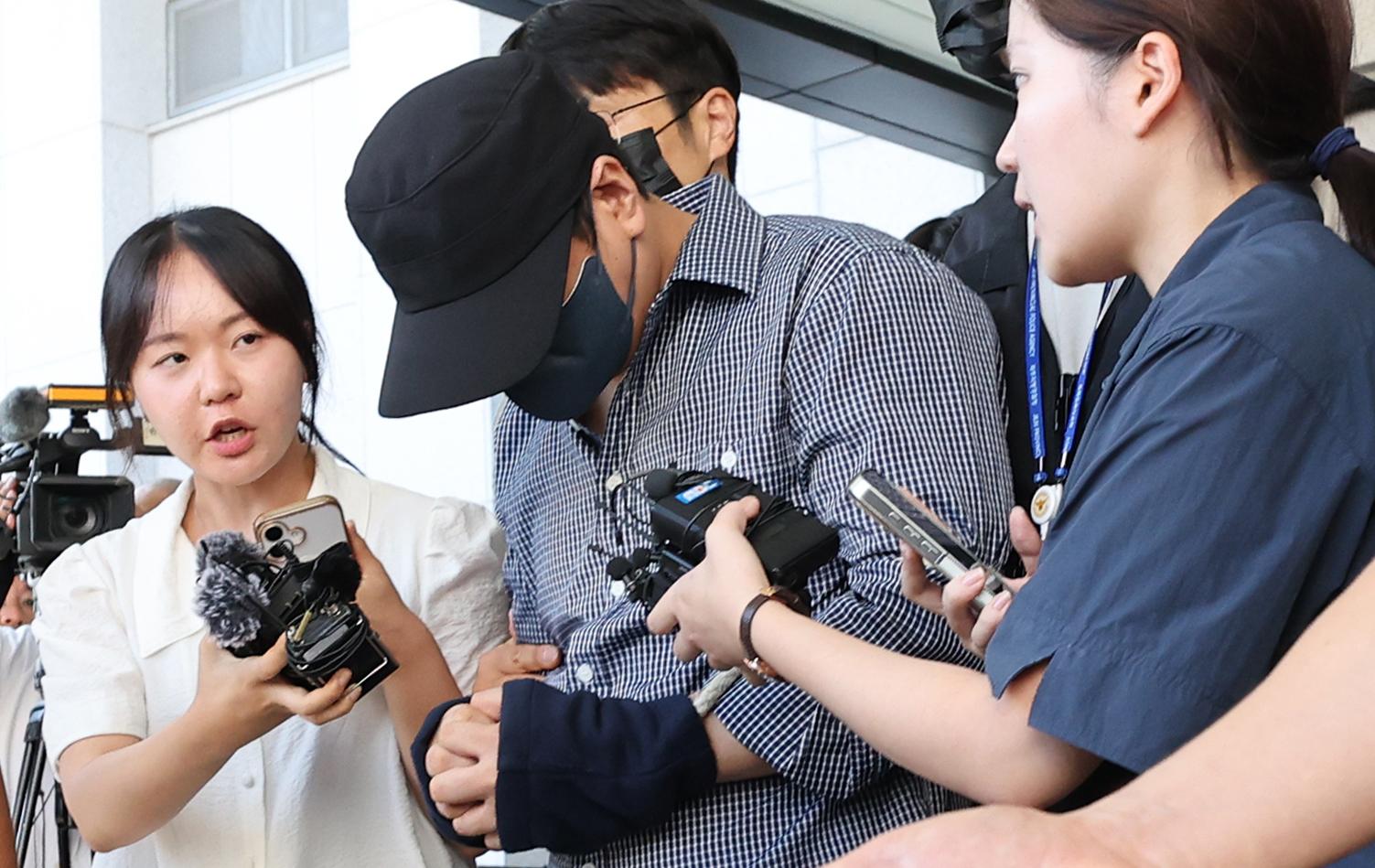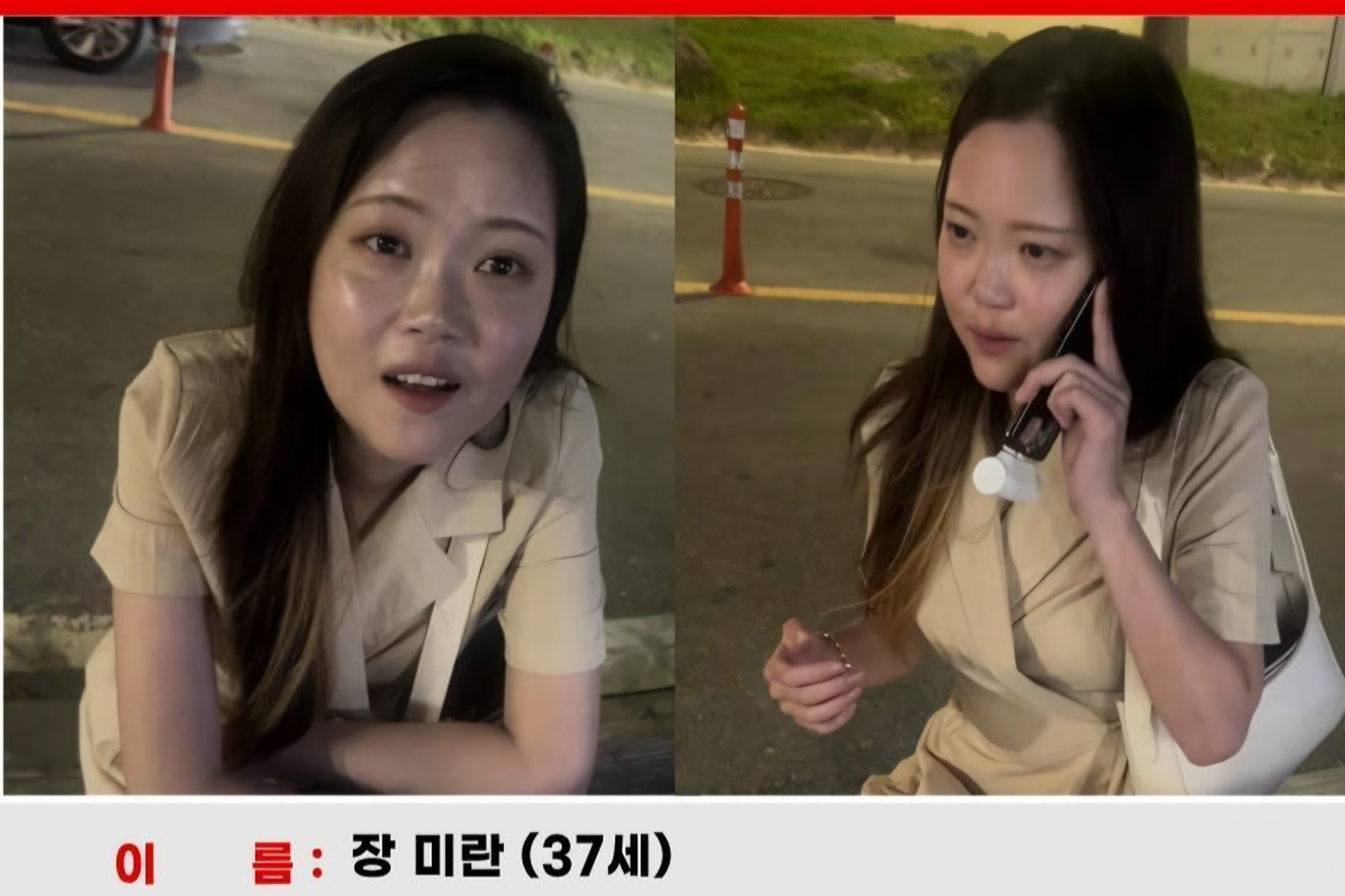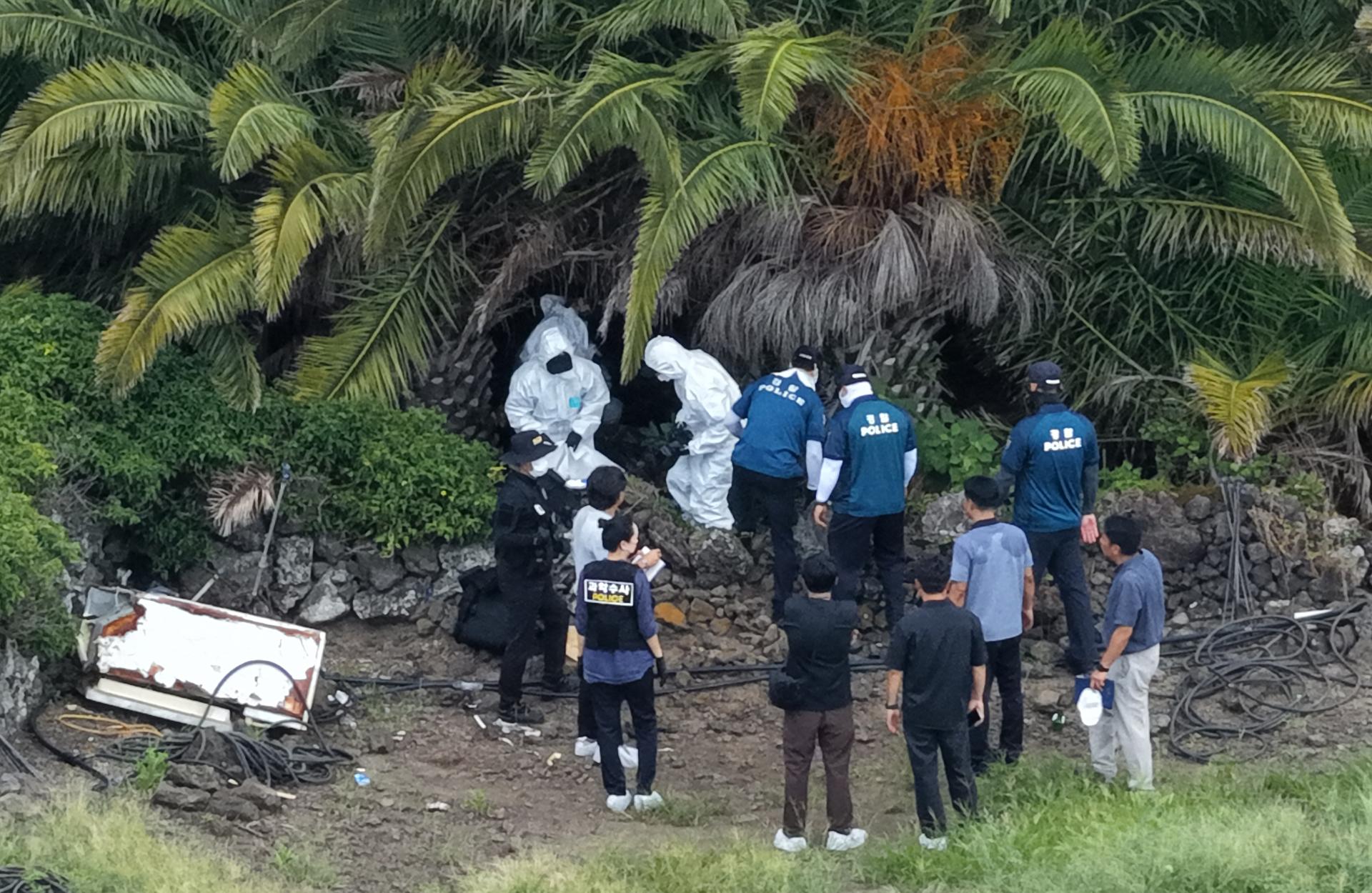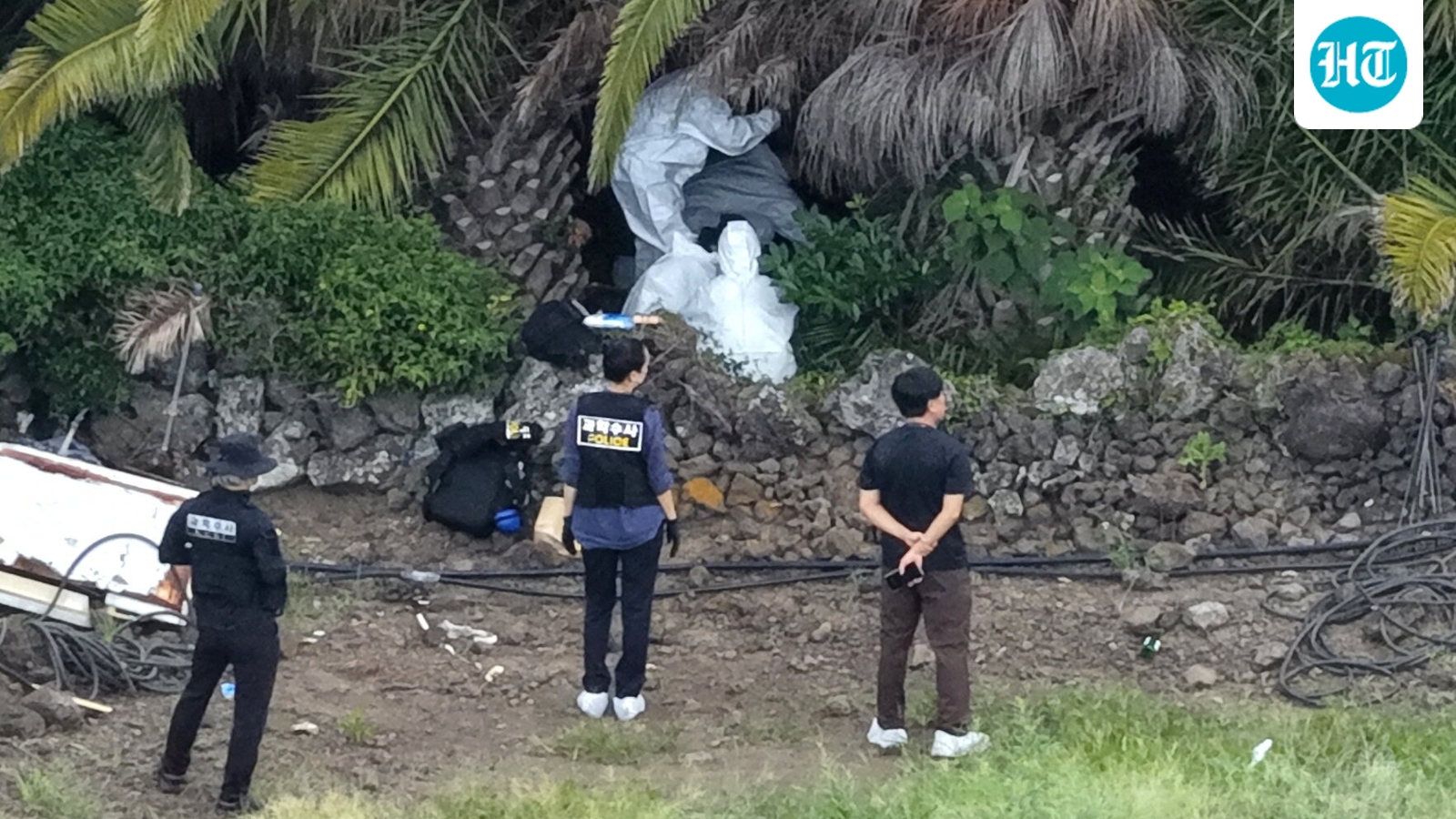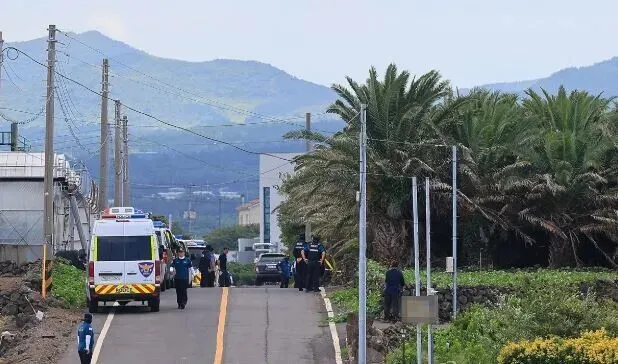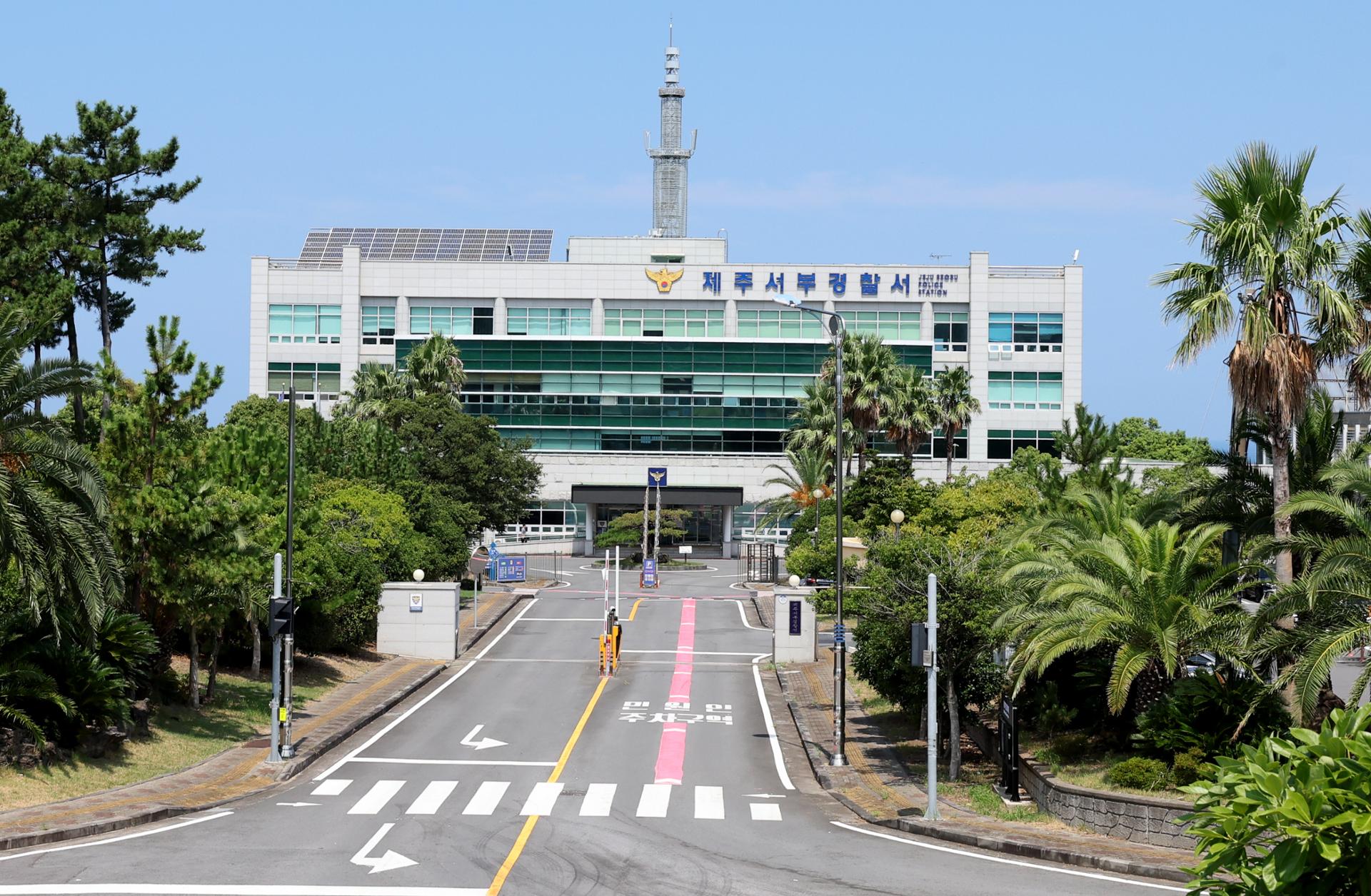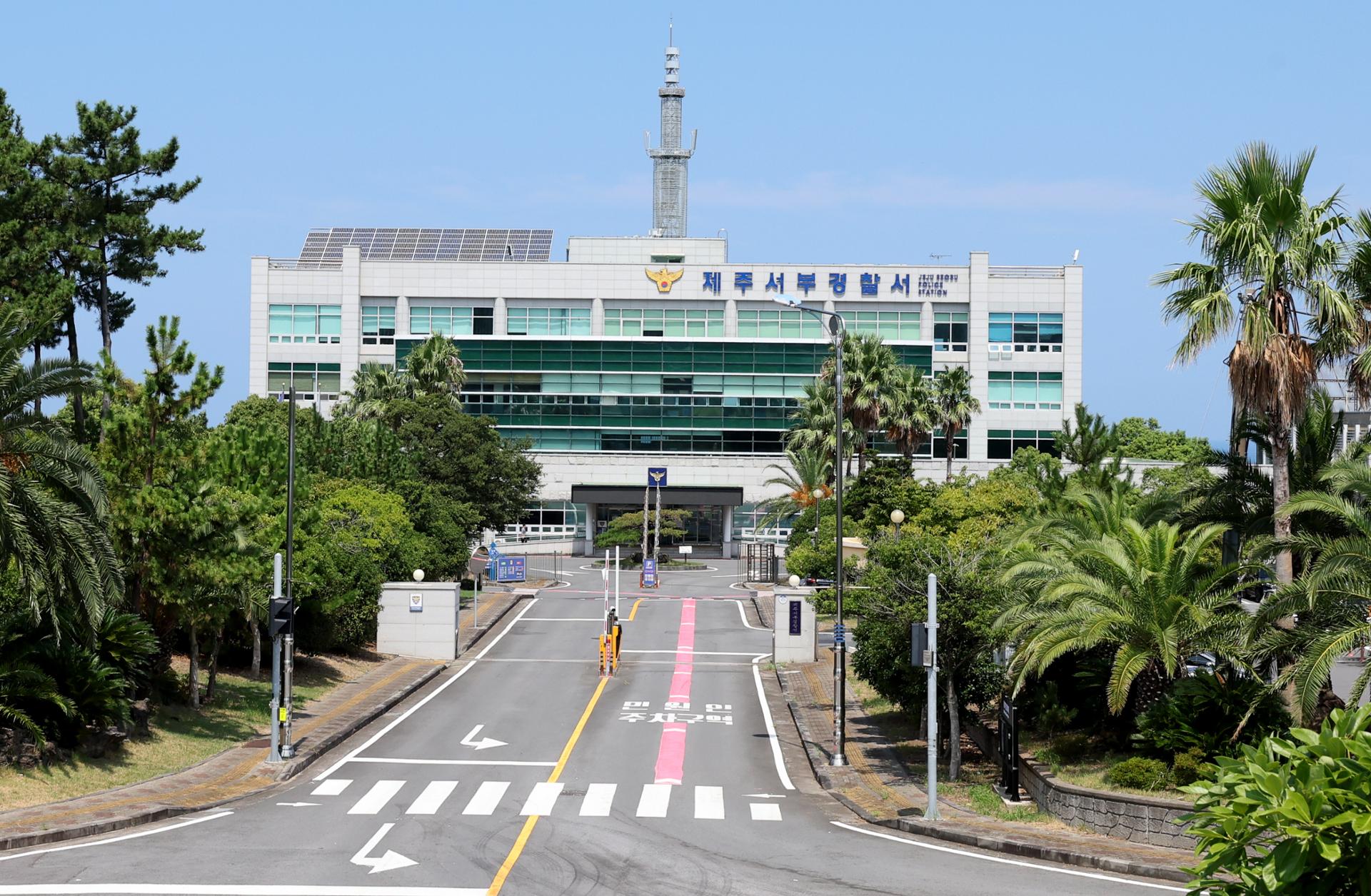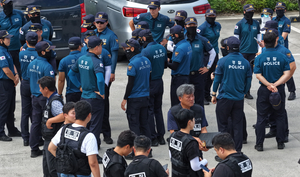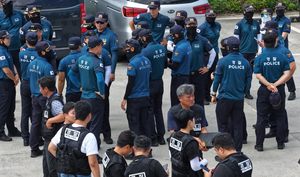
Experts point to weakness in Korea's missing persons investigation system Police officers gather at Hallim Port on Jeju Island on Thursday to search for Jang Mi-ran, who went missing in May. (Yonhap) A police officer accused of prematurely closing missing person cases has been placed under emergency arrest, after investigators discovered a second disappearance case that he allegedly closed last month.The Jeju Provincial Police Agency said the officer was arrested at around 3:29 p.m. Saturday on charges including dereliction of duty, falsification of public electromagnetic records and obstruction of official duties by fraudulent means.According to the police, the officer had prematurely closed a missing person case involving a man who was found dead on Saturday. The initial report was filed on July 2, but the officer closed the case after telling the family that he had verified the victim’s safety.The body was found in the ongoing search operation connected to the disappearance of 37-year-old Jang Mi-ran, another case the officer is suspected of closing under false pretenses.The discovery has intensified scrutiny of how missing persons cases are handled by South Korean police, particularly as both cases were allegedly closed based on the officer’s false claim that he had personally contacted the missing individuals.Second case reveals same patternIt is believed that the officer submitted a false report to close the case of Jang, a woman who has been missing for three months, prompting police to reopen the investigation.The family of the missing man was notified when police reinvestigated missing persons cases previously handled by the officer in question.The officer allegedly told the family that he had contacted the missing man and that he did not want his family to contact him. The officer subsequently closed the case and removed the missing person designation from the police profiling system, according to police.The system is an internal police database used to manage reports and information related to missing persons cases. It records information including previous reports, discovery histories, the rationale behind case closures, and measures taken by police.After learning about Jang’s case through news reports, the missing man's family again contacted police, saying he had still not returned.The officer's alleged conduct closely mirrors what investigators say occurred after Jang was first reported missing in May.Jang’s boyfriend, who was living with her at the time, initially reported her disappearance, saying he had woken up to find her gone.The officer, who was working a night shift, received the report at around 6:43 p.m. on May 15. At 9:16 p.m., he made an entry in the 112 police system saying that he had made contact with Jang and closed the case.Investigators also found that he removed Jang’s information from the police's missing person profiling system when closing the report.Jang’s family reported her missing. They asked police to investigate last month after they were still unable to reach her.Police said Tuesday that investigators had found no signs of activity by Jang since her disappearance, including credit card or mobile phone use or hospital admission records.Phone forensics later showed that the officer had not contacted Jang, despite recording that he had done so, according to police.Cases expose gaps in missing persons investigations Police officers search for Jang Mi-ran on Wednesday at a beach in Hallim-eup, Jeju, after she went missing in May. (Newsis) The two cases have drawn attention to structural weaknesses in Korea’s system for investigating cases of missing adults, including the degree of discretion given to individual officers in closing cases.Under the current system, a supervisor can review whether a case has been handled appropriately, but the officer responsible for the case can remove a missing person designation from the police system without a supervisor's approval.One police official described the handling of adult missing person cases as effectively operating under a system in which approval comes first and reporting follows, leaving limited room for supervisors to become involved during the initial response.Meanwhile, Korea’s Act on the Protection and Support of Missing Children regulates cases involving missing children under 18 as well as people with intellectual disabilities and dementia. Missing adults who do not fall into those categories, however, are primarily handled under internal police rules.The internal rules usually classify such adults as people who have left home, a system critics say can make systematic investigations and timely responses more difficult.“The police’s inadequate initial response in Jang’s disappearance is something that could sufficiently occur under the current system,” Lee Geon-soo, a professor in the Department of Police Science at Baekseok University, told Yonhap News Agency.“The reality is that an officer can decide to close or scale down a case based simply on the circumstances.”The National Police Agency said it is seeking to introduce additional safeguards requiring a supervisor to verify information entered by an investigator before a missing person case can be formally closed.Lee, however, said more concrete measures are needed, including new statutory frameworks that dictate how adult missing persons cases should be handled and how search operations should be conducted.
Jeju officer arrested on discovery of 2nd closed missing person case
A police officer accused of prematurely closing missing person cases has been placed under emergency arrest, after investigators discovered a second disappearan
826 words~4 min read