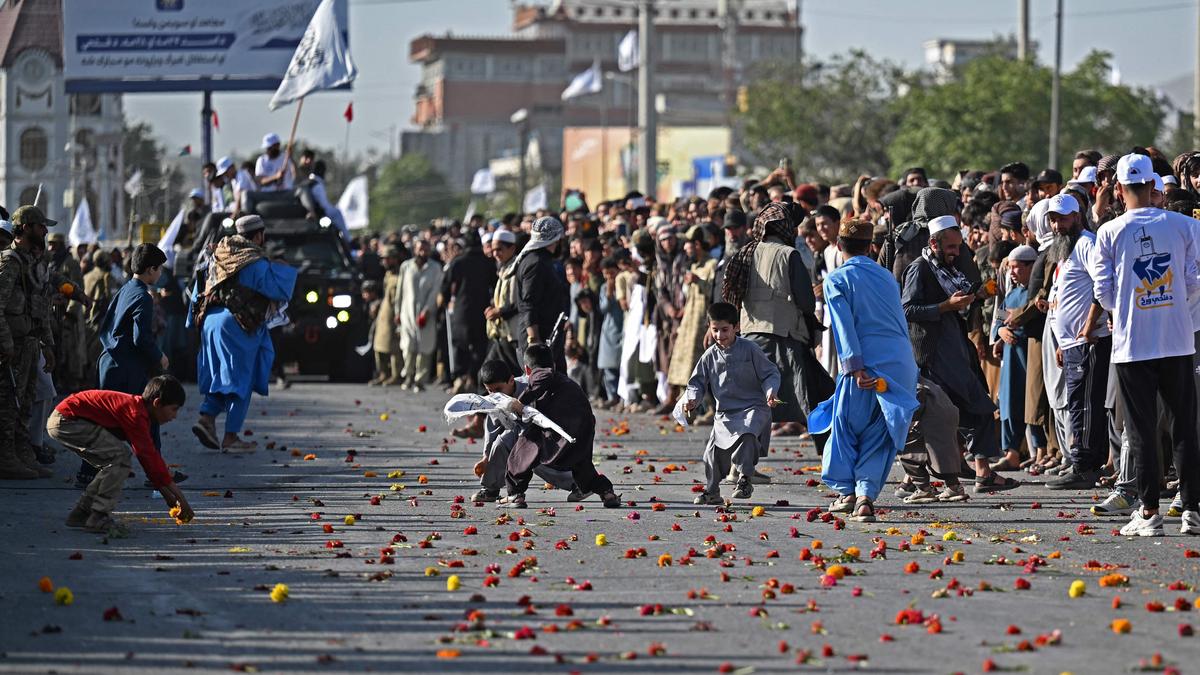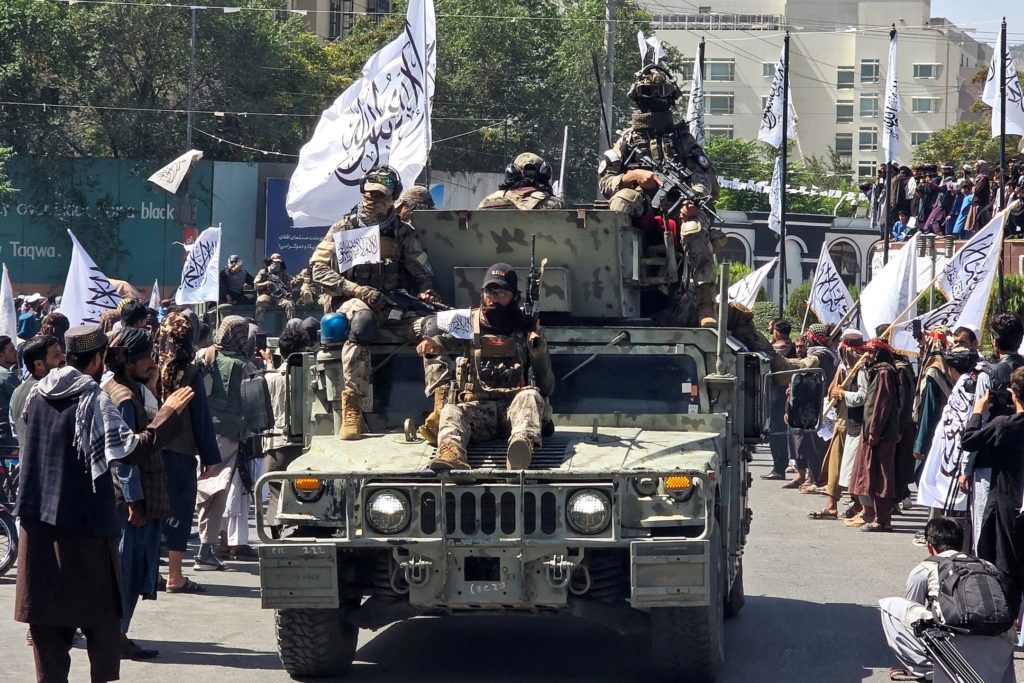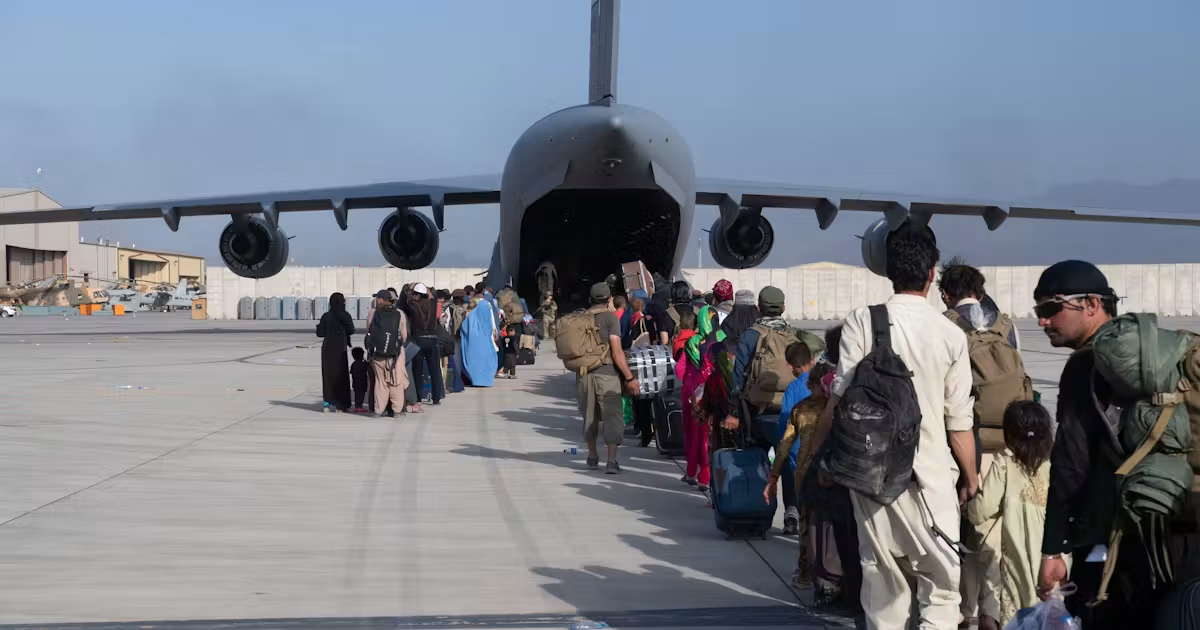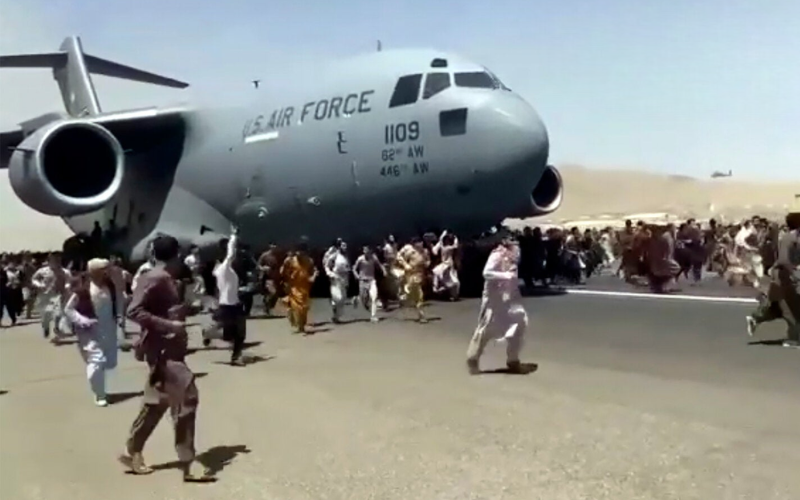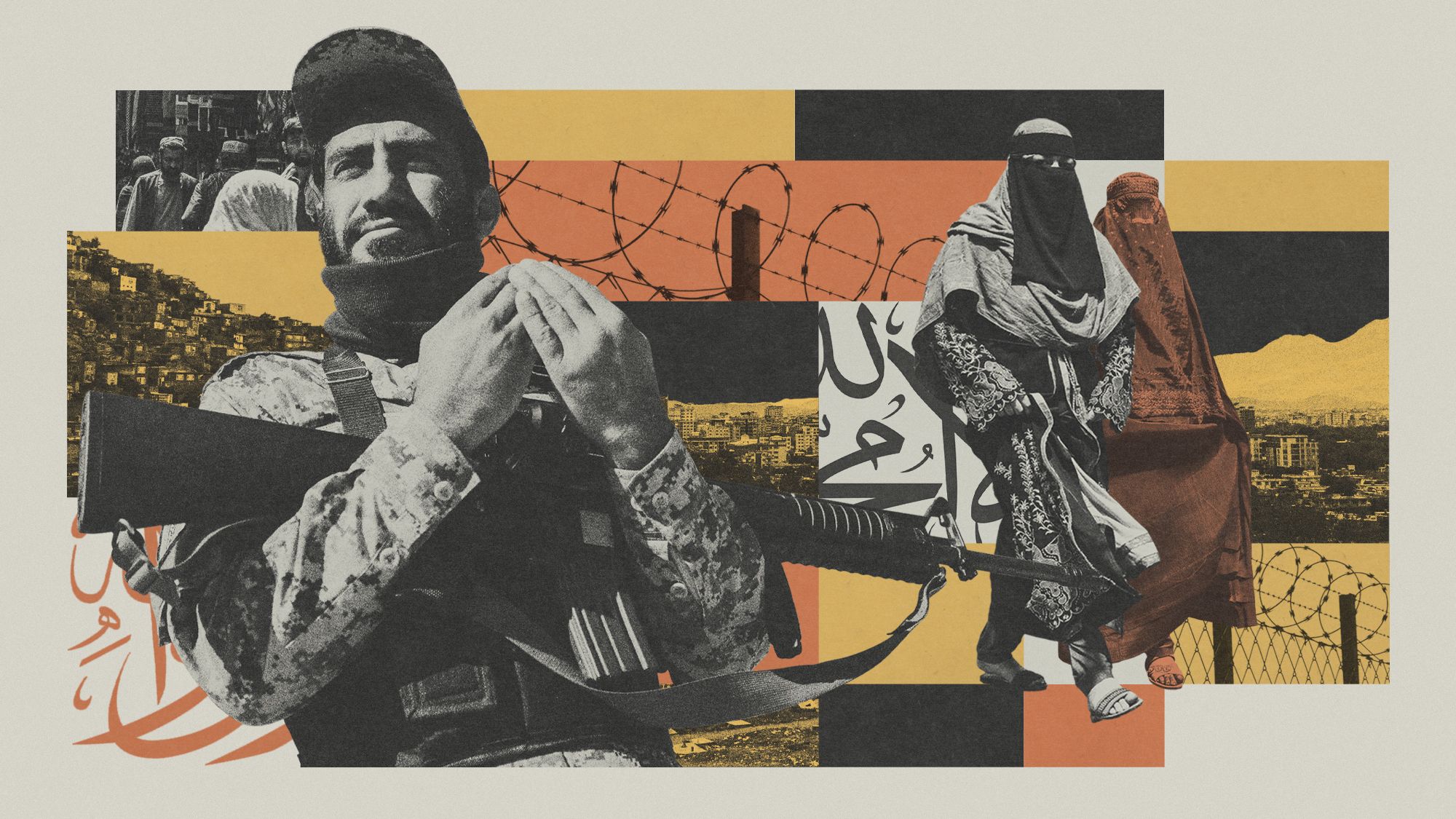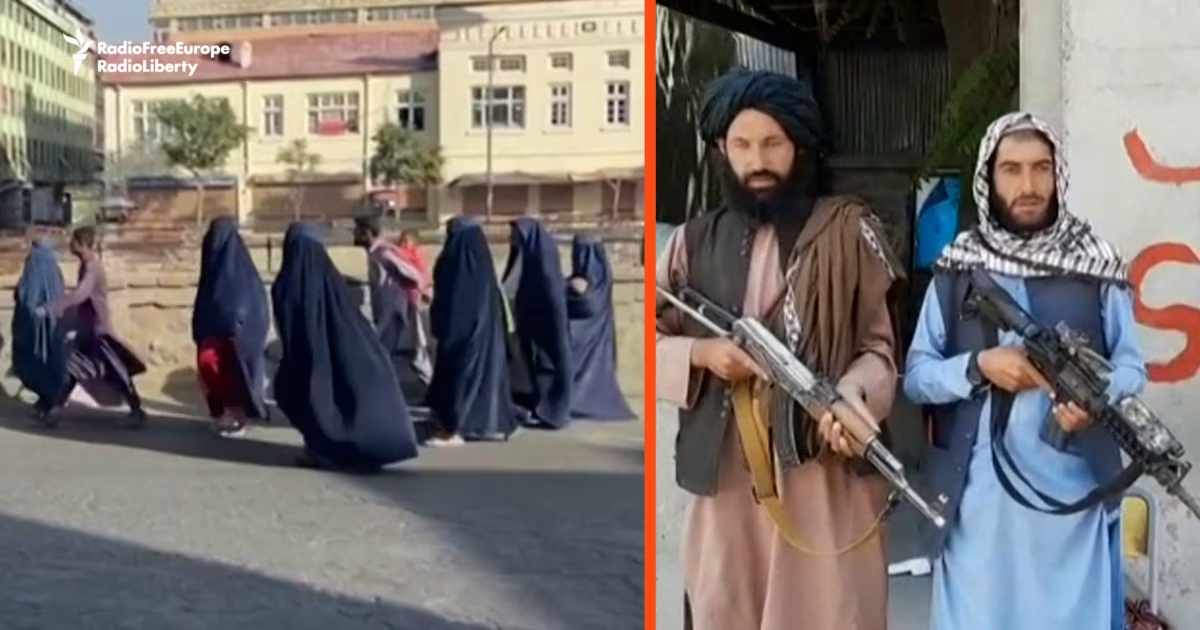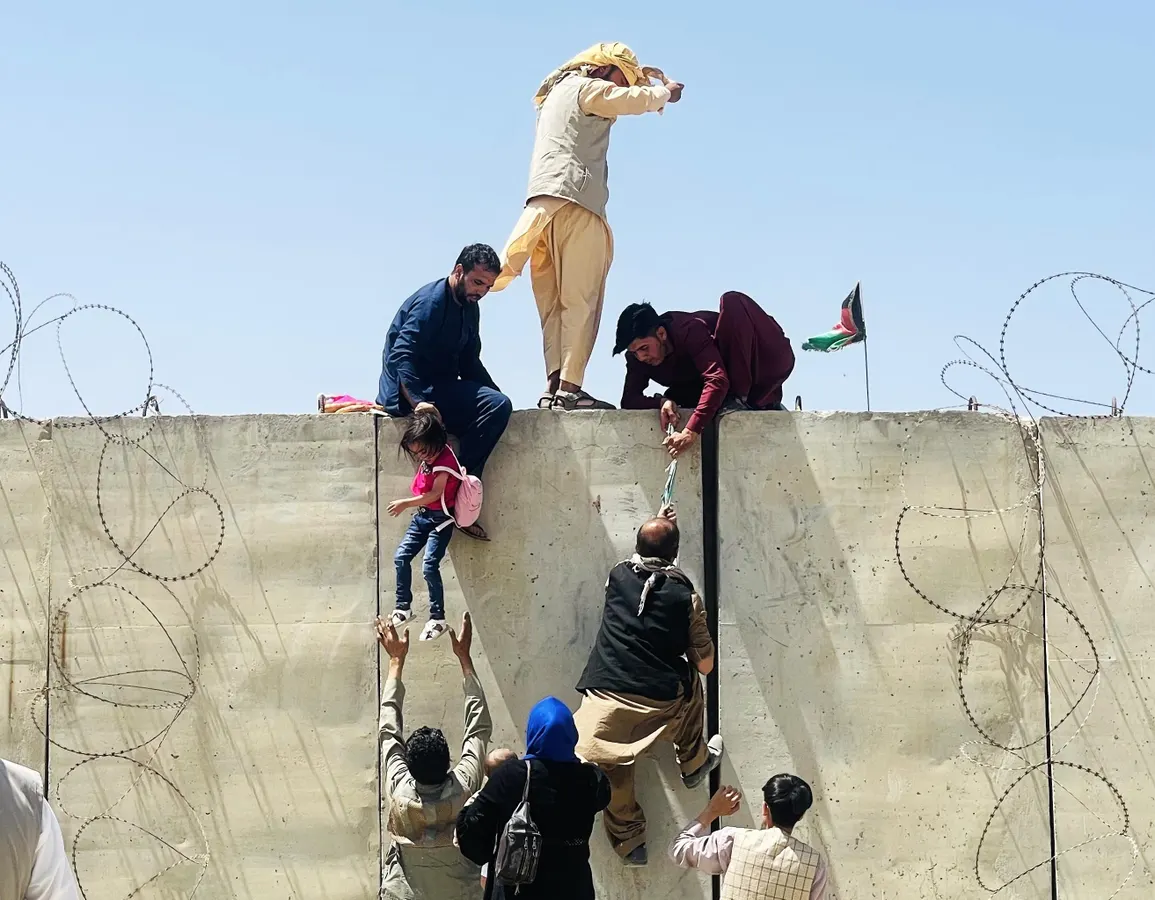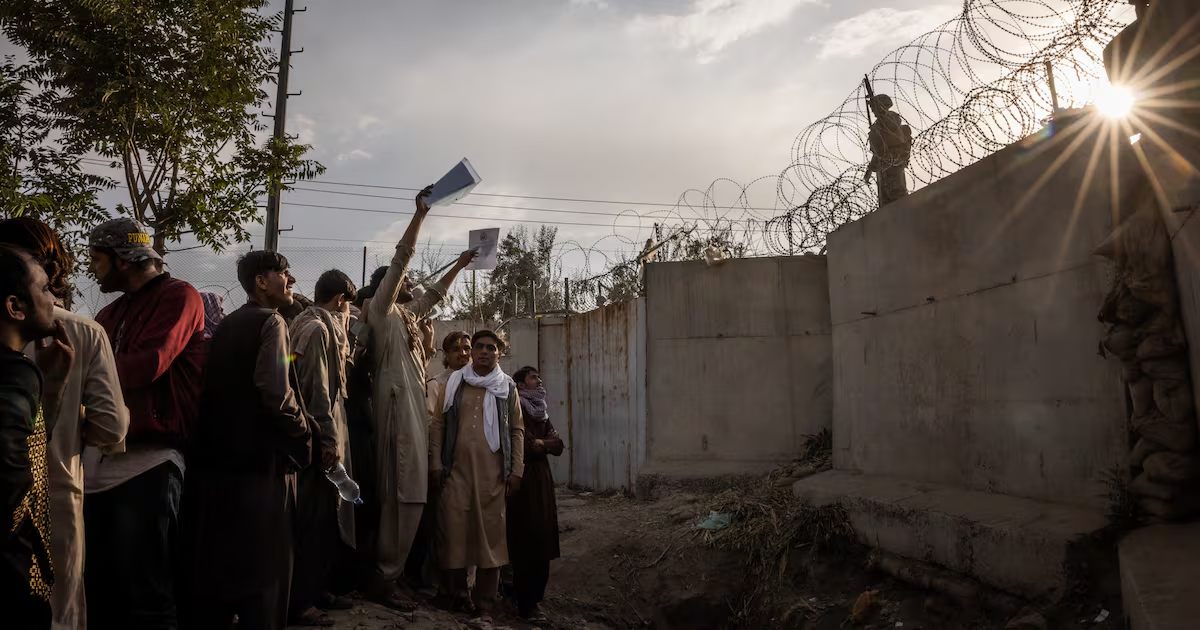
Shards of rock crunch-clink underfoot as a column of young men pick their way through a narrow mountain path, approaching a ridge line. Each carries a few belongings in a backpack bought in an Afghanistan frontier town. Heads are wrapped in scarves against the relentless sun. A gruelling 24-hour trek and nearly a fortnight of stop-start moves will deposit this batch of Afghan youths in the Iranian port city of Bandar Abbas. The people smugglers document this recent ordeal on video to prove they have delivered their charges. These Afghan migrants, who made their journeys this month, hope to work as labourers on the shores of the Strait of Hormuz for a while, before finding another smuggler to cross the Iran-Turkey border. Their willingness to risk their lives running the gauntlet of trigger-happy Iranian and Turkish border guards epitomises the plight of Afghanistan.The story of restored Taliban rule started with a different-looking exodus: the mass evacuation to western countries of hundreds of thousands of Afghans. I also got out on one of the military flights the night after president Ashraf Ghani fled. As our convoy inched its way to the airport gate, crowds of desperate civilians pushed towards the perimeter like a scene from Dante’s Inferno. In the massive cargo bay of a C-17 military aircraft, I was one of the few Europeans among the hundreds of people tucking ourselves under the cargo straps, for what they call a “floor loading” flight.People queue to board a US miltary aircraft at Kabul airport in 2021. Photograph: Taylor Crul/AFP/Getty In all, some 300,000 Afghans fled to the West in the August 2021 airlift and subsequent official relocation schemes. Ironically, these evacuees far outnumbered the Taliban from whom they were apparently fleeing. And after five years of Taliban rule, the country continues to haemorrhage people.A former colleague, a Kabul University academic, shared his feelings with me as republican Kabul collapsed. In 2021 he was desperate to get out and lamented “the return of these brutes”. On one level, things worked out okay for him. The academic, his wife and three of their four adult children are settled in Europe. The youngsters are all working. My colleague, like many of the 2021 evacuees, is now eligible for a European passport. That is life changing as, under the Taliban, Afghans have seen their national passport ranked the most difficult one in the world to travel on.When we talked recently, the academic was keen to discuss latest developments in Afghanistan. Intellectuals of the new diaspora remain constantly in touch with their homeland, asserting they still have a stake. They have concluded, he informed me, that the Taliban are on the verge of provoking a nationwide popular uprising.I too have continued to research the Taliban and so am alert to the pitfalls awaiting anyone trying to explain the group. There is the orientalist trap of othering these turbaned men and rendering them reassuringly exotic. Denigrating the Taliban as mere proxies with no agency, as some Afghans do, is equally unhelpful.Perhaps what has happened over the past five years is best described as the Taliban imposing their version of tyranny. Tyranny is universally understood. Look closely and many Taliban moves resemble those of other contemporary foes of freedom. Afghans celebrate the fifth anniversary of the Taliban’s return to power in Kabul last Saturday. Photograph: Tomas Munita/The New York Times
After five years of Taliban rule, Afghanistan continues to haemorrhage people
US forces completed their withdrawal from Afghanistan on August 30th, 2021, marking the end of a 20-year war and the beginning of an exodus of Afghans
2,232 words~10 min read