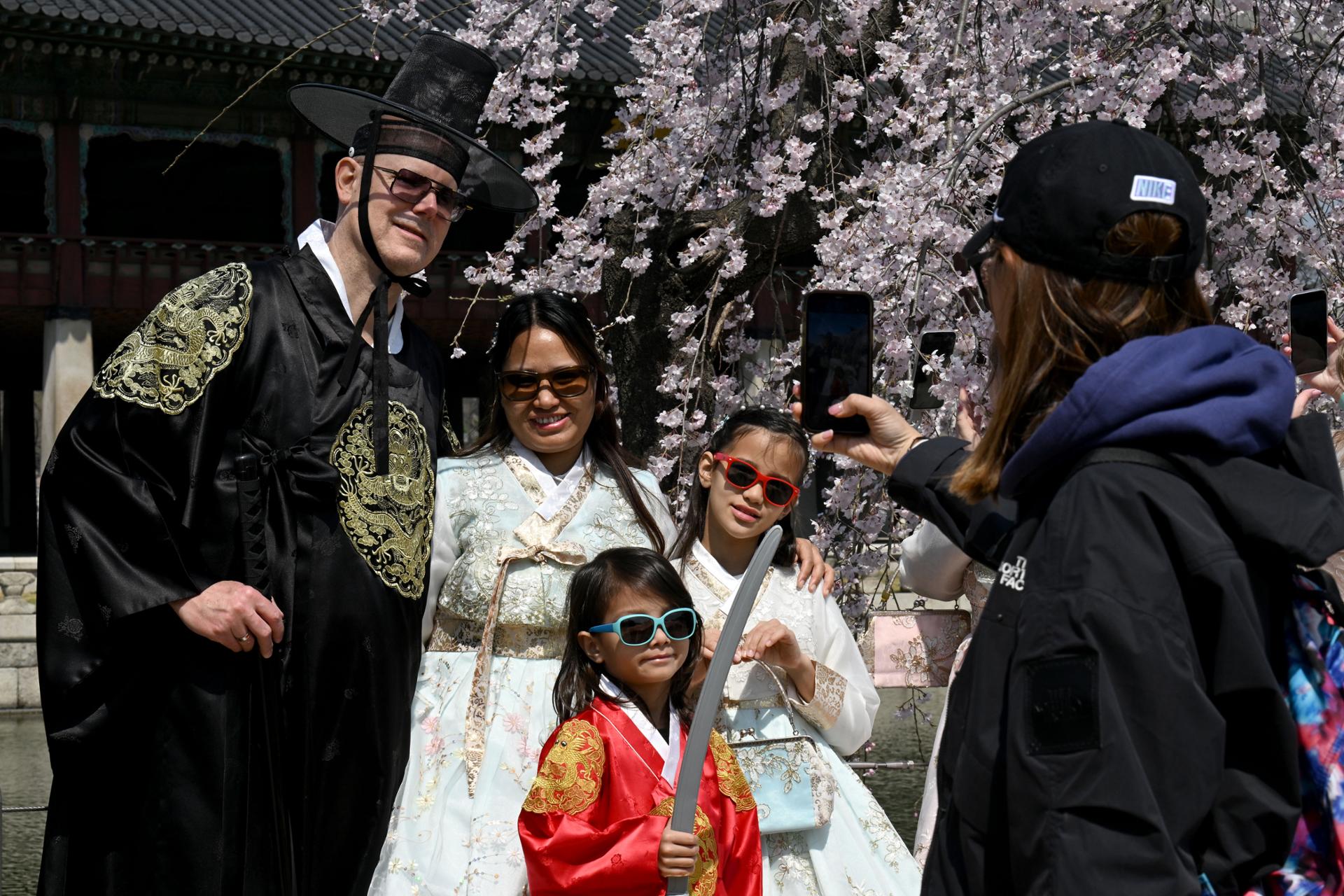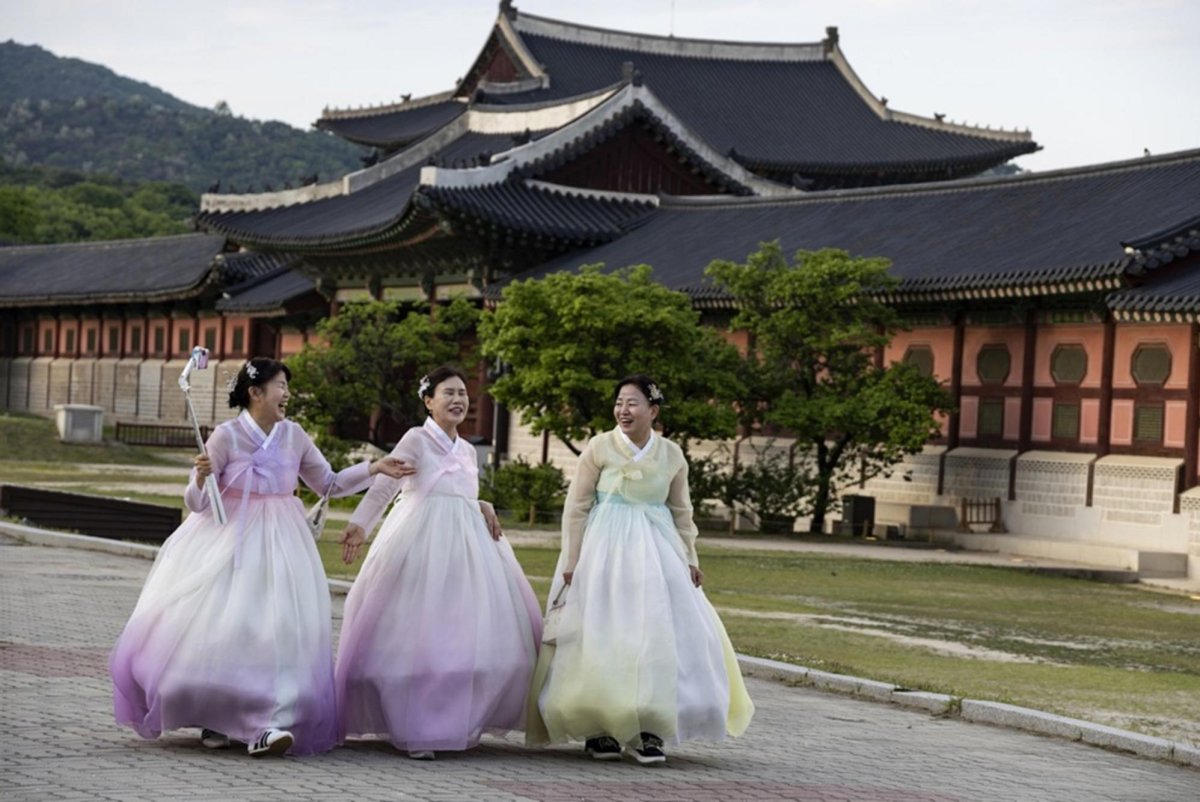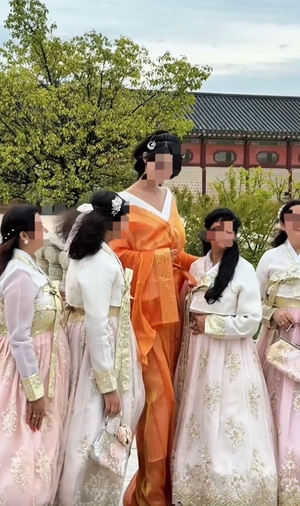
Cultural provocation or personal expression? Controversy highlights lingering tensions over China and Korea’s cultural histories A hanfu-clad Chinese female influencer (center) poses for photos with foreign tourists dressed in Korean traditional hanbok at Gyeongbokgung Palace in Seoul, in a video posted on her Instagram account. (Instagram @maxinee_liu) Social media posts showing Chinese influencers dressed in traditional Chinese attire known as hanfu at major historic sites in Seoul, including Gyeongbokgung, have sparked debate and sensitivity among some Koreans.In a recent viral Instagram video, a female Chinese model is seen walking through the palace, Gwanghwamun Square and the streets of Myeong-dong dressed in a bright orange hanfu. She also poses for photos with foreign tourists wearing hanbok, traditional Korean attire.The video drew criticism from some Korean users, who connected the images to a long-running dispute over China’s treatment of Korean history and culture. Some invoked the Chinese government’s Northeast Project, a historical research initiative launched in the early 2000s that examined the history of China’s northeastern regions and has been criticized in South Korea for incorporating aspects of ancient Korean kingdoms into Chinese history.“How would Chinese people react if Koreans visited the Forbidden City wearing hanbok?” one commenter wrote. “Given the long-running controversy over the Northeast Project, this is difficult to understand.”Similar short-form videos showing other Chinese creators wearing hanfu at Gyeongbokgung have surfaced on TikTok and other social media platforms in recent months, according to online communities.Both hanbok and hanfu have roots in ancient East Asian clothing traditions, dating to Korea’s Three Kingdoms period (57 BC–AD 668) and China’s Shang dynasty (1600–1046 BC), respectively. Each developed independently, with hanbok typically consisting of separate upper and lower garments and hanfu often featuring a one-piece silhouette.Claims that hanbok originated from hanfu have nevertheless circulated in Chinese online communities, fueling sensitivities in South Korea. In 2021, Baidu Baike, an online encyclopedia operated by China’s leading search portal Baidu, drew criticism in South Korea after describing hanbok as the traditional clothing of ethnic Koreans in China and stating that it originated from hanfu.Seo Kyung-duk, a professor of general education at Sungshin Women’s University in Seoul known for his campaigns promoting Korean history and culture, rejected such claims, noting that hanbok appear in Goguryeo-era tomb murals and is defined by the Oxford English Dictionary as traditional Korean clothing."As the Korean Wave spreads worldwide, traditional Korean items such as hanbok and gat are gaining greater international attention, leading to misguided actions rooted in cultural insecurity," Seo wrote on Facebook. A "gat" is a traditional Korean hat."Rather than merely criticizing China’s cultural distortions, Koreans should take a greater interest in hanbok and step up efforts to promote it worldwide."But some users said the controversy had gone too far, arguing that people should be free to wear their traditional clothing abroad."The woman in the video did not harm anyone. She simply wore traditional clothing and took some photos. It is a stretch to suggest that a few photos carry a political message," one user wrote on Threads.
Hanfu-clad influencers at Gyeongbokgung stir sensitivities in Korea
Social media posts showing Chinese influencers dressed in traditional Chinese attire known as hanfu at major historic sites in Seoul, including Gyeongbokgung, h
499 words~2 min read