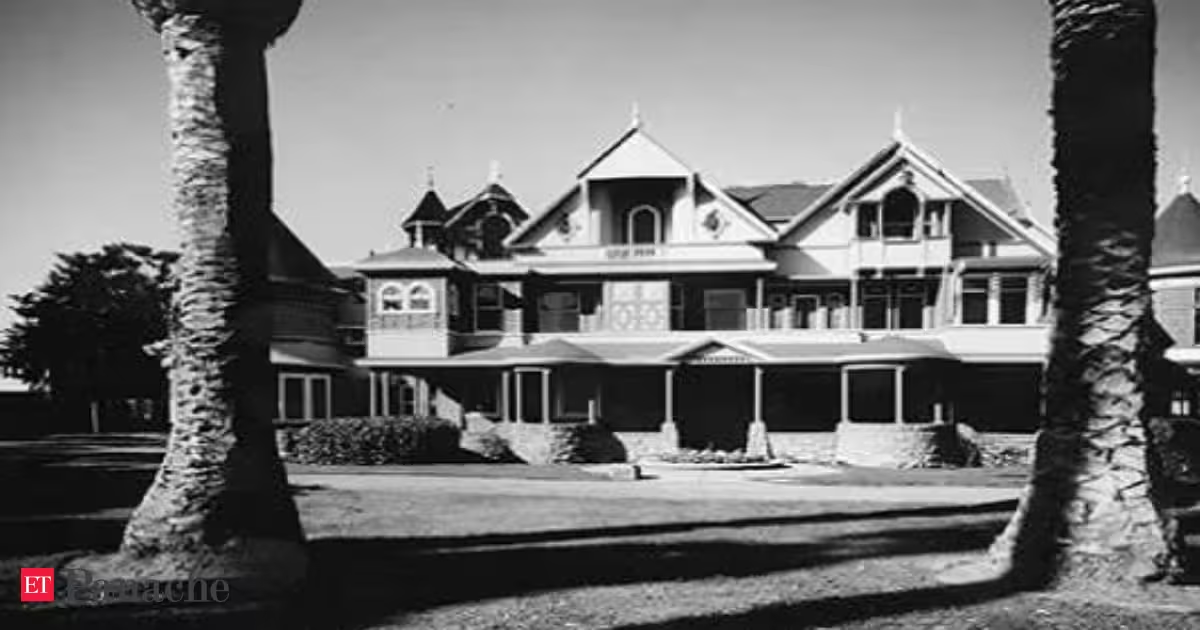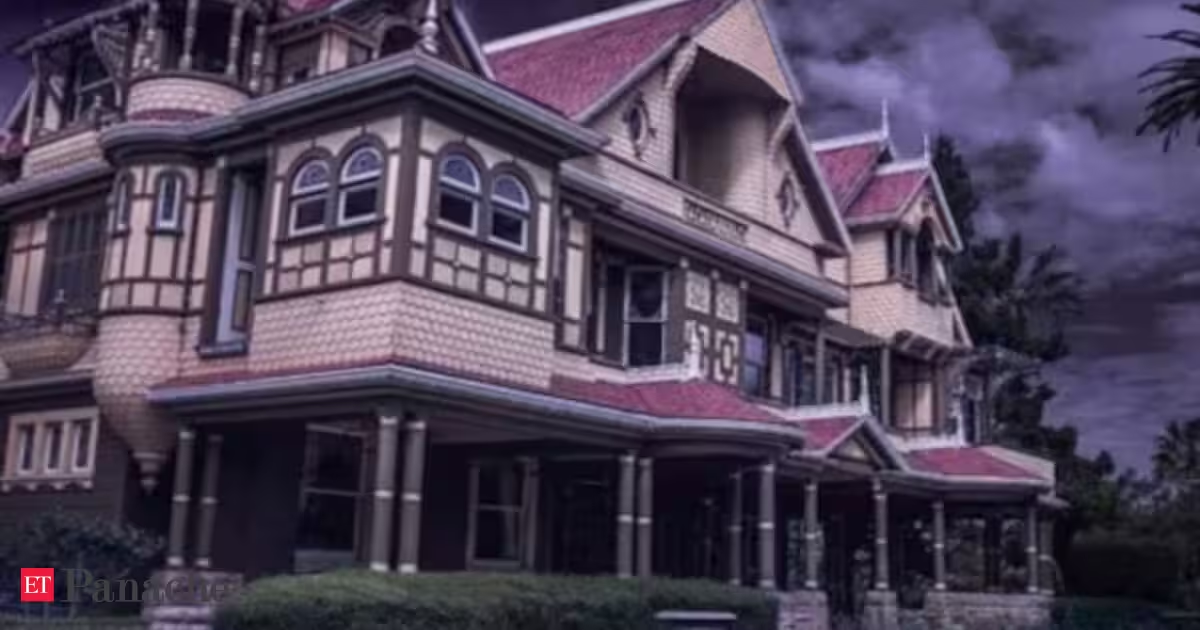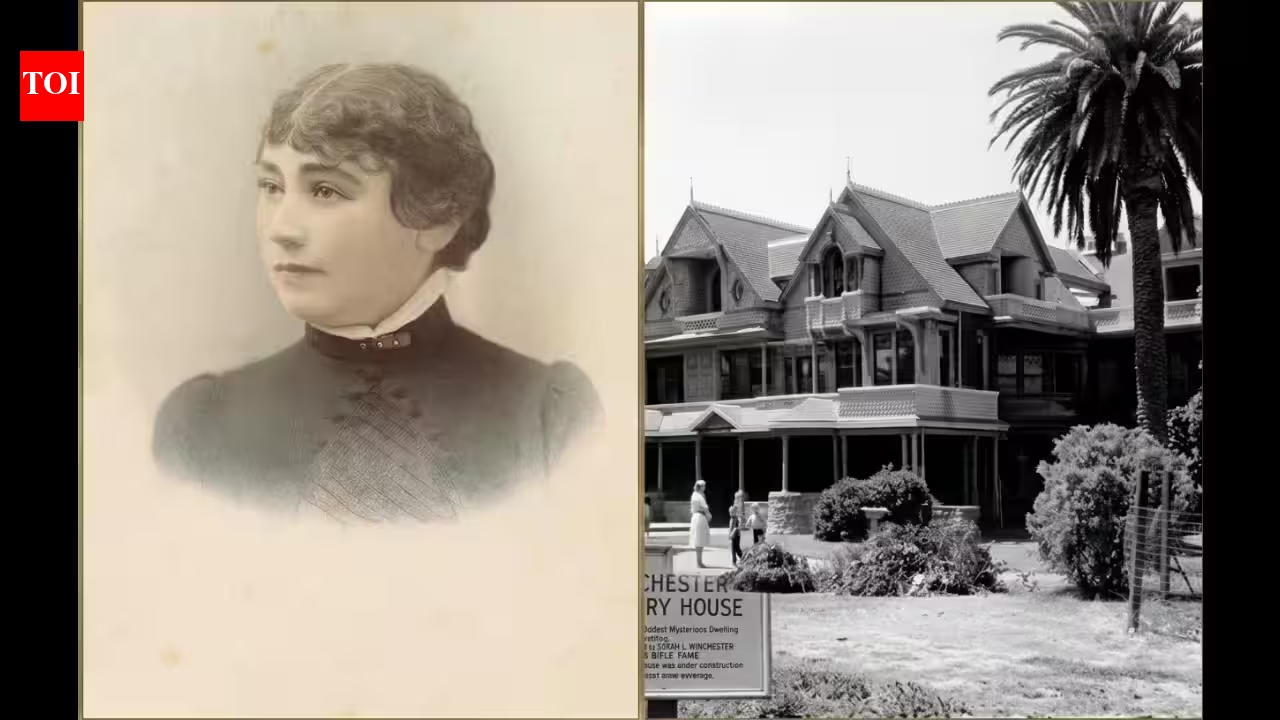
Image(s): Winchester Mystery HouseIn 1881, Sarah Winchester became one of America’s wealthiest women after her husband, William Wirt Winchester, died and left her a vast inheritance. A few years later, the widow moved from Connecticut to California and bought an eight-room farmhouse in the Santa Clara Valley. What began as a modest renovation soon turned into an extraordinary building project that continued for 36 years, with rooms, corridors and architectural experiments added without a conventional master plan. By the time Winchester died in 1922, the house had grown into a sprawling Victorian mansion containing 160 rooms, thousands of windows and doors, and staircases that appeared to lead nowhere. Some stories claim she built endlessly to confuse restless spirits, while other explanations point to her fascination with architecture and desire to keep workers employed. Whatever motivated her, the result became one of California’s most unusual historic homes in America, drawing visitors intrigued by its strange rooms, hidden passages, elaborate craftsmanship and enduring mystery.How the wealthy widow began the extraordinary building project in CaliforniaSarah Winchester’s transformation from wealthy widow to builder began after a loss. Her husband died in 1881, and she inherited a fortune tied to the Winchester rifle business. She eventually travelled west and settled near San Jose, purchasing an eight-room farmhouse in 1886. Rather than simply remodel it, she kept ordering new construction, creating a home that changed almost continuously. Carpenters worked without the benefit of a blueprint, allowing rooms and passages to appear wherever Winchester wanted them. According to Atlas Obscura, the project lasted 36 years and cost millions of dollars at the time. The expanding house became increasingly intricate, reflecting Winchester’s wealth, curiosity and willingness to experiment with unconventional architectural ideas throughout.Sarah Winchester (Image: Wikipedia)The 160-room mansion became a maze of doors and staircasesThe mansion’s strangest features are what made it famous. Staircases climb towards ceilings, doors open onto empty space, and some windows were placed inside rooms rather than facing outdoors. The completed building contained 160 rooms, 2,000 doors, 10,000 windows and dozens of stairways. Yet its oddities were mixed with modern comforts. The house had indoor plumbing, central heating and multiple elevators, showing that Winchester was not creating a chaotic curiosity. She also incorporated stained glass, decorative woodwork and other expensive details throughout the structure. Some architectural choices may have been practical experiments, while others remain difficult to explain. The result was less a conventional mansion than a changing maze, where domestic spaces could suddenly give way to a dead end.The mystery behind the mansion remains part of its legendThe famous explanation for the construction comes from a story about spiritualism. According to legend, a medium told Winchester that the spirits of people killed by Winchester rifles were seeking revenge and that she could avoid them by moving west and building continuously. Some versions claim she believed construction had to continue to prevent her death, while others say the confusing layout was intended to keep spirits lost inside the house. These claims remain part of the mansion’s mythology rather than established fact. Another possibility is less supernatural, Winchester may have enjoyed architecture, experimentation and the challenge of expanding her home. Whatever the truth, construction ended when she died in 1922, leaving a mansion whose design still invites speculation.
In 1881, a wealthy widow moved to California and kept expanding her home for 30 years; it became a 160-room maze with staircases to nowhere
In 1881, Sarah Winchester became one of America’s wealthiest women after her husband, William Wirt Winchester, died and left her a vast inheritance. A few years later, the widow moved from Connecticut to California and bought an eight-room farmhouse in the Santa Clara Valley.
543 words~2 min read