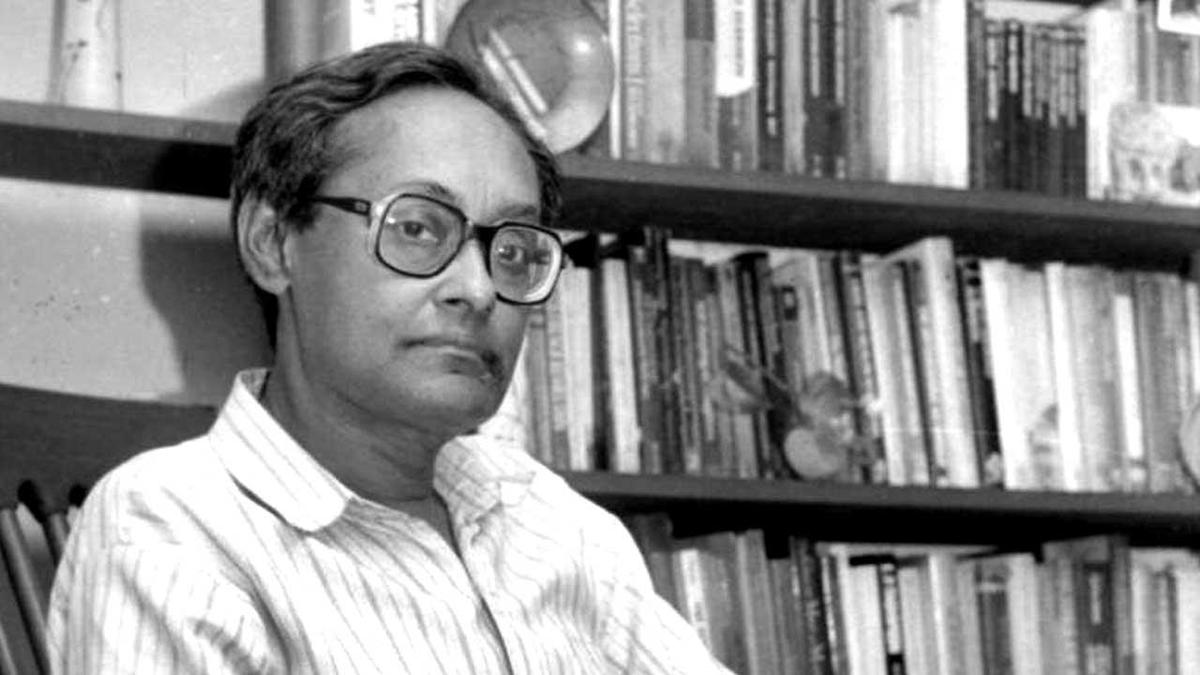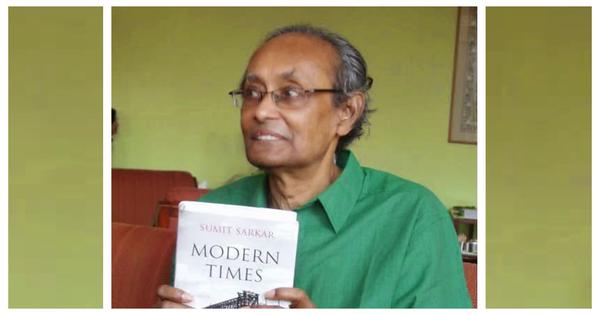
In a late essay reflecting on his intellectual journey over the decades, Sumit Sarkar remarked: “So far, we Indian historians have written the histories that we wanted to write, following no agenda but our own. That seems to be a fast-vanishing luxury.”In a long and very productive life, Sarkar – who was born in Calcutta in 1939 and died in Delhi earlier this month – had to confront three historical agendas imposed by others. The first was a dogmatic Marxism which viewed the past through a narrow economistic lens, and was very influential in Sarkar’s hometown (his father, also a historian, was a member of the Communist Party of India).The second was the interlinked trend of post-modernism and post-colonialism which viewed history as fragmented and culturally relative, and focused on texts and discourses rather than the lived experiences of people in the past.The third was the religious majoritarianism of the sangh parivar, which glorified Hindus and demonised Muslims, and despite – or perhaps because of – its Manichaeism gained ideological and political ascendancy in the 1990s and beyond.‘Pomo-poco’ thoughtSarkar refused to succumb to the seductions of “pomo-poco” thought, for he saw – more clearly than his fellow members of the Subaltern Studies school – how it underplayed the economy, social conflict, and lower-caste deprivation. His rejection of Hindutva was absolute, based both on its misreadings of the past and its dangerous consequences for democracy and pluralism in the present.His relationship with Marxism, however, was more complex. He moved away early from its economic determinism, recognising that in India caste and gender were axes of inequality as significant as class. His prose was free of Marxist jargon, and (as far as I know) he never joined a communist party.Yet he did not entirely disavow the Marxism of his youth either. He continued to see it as a philosophy of emancipation, which – whatever its perversions in countries like the Soviet Union – still stood, broadly, on the side of equality and justice.Sarkar’s first book was The Swadeshi Movement in Bengal, published in 1973. A richly crafted political and social history, it used primary sources in English and Bengali to examine the Swadeshi upsurge against a backdrop of rising Hindu-Muslim tensions and the partition of the province.A counterpart of this focused, immersive regional study is the wide-ranging essay collection, Writing Social History (published in 1997). Here, critical assessments of the bhadralok icons, Ramakrishna and Vidyasagar, share space with essays on Calcutta, on caste in the making of political ideologies, and on historiographical traditions the author admired or else deplored.Both these books are well worth reading and re-reading. But Sarkar’s most important book was undoubtedly Modern India: 1885-1947, a magisterial account of the last decades of colonial rule and of the emergence of mass nationalism. The preface has the author stating his two aims: first, “a synthesis of the massive data unearthed in recent years by the flood of monographs on specific problems in political, social and economic history”; and second, the possibilities of a “history from below” as a counterpart to nationalist historiography and its concentration on “the activities, ideals, or factional manoeuvres of leaders”.These twin ambitions are splendidly realised. This is a genuinely all-India history, with illustrative examples from across the subcontinent. Equal attention is paid to tribal and peasant movements as to initiatives by the major nationalist party, the Congress. The origins of Hindu-Muslim conflict and the onset of Independence and Partition are deftly delineated. Forty-three years after its publication, it remains the best single-volume account of the period.The attention to caste in Modern India shows how heterodox Sarkar’s Marxism had now become. Perhaps an even more notable departure from his inherited beliefs was his treatment of the historical figure of Gandhi. Marxist ideologues like RP Dutt and MN Roy saw the Mahatma’s non-violence as a cunning device to wean the masses away from revolutionary action, and his emphasis on communal amity as a distraction from class struggles.Sarkar, however, understood the deep ethical component of Gandhi’s politics. He recognised that, for Gandhi, non-violence and satyagraha constituted “a deeply-felt and worked-out philosophy… revealing considerable originality”. In Gandhi’s view, “the search for truth was the goal of human life, and as no one could ever be sure of having attained the ultimate truth, use of violence to enforce one’s own necessarily partial understanding of it was sinful.”This assessment comes in Sarkar’s discussion of the 1920s; towards the end of the book, he has a section titled “The Mahatma’s Finest Hour”, on Gandhi’s pilgrimage for peace in Noakhali and the fasts to restore Hindu-Muslim harmony that followed in Calcutta and Delhi. As Sarkar writes here, “Gandhi’s unique personal qualities and true greatness was never more evident than in the last months of his life…”Like the best historians, Sumit Sarkar took his clues from the archives, and was always willing to have his prior conjectures modified or even overthrown by what the primary sources revealed. His work had an explicitly comparative lens, juxtaposing Indian studies on popular protest against studies by European historians on the same broad theme, as well as studying regional variations within different parts of India itself. And he was a fine prose stylist, which took his scholarship beyond the confines of the academy.NEW | In this tribute, Charu Gupta remembers her teacher Sumit Sarkar, saying his greatest legacy was not simply his scholarship on modern India, but the intellectual habit he taught generations of students: to question easy historical narratives, distrust certainty, and keep…— Frontline (@frontline_india) August 15, 2026
Ramachandra Guha: Historian Sumit Sarkar took his scholarship beyond the confines of the academy
He was was one of several prabasi Bengali intellectuals who helped make Delhi University the foremost academic institution in all of South Asia.
1,483 words~7 min read